What transforms the mundane into the meaningful? In William-Adolphe Bouguereau’s two paintings titled “The Knitting Girl,” the answer lies in the measured pull of yarn through patient fingers.
Few ordinary tasks carry as much symbolic weight as knitting. Once a preindustrial necessity, it has evolved into a modern practice valued for personal satisfaction. At its core, it remains a skill that demands patience and careful attention. Bouguereau drew on these rich associations, transforming an everyday rural activity into a scene that quietly celebrates these enduring values.
An Essential Craft
The symbolic meanings attached to knitting have roots in centuries of practical necessity and cultural evolution. Although the origins of knitting are still debated, most historians trace early forms of the craft to the Middle East and Mediterranean regions during the first millennium A.D. From there, it spread into Europe through trade and cultural exchange. By the late Middle Ages, knitting was a firmly established craft. Professional guilds produced stockings, gloves, and other garments for both local use and export, laying the groundwork for the skill’s later symbolism.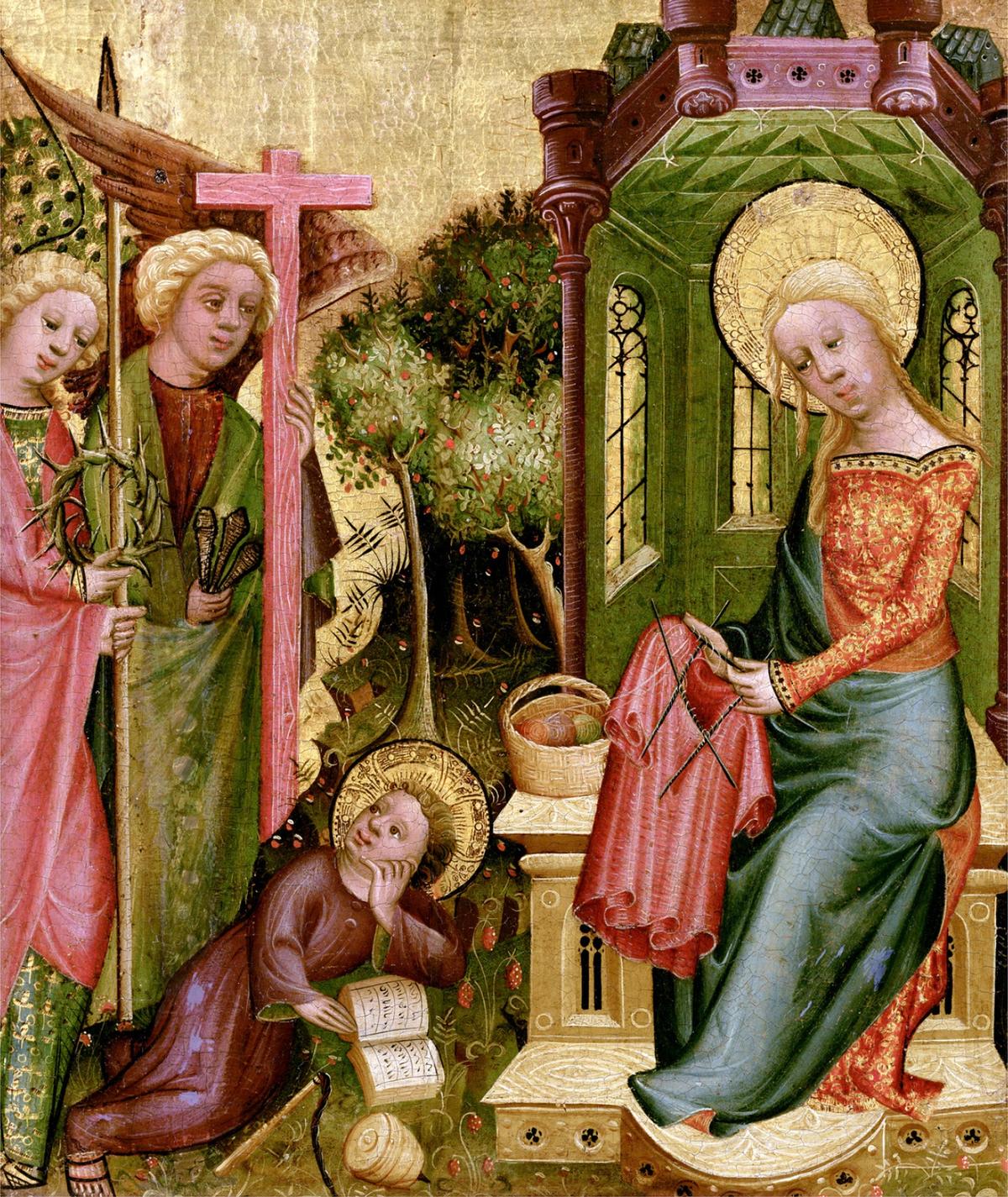
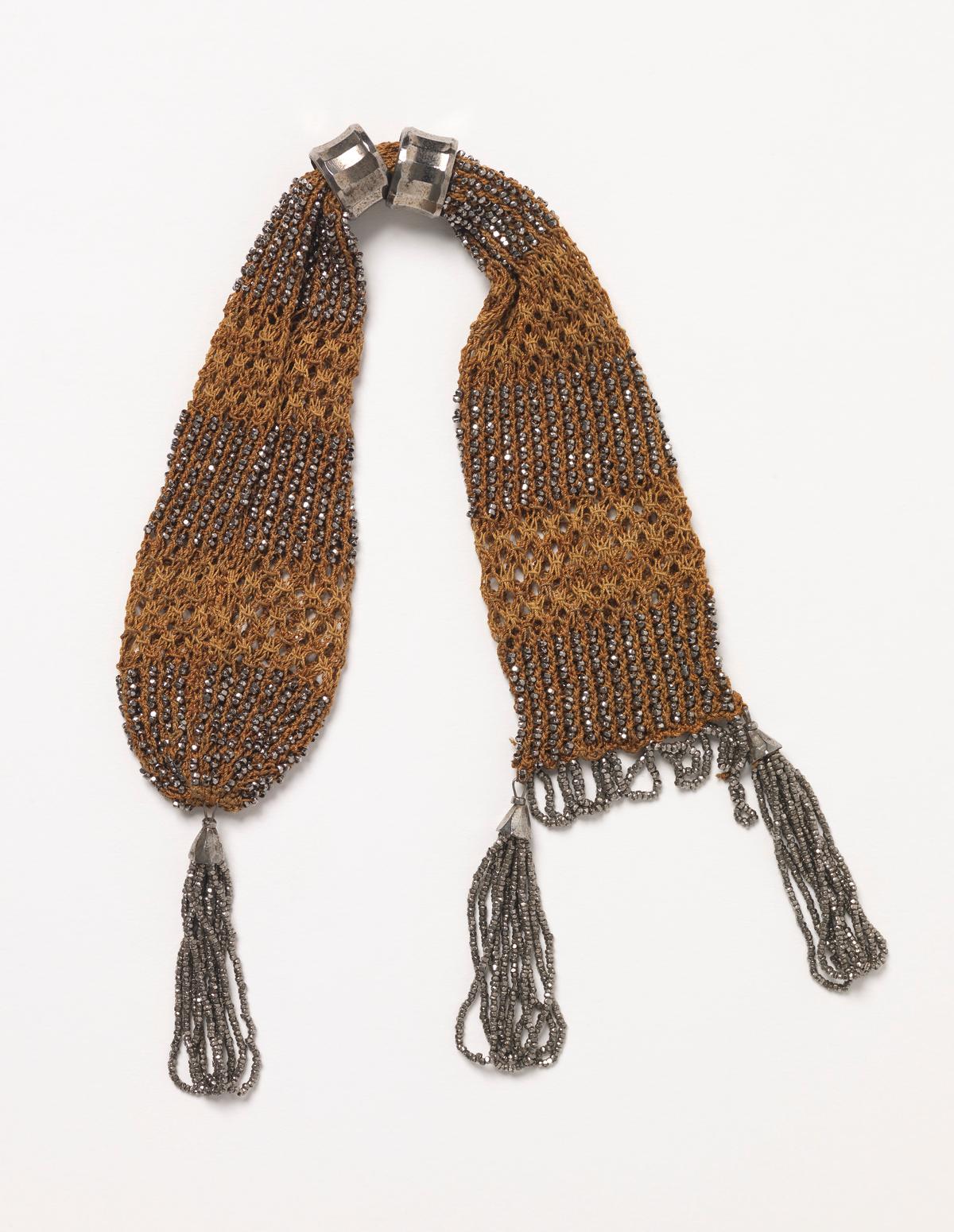
As knitting moved from workshops into homes, its social role shifted. During the Renaissance and early modern period, it became closely associated with women’s labor, particularly in rural and working-class households. Miser’s purses, commonly crafted through knitting or crocheting, became a fashionable accessory among both men and women for the practical purpose of carrying coins.
Growing demand for knitted goods encouraged greater skill and refinement, with more intricate patterns and finer materials. Yet knitting rarely achieved recognition as fine art. It remained essential, but was largely taken for granted.
Painters included knitting in their works to evoke subtle, meaningful qualities without the need for overt storytelling. By the 19th century, such symbolism was widely understood. Women shown with needles and yarn were often presented as industrious, modest, and self-possessed, traits closely aligned with bourgeois ideals.
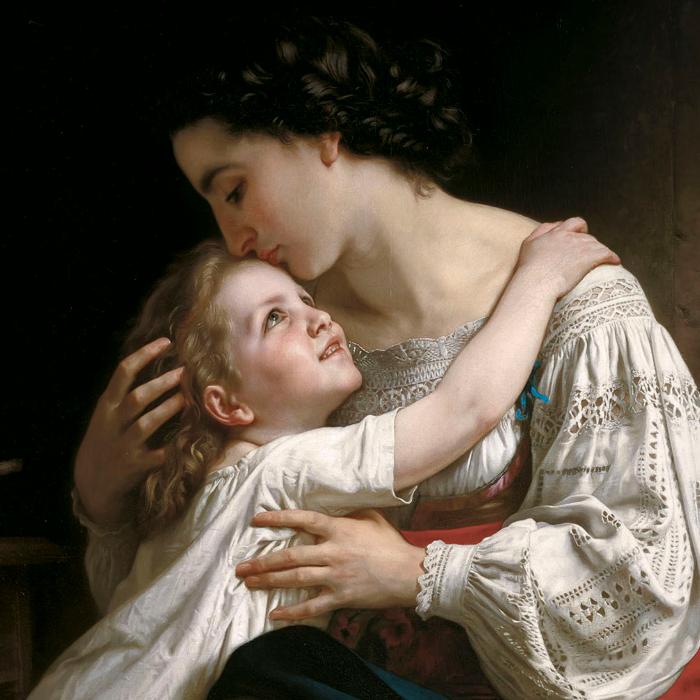
In France, knitting remained an important household skill well into the 1800s. Women produced stockings, gloves, and caps, often supplementing family income during periods of economic uncertainty.
As industrial production expanded through the century, hand-knit accessories gradually gave way to factory-made goods. During this period, academic artists such as Bouguereau revived the pastoral tradition, portraying idealized peasants often infused with classical or mythological touches. Works such as “The Knitting Girl” offered viewers a respite from rapid social change. He used soft landscapes, warm tones, and serene activity to evoke harmony and simplicity. This focus on tranquil, idealized scenes was the result of years of careful training and artistic development.
The Romanticized Knitter
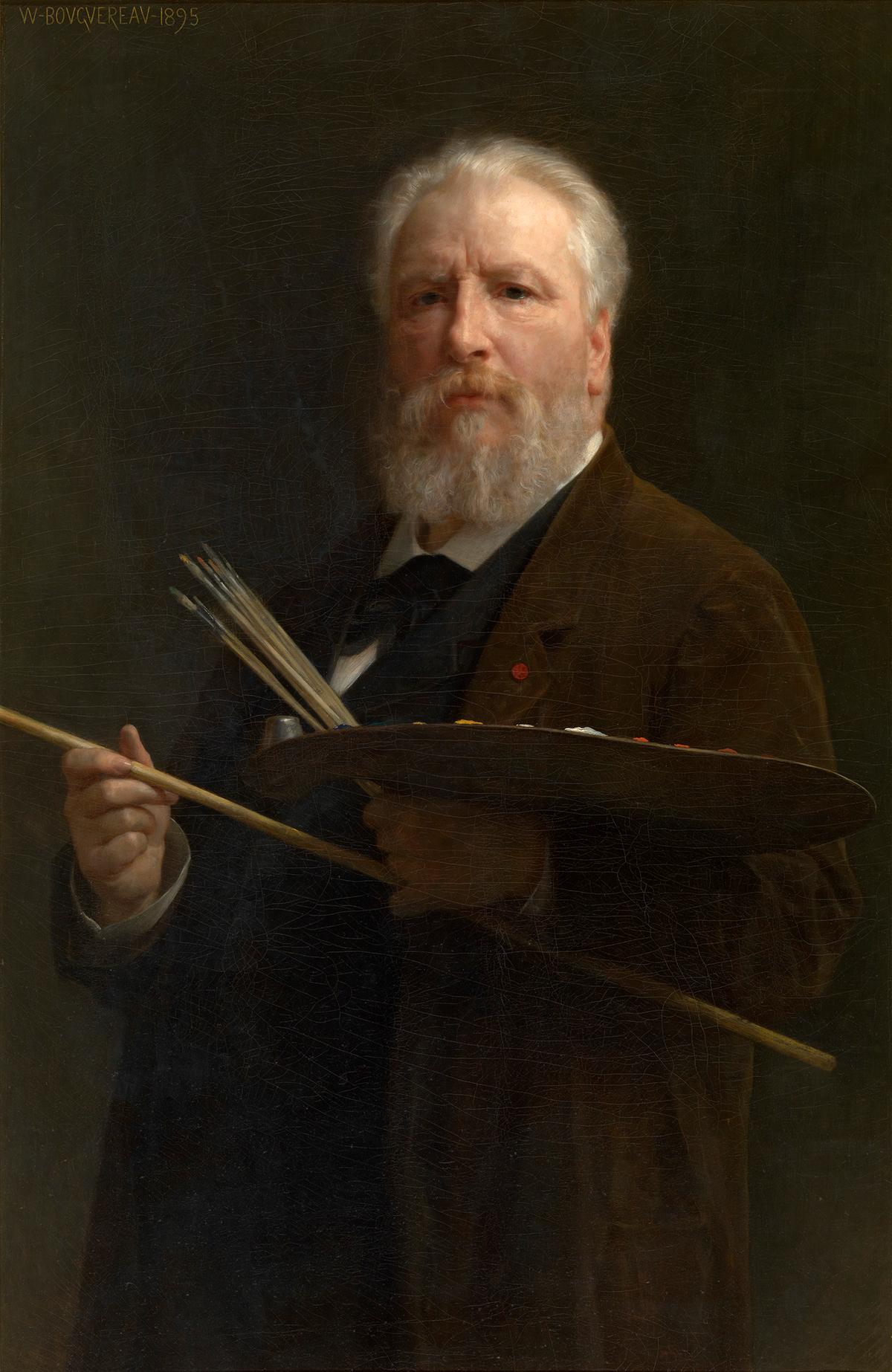
Painted in Bouguereau’s later years, the two “Knitting Girl” paintings reflect the mastery of academic techniques he honed during his early training in France and Italy. His time in Italy deepened his admiration for classical sculpture and Renaissance painting. This experience cemented his belief that careful technique and idealized form were essential for creating beautiful, timeless art.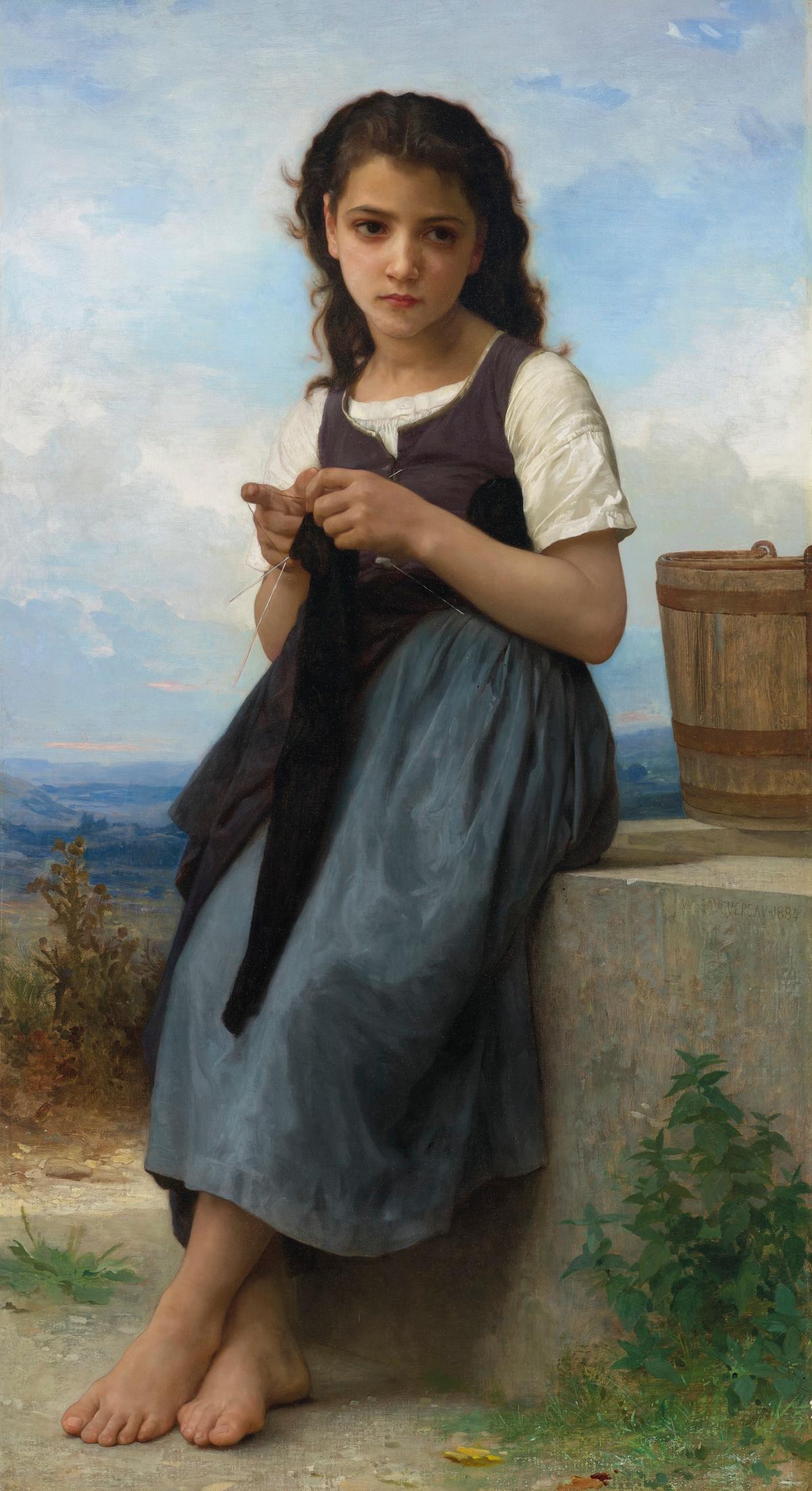
Every detail of these paintings reflects Bouguereau’s precision: The anatomy is exact, the contours flow smoothly, and the surface is polished nearly to perfection. A young rural girl sits quietly outdoors, absorbed in her task. The girl’s posture is calm and self-contained. She does not look at the viewer but gazes slightly away, as though absorbed in thought. Here, knitting is shown not as laborious work but as an unhurried, carefully attended practice.
In Bouguereau’s 1869 painting, the knitter’s simple clothing marks her as belonging to the working class, while the vibrant red headscarf draws attention to her luminous face, adding warmth and vitality to the otherwise muted palette.
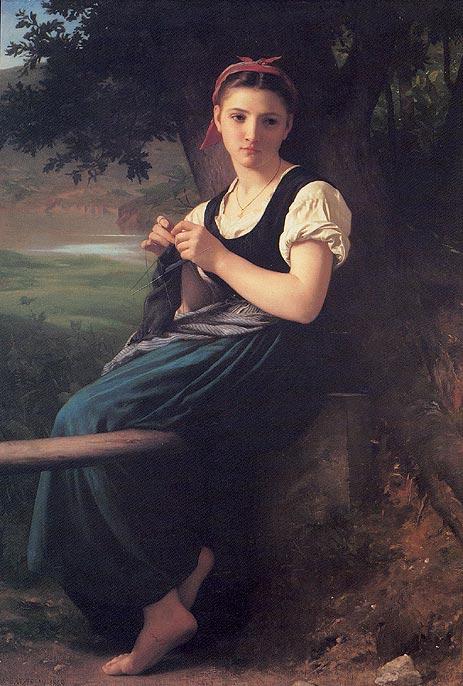
The surrounding landscape reinforces this mood. Trees and foliage create a soft backdrop, rendered with less detail than the figure. Soft light filters gently through the leaves, creating an idyllic atmosphere. Nature appears serene rather than overwhelming, echoing the academic belief that beauty arises from harmony and restraint.
Today, “The Knitting Girl” feels surprisingly resonant. In a culture shaped by speed, automation, and constant distraction, Bouguereau’s quiet figures offer a different set of values. By elevating a simple domestic act to the level of fine art, the paintings remind viewers that meaning often resides not in spectacle, but in the steady rhythms of daily routine.