‘Woman of the Year’ (1942)
This wedding scene stands out as the most conventional on this list. The characters aren’t facing death or mortal peril. However, the ceremony serves as an important turning point in the leading lady’s life, although it isn’t her wedding.Tess Harding (Katharine Hepburn) is a successful newspaperwoman and outspoken feminist. When she marries he-man sportswriter Sam Craig (Spencer Tracy), they soon learn that it takes more than physical attraction to make a successful marriage.
Shortly after the two have separated, Tess learns that her equally emancipated Aunt Ellen (Fay Bainter) is finally settling down and marrying none other than Tess’s father (Minor Watson). Ellen tells Tess that she’s tired of winning prizes; this time, she wants to be the prize.
Tess stands in the shadows of the chapel watching the wedding ceremony as silent tears stream down her face. As beautiful as customary wedding vows are, the ones used in this scene go even deeper into the responsibilities and true meaning of marriage.
‘Father Goose’ (1964)
Although this wedding scene takes place during a Japanese air raid on a small island in the South Pacific, it’s one of the lightest on the list due to the film’s generally fun tone. However, in its own semi-comedic way, it’s deeply touching.Walter Eckland (Cary Grant) is a slovenly ex-patriot boat captain with no interest in helping the war effort during World War II. However, his old friend Cmdr. Frank Houghton (Trevor Howard) coerces him into serving as a coast-watcher on a nearby deserted island.

Through a series of mishaps, Eckland finds himself saddled with stranded French teacher Catherine Freno (Leslie Caron) and her seven students. The two initially fight like cats and dogs, but through their many experiences on the island, some harrowing and others lighthearted, the two fall in love and decide to marry.
A naval chaplain (Peter Forster) begins to perform the ceremony over the radio, accompanied by a sailor with a squeezebox, only to be interrupted by a Japanese air raid. As bullets rain down at intervals, interrupting the ceremony multiple times, they cling to their determination to be man and wife, even if their marriage only lasts for a few hours.
In one of the most touching moments, the chaplain realizes they neglected to “do the ring.” Eckhart retrieves a band-aid from a nearby first aid kit and puts it on Catherine’s finger before kissing it.
‘Quo Vadis’ (1951)
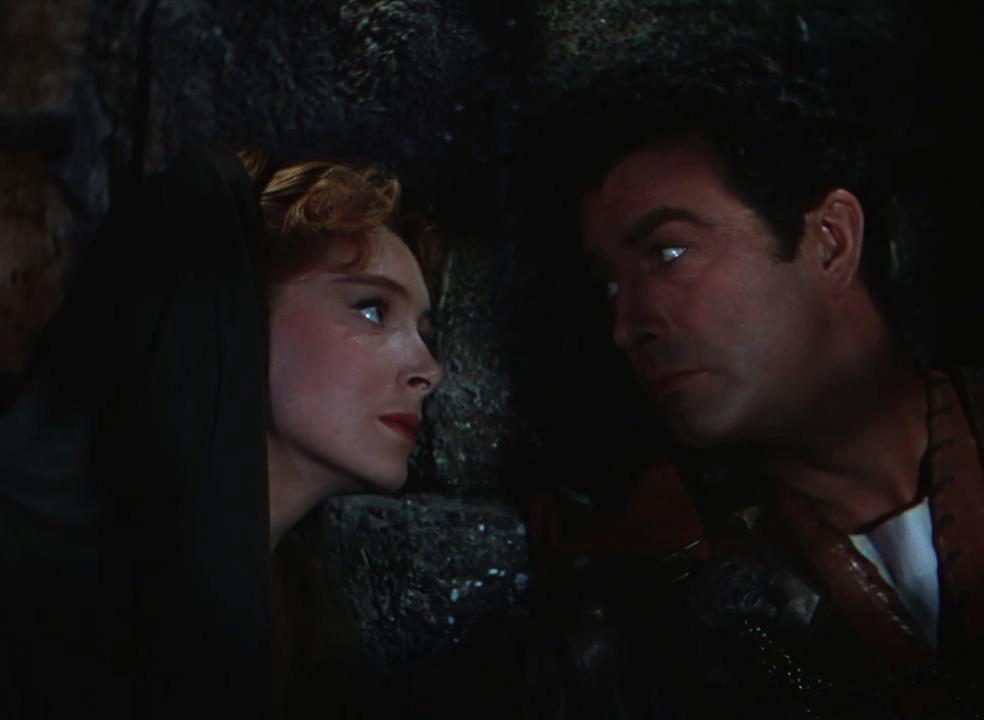
This scene is without doubt the most holy on the list, since it’s performed by one of the most important men in the history of the Christian church, St. Peter. It takes place in ancient Rome in a prison beneath the Colosseum.
Roman warrior Marcus Vinicius (Robert Taylor), a boastful, irreverent heathen, meets and falls in love with a Christian woman, Lygia (Deborah Kerr). Though she returns his love, Lygia can’t turn Marcus’s heart to Christ, so she rejects him.
Lygia and all other Christians in Rome are imprisoned when Nero accuses them of setting fire to the city. Marcus attempts to free her. Instead, he’s arrested himself and thrown in with the Christians to be executed in the arena.
Although he still struggles to believe, Marcus sees how Christians are willing to die for their faith. Awaiting certain death, Lygia tells him she wants to be his wife before they die. They ask St. Peter (Finlay Currie), a fellow prisoner, to marry them.
‘Dust Be My Destiny’ (1939)
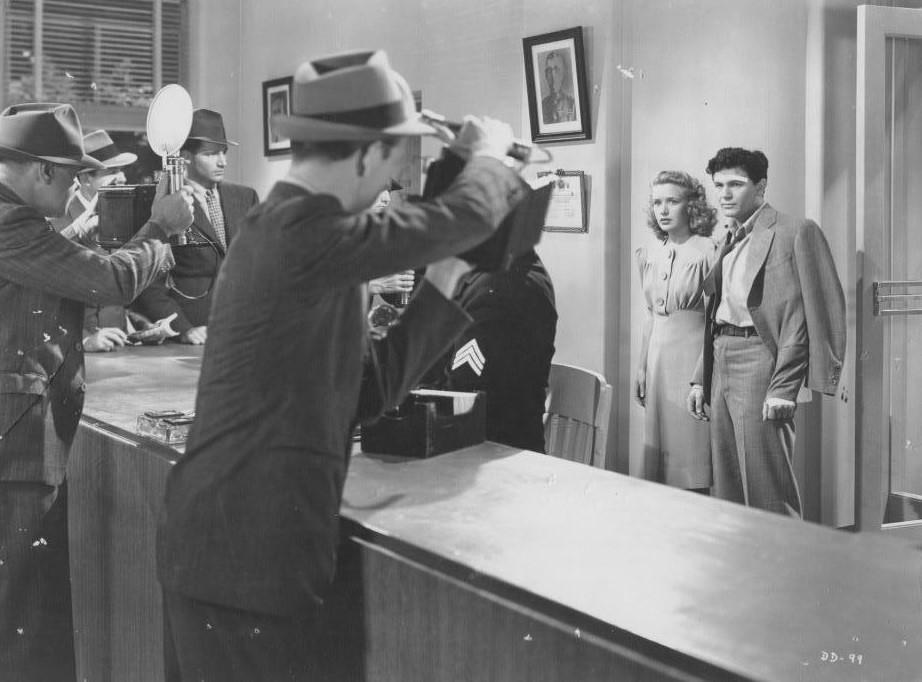
This wedding scene is heart-wrenching for a different reason than the others on this list. Rather than a respectful wedding ceremony, it’s the worst that could be imagined. The scene is ridiculed with laughter by an audience of rowdy spectators.
Joe Bell (John Garfield) is bitter after serving 16 months in jail for a burglary he didn’t commit. He’s barely out of prison when he runs into trouble again and is once more sentenced unfairly, this time to 90 days on a prison farm.
There, he meets and falls in love with Mabel (Priscilla Lane), the sweet stepdaughter of the brutal, drunken foreman (Stanley Ridges). When a fight with Joe results in the foreman’s death, Joe and Mabel go on the run.
In the next town, they wait on the steps of the city hall to get married. Promoter Caruthers (Frank McHugh) finds them and offers them a wedding ceremony, a set of dishes, and a month’s free rent in an apartment if they get married live onstage. Unable to pass up such an offer, they agree.
As a crowded audience hoots, hollers, and even heckles the proceedings, a justice of the peace performs a rather uninspired ceremony. Caruthers bounces around them with a camera, taking photos from every possible angle, as the mortified couple struggles through the vows.
The highlight of the ceremony is when Joe places the ring on her finger, softly repeating the officiant’s words: “This ring signifies my constant faith and abiding love.”
‘Thunder in the East’ (1952)
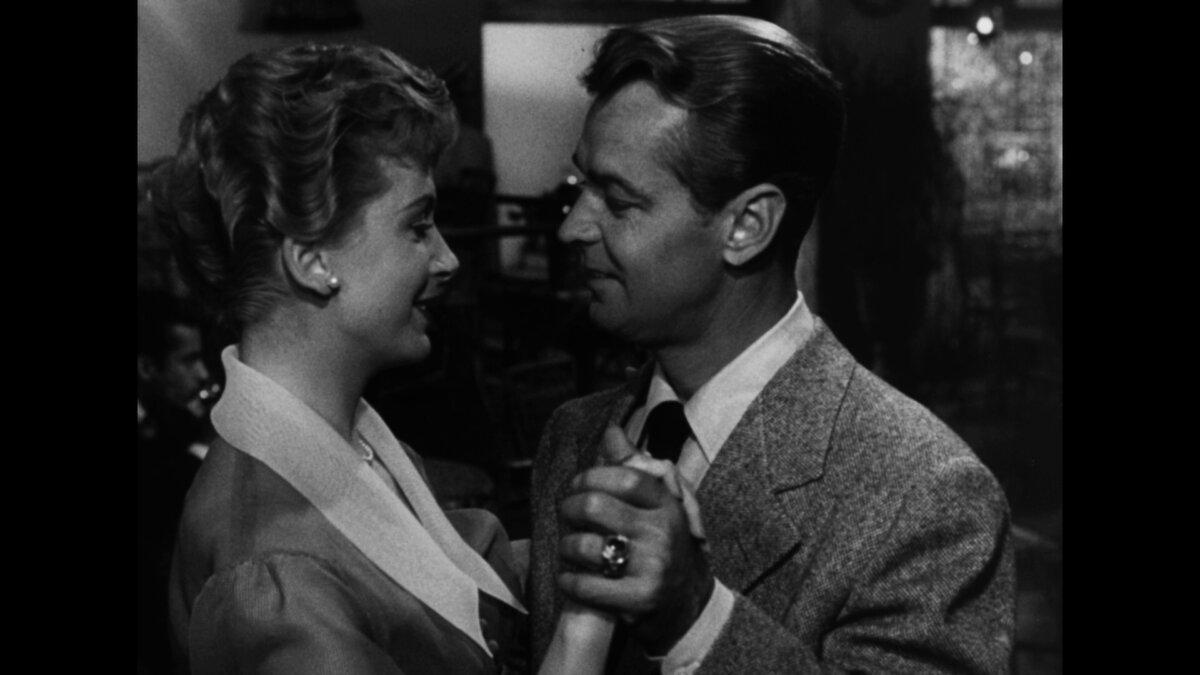
The final film on the list takes place amidst peril and stands out as one of the most moving wedding scenes on film. It’s also memorable for the unique relationship between the two characters and the heartrending disability one of them suffers.
American arms-dealer Steve Gibbs (Alan Ladd) is in Ghandahar, India, shortly following its independence in August 1947. Amid civil warfare, he’s been trying in vain to sell his merchandise to anyone who’ll purchase it, whether government official or outlaw.
He meets and falls for Joan Willoughby (Deborah Kerr), a blind British settler with a strong allegiance to the Indian people.
When his plane is the only way out for the settlers hoping to escape the war, Steve drives Joan away by insisting the stranded settlers pay him for passage. When Joan still refuses to leave after he changes his mind and offers to help for nothing, Steve returns to die with her. Joan forgives him, and he asks her grandfather, Rev. Willoughby (Cecil Kellaway), to marry them.
As Joan stands with her hands clasped in Steve’s, tears shining in her unseeing eyes, her grandfather performs a very simple ceremony. He doesn’t even bother to use their full names. As he sadly speaks the words, “so long as you both shall live,” all know that this may only be a few more minutes. Nevertheless, the pair promise their love and fidelity through all life’s storms with the gravity those vows deserve.
Sacred Vows
Classic films upheld the sanctity and beauty of marriage for a reason. The Motion Picture Production Code was officially in place from 1930 to 1968. Joseph Breen’s term from 1934 to 1954 ensured that this sacred state was never disrespected or treated flippantly. Even as late as 1964 in “Father Goose,” this beautiful tradition could still be seen.This June, let’s remember that true meaning by watching one of these beautiful films celebrating traditional marriage, which are just a few examples of heartrending wedding scenes.