The artistic quality of films made during the first half of the 20th century is undeniable, and cinephiles are often curious about the people who made them.
Movie moguls, the powerful men who ruled the emerging film industry are particularly of interest. One of these men is Louis B. Mayer, the top executive of Metro-Goldwyn-Mayer (MGM).
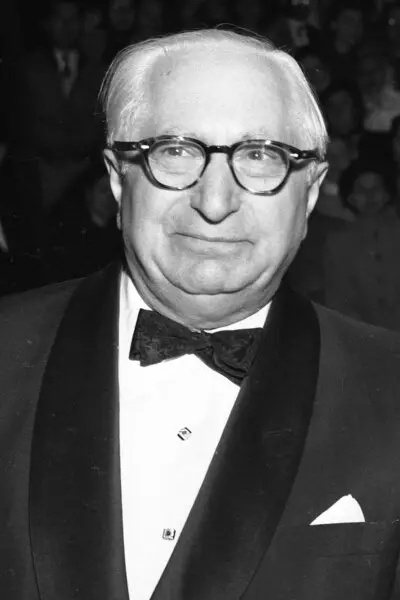
Mayer was born Lazar Meir in Dumier, a city in the Russian Empire in modern-day Ukraine, on July 12, 1884, but he always claimed he was born in Minsk, a city in modern-day Belarus, on July 4, 1885.
One of three children, Lazar came from a very poor family that fled Russia because of Jewish persecution. Upon emigrating to Canada in the early 1890s, his father changed the family named to Mayer, and Lazar became Louis, later adding the middle initial B.
Mayer spent his childhood in Saint John, New Brunswick, helping his father collect scrap metal to sell. At 19, he moved to Boston, where he began working odd jobs, got married, and had two daughters.
Film Distributor
Within four years, his little rundown theater business had expanded into six theaters in Haverhill; he also built his own 1500-seat auditorium, the grand Colonial Theater. In 1915, he bought the New England distribution rights to D. W. Griffith’s “The Birth of a Nation” (1915), which made him a fortune. Mayer was becoming one of the biggest movie distributors on the East Coast.

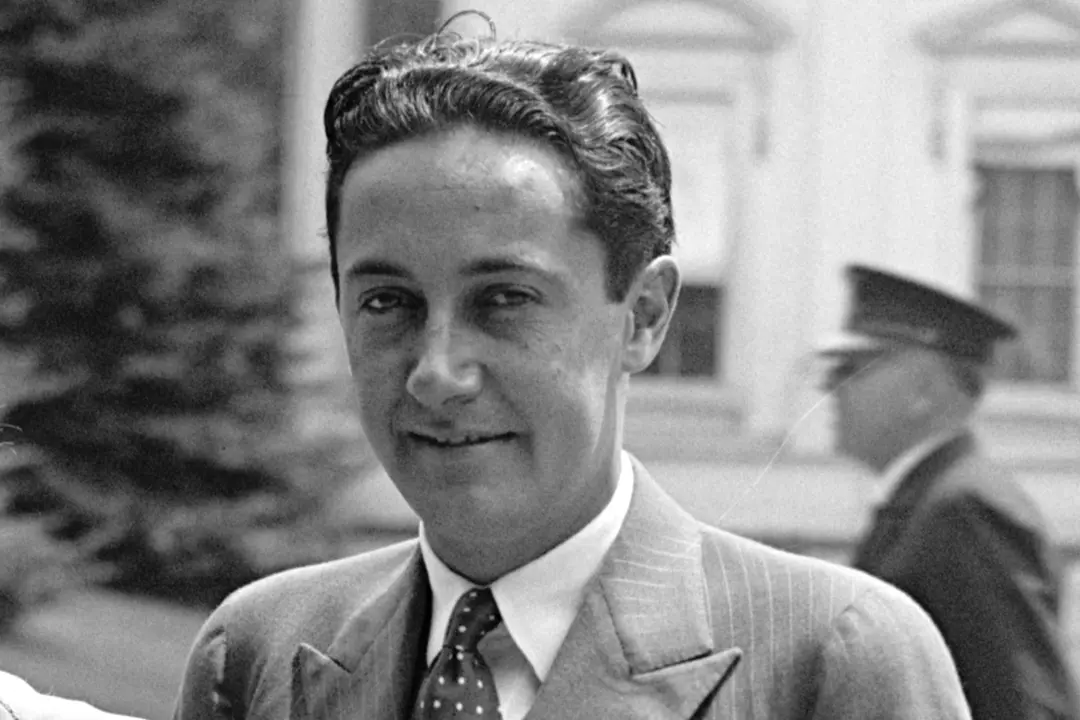
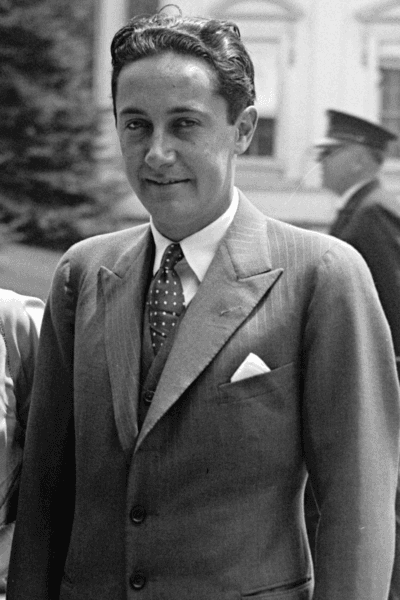
In 1918, Mayer moved out west to stake his claim in Hollywood. He formed his own silent film production company, Louis B. Mayer Pictures. In 1923, he found the partner who would help him make this venture a true success. He hired boy wonder Irving Thalberg as his vice-president. Just having left Universal Pictures where he was the head of production, the 23-year-old producer became like a son to Mayer.
The Beginning of MGM
In 1924, Marcus Loew, the New York owner of the Loew’s chain of theaters, merged his two new holdings, Goldwyn Pictures and Metro Pictures. He needed someone on the West Coast to oversee the new company.Loew was impressed with Mayer’s success as a producer and businessman. He hired Mayer as head of studio operations, soon adding his surname to make it Metro-Goldwyn-Mayer. Once Thalberg’s role at the company was negotiated, the two men took on the difficult task of blending the two companies’ disparate styles to make one studio that would supply Loew’s theaters with a reliable stream of high-quality films.
The new company salvaged two disastrous productions begun before the merger: “Greed” (1924) and “Ben-Hur: A Tale of the Christ” (1925).
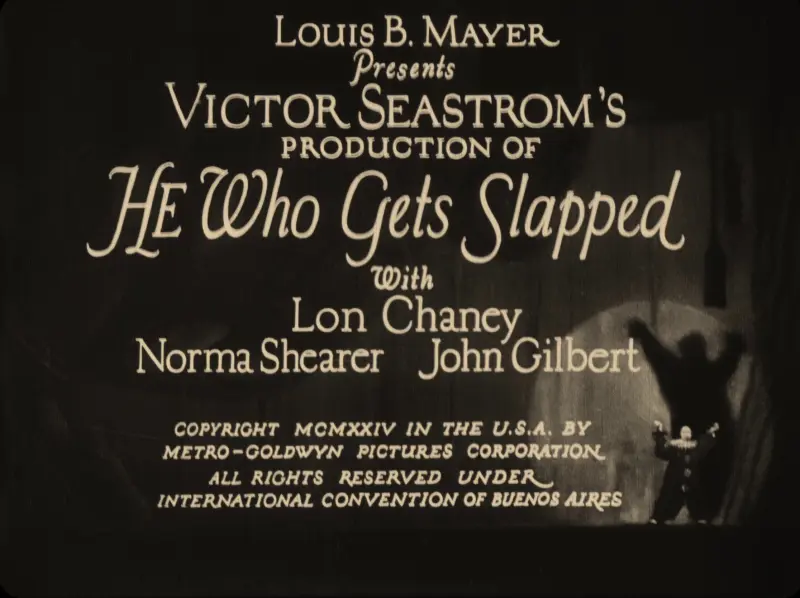
MGM got a fresh start with its first new production, the Lon Chaney vehicle “He Who Gets Slapped” (1924). The next year, they produced a huge war picture aptly titled “The Big Parade,” which made $18-22 million and remained the studio’s top-grossing film for 14 years, until “Gone With the Wind” in 1939.
Throughout Hollywood’s Golden Era, MGM would be the gold standard of moviemaking, and Mayer was at the helm. It was the only studio to flourish during the early years of the Great Depression. While Thalberg was detail-oriented, Mayer focused on the big picture.
The Lion of MGM
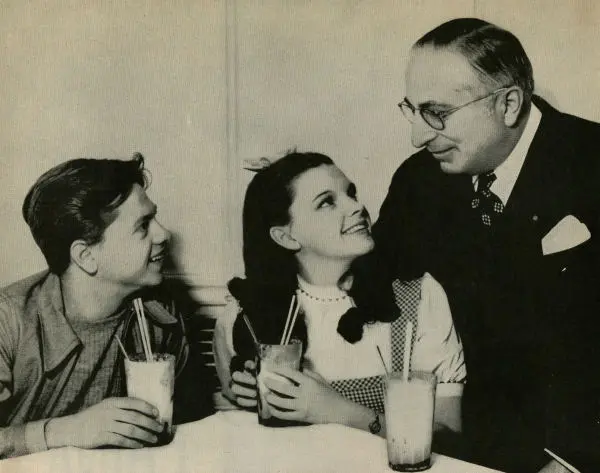
During Hollywood’s heyday, MGM perfected the studio system to a science. The studio had the biggest and most impressive “stable” of talent, from stars to bit part actors, as well as the greatest directors, producers, costumers, composers, and set designers. There were doctors, dentists, and chiropractors on staff at all times. MGM had a bigger police force than Culver City itself. One could basically live on the lot, since everything was on hand.MGM wasn’t just a company; it was a family, and Mayer was the father. Whether it was a healthy or dysfunctional family depends on whom you ask. Some actors described Mayer as a monster, while others recalled him as a loving mentor.
It was a common joke around MGM that Mayer was the best actor on the lot. He was known for his very emotional, theatrical responses, as he would beg, threaten, or even cry to make an impression.
Some actors saw through his antics. But longtime MGM player Robert Taylor reportedly was so moved by his tearful fatherly advice about working for the good of the company that he remained one of the lowest-paid stars in Hollywood during his long tenure at MGM.
Mayer’s ideal was heroic men, virtuous women, and saintly mothers. Because he was close to his own mother, he was particularly insistent that maternal characters be depicted in a respectful light.
The End of an Era
Mayer made one of the best deals in Hollywood history when he arranged for MGM to distribute his son-in-law David O. Selznick’s Civil War epic “Gone With the Wind” (1939).The film featured many of MGM’s performers, including leading man Clark Gable. The film ended up sweeping the Oscars and becoming the highest-earning film in history when adjusted for inflation.
However, as the 1940s wore on, Mayer’s feel-good musicals and family films seemed behind the times in a post-war world. Nicholas Schenck, Loew’s successor and Mayer’s longtime nemesis, began giving more authority to daring producer Dore Schary.
To Mayer’s outrage, Schenk approved Shary’s productions of dark and daring films “Battleground” (1949), “The Asphalt Jungle” (1950), and “The Red Badge of Courage” (1951), all over Mayer’s objections.
After the last film went into production, Mayer was so offended that he submitted his resignation. Certain it would be refused, he intended to show Schenck that he wouldn’t take such treatment. Schenck called his bluff and accepted his resignation. Mayer found himself ousted from his own company and spent the last six years of his life denouncing the direction the struggling MGM was taking.
Whether or not MGM was an idyllic family behind the scenes, Mayer was determined that the product they presented would be something uplifting and beautiful for Americans to enjoy.