While Philadelphia abounds in noteworthy early American history, pastoral and vegetatively lush Berks County, Pennsylvania, about an hour’s drive from the big city, is known more for commercial farming. Seas of corn and wheat fields extend to endless horizons, silos are the only skyscrapers, and dairy cows line up a few times a day to be relieved of their milk.
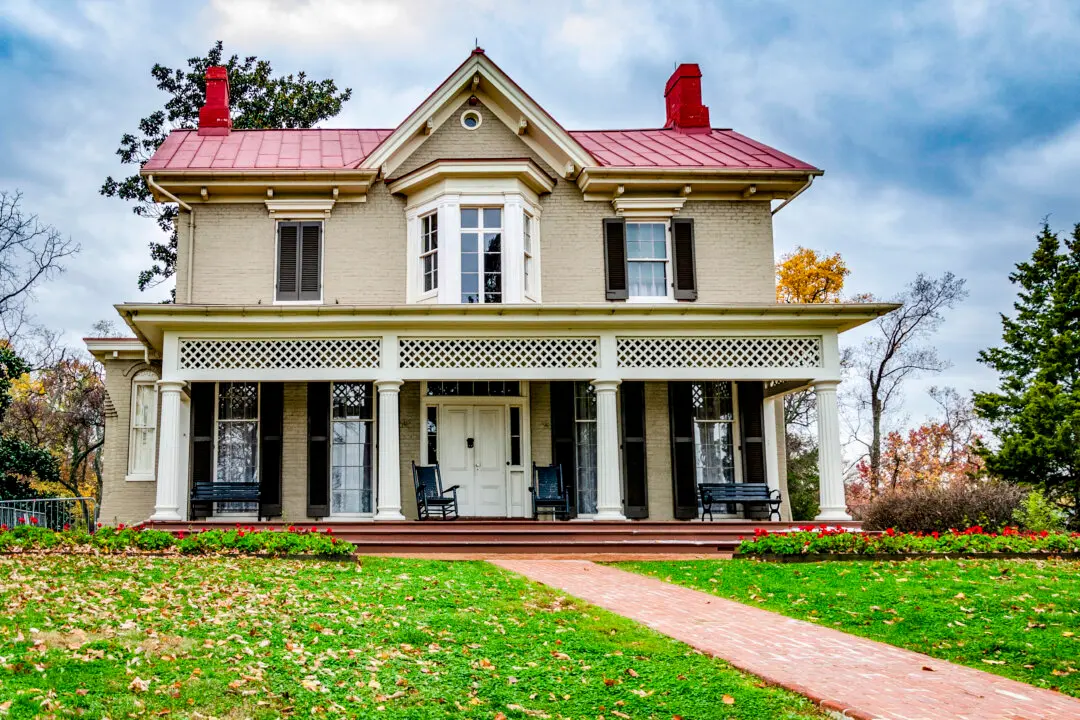
However, nestled in the curve of a rural road is a significant historical site. Thomas Rutter’s mansion is a tangible reminder of both Pennsylvania’s first iron forge as well as Underground Railroad, a spot of relief for enslaved people fleeing the South over a century later.
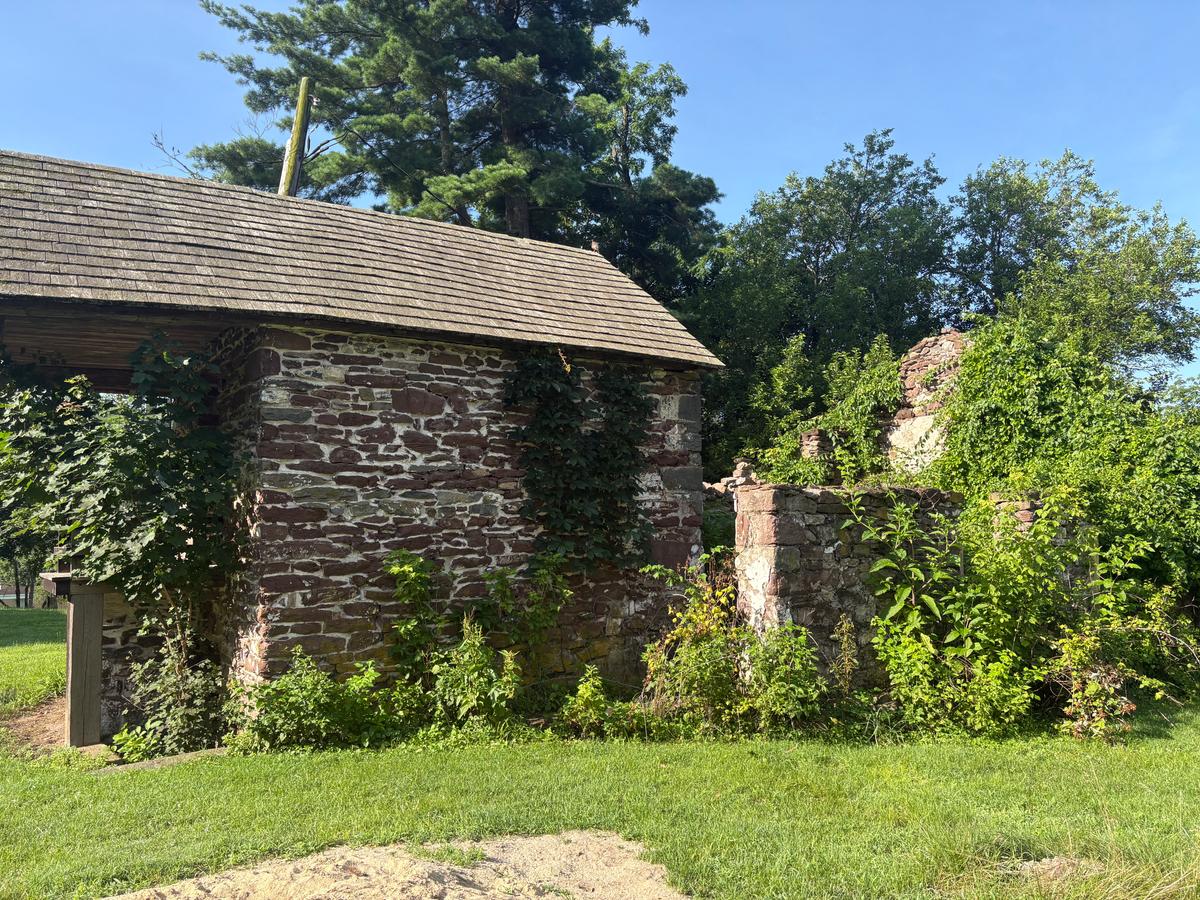
There are many outbuildings around Pine Forge. Deena Bouknight
Industry Blooms in an Unlikely Place
Like many Quakers seeking a new life in a new world, Rutter (1660–1730) emigrated from his native England to Pennsylvania. He came in his early 20s. He married and was granted 300 acres on the Manatawny Creek in Berks County by Governor William Penn in 1715. Five years later, Rutter, trained as a blacksmith, had expanded his land holdings by 1,500 acres due to his establishing Pennsylvania’s first bloomery, or iron furnace—for the purpose of forging wrought iron.The rural landscape provided Rutter with an abundance of the materials needed to succeed as an ironmaster: ore, wood for making charcoal, and water. Thus, Rutter’s bloomery thrived.
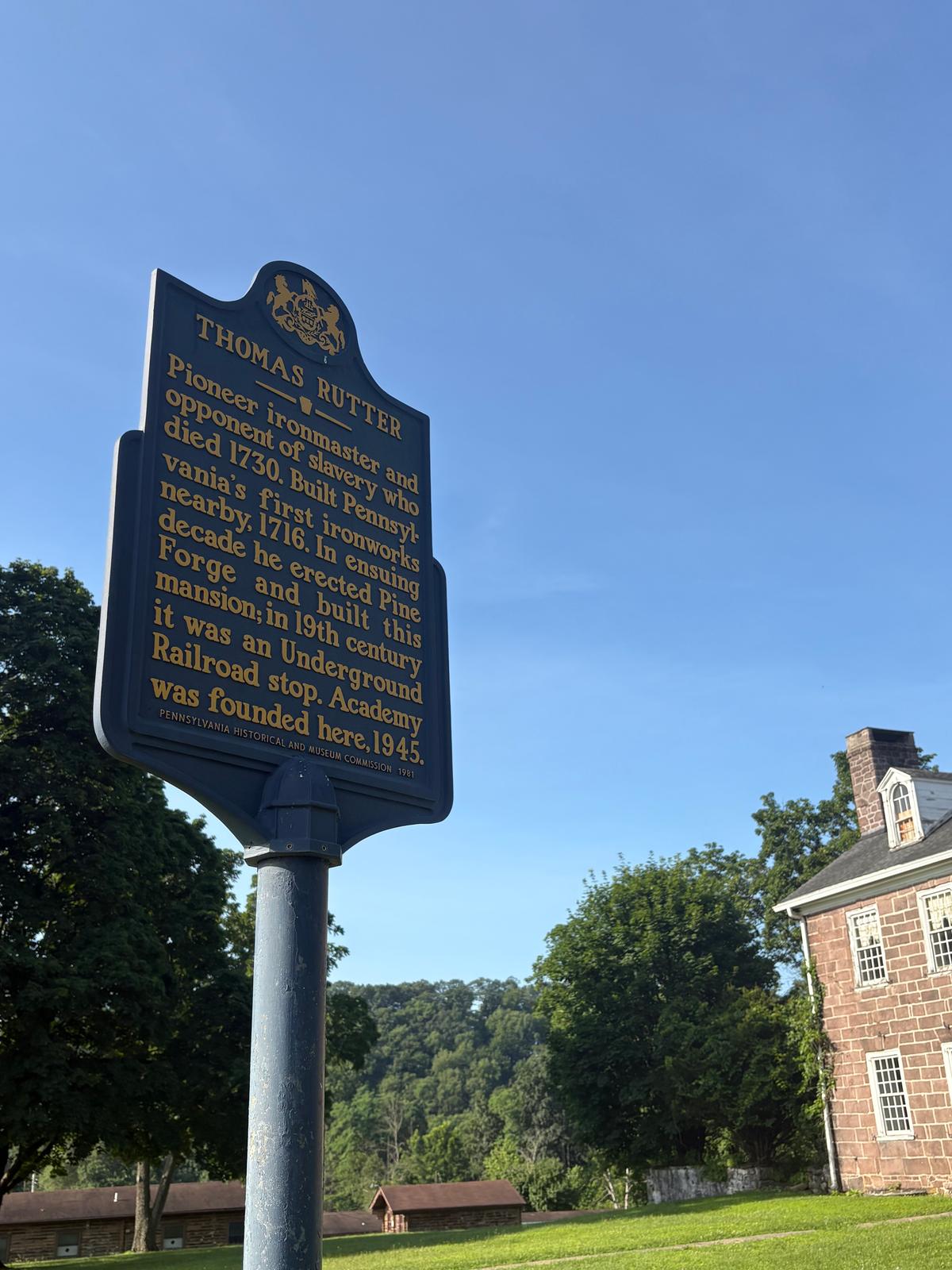
A sign telling the history of Rutter's home and land. Deena Bouknight
In 2021, Daniel Graham, a researcher focusing on Pennsylvania’s early iron history, authored a book on Rutter’s contributions. He wrote: “When he blew the spark of life into it [his forge], the vast iron and steel industry of Pennsylvania was born.”
Rutter constructed several buildings on his land out of readily available fieldstone: a Colonial-style house, an outdoor kitchen, a smokehouse, root cellar, and storehouse. Underneath the house are tunnels, constructed as hideaways in case of attacks by Native Americans. Additions to the home were made over the years, including a two-story add-on featuring chiseled stone block instead of stacked and mortared stone.

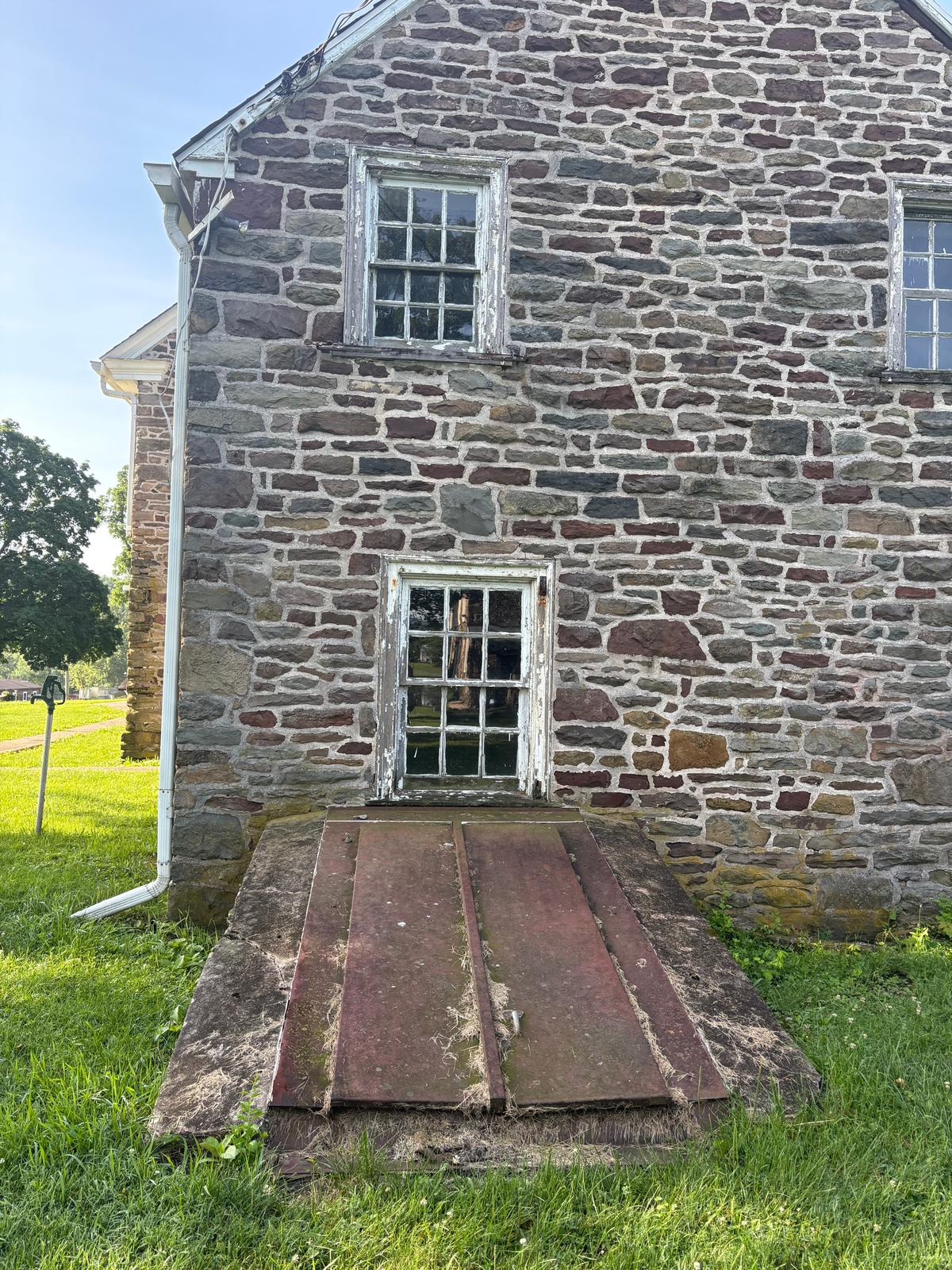
Many additions to the home were made over the years, but the most important was the network of cellars that hid escaped slaves. Deena Bouknight
The large residence and its tunnels ultimately served to carry out another important aspect of Rutter’s legacy—as an abolitionist. Rutter supported antislavery measures during Quaker meetings verbally, as well as in writing. He added his signature to an antislavery tract written Aug. 13, 1693, by George Keith titled “An Exhortation & Caution to Friends Concerning Buying or Keeping of Negroes.”
Generations of Rutters lived in the home, but in the 1800s, it provided refuge and security for escaped slaves attempting to reach Canada. Then, in 1945, the home was used as a school to educate primarily black students. Rutter’s estate was listed on the National Register of Historic Places in 2004.
A Lasting Legacy
Rutter died in 1730, but his forge was so well established, thanks to the burgeoning colony’s need for ironwork and tools, that it was acquired by investors. The resultant business was named Pine Forge and continued operating into the mid-1800s. Although the forge was torn down after it was no longer in operation, Rutter’s home still stands. Annually, a local historical society recognizes Rutter’s role in the state’s iron-making tradition.The Douglass Township Pine Forge Road home is in need of restoration and preservation. These are ongoing efforts of various societies.
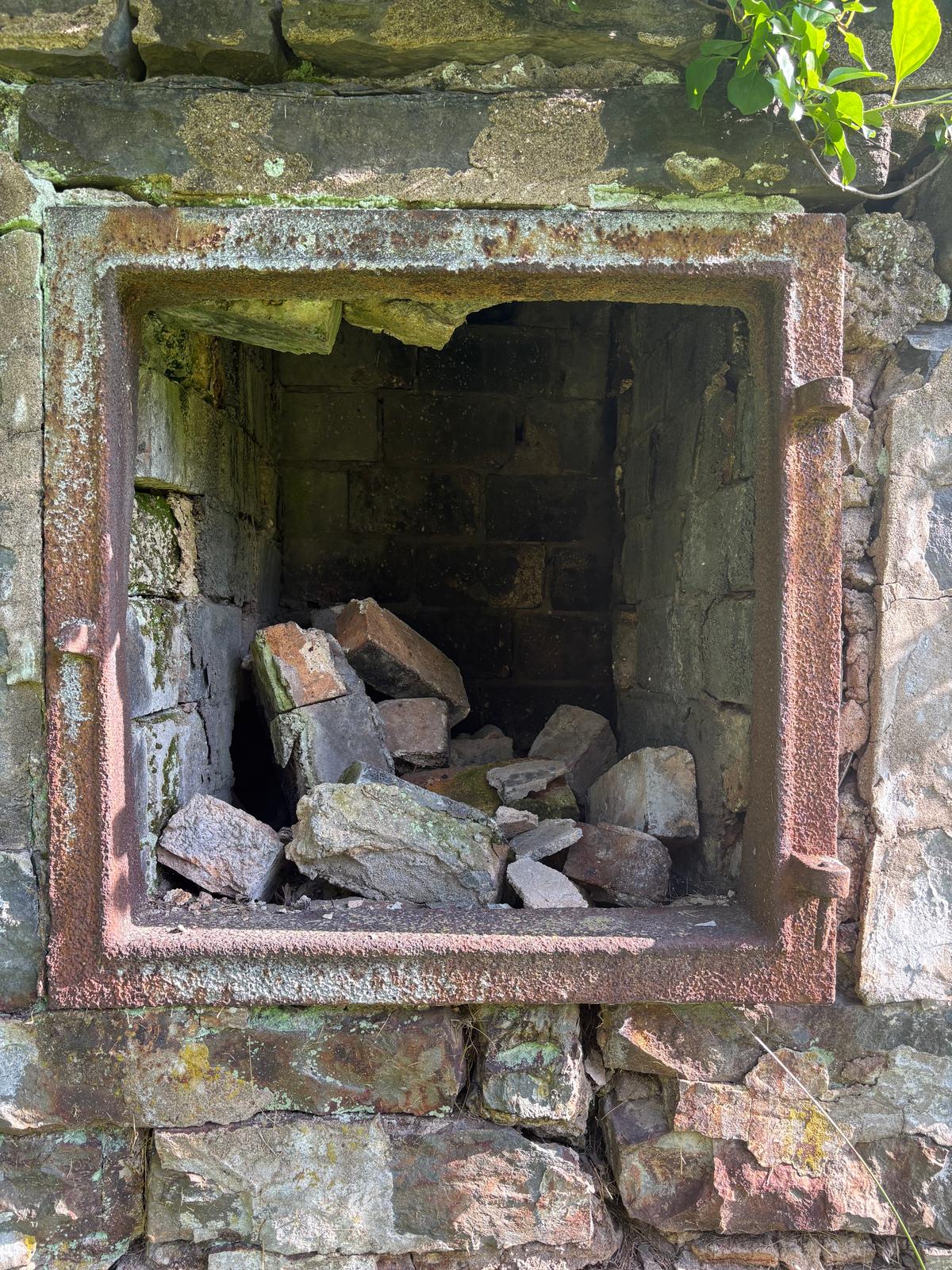
The opening to a furnace is still preserved. Deena Bouknight
While many people seek out Philadelphia for its history, as well as nearby Lancaster County, Pennsylvania, for its Amish farms, pristine countryside roads, and covered bridges, it behooves history fans to meander to where Thomas Rutter made history. His estate clearly exudes 300-plus years of important American history.
What arts and culture topics would you like us to cover? Please email ideas or feedback to [email protected]