The Library of Congress (LOC) in Washington is the world’s biggest library. It is also home to the world’s largest flute collection. The extensive assortment spanning almost 1,700 instruments was curated throughout the late 19th century and early 20th century by Midwest physicist and flutist Dayton C. Miller (1866–1941). The historical flutes and various other woodwinds within the collection are a doorway not only to music but to the past.
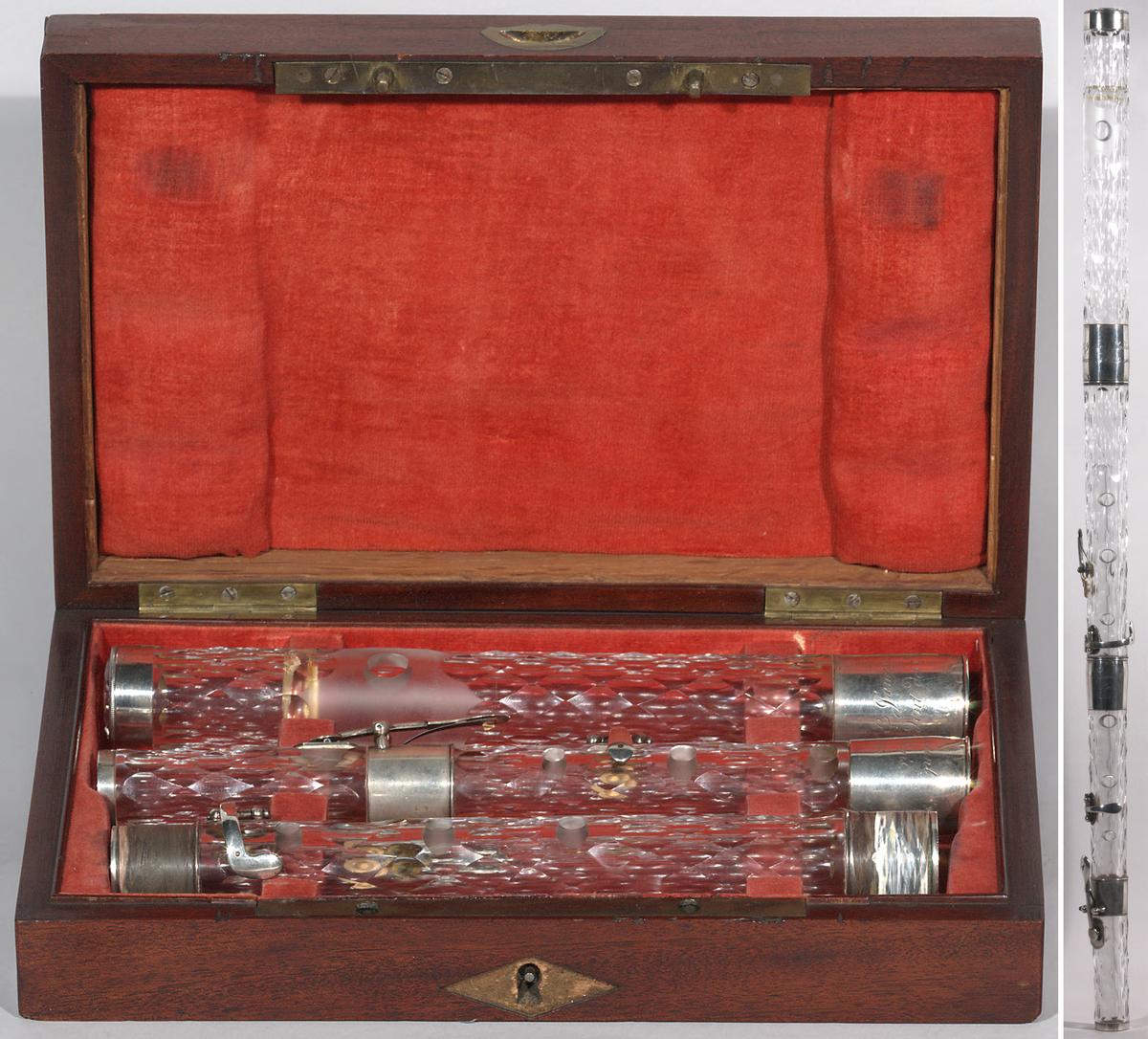
The 18 glass and crystal flutes housed at the LOC all originated in the workshop of notable Parisian flute innovator Claude Laurent. One crystal flute in particular was constructed as a gift for President James Madison in 1813. Other instruments offer glimpses into American military history and European history. LOC’s Chief of the Music Division, Jon Newsom, explained that Miller viewed his gathering of flutes, fifes, and piccolos as the preservation of “invaluable historical documents”—some of which are tied to a U.S. veteran who became one of the country’s foundational composers.
‘The March King’
Several instruments in the Dayton C. Miller collection are traced back to historic band leader and Marine Corps veteran John Philip Sousa (1854–1932). He not only served as the leader of the U.S. Marine Band from 1880 to 1892, but also fronted his own group that was simply referred to as the Sousa Band or Sousa’s band. He was given the nickname “The March King” for penning 130 military march songs.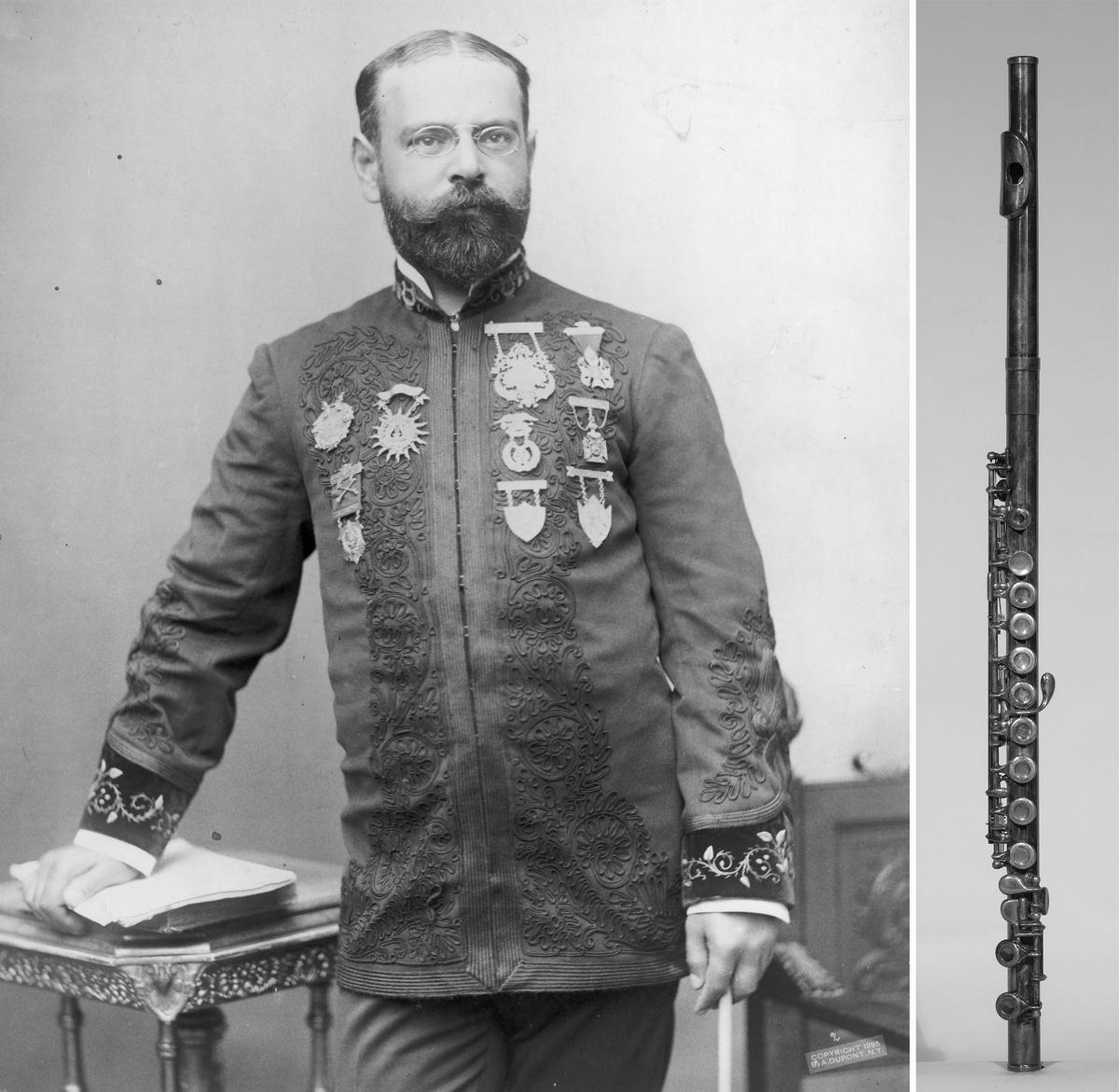
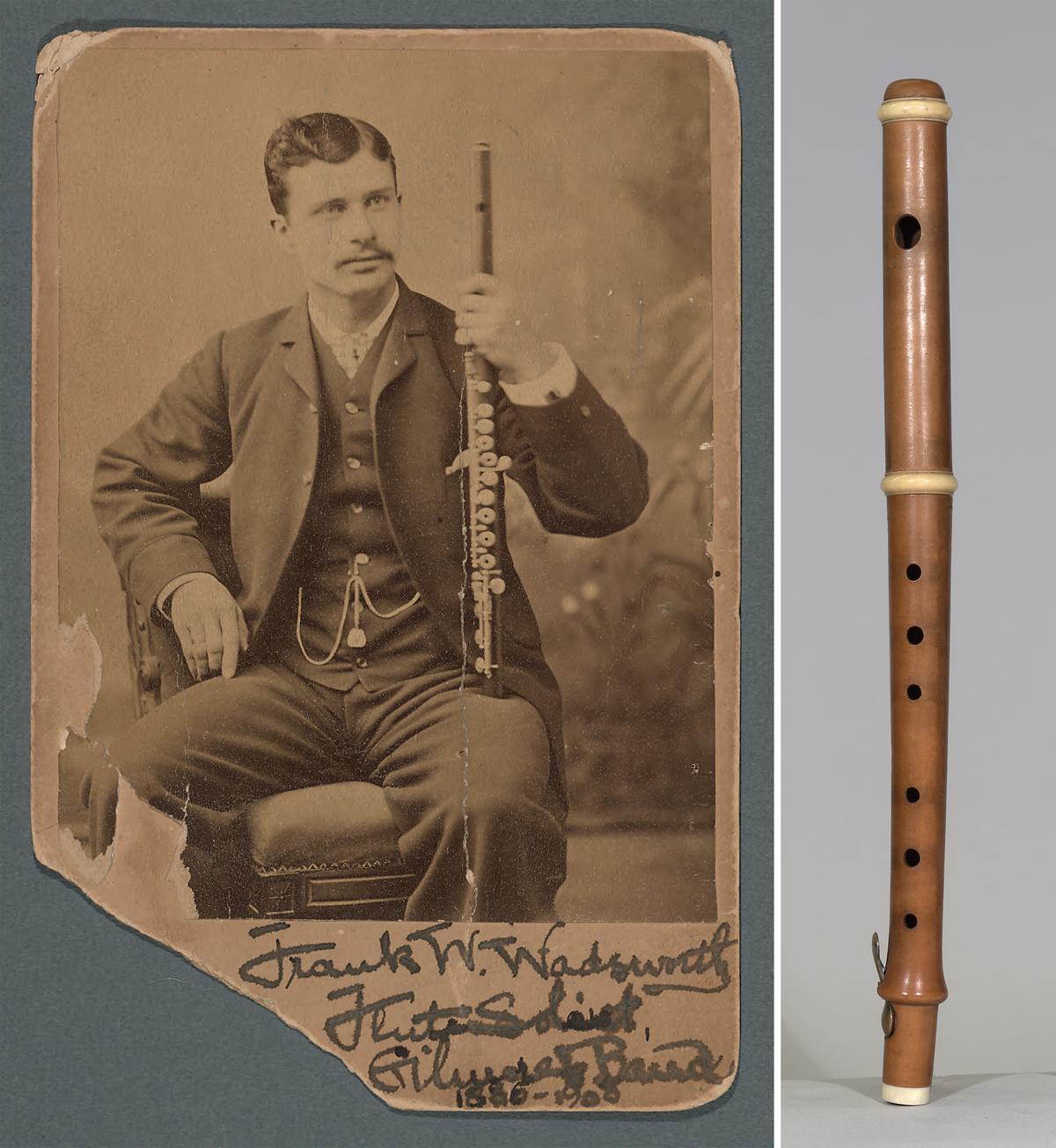
Flutes and other woodwind instruments complemented his musical style, and he was no stranger to the bright, high-pitched sound of the piccolo. Sousa’s band flutist, Frank Wadsworth, was also a piccolo player. The collection features the piccolo he played, which came from Boston musical instrument manufacturer John C. Haynes in 1897, for the first public performance of Sousa’s signature work, “The Stars and Stripes Forever.”
While many of the collection’s instruments offer a look into historic American music styles, some of the instruments also hail from across the pond. An Irish Union bagpipe, known by its technical name as uilleann pipes, is featured in the collection. Liverpool instrument maker Michael Egan built it in 1845 before he immigrated to New York several years later.
Uilleann pipes are a national symbol in Ireland. They represent the country’s time-honored love of music. Historically used for the arts, from dancing and singing to storytelling, this type of bagpipe is softer in volume and more gentle in tone than the larger Scottish Great Highland Bagpipes. Uilleann pipes are powered by a manual pump called a bellows that takes away the need for a musician to blow through the blowpipe. It allows simultaneous singing and playing.


Miller’s impressive flute and woodwind collection features the work of around 460 American and European instrument makers; it also includes his personal archive of materials covering rare books on music, more than 10,000 pages of sheet music, photos and catalogs, patents, and various memorabilia. “In view of all this,” the LOC noted, “it may be fair to say that Miller gradually developed the largest private collection of diverse objects ever assembled pertaining (mostly) to one subject in the musical arts.”
But for Miller, his private collection was about more than music. It was also about preserving and honoring artistry, craftsmanship, and history:
Discovery and Innovation
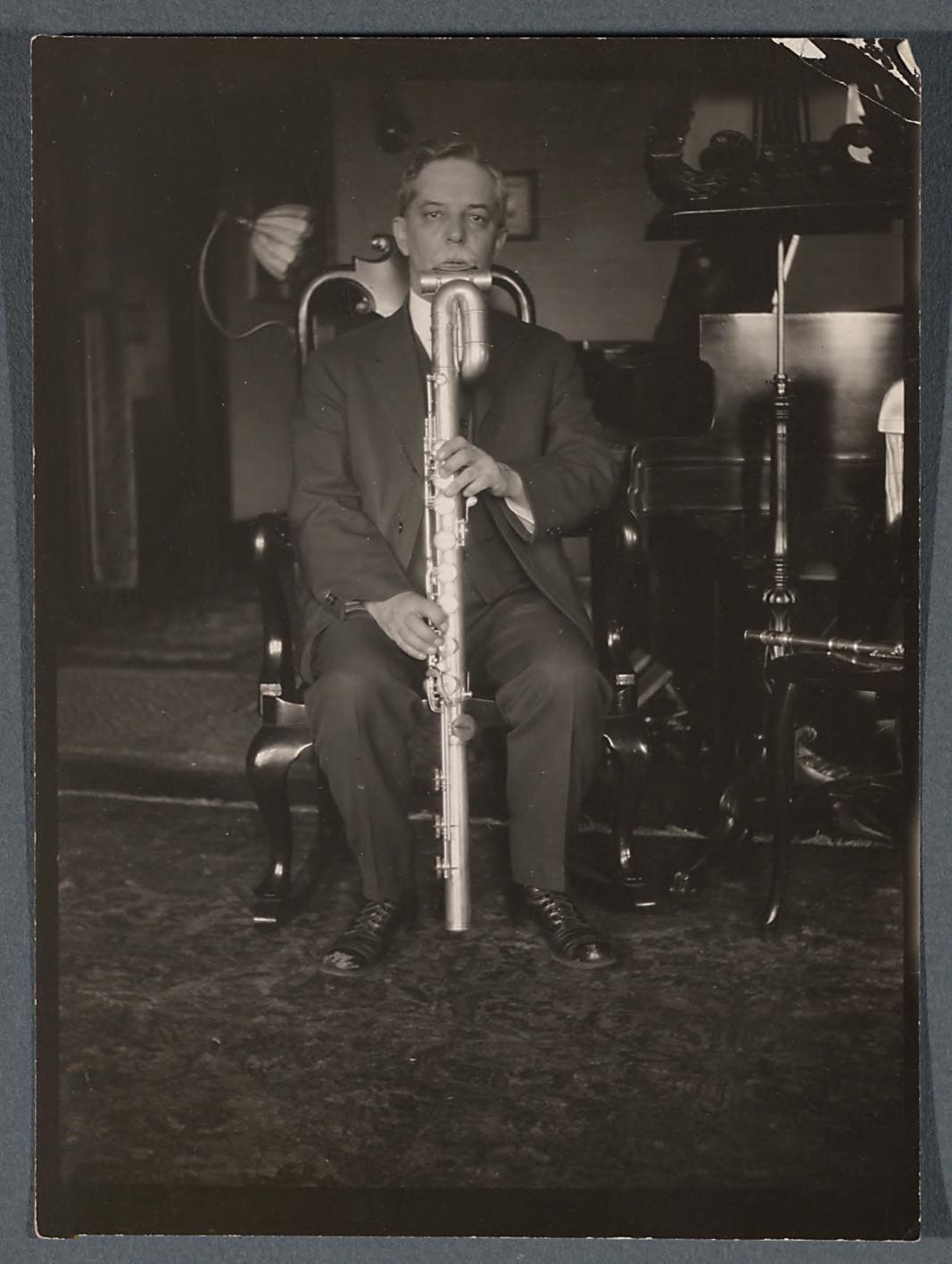
While growing up in Ohio, Miller combined his love of music with his love of science. At his graduation from the former Baldwin University, he played a solo on his flute accompanied by an orchestra. After earning a doctorate in astronomy from Princeton University, he became a physicist and worked at Case School of Applied Science in Cleveland for more than 50 years. He became known as an acoustician, or someone who studied the science of sound.
His innovative side produced a 1908 invention called the “phonodeik,” one of the first devices capable of rendering a visual image of sound waves, creating the opportunity to measure all kinds of sounds, from music to speech. His work as an acoustician and scientist prepared him to study and write about the effects of shell shock after World War I. He even became one of the first people to take an X-ray photo in America.
Miller’s 75 years were full of discovery and innovation, but his collection of flutes and various woodwind instruments was a later-in-life project that turned into a lasting passion. “It is interesting to note that a great part of the collection, close to 85 percent, was acquired after Dr. Miller had passed his fiftieth birthday,” wrote the LOC’s Laura E. Gilliam and William Lichtenwanger in a 1961 reference book. Many of the instruments came under the LOC’s care shortly after Miller’s passing in 1941.
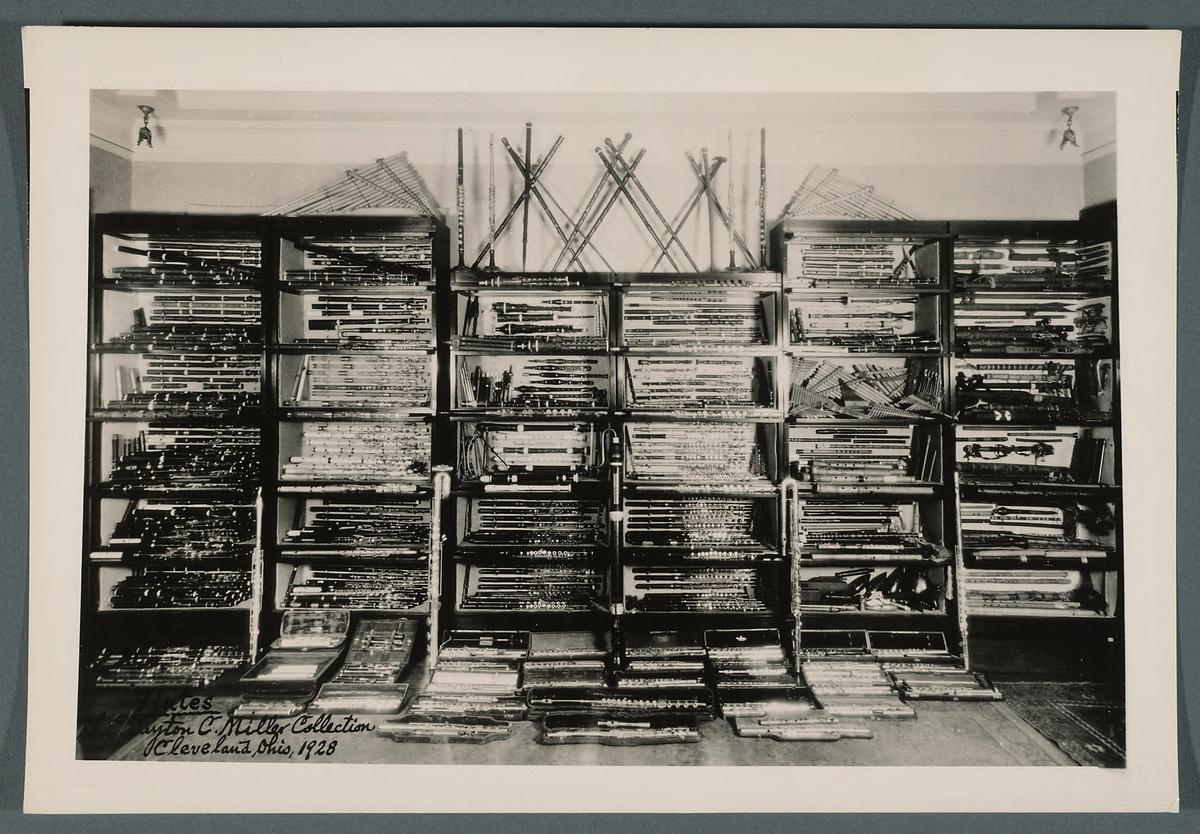
Ultimately, Miller’s insatiable inquisitive nature resulted in the procurement of one of the most unique and exhaustive collections of musical instruments today. “No one better exemplifies the traditional concept of the practical-minded, ever-curious American scientist than Dayton C. Miller,” Gilliam and Lichtenwanger wrote.