R | 2h 17m | Drama, Biopic | 2025
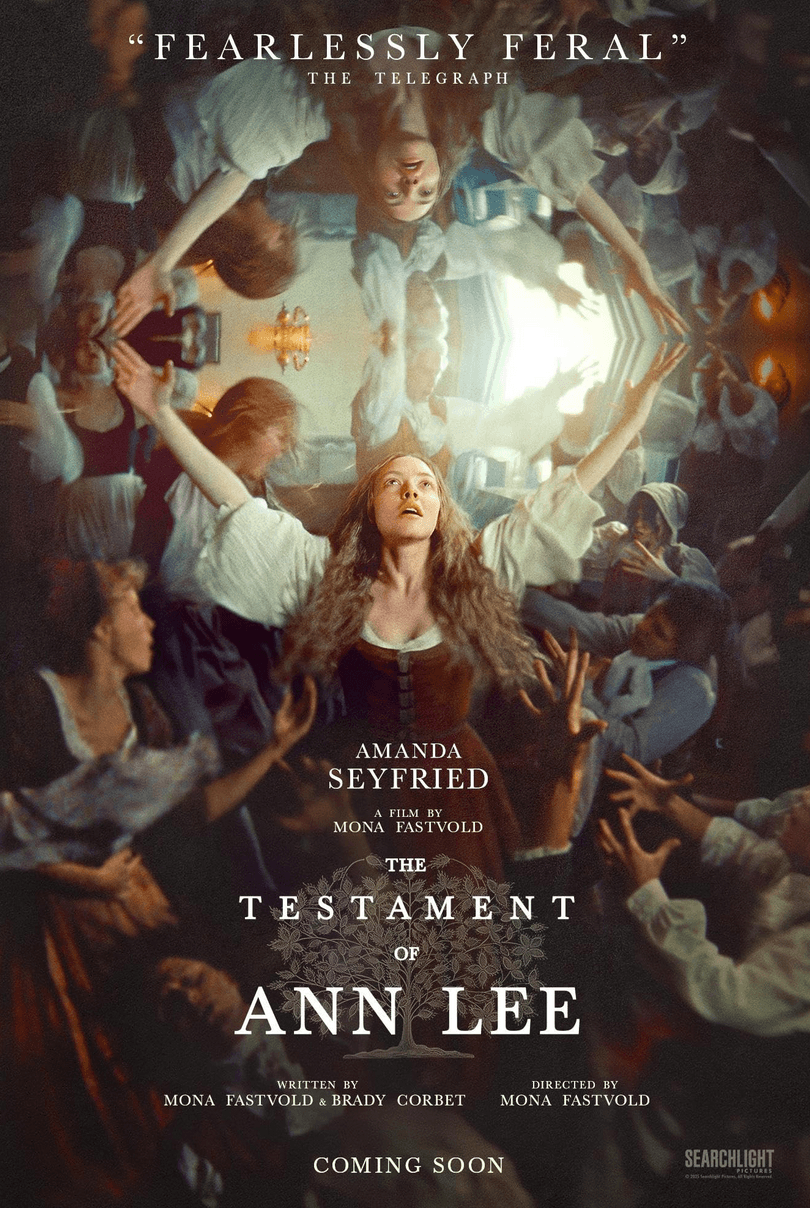
“The Testament of Ann Lee,” the third feature film by Norwegian director Mona Fastvold, is a biopic about “Mother” Ann Lee (Amanda Seyfried), the titular founder of the 18th-century evangelical religious group known as the “Shakers,” an offshoot sect of the Quaker religion.

The film spans Lee’s childhood in 1740s-era Manchester, England, her spiritual awakening, her imprisonment for proselytizing, her pilgrim-like ocean voyage to upstate New York, her founding of American Shakerism, and her death.
That’s a tremendous amount of ground to cover, geographically, plot-wise, and tonally. Compliments of the Broadway aspect, “The Testament of Ann Lee” tries to have something for everyone, meaning audiences will most likely either love it or hate it.
Being a bit of a geek-aficionado regarding the topic of salvation, I was torn. I wasn’t aware of Lee’s story, and quite a few of her portrayed experiences tick the archetypal path-to-salvation boxes, but wild horses can’t drag me to Broadway even though I live five minutes away from it.

Shakerism
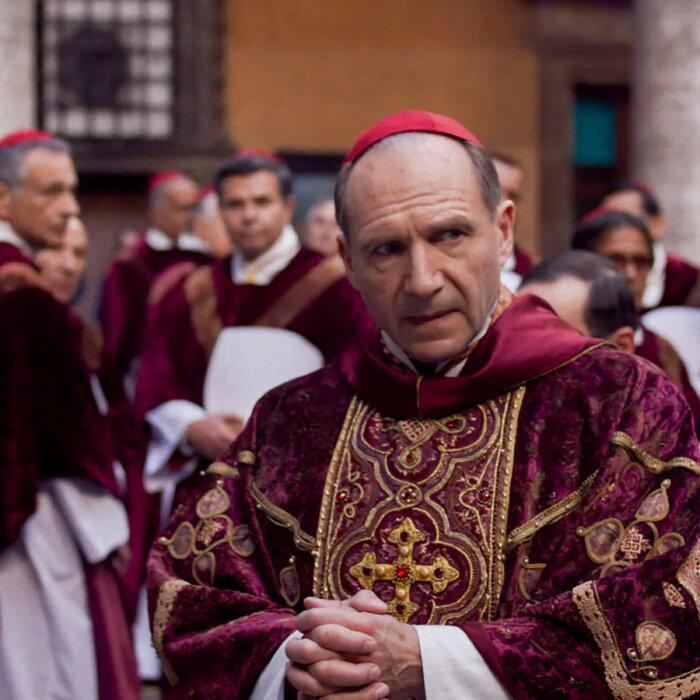
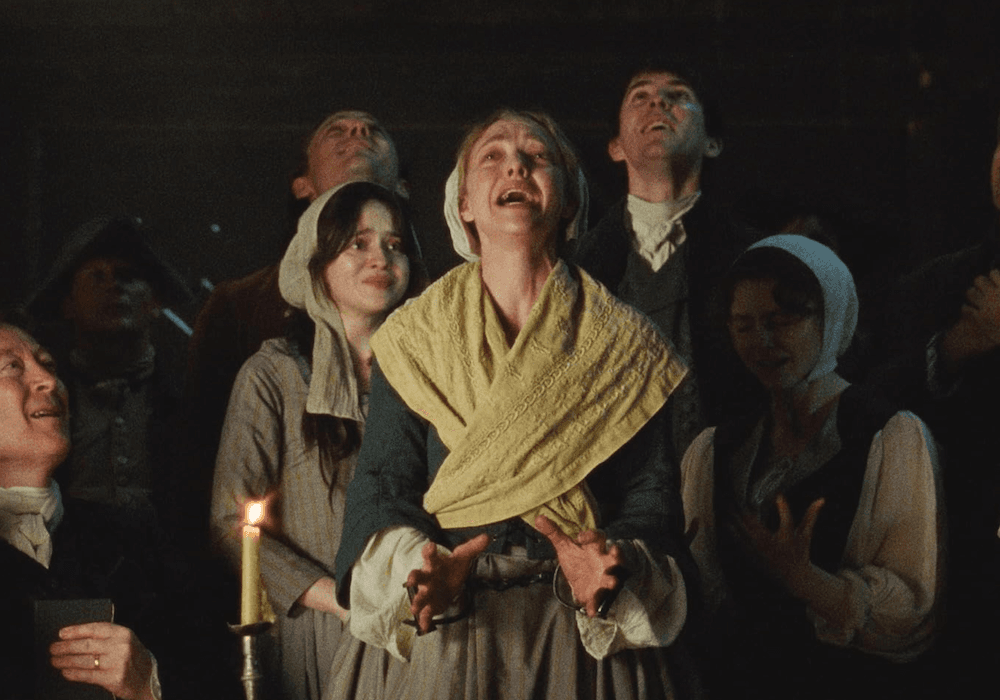
Unlike other faiths, which attempt to access the sacred through traditions and symbolism, Shakerism touts a belief in a corporal connection to God, through His incarnation in the human body of Jesus Christ. It’s specifically named for the shaking, trembling, and whirling that its practitioners performed during ecstatic worship services to “shake off” sin and evil. This earned them the nickname “Shaking Quakers,” later shortened to Shakers.To depict this, director Fastvold, along with choreographer Celia Rowlson-Hall, re-imagine Shaker religious practices in what might be described as mild self-afflicted harm (lots of chest-beating), bodily contortions, and prostrations, before the Almighty.
It’s unclear whether these are historically documented gesticulations, but one has to assume not, since the musical numbers are fashioned from Shaker hymns by the movie’s composer, Daniel Blumberg. The whole Shaker approach comes across as a distant, northern cousin of Appalachian Pentecostal and Holiness churches, sans the rattlesnakes and the glossolalia, but similar in its rapturous-unto-orgasmic fervency.
Seyfried
“The Testament of Ann Lee” is career-defining moment for Amanda Seyfried, who plays Ann with passionate abandon. That said, Seyfried created a public audition for herself on Jimmy Fallon’s “The Tonight Show” last March, where she played the dulcimer and sang Joni Mitchell’s “California” like a jaw-droppingly accurate Joni-clone. When that inevitable Mitchell-biopic drops, and if Seyfried is cast, that movie will likely be the vehicle that catapults Seyfried’s current mid-level stardom into the stratosphere.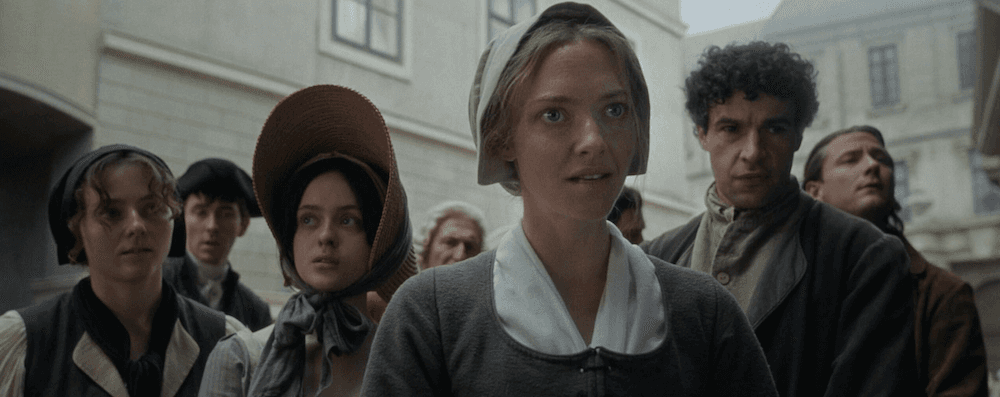
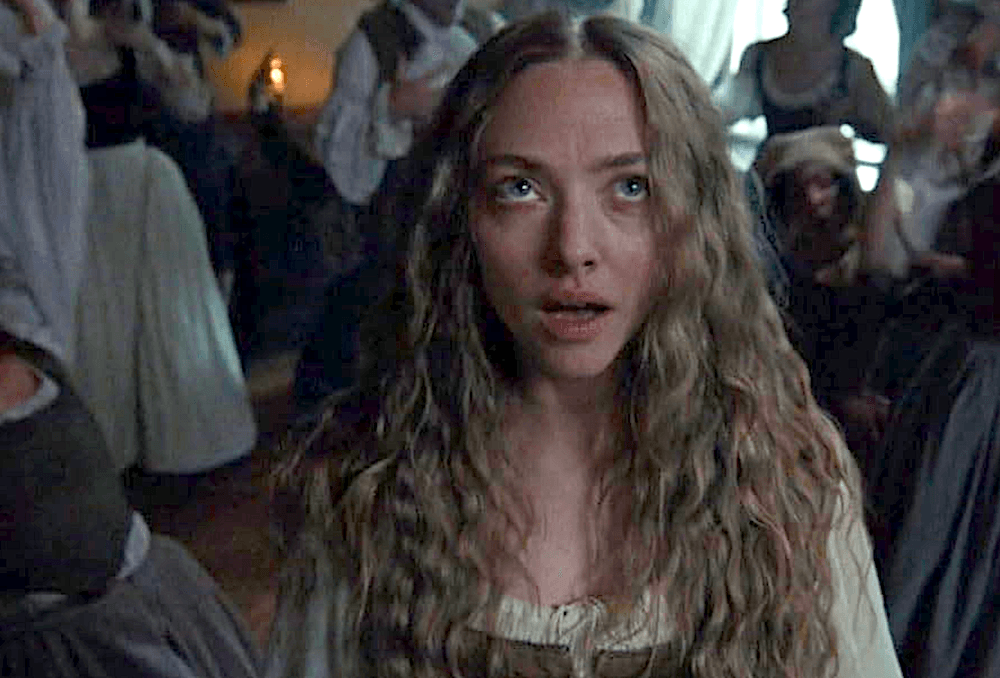
Granted, it’s a challenge to convey the mindset of someone who suffered the death of four babies. Granted also, is the fact that Seyfried’s famously large, luminous eyes convey more religious fervency than the average actress could, all by themselves.
New Religions in New England
While walking in lockstep in terms of strictness with its American religious cousin, Puritanism, Shakerism was infinitely more stringent regarding the denial of the flesh. With celibacy at the forefront of the Shaker movement, the community was denied the ability to procreate, and so slowly diminished to near obsolescence in the 19th century.The Shakers are mostly famous for their stark, finely-crafted wooden furniture. One wishes the film had focused more on this aspect instead of the conflict-for-conflict’s-sake of depicting everyone who opposed Ann as an intolerant enemy. That level of conflict is probably unavoidable though. Ann Lee clearly threw a formidable, rebellious monkey wrench into the 1800s religious zeitgeist, due to Shakerism’s destabilization of traditional marriage, the lack of gendered hierarchy in Shaker leadership, and other reforms.
It also would have been interesting to note the shared connections of the other hardcore, move-to-America, not-playing-around approaches of the early American religious movements. The Amish and the Shakers share roots in European radical reformation movements, but both emphasize simplicity, pacifism, and plain living.
Puritanism’s core tenets—influenced by Calvinism and derived from the English Reformation’s desire to weed out Catholic remnants—shaped American values like individualism, education, and a strong work ethic.
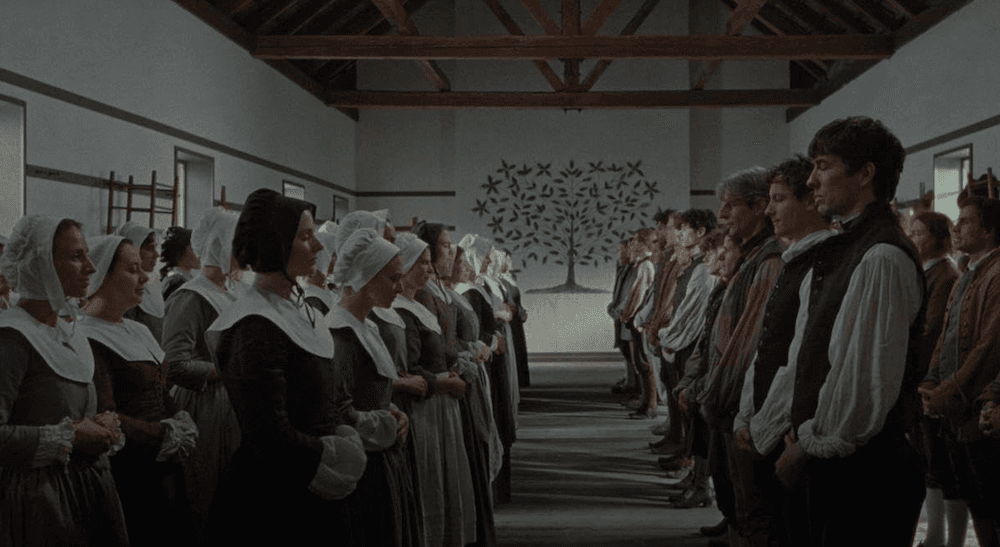
But it was this migration to New England with the intent to make religion great again, by all the various Christian sects—the melting pot of Catholics, Anglicans, Episcopalians, Lutherans, Calvinists, Baptists, Methodists, Quakers, Shakers, Moravians, Anabaptists, Mennonites, Amish, and Dunkers—that fundamentally made America great in the first place.
Why?
So, what’s the point, and who is this film for in this divisive age? Ann as a child was revolted by the thought of sexual congress, so the path to celibacy was a logical outcome. This fact makes much of the film’s nudity and sexual content feel a bit gratuitous.Second, why a musical? Whereas a serious topic in musical form, say in “Les Mis,” viewers can identify and commiserate with poverty. With the zealous Sufi-like religion depicted here, however, where the moans, groans, grunts, and shrieks come across as more than a little animalistic—some viewers may have a hard time with it.
Director Mona Fastvold’s intention for “The Testament of Ann Lee” was to create a “speculative retelling” exploring the life of the Shaker founder, focusing on themes of radical utopianism, gender equality, and the creation of a unique spiritual society against societal norms. So, ultimately, quite liberal and progressive. As I said, it’s not my cup of tea.