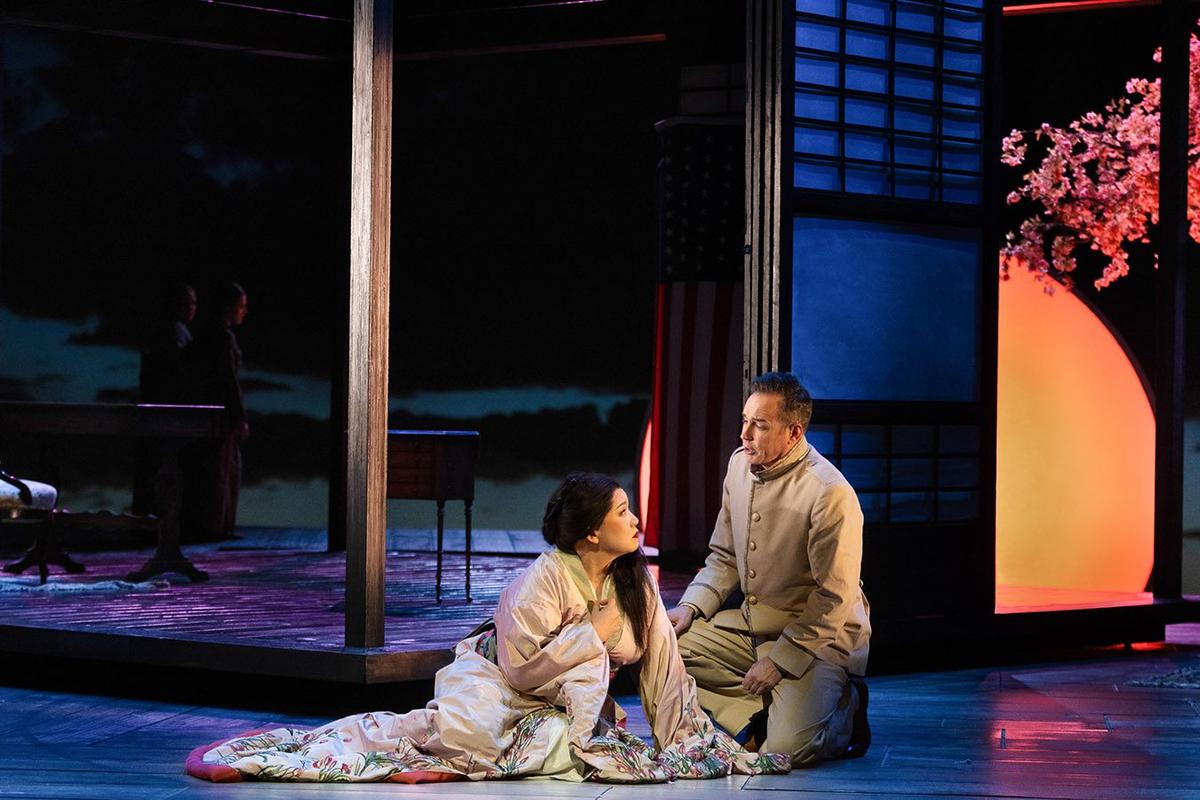
“Powerful vulnerability” may seem an oxymoron, but it’s an accurate characterization of Karen Chia-ling Ho’s magnificent portrayal of the title character in Puccini’s “Madama Butterfly” at Santa Fe Opera.
The role of Cio-Cio-San (Butterfly’s actual name) is one of the most demanding in all opera. In Puccini’s other operas, the vocal parts are shared fairly equally among the principals. Think of the four principals in “La Boheme” or the love-triangle trio in “Tosca.” In this opera, however, Butterfly is onstage for nearly all of the show. While no official figures exist, I would be surprised if she sings less than 60 percent of the total vocal parts.
A Wise Stage Director
The opera’s libretto, based on a one-act play adapted from a short story, stretches the material to three acts. These can seem terribly long unless the stage director uses the length and Butterfly’s stoic endurance as elements of the story itself. This is precisely what director Melanie Bacaling has done.Butterfly, a former geisha, marries the American Navy Lt. B.F. Pinkerton. She takes the marriage seriously while Pinkerton, one of opera’s most deeply hated figures, considers it a lark and returns to America, where he takes a “real” American wife. The rest of the plot finds Butterfly waiting with serene confidence for Pinkerton’s return, while the audience and everyone else on stage know the horrible truth. Butterfly waits. And waits.
The famous Humming Chorus closed Act II with the tranquility of falling cherry blossoms. The orchestral Intermezzo that followed changed nothing on the outside and everything on the inside: Butterfly may sit, Buddha-like, in vigil for the return of her husband, but the music tells us that her emotions are darkening. The Santa Fe Opera orchestra, conducted by John Fiore, turned in a performance worthy of any major orchestra.
Cross-Cultural Meaning
“Madama Butterfly” has the distinction of being interpretation-proof. Because its plot depends on a specific time and place in history, it cannot be restaged to happen on the moon or in the Roman Empire. Such displacements or “re-imaginings,” as they are called, have been common in opera for decades. “Madama Butterfly” takes place in Nagasaki during the first decade of the 20th century, period. This frees the stage director to do the job of a stage director: developing the aspects of plot, theme, and character not immediately evident in the script and score.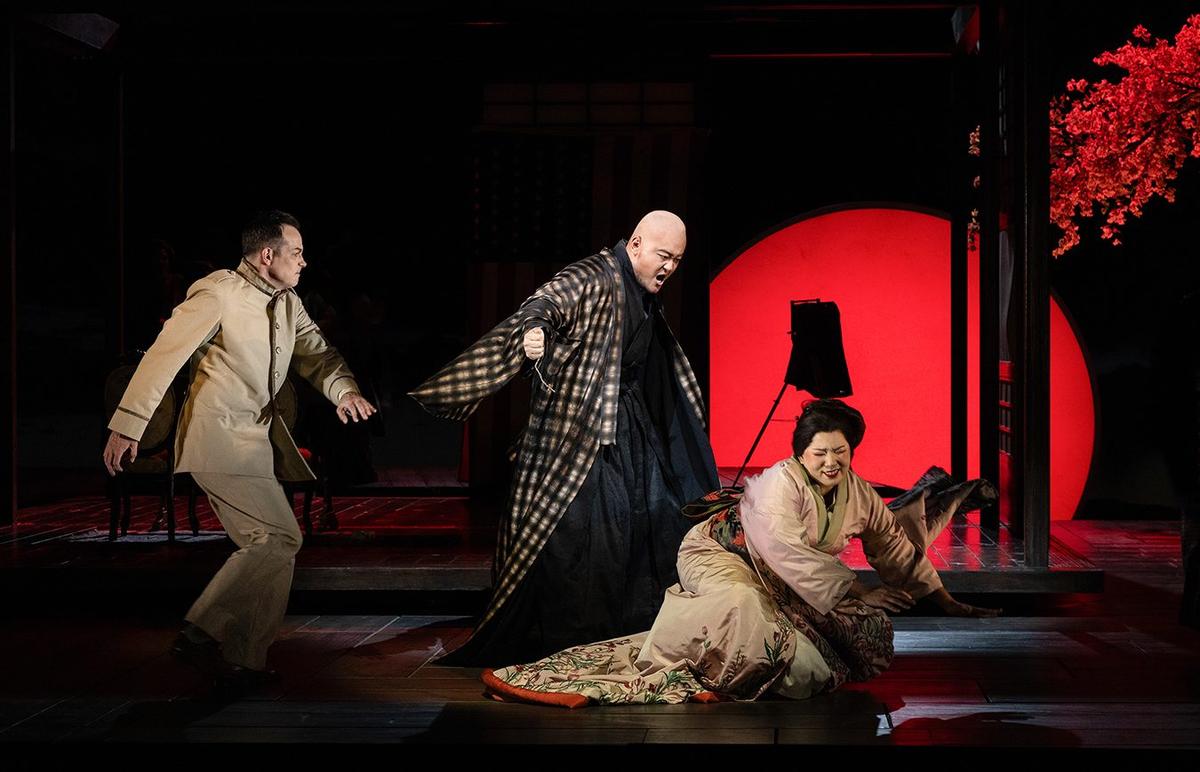
Because Pinkerton is a heartless American preying on an innocent girl of another culture, “Butterfly” is sometimes considered an anti-American piece. It doesn’t help that Puccini frequently quotes the “Star-Spangled Banner.” But without denying the opera’s historic frame, the theme of “Butterfly” is betrayal and its opposite, obsessive commitment. Pinkerton is a coward, but so, in a way, is Cio-Cio-San, who denies the truth even when it hits her in the gut. She refuses to consider the courtship of a wealthy merchant who forgives her rejection of Japanese culture. She prefers ritual suicide, which, ironically, returns her to a Japanese practice.
Suzuki, Butterfly’s maid, is the sane character in the story. As performed with depth of feeling by Sun-Ly Pierce, we experience Suzuki’s desperation in trying to dissuade her mistress from disaster. Tenor Stephen Costello plays the naïve and selfish Pinkerton, a role that requires powerful singing inevitably rewarded by boos at final curtain. Jarrett Ott plays Sharpless, the American consul, and Ya-Chung Huang sings the marriage broker, Goro.