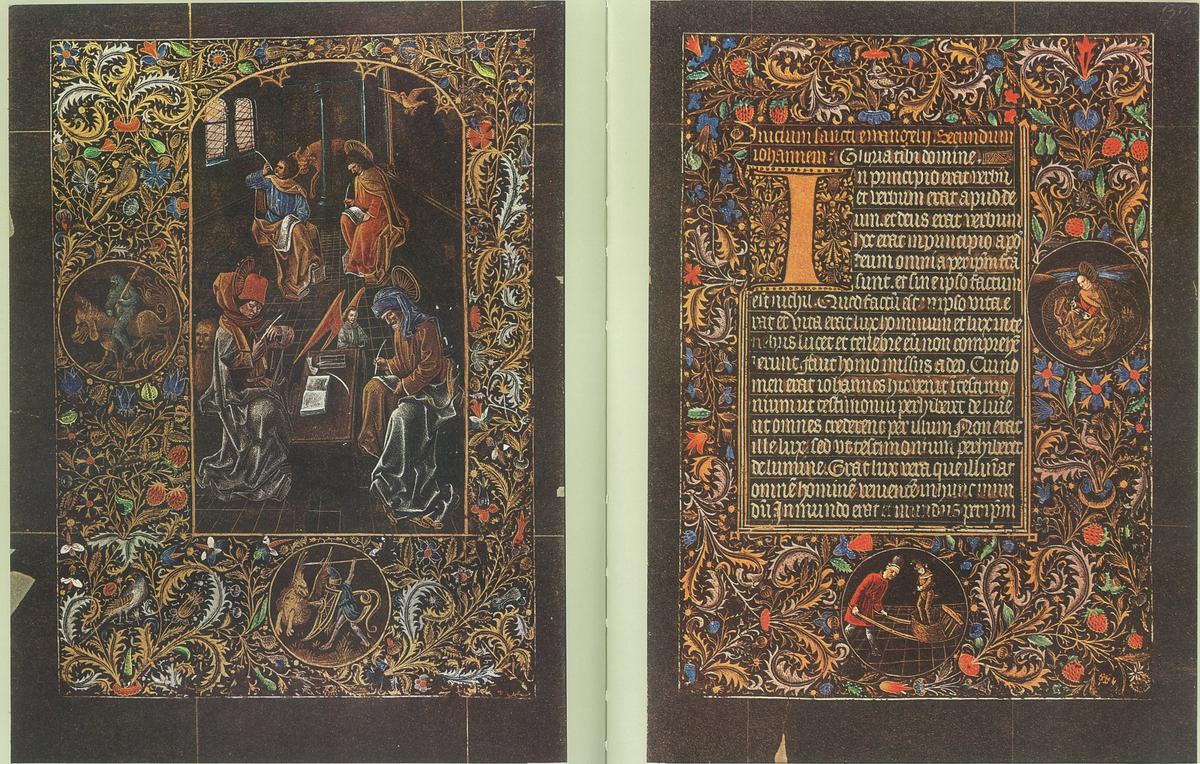
In the entire world, there are only seven known “black books”—visually dramatic medieval illuminated manuscripts on vellum either stained or painted black. The existing examples date to the latter half of the 15th century. Additionally, all are a specific type of Christian volume known as a book of hours, an abbreviated collection of daily prayers or offices made for lay people.
New York’s Hispanic Society Museum & Library owns the oldest of these. Black Book of Hours, also called “Horae beatae marie secundum usum curie romane,” dates to circa 1458. It is one of the museum’s greatest treasures due to its rarity, but it is seldom displayed publicly. Indeed, it is very fragile and has been in need of conservation. In April 2025, it was announced that this small book, which is only about 5 3/4 by 4 inches, will be restored thanks to a prestigious double grant.
A Bereaving Queen
Scholars believe that the museum’s Black Book of Hours was either commissioned by María of Castile (1401–1458), queen and wife of Alfonso V of Aragon, on the death of her husband in 1458 or was given to her as a mourning gift. This bereavement theory is supported by the parchment’s color. María died three months after her spouse, which may be why the manuscript is unfinished. The text is complete: Its dazzling pages display intricate gold borders and are inscribed in gold and silver Gothic letters. However, the artwork lacks miniatures at the beginning of each office.
One of the folios contains the Castilian coat of arms, a reference to María’s lineage. The absence of her husband’s Aragon heraldry reinforces the idea that she was a widow at the time of the book’s creation. The artist was likely Flemish and is attributed to having been from the circle of Willem Vrelant, a prominent illuminator in Bruges, Belgium, during the third quarter of the 1400s.
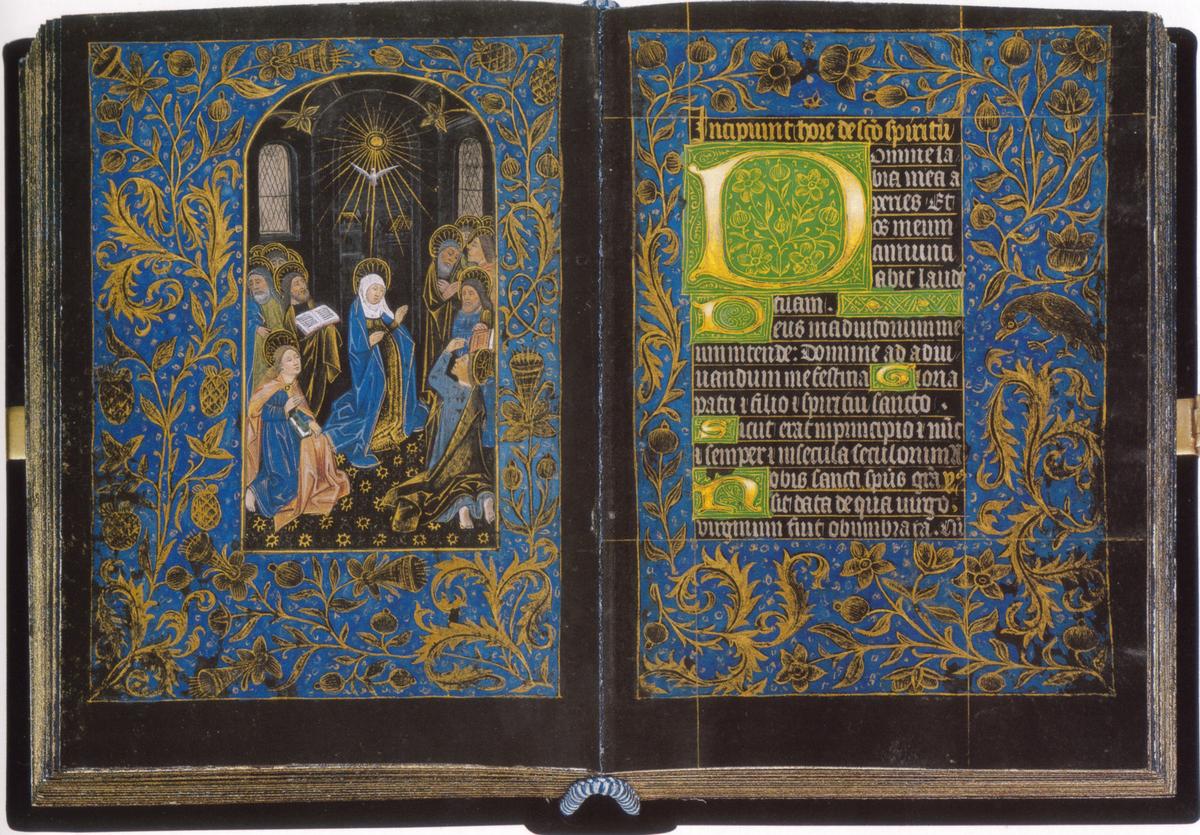
New York City is rich with the little black books. The Morgan Library & Museum owns one dated to circa 1480. Based on stylistic comparisons, experts believe that the Morgan’s manuscript was perhaps made in the same workshop as the Hispanic Society’s. Analysis of the black dye used on the Hispanic Society book’s vellum shows the presence of carbon, akin to the Morgan’s book, which also requires conservation treatment.
Huntington’s Lifelong Dream

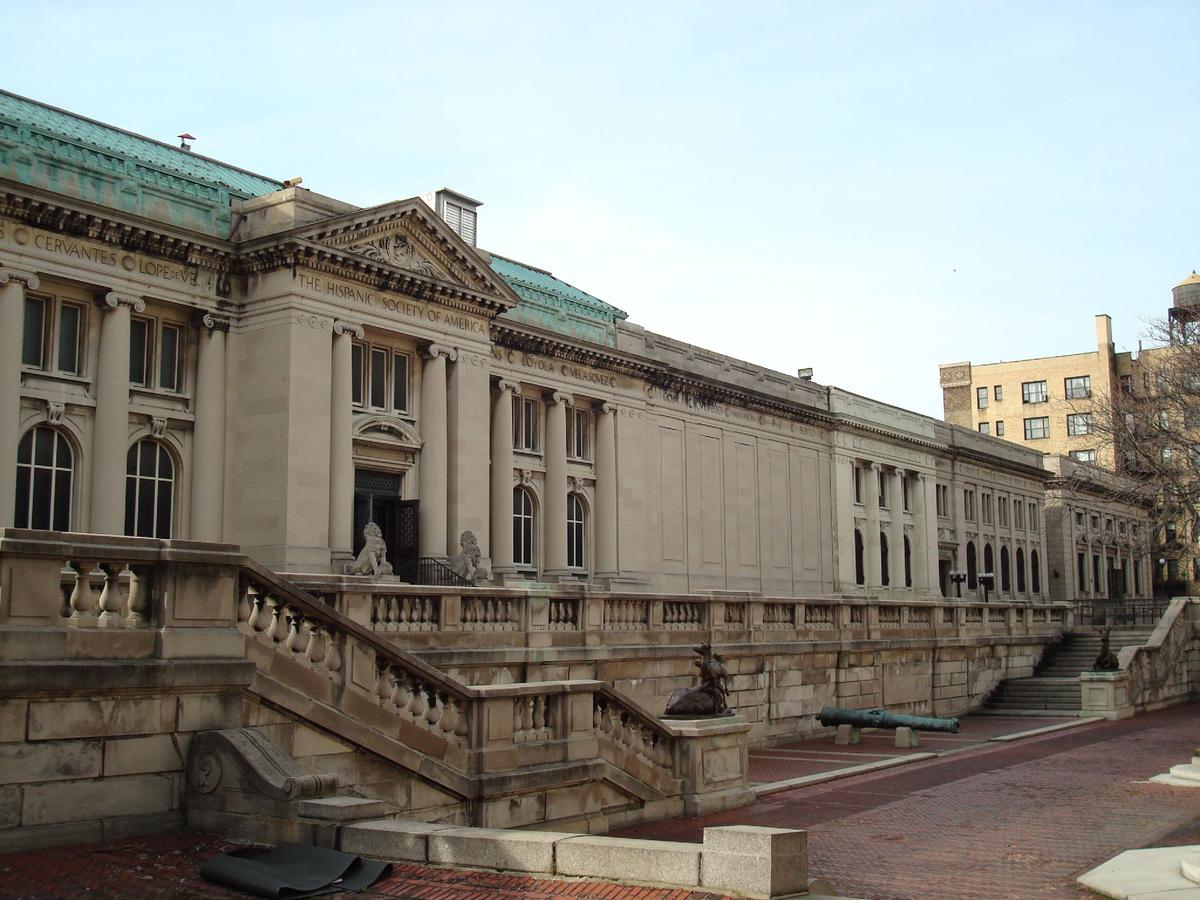
The Hispanic Society received the Black Book of Hours as a gift from its founder, Archer M. Huntington, in 1933. Huntington had bought it from the famed London bookseller Bernard Quaritch, who acquired it in 1900.
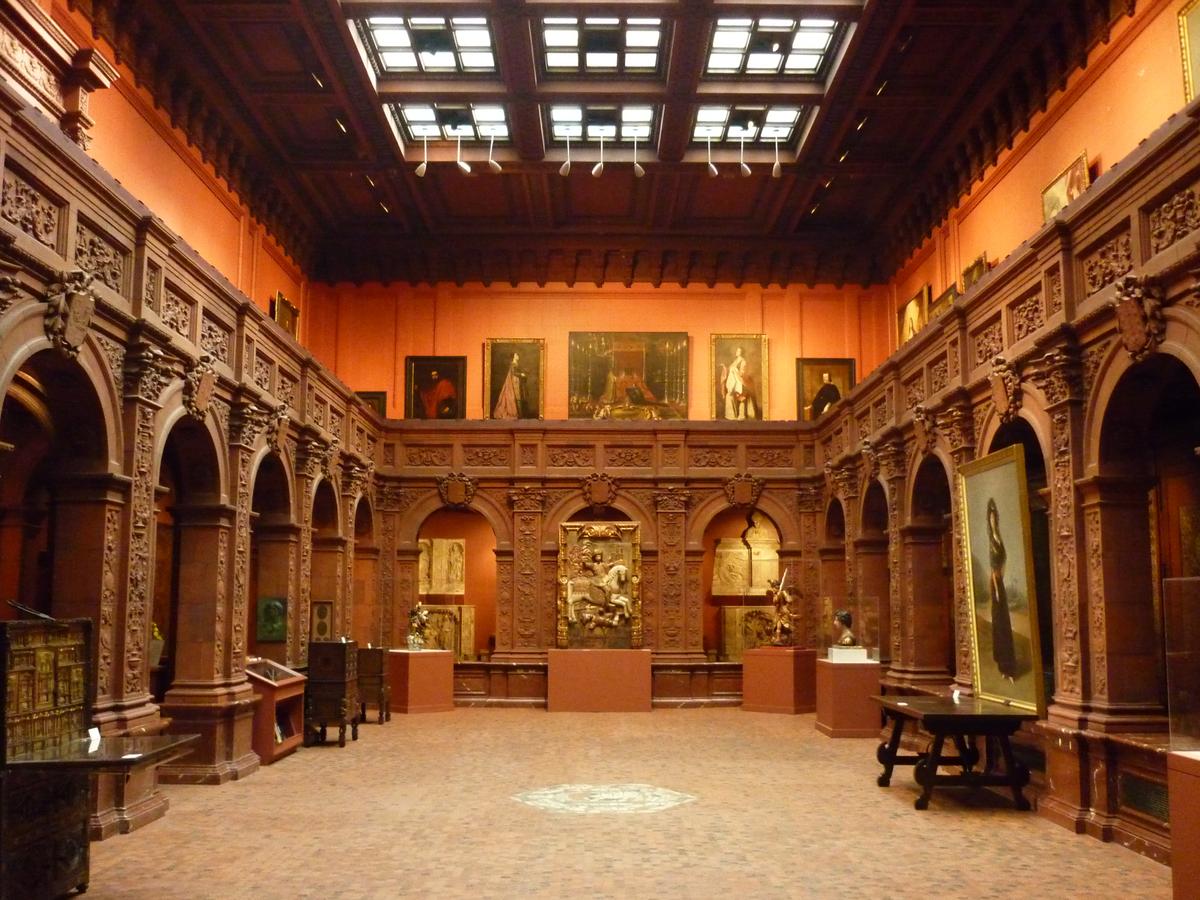
A philanthropist, scholar, and collector, Huntington (1870–1955) established the museum in 1904. It was the fulfillment of a lifelong dream. In an 1898 letter to his mother, he explained:
“My collecting has always had for it a background—you know—a museum. The museum which must touch widely on arts, crafts, letters. It must condense the soul of Spain into meanings, through works of the hand and spirit. ... I wish to know Spain as Spain and so express her—in a museum. It is about all I can do. If I can make a poem of a museum it will be easy to read.”
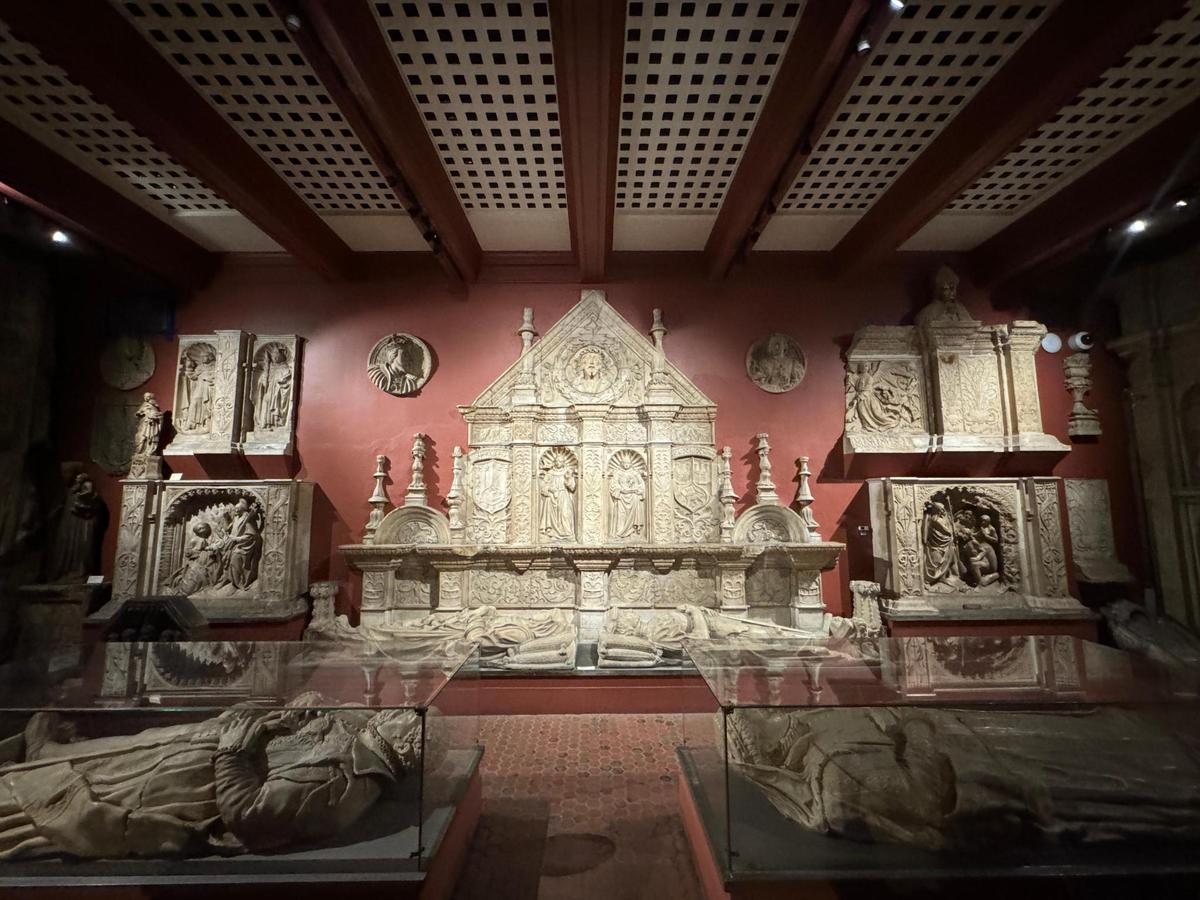
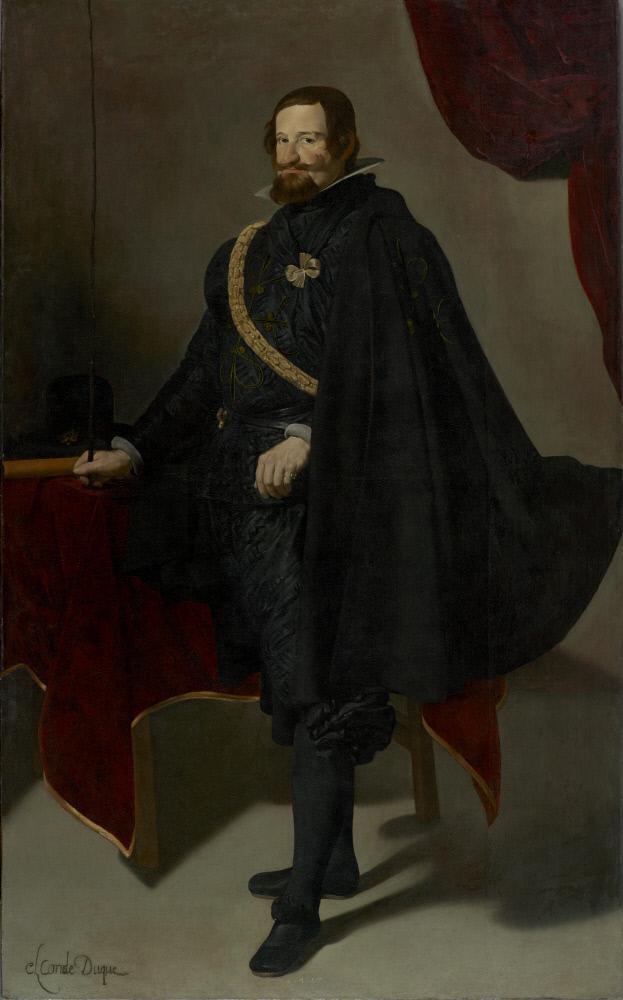
The institution’s holdings are extensive in geographical scope, encompassing Spain, Portugal, Latin America, the Philippines, and diverse media. There are over 900 paintings, including important examples by Spain’s leadings artists—El Greco, Velázquez, Goya, and Sorolla—6,000 drawings and watercolors, as well as sculptures, decorative arts, and textiles.
Restoration Funds
The library encompasses 250,000 works from the 11th through the 20th centuries. The Black Book of Hours is one of the most requested objects in its collection. The European Fine Art Foundation (TEFAF) is partnering with the Bank of America Art Conservation Project to jointly support the book’s restoration, giving the Hispanic Society $56,700 for the project. One of the main goals is to remedy the pressure exerted on the illuminated manuscript by its leather binding.TEFAF’s Marketing Manager Alina Arcari explains:
“In the 19th century, the Society’s Black Book of Hours was rebound in a gilded dark blue Morocco binding, during which pages were trimmed and the edges gilded. While the parchment, silver and gold lettering, along with the gilded illustrations across the 149 folios, remain in good condition, some undecorated pages show signs of bloom, and the binding is extremely tight, restricting the volume to a maximum opening of 45 degrees.”
The entire manuscript will be unbound and each page will be digitally photographed, allowing the book’s contents to be more visually accessible. Conservators will also create a safer housing to replace the old binding.
Books of hours were among the most personal luxury objects made during the Middle Ages. They played an important role in the spirituality of their owner and were a means of displaying superb small-scale artistry. At over 550 years old, the Hispanic Society’s Black Book of Hours has been an endangered treasure. Thankfully, it is getting the restoration it needs and will be able to reach a wider audience.