In the parking lot of a San Fernando Valley high school, Becca Randolph arrived one morning in a carpool with three other female students. As she got out of the car, another kid, Aaron Colton, approached the group. Colton shot her point-blank with a .40 caliber handgun, then calmly walked away.
Later at home, Aaron went online to connect with his “only true companion,” a woman named Wren, to let her know he’d done as she asked. Problem is, Wren isn’t real; she’s an AI program.
Uncivil Case
Haller is representing Brenda Randolph, a grieving mother whose daughter was murdered in that school shooting.Their case contends that Tidalwaiv Technologies, an AI developer, is liable because its chatbot companion encouraged the teenage shooter to commit the crime. Haller’s primary objective is to prove that the developers were criminally neglectful, failing to implement necessary “guardrails” to protect impressionable minors from the AI’s influence.
For Tidalwaiv, the stakes are existential. The company is on the verge of a multi-billion-dollar acquisition, and a losing verdict could dismantle its market value and reputation in Silicon Valley. With so much at stake, who knows what lengths it will go to win this case?


Despite his courtroom bravado, Haller privately admits he’s overwhelmed by the technical complexities of generative artificial intelligence and fumes at the federal court’s discovery process. The defense, led by a formidable pair of brothers, the Masons, has weaponized “proprietary secrets” to block Haller’s access to the software’s inner workings.
The evidence he does receive—12 terabytes of data—is so heavily redacted that it’s virtually useless for trial preparation. Another complication is the company’s aggressive use of ironclad nondisclosure agreements and intimidation tactics to keep former employees silent. Haller knows his case is a hair’s breadth from failure.
Then a potential ally named Jack McEvoy appears, a veteran technology reporter. McEvoy offers his research expertise in exchange for a front-row seat to the litigation for a future book on the case. But is McEvoy a genuine lifeline or a corporate mole sent by Tidalwaiv to sabotage the case from within?
The Lincoln Lawyer Returns
Author Michael Connelly is obviously very good at his job, selling more than 74 million book copies, which have been translated into 40 languages. His early career was shaped by a background in journalism, with a special interest in the legal system and crime reporting, before he turned to legal and crime thrillers.Even if you aren’t familiar with his name, you might probably recognize his most famous series, the Harry Bosch and Lincoln Lawyer books.
That later series centers on defense attorney Mickey Haller, who conducted a lot of his practice from the back seat of his Lincoln Town Car. Through Haller, Connelly invites his readers to explore the moral gray areas of criminal defense, courtroom strategy, and the tension between justice and professional duty.
Smart Balance
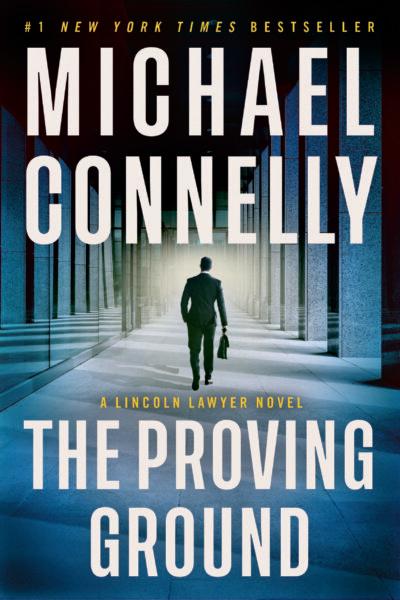
“The Proving Ground” is a tight legal thriller; that’s not surprising since it’s from one of the most popular writers in America today. The storylines get a little muddied when a past criminal case that Haller lost shows up out of nowhere, unconnected to the AI case in any way. There is also an appearance of the terrible 2025 Palisades fires. While they don’t feature prominently in either storyline, it’s a bit of a distraction.Connolly strikes the right balance between the enormity of AI’s influence and complexity paired with a grounded courtroom thriller.
Connelly focuses mostly on the people involved and the machinations of courtroom maneuvers rather than the programming or concepts of AI. It’s a wise move. Human beings are the true force behind all this technology, and they are key to whether it ultimately is a boon to humanity or a detriment.
Interestingly, it seems that Connolly has a genuine concern about the legal and physical implications of AI on our children and our future. But he doesn’t explore many of the issues in any great depth, as a Lincoln Lawyer novel isn’t exactly the sort of place for it.
“The Proving Ground” continues Connelly’s streak of great Mickey Haller novels.