It’s fair to argue that America has an uneasy relationship with artificial intelligence. Even those at the top of the social, technological, and financial hierarchies don’t fully comprehend its effects for all of us. Fiction authors have tackled the issue before, going back to Samuel Butler’s “Erewhon” (1872). Now that it’s actually here, the subject is more timely than ever.
Autodrive Versus Human Error
The accident happens when their autonomous minivan, equipped with cutting-edge “SensTrek technology,” collides with another vehicle in rural Delaware. Charlie, 17, was in the driver’s seat when he suddenly took manual control moments before the impact. The other car’s occupants, a retired couple, were killed, but the five members of the Cassidy family escaped with relatively minor injuries. Everyone keeps calling them incredibly lucky.Knowing that their family will need to take time to process, Noah and Lorelei decide to take the family on a trip to a vacation home rental they’ve used before, near the Chesapeake Bay in Northern Neck, Virginia. Soon after arriving, they discover that an ostentatious neighboring mansion is occupied by a famous billionaire tech mogul, Daniel Monet, and his attractive teenage daughter Eurydice. Frequent landings of a helicopter next door disrupt their tranquility.
Survivor’s Guilt
Each member struggles with survivor’s guilt in different ways. Lorelei strives to understand the moral calculus of their survival, Noah wants to shelter and protect his family by whatever means necessary, and their children grapple with trauma using distinctly modern techniques.Charlie starts a relationship with Eurydice and begins acting recklessly, while 13-year-old Alice finds solace in a mysterious online relationship. It also doesn’t help that their smart home system, for some reason, starts malfunctioning.
Thriller or Essay?
From a high-level perspective, “Culpability” might sound like a creepy thriller, where the villain is a soulless machine, á la the HAL-9000 in Stanley Kubrick’s “2001: A Space Odyssey.” And yes, that aspect is present. The influence of AI systems rises and falls throughout the story like cicadas buzzing in the background. But it also includes a long, dull patch once the family relocates to the vacation rental home.

The accident was traumatic, and the secrets are serious, so it’s no wonder they’re reticent to deal with them directly. However, Holsinger spends too much time teasing us with hints, minor mysteries, and social awkwardness, which quickly becomes frustrating.
Also, part of the problem is Holsinger’s storytelling style, which might make you think you’re reading an academic paper or a socio-political creative essay. Noah frequently observes the family and events in a clinical manner. He psychoanalyzes and contextualizes, with lots of subordinate clauses to back up his points and add depth. It often leads to dry, predictable rhythms.
Even the conclusion, where the various looming threats are finally resolved in their own, particular ways, reads more like Holsinger is presenting thesis arguments. A lengthy speech by the Delaware State Police detective investigating the traffic accident comes across as somewhat contrived. Her frustrations boil over about where to assign blame when AI is involved. It’s one of several moments: here is this talking point before we move onto the next one.
AI Morality
“Culpability” is likely to be dissected and analyzed rather than merely enjoyed as a work of fiction. I could even see it being assigned in colleges for course credit, or to inspire pundits, journalists, and content writers to generate new articles.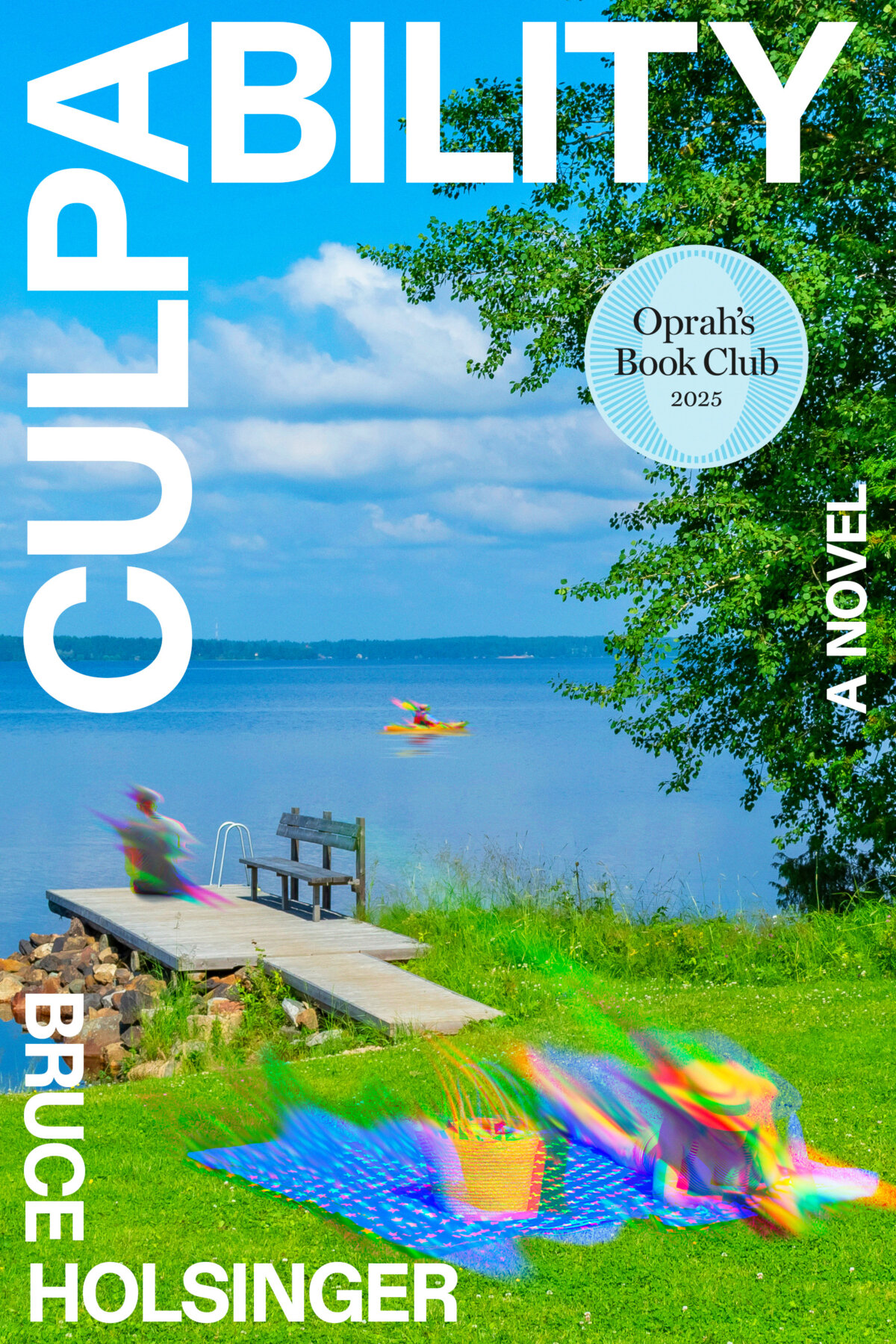
The advent of AI technology in our culture is a monumentally complex subject, and a daunting task for any novel writer to encompass. The fact that Holsinger manages to address these subjects with moderate success and brings these issues to greater consciousness is laudable. And there are plenty of dramatic moments and reveals by the end that will make it a worthwhile journey for many.
The novel takes a long time to get to the point. It’s ironically being hindered by a mechanical writing style, but “Culpability” ultimately presents a thought-provoking tale about AI and morality, wrapped up in a family getaway package.