In 1865, an American painter stepped into London’s most prestigious artistic circles and was celebrated without reservation. Critics praised his luminous canvases. The poet Alfred, Lord Tennyson sought him out as an admirer.
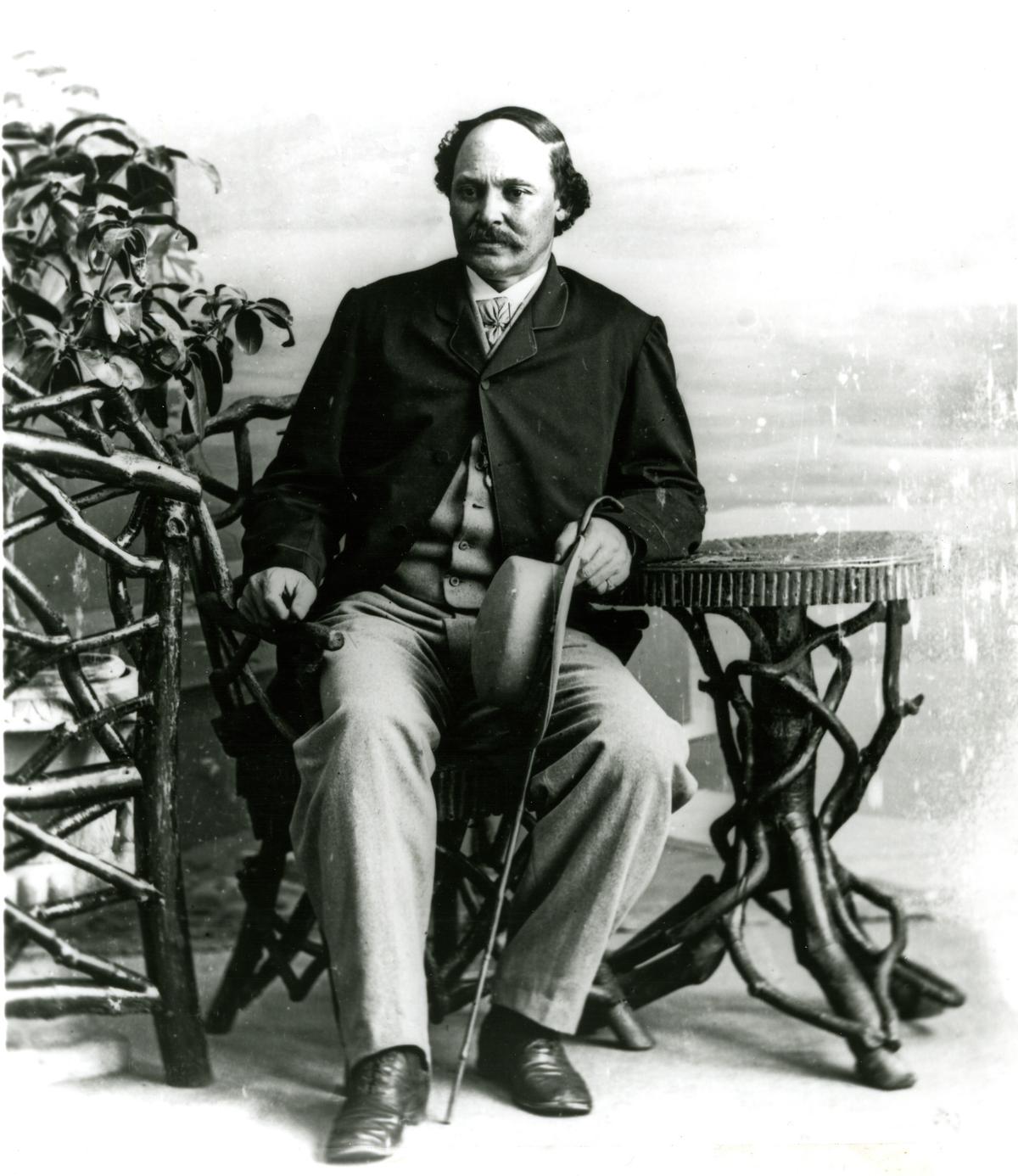
Born around 1821 in Fayette, New York, Duncanson came from a black family that had survived the brutal realities of American slavery and found its way to freedom. When he was a child, his family moved to Monroe, Michigan, on Lake Erie, where he grew up learning the family trade of housepainting.
A Career-Defining Turn Toward Landscape
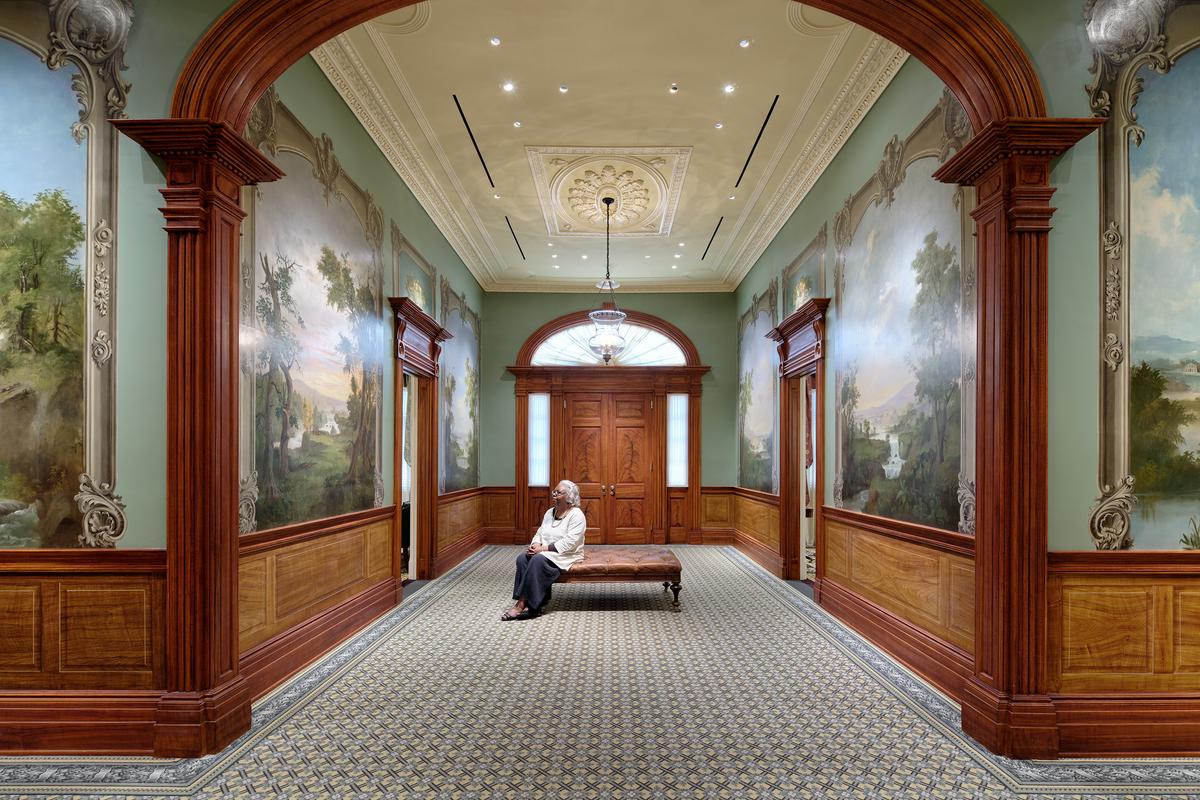
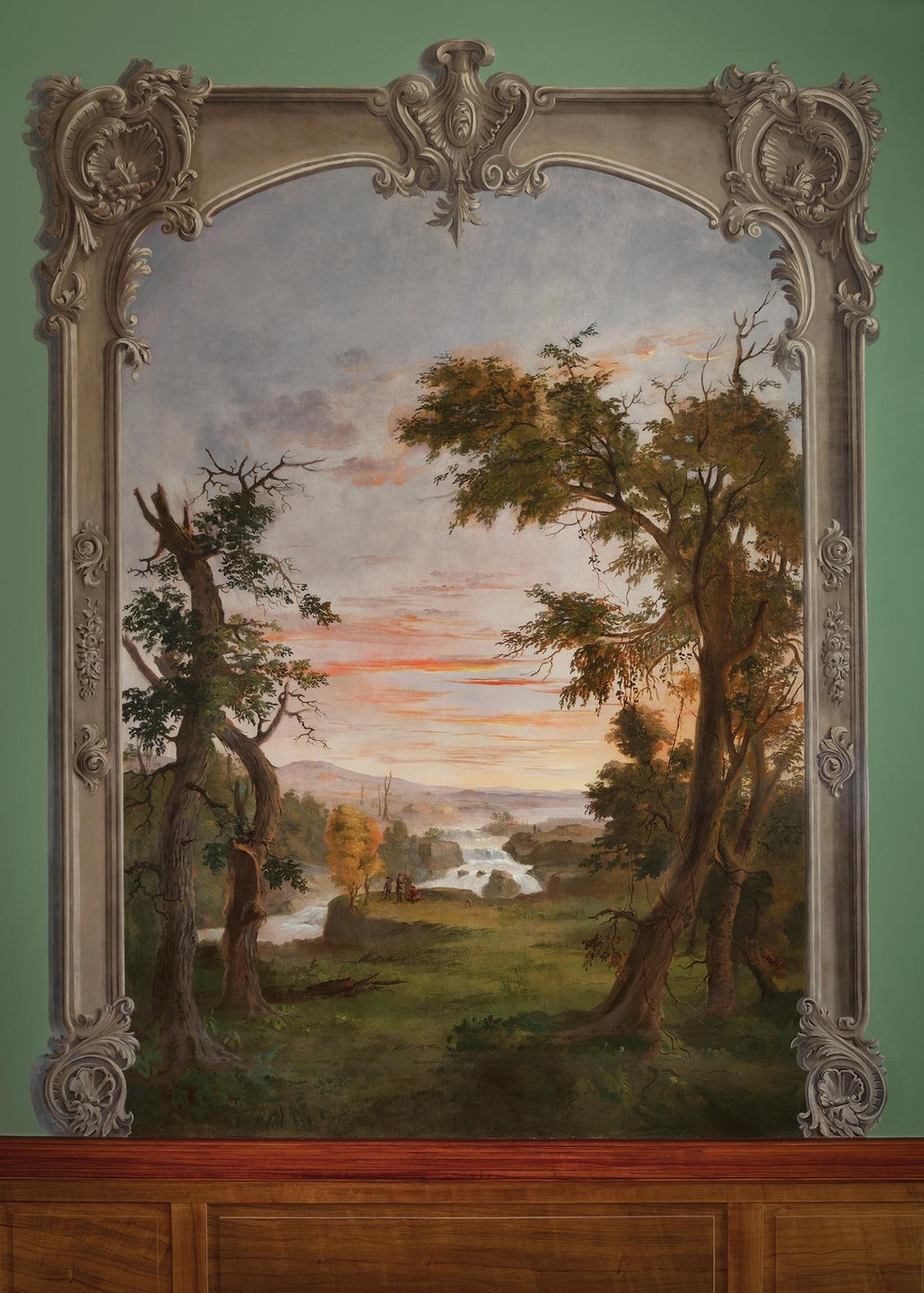
More commissions soon followed, most notably from Nicholas Longworth, a horticulturalist and prominent supporter of black artists who hired Duncanson to paint a series of large-scale landscape murals for the entry hall of his estate in Cincinnati. Completed between 1850 and 1852, the eight murals envelop viewers in the intricate foliage and softly glowing sunsets of a romanticized American wilderness.

The murals are widely regarded as the most important surviving pre-Civil War domestic murals in the United States. Today, they stand among the defining attractions of the Taft Museum of Art, which occupies the former Longworth estate.
A Luminist in the Ohio Valley
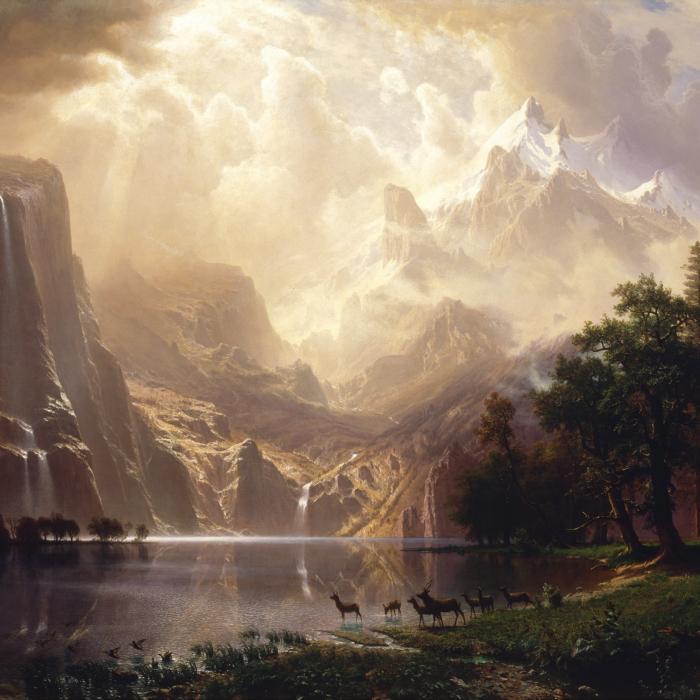
Duncanson hit his stride in the late 1840s. By then, a movement that would later become known as the Hudson River School had already established itself as America’s defining artistic force. Its painters celebrated the untamed North American landscape through a style known as luminism, which favored smooth, nearly invisible brushwork, low horizon lines and wide-open skies suffused with light. These were paintings meant to evoke a sense of wonder and contemplation in the viewer.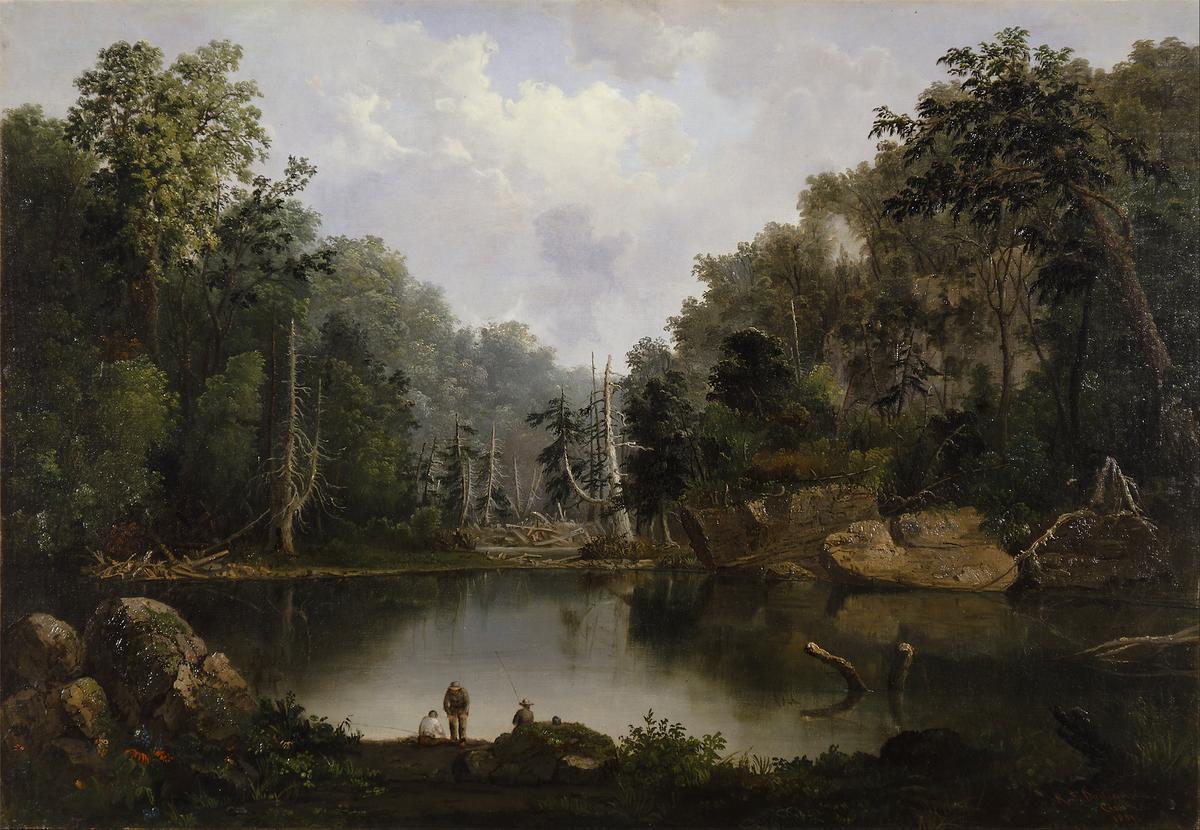
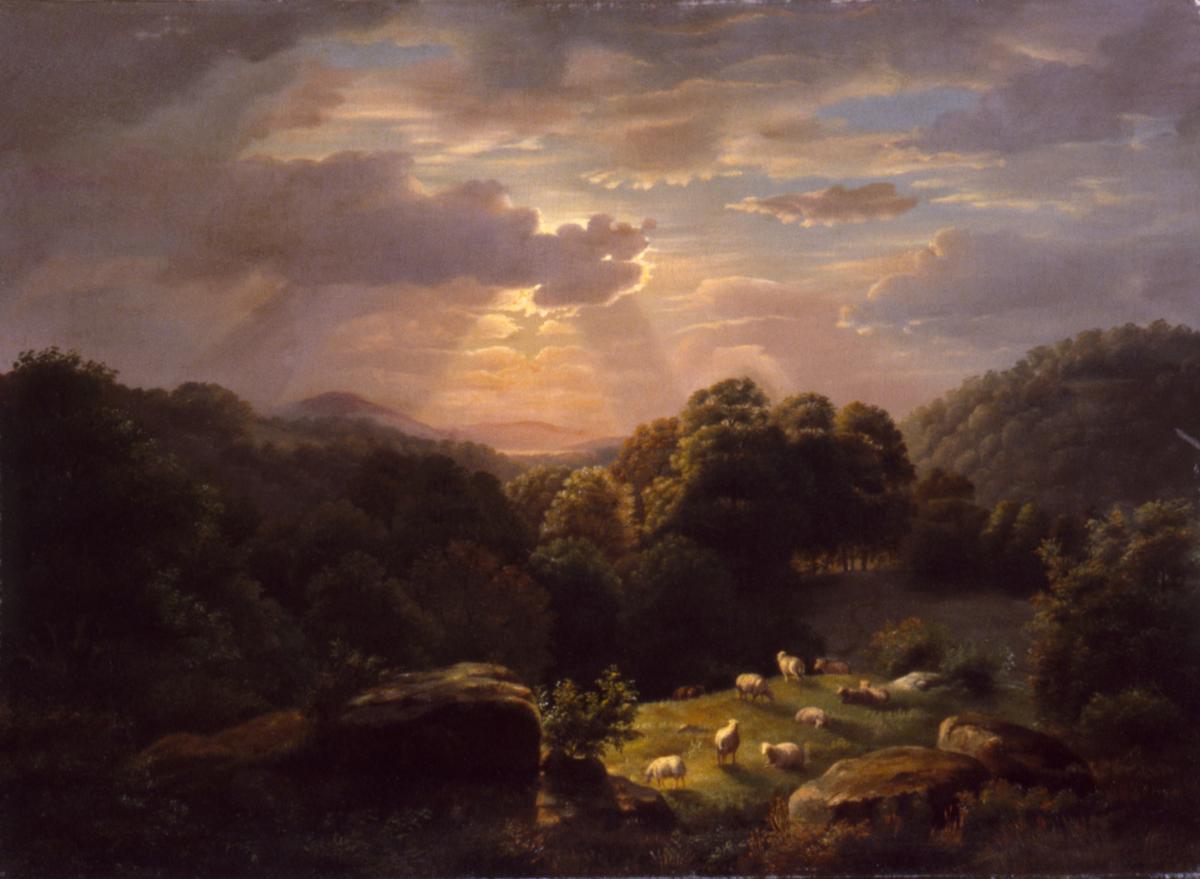
Duncanson filtered the tradition through his own experience and geography, developing a regional variant rooted in the Ohio and Little Miami river valleys. Where Hudson River School painters often sought drama and grandeur, Duncanson tended toward the pastoral and the serene. Paintings like “Blue Hole, Flood Waters, Little Miami River” (1851), “Landscape With Rainbow” (1859) and “Landscape With Sheep” exemplify this approach.
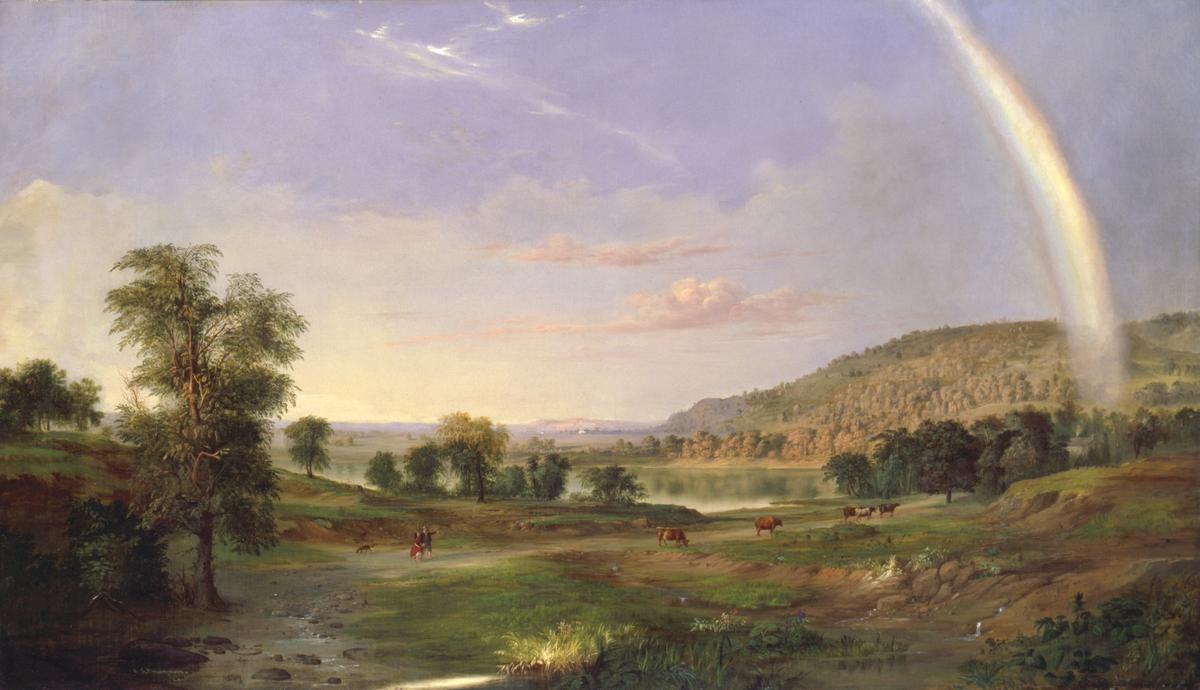
In “Blue Hole, Flood Waters, Little Miami River,” he transforms the swollen river into a composed, tranquil scene. “Landscape With Rainbow” uses light and a gently arching rainbow to create an almost allegorical effect. In “Landscape With Sheep,” the quiet countryside and carefully modulated light highlight his talent for idealized, contemplative vistas that merge observed detail with poetic restraint.
A Grand Tour and a Gradual Unraveling
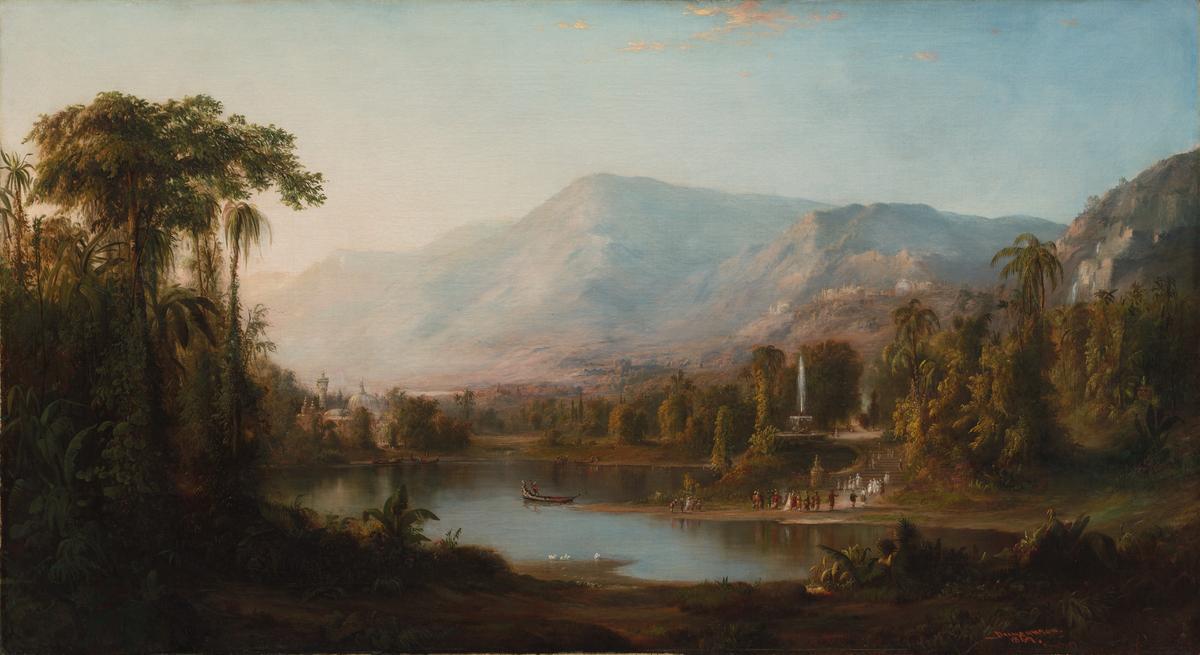
In 1853, funded by Longworth, Duncanson embarked on a European grand tour. He traveled to London, Paris, and Florence, taking in the classical masterworks that formed the foundation of a 19th-century art education. The trip sharpened his technique and opened up new ways of seeing.He returned to Cincinnati and continued painting, but the onset of the Civil War in 1861 unsettled him. He traveled to Canada and then again to England where, in 1865, he attracted a new circle of admirers that included the poet Alfred, Lord Tennyson. The British press celebrated him. Abroad, stripped of the specific degradations of racial tensions, he moved through elite artistic and literary circles with a freedom he rarely experienced at home.
He eventually returned to the United States, and the years that followed were marked by deterioration. He began exhibiting erratic behavior and suffered from dramatic mood shifts. Duncanson’s biographer, Joseph Ketner (“The Emergence of the African American Artist: Robert S. Duncanson, 1821–1872”), has proposed a specific physical cause for the breakdown: lead poisoning. Having worked with lead-based paints since childhood, first as a house painter and then, for decades, as a fine artist, Duncanson likely accumulated toxic levels of exposure over a lifetime.
An Invitation to Find Beauty
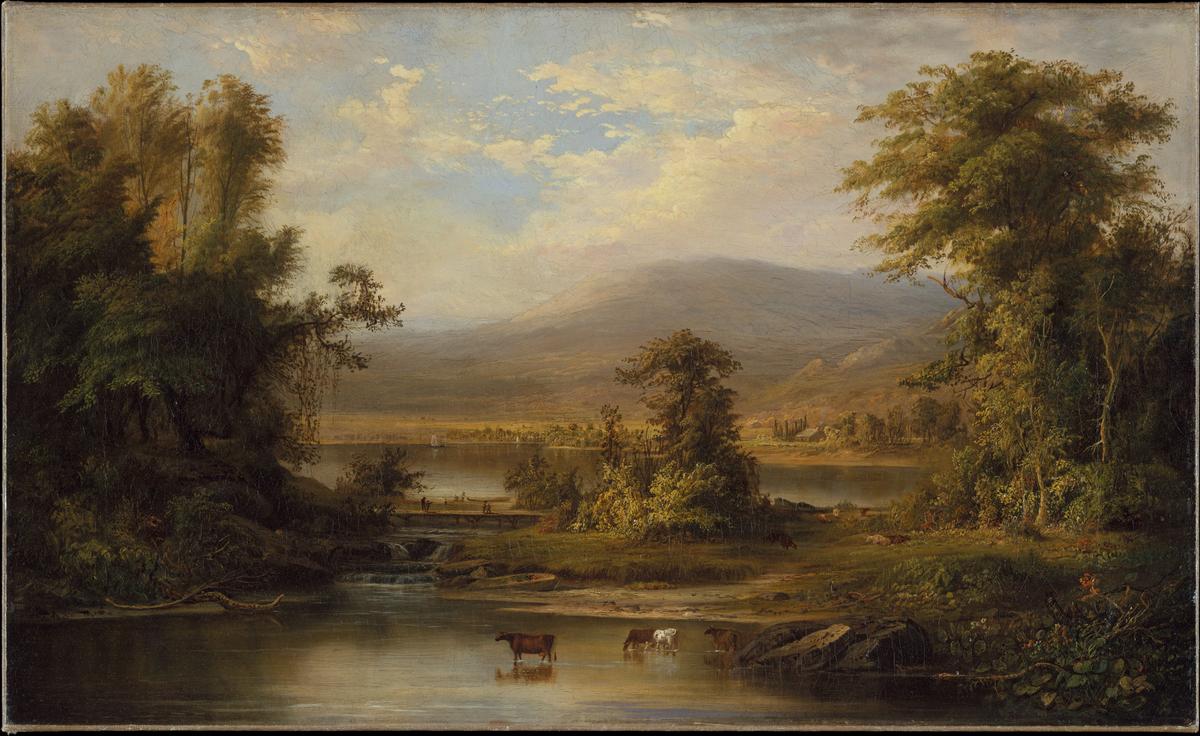
Duncanson’s work is held today in the collections of the Metropolitan Museum of Art, the National Gallery of Art, and numerous other institutions. The Cincinnati Art Museum and the Taft Museum of Art remain particularly important repositories of his achievement.
Scholars and curators have long worked to secure Duncanson’s rightful place in American art history, and audiences have responded. His landscapes offer something timeless: an invitation to find beauty, even in the most difficult of times.