In 1898, British civil projects financier Robert Beaumont (Tom Wilkinson) commissions military engineer Lt. Col. Patterson (Val Kilmer) to build a railroad bridge across the Tsavo River in Kenya. There’s a catch, though.
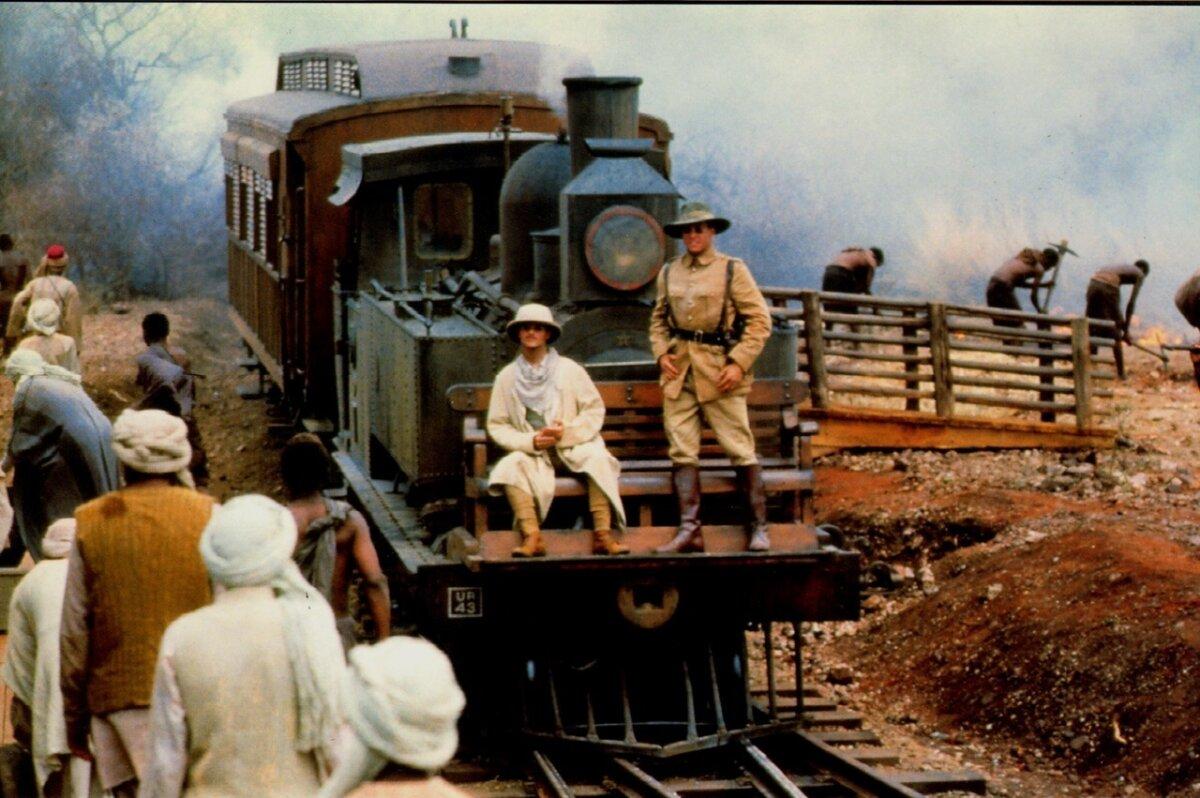
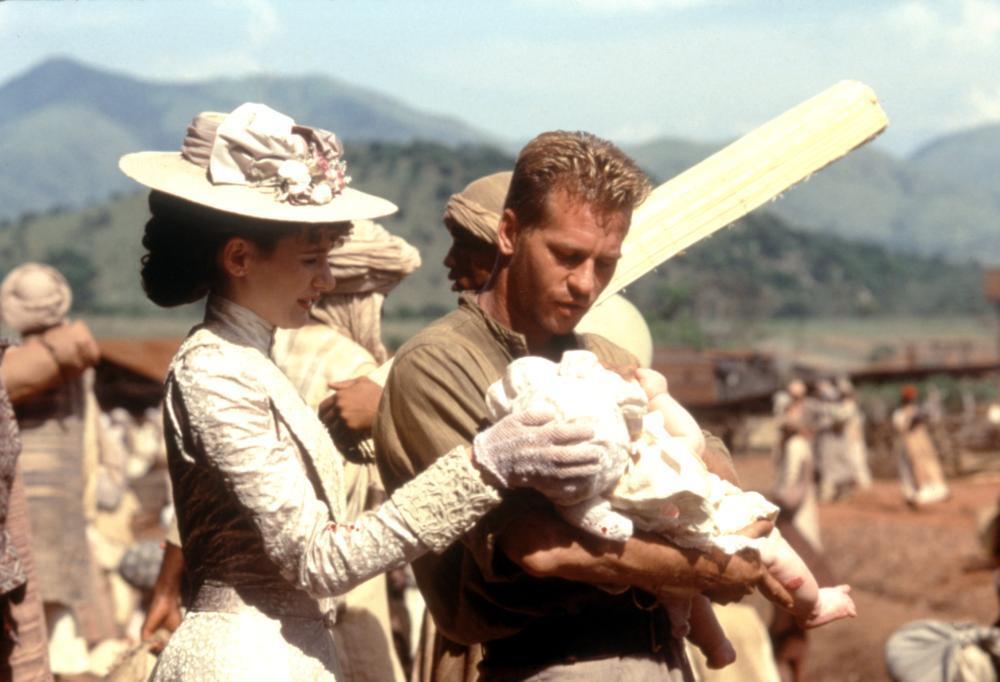
He must finish in five months. Patterson rushes to Kenya, leaving wife Helena (Emily Mortimer) back in England. He vows to return before their first baby is born; Helena’s scheduled to deliver in six months.
On arrival in Kenya, Patterson finds himself overseeing fearful workers. Why fearful? Two rogue male lions are killing humans by the week.
An amateur hunter, Patterson fails to kill the man-eaters. Workers desert, and he’s about to miss his schedule; back home, Helena’s not about to miss hers.
Furious that the lions still roam, Beaumont hires professional hunter Charles Remington (Michael Douglas) to finish the job. Beaumont’s too proud to provide the soldierly protection Patterson requests; he couldn’t care less if Patterson’s having, as Beaumont dismissively says, “minor difficulties with the local wildlife.”
However, these lions, whom locals nickname “the Ghost” and “the Darkness,” have their own plans.
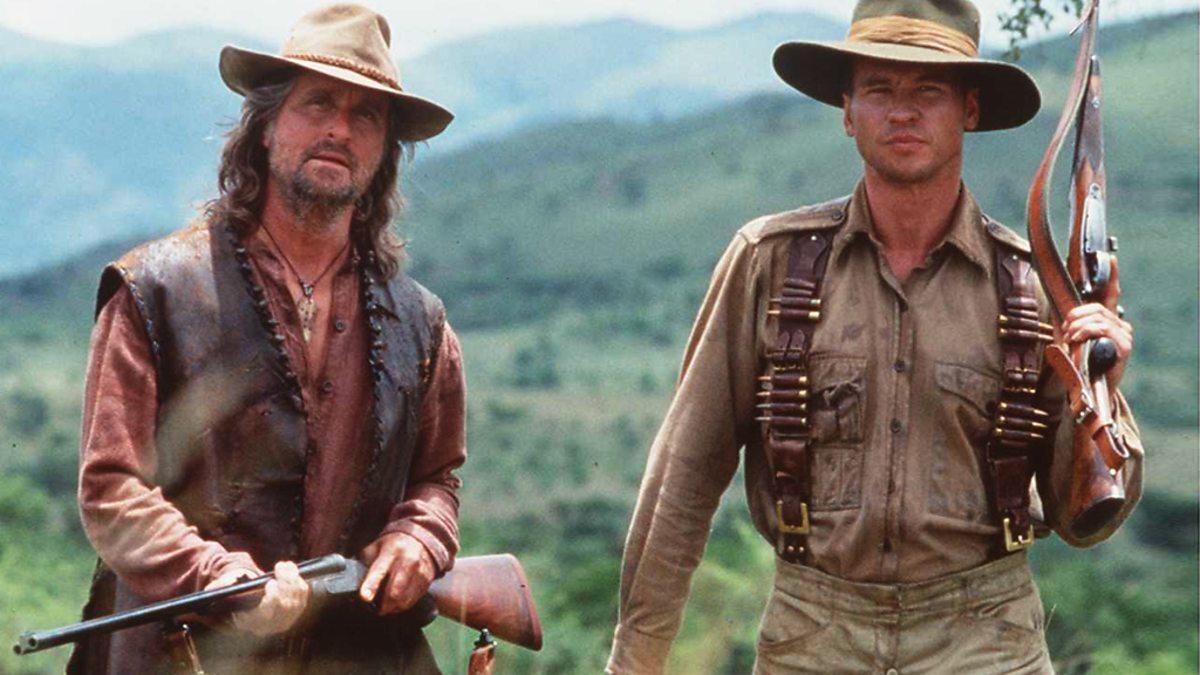
Lions Against Men
That this story pits lions against men may be incidental, but it happens to also be instructive. Lions are unique among big cats. They form stable, social groups called prides, just as humans, among all beings, form families.Lions boast the loudest big cat roars, often carrying up to five miles on the open savanna. If the lion is the king of the jungle, man is the crown of creation; in this mythical sense, lions proxy here for the primacy of man.
This confrontation, then, imagines man pitted against an equal of sorts. Because it’s a man-eating lion, it’s as if he’s pitted against himself and his anxieties around self-preservation.
Before Patterson faces any lion, it’s himself and his self-consuming terrors he must face first.
Mark Twain is believed to have said that courage isn’t the absence of fear but the ability to cope with, resist, and even master it. This is what Patterson, who’s been relatively protected until now, must contend with as diseases, deaths, and desertions test his commitment.
Remington tells Patterson about growing up with a bully who’d terrorize him and the other children. The bully had an even more intimidating brother. Alone, they were just bullies. Together, they were lethal and grew up to be killers; one or the other was always in jail.
Patterson wonders, “What happened to them?” Remington smiles and replies, “Well, I got bigger.” Remington’s speaking metaphorically. It’s not just size, speed, power, or strength that matters but drive, vision, and strength of purpose.
When Patterson’s painstakingly laid plans fail to lure the lions, Remington reminds him of an expression in prize fighting: “Everybody’s got a plan, until they’ve been hit. Well, my friend, you’ve just been hit. The getting up, that’s up to you.”
Patterson gets up not just once or twice but repeatedly. He shows resolve far stronger than the steel in his rifle.
The true mettle of men is tested not when they heave with the cacophonous multitude but when they’re in stark, even silent solitude. Patterson finds himself alone in more ways than one, yet he summons the bravery of a battalion.
Collaboration is a handy skill to nurture, but what to do when teamwork doesn’t work, or worse, when it backfires? What can you do when teammates let you down, intentionally or not?
That’s when individuality counts. Carried too far, individualism can all too easily degenerate into willfulness.
The test of when it’s virtue rather than vice is whether it’s altruistic. If driven by self-preservation or self-promotion, especially at the expense of others, it’s vice. If driven by a desire to protect or provide for those who’re weaker and more vulnerable, regardless of the personal price to be paid, it’s virtue.
The brave man knows what to do when a metaphorical rogue lion charges. It may have the hottest breath, the coldest stare, or a roar more deafening than a jet engine.
The man lies still, his arm steady and his metaphorical rifle ready. He’s practiced this a thousand times already. He takes a deep breath, takes aim, and fires.