Thunderstorms. Jumping salmon. The kingly crowns of buck antlers. For Native Americans in precolonial times, these meant summer.
Throughout history, human communities have mapped rhythms of the seasons with cycles of the moon. Long before digital calendars existed, some Native American tribes called July’s lunation cycle the “Buck Moon,” tracking the time of year by the velvet antlers of male deer.
When American explorer Jonathan Carver traveled through the Great Lakes region in the late 1760s, he lived among the Naudowessie and Chippewa peoples, carefully documenting how they used the natural world to track the passage of time. His published journals later introduced these evocative lunar titles to Western culture, where the name “Buck Moon” took permanent root and endures today among our oldest seasonal markers.
In other regions, inland tribes watched the deer, coastal communities scanned rivers for the “Salmon Moon,” and northeastern woodland tribes observed the “Thunder Moon.” There are myriad other tribal names and countless lunar monikers beyond our shores.

While the asphalt and air conditioning of today buffer some of those ancient environmental cues, next month’s lunation, which officially reaches peak fullness on July 29 at 10:36 a.m. Eastern time, offers modern city dwellers a rare reason to step outside and look up. For North American viewers hoping to sight the Buck Moon, it will actually be below the horizon at the moment of technical fullness. But because full moons stay visually full for about a day or so on either side, sky watchers need only wait for sunset, then turn their gaze eastward.
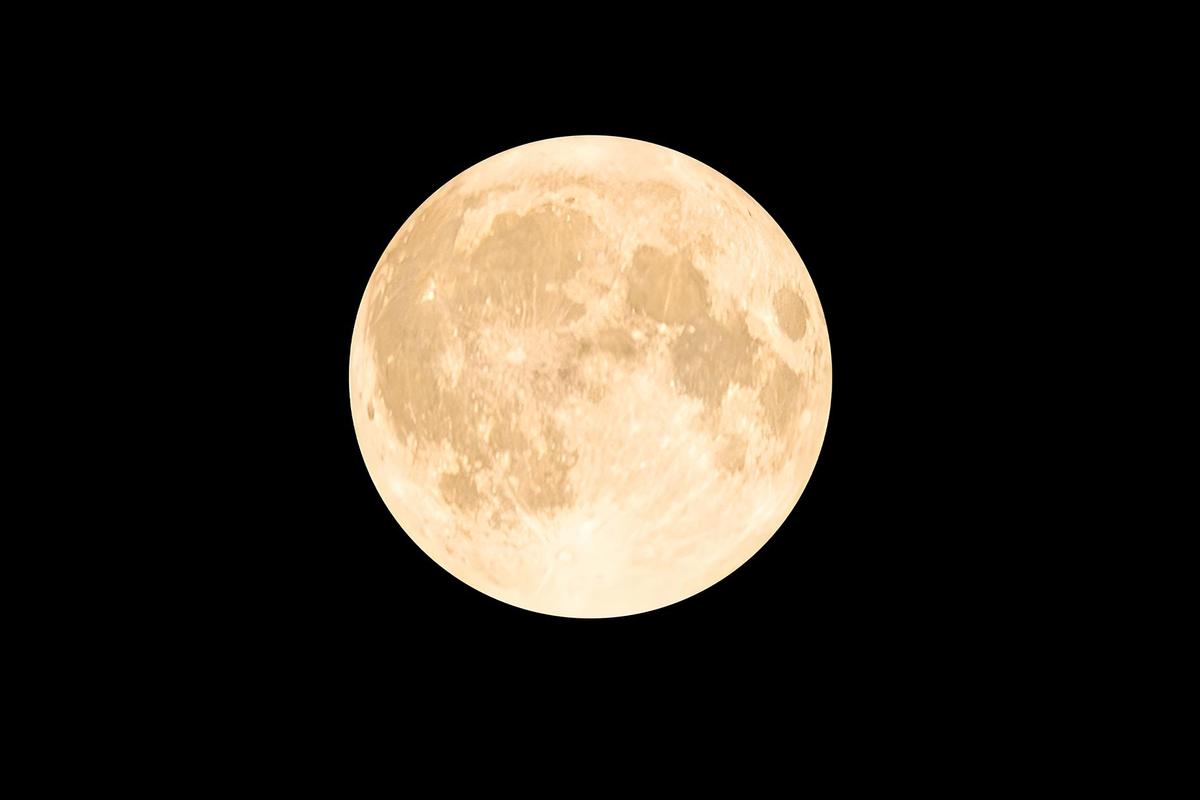
Because of cosmic geometry, summer moons tend to arc low across the sky, near the horizon. This forces moonlight to slice through more dust and haze, resulting in Rayleigh scattering: moonlight struggles through the densest part of our atmosphere, scattering shorter blue wavelengths while leaving behind a deep, smoky amber hue reminiscent of a summer sunset.
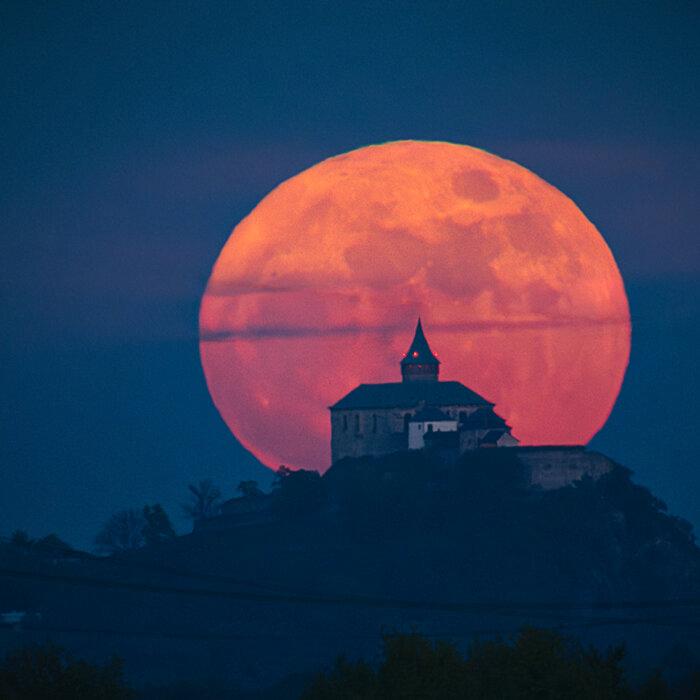
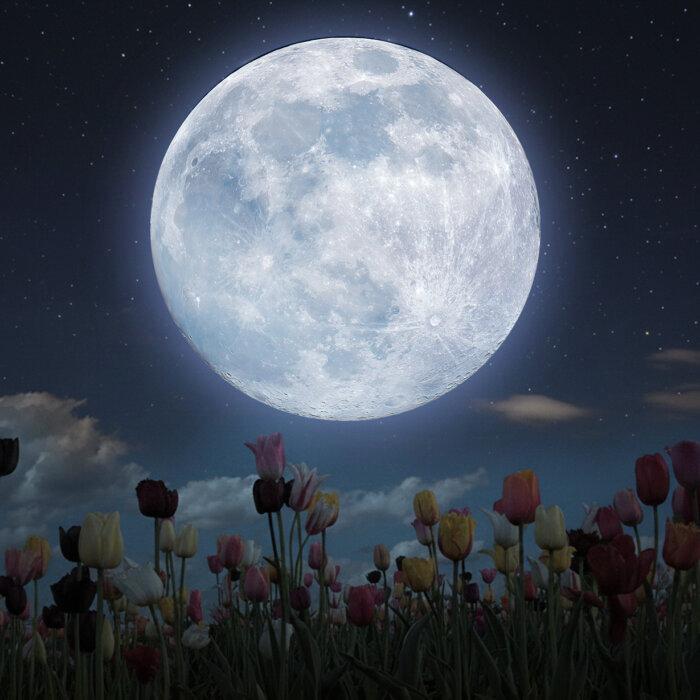
Moreover, this low-hanging moon may produce the famous “moon illusion,” where the lunar orb seems unnaturally bloated against the skyline simply because our brains compare it to neighboring trees and buildings.
But the amber full moon won’t be the only theater in the sky in late July.
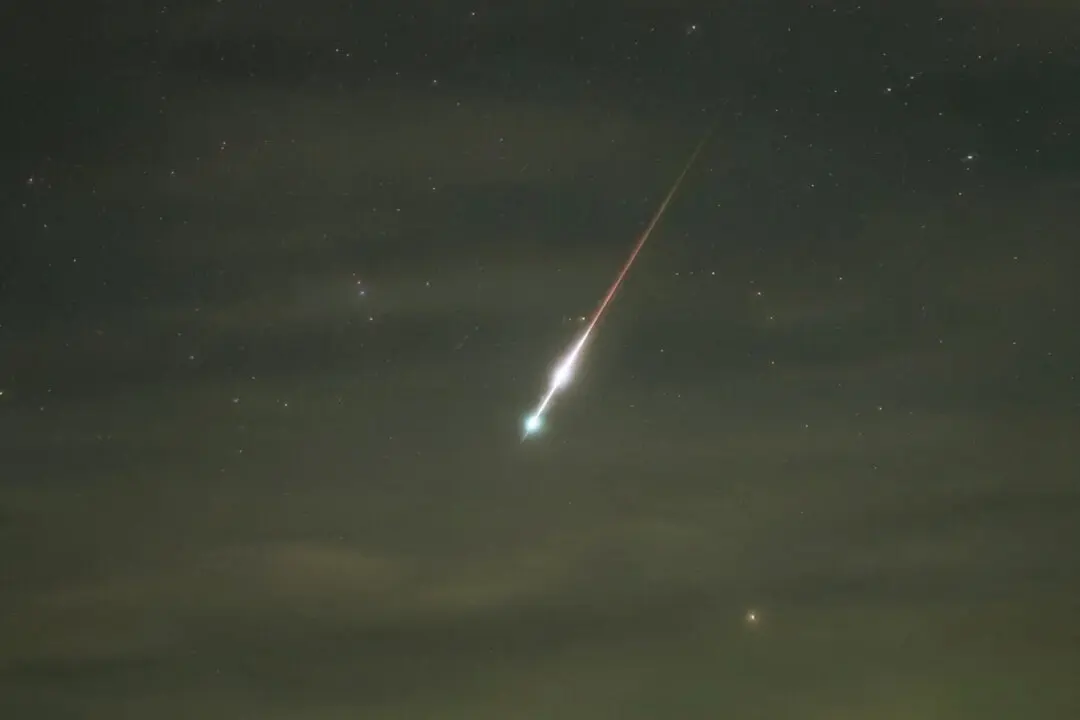
Stargazers who stay out past midnight may also catch the early streaks of two distinct meteor showers, the Delta Aquariids and Alpha Capricornids, both peaking on this same night. From our vantage point on Earth, these shooting stars will appear to radiate from constellation Capricornus—where Pluto will also, coincidentally, lie hidden billions of miles in the deep background. The unseen planet will have reached its opposition, or closest point to Earth, at this exact time, with the much-closer full moon temporarily drifting directly in front of it.
To watch all this unfold in July is to partake in a tradition that extends far beyond American shores. Across the Atlantic, the medieval Celts once toasted this lunation as the “Mead Moon,” celebrating the summer honey harvest, while ancient Chinese stargazers saw the mythical Jade Rabbit pounding the elixir of life among the lunar craters.
Today, modern humans have even added their own milestone to this legacy. Next month, the July lunar cycle will track the exact mathematical phase footprint as July of 1969. That means moon observers will witness the same cosmic silhouette Neil Armstrong and Buzz Aldrin saw from the Sea of Tranquility so many decades ago.
On that summer night, humanity’s lunar heritage officially doubled as a new landscape to explore. Decades later, it still commands us to do what humans throughout history have always done while pondering the universe: look up.