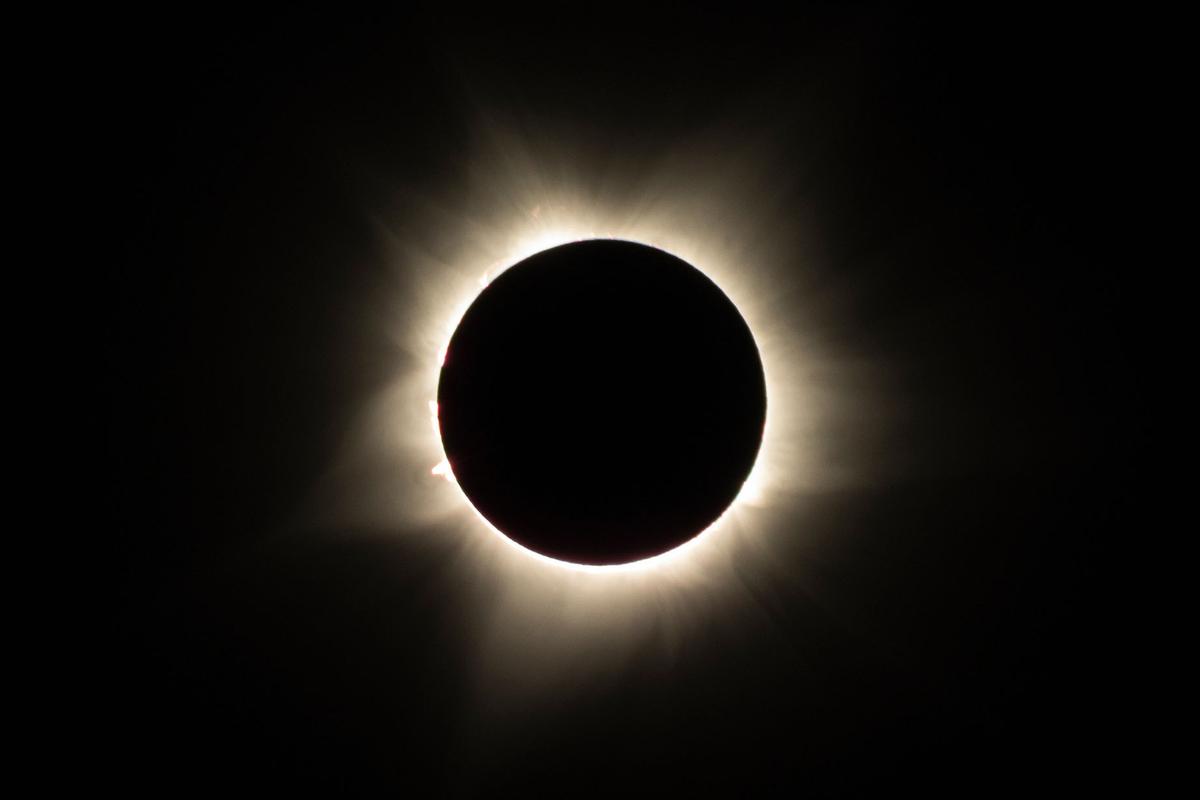
For Jamie Carter, seeing a total solar eclipse for the first time felt like a glitch in the cosmos. The whole sky became a sunset. Animals suddenly stopped moving as though night had fallen. The sun became a black disk crowned by light.
“Totality is transformative,” he told The Epoch Times. “I’ve seen people laugh uncontrollably, burst into tears, stand speechless, or simply stare in disbelief. Your brain struggles to accept what your eyes are seeing.”
Sometimes there’s the fleeting sensation the sun might never come back.
“Of course it always does—but for those precious moments, it feels as though the universe has briefly revealed a side of itself we’re never supposed to see,” Carter said. “After you’ve experienced one, chasing eclipses suddenly seems like the most obvious way to see the world.”
The iconic crown of silver light that only appears during total solar eclipses is the solar corona, the sun’s elusive outer atmosphere. Normally drowned out by the blinding glare of the photosphere, this wreath of superheated, pearly-white plasma is always invisible to the naked eye—except during totality. It hangs in the blackened sky, sculpted surreally by the sun’s intense magnetic fields.
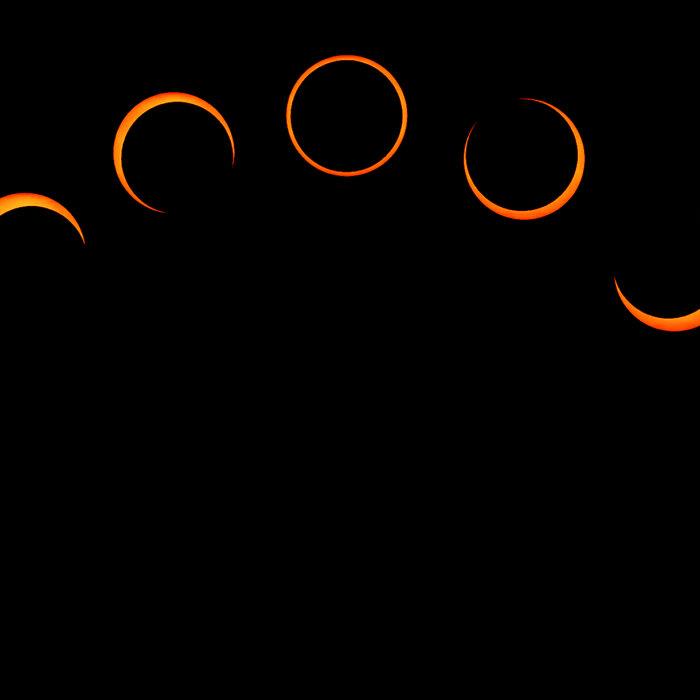
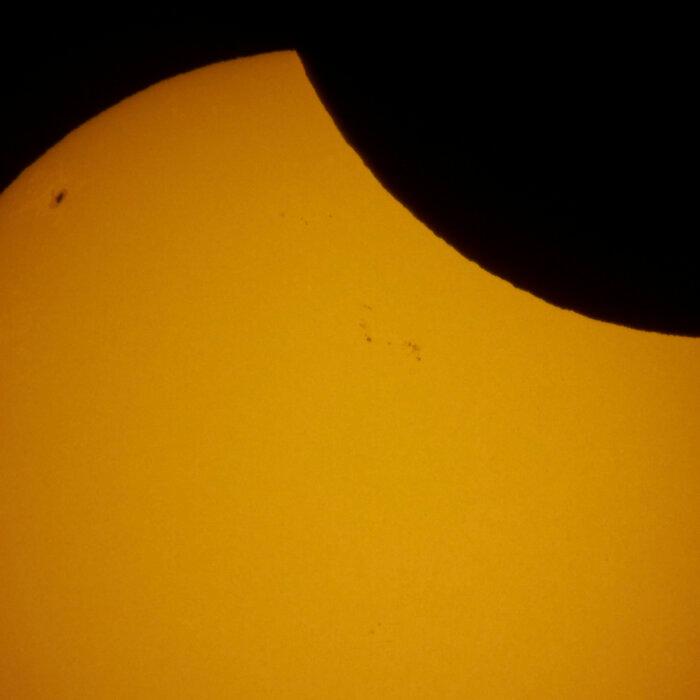
The physics behind the spectacle rely on a staggering celestial coincidence. While the sun is about 400 times larger than the moon, it sits 400 times farther away from Earth. This equalizes their sizes from our perspective, enabling the moon to completely blot out the solar surface while leaving the corona exposed.
This celestial blackout also happens to coincide with the peak of the annual Perseid meteor shower, so onlookers with exceptionally dark skies may even witness shooting stars piercing the midday twilight. Meanwhile, a cooperative new moon will prepare stark-black skies.
Next month, the impending spectacle will favor the Far North. Moving across 5,157 miles in just over four hours, the moon’s shadow will bridge the Arctic Circle, connecting both eastern and western Europe. Making first landfall in the remote wilderness of northern Russia, the darkest part of the moon’s shadow, the umbra, will sweep across the icy fjords of eastern Greenland and Iceland, before wrapping up in the skies of Spain around sunset, then finally terminating over the Mediterranean Sea.
Some 15 million people worldwide will witness at least a partial eclipse—where the moon’s half-shadow, or penumbra, creates a crescent sun across a vast, dimmed region. Only a few hundred thousand will stand within the narrow, 180-mile-wide strip where true totality is visible.
Viewers in North America, who last witnessed a total solar eclipse on April 8, 2024, will watch from the sidelines this time. Alaska, most of Canada, and the northernmost fringe of the contiguous United States will experience only a partial eclipse. The further north, the better the view.
Europe, by contrast, will catch at least some of the spectacle of totality. The continent has not seen a total solar eclipse since 1999, and for Spain the dry spell stretches back to 1905.
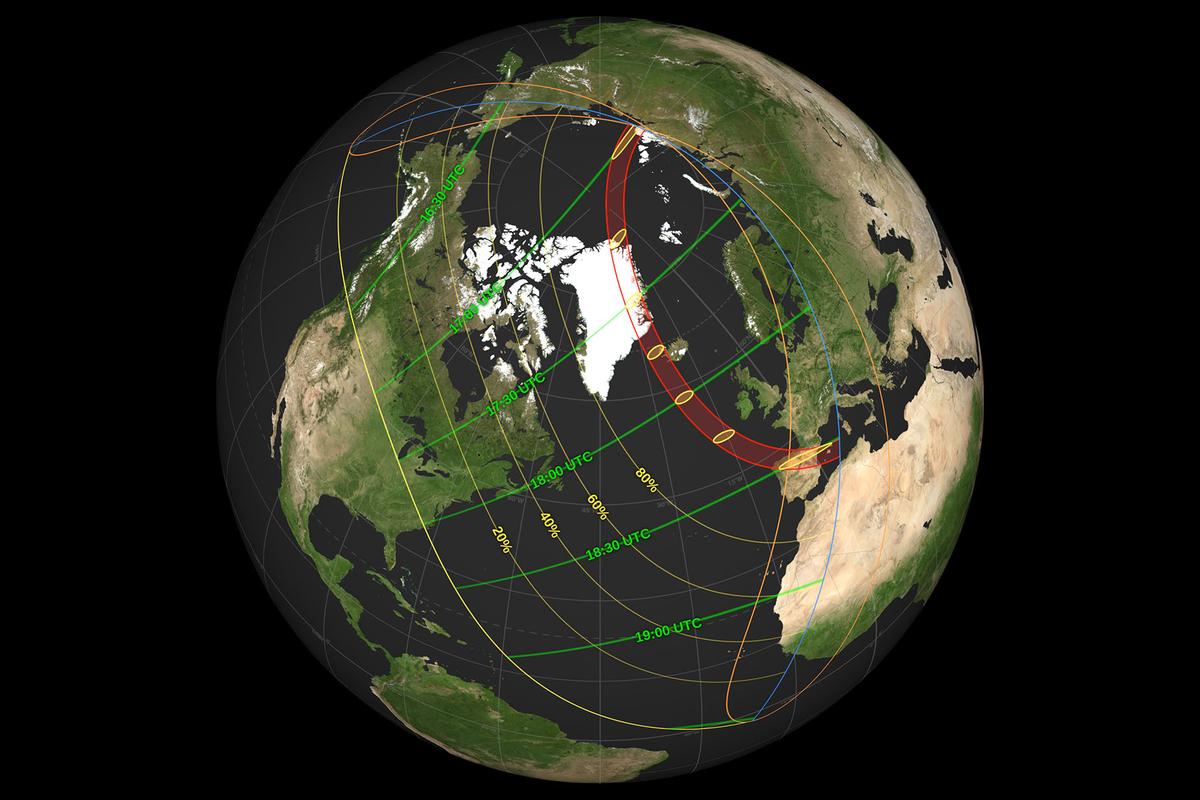
Positioning is everything when it comes to eclipses, and the spectacle will vary widely based on location. In the far North Atlantic, totality will peak at a generous two minutes and 18 seconds. Eclipse chasers like Carter’s team in Scoresby Sund, Greenland, will expect a partial eclipse to begin at 3:34 p.m. local time, with totality beginning at 4:34 p.m. In Reykjavik, Iceland, partial darkness will arrive as the workday closes, with totality arriving at 5:48 p.m.
When the moon’s shadow reaches Zaragoza, Spain, the sun will be setting, which will shrink the window of totality to under two minutes. The partial phase begins at 7:34 p.m. while totality hits just at 8:29 p.m. This rare “sunset eclipse” will turn inland Spanish cities like Zaragoza into prime viewing spots.
The big danger in eclipse spotting, of course, is eye safety from the sun’s glare. Staring directly at the sun during the partial phases can cause permanent retinal damage. Standard sunglasses, regardless of their UV protection or darkness, offer absolutely zero defense against intense solar radiation. During the partial phase viewers must use certified solar filters or dedicated eclipse glasses, which are thousands of times darker than ordinary sunglasses.
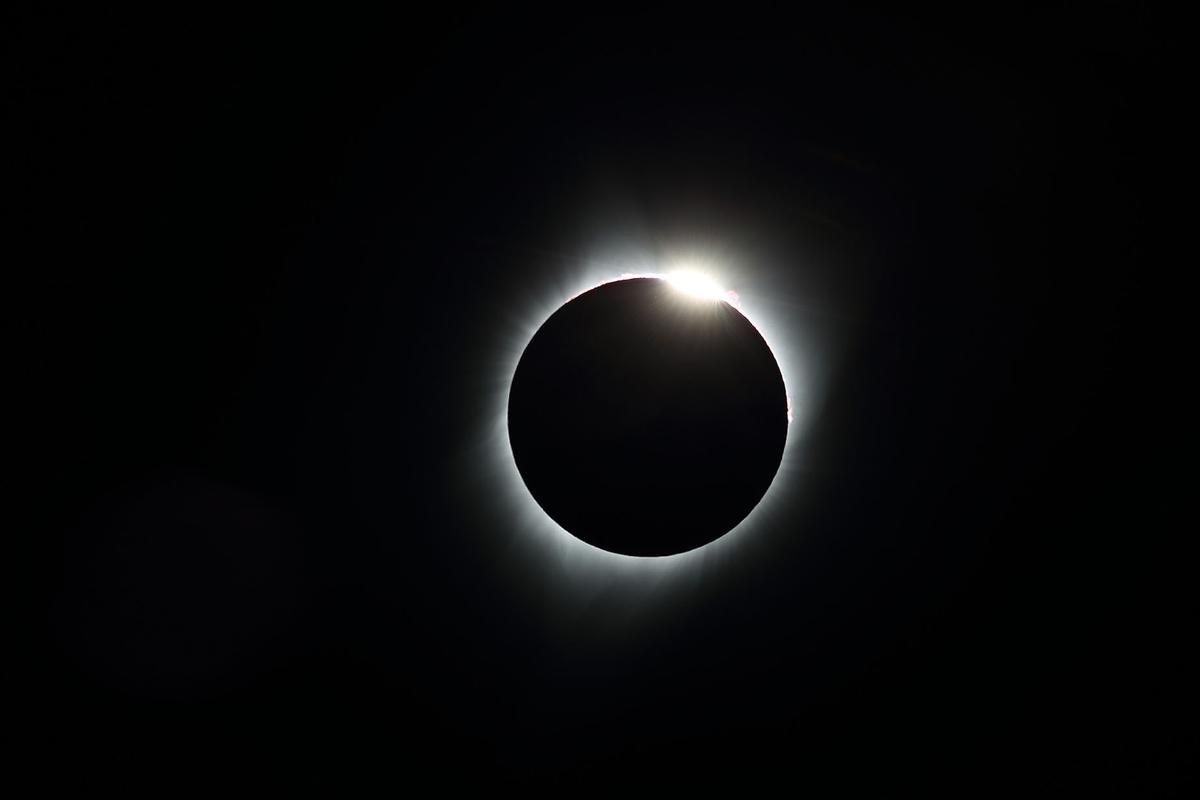
Just before the sun vanishes, the last rays of light glimmering through lunar valleys will create a shimmering phenomenon known as Baily’s Beads, or the “diamond ring effect.” Only when that ring dissolves and the sun’s bright face is entirely obscured is it safe to remove protective eyewear and look with the naked eye. Once totality ends, the glasses must go back on.
“Even after eight previous eclipses,” Carter said, “there’s simply nothing else on Earth like those few extraordinary minutes.”