Zeke Fox will never forget the night he saved a man’s life.
It was a late evening in January 2025, and Fox, then a senior at Cathedral High School in Hamilton, Ont., was driving home from a friend’s house in his parents’ Dodge Caravan. As he neared Bayfront Park the quiet night was suddenly interrupted by a drifting cloud of black smoke and the sharp, toxic odor of burning plastic.
Fox knew immediately this was no ordinary campfire.
Pulling into the gravel parking lot of Hutch’s diner, he rolled his windows all the way down and flicked on his high beams, searching the darkness.
And then he heard the screams.
“I heard someone yell, ‘Help me!’ three times,” Fox, now 19, told The Epoch Times. “And then it went silent.”

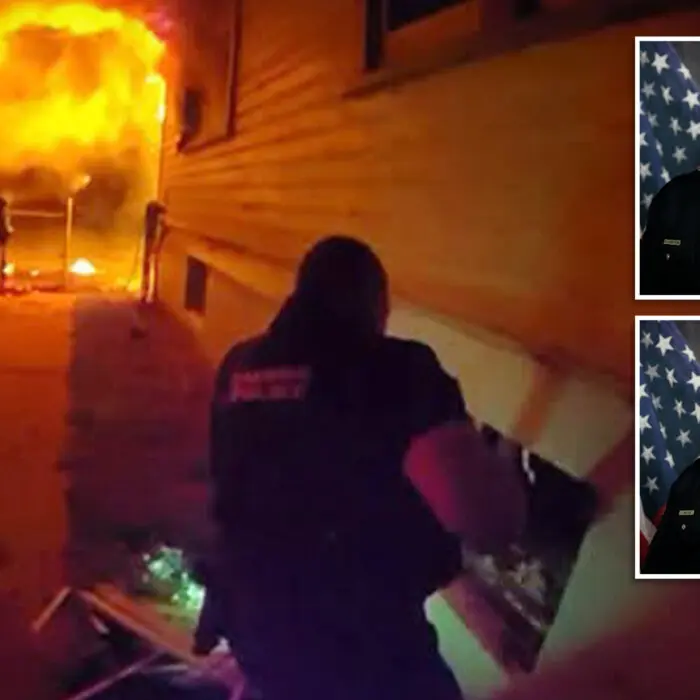
Through the darkness, he saw smoke flowing from a patchwork of tents covered by a large orange tarp about 50 feet away, near the tree line. No flames were visible, but his instincts spurred him to exit the van and run toward the sound.
“As I approached the tent, the back of the tent exploded into flames,” Fox said, adding that he was just five feet away when a huge fireball blew off part of the tent, erupting into the night sky.
“Within less than a minute, the whole tent was on fire,” he said.
The Call Home
Two blocks from Bayfront Park, Fox’s mother, Christine Fox, hadn’t yet spotted the glowing cauldron of fire that was visible from the family’s backyard. Just then, her phone rang. It was her son calling to tell her that a man was trapped inside a burning tent and that she needed to call emergency services immediately. Meanwhile, he was going to do what he could.
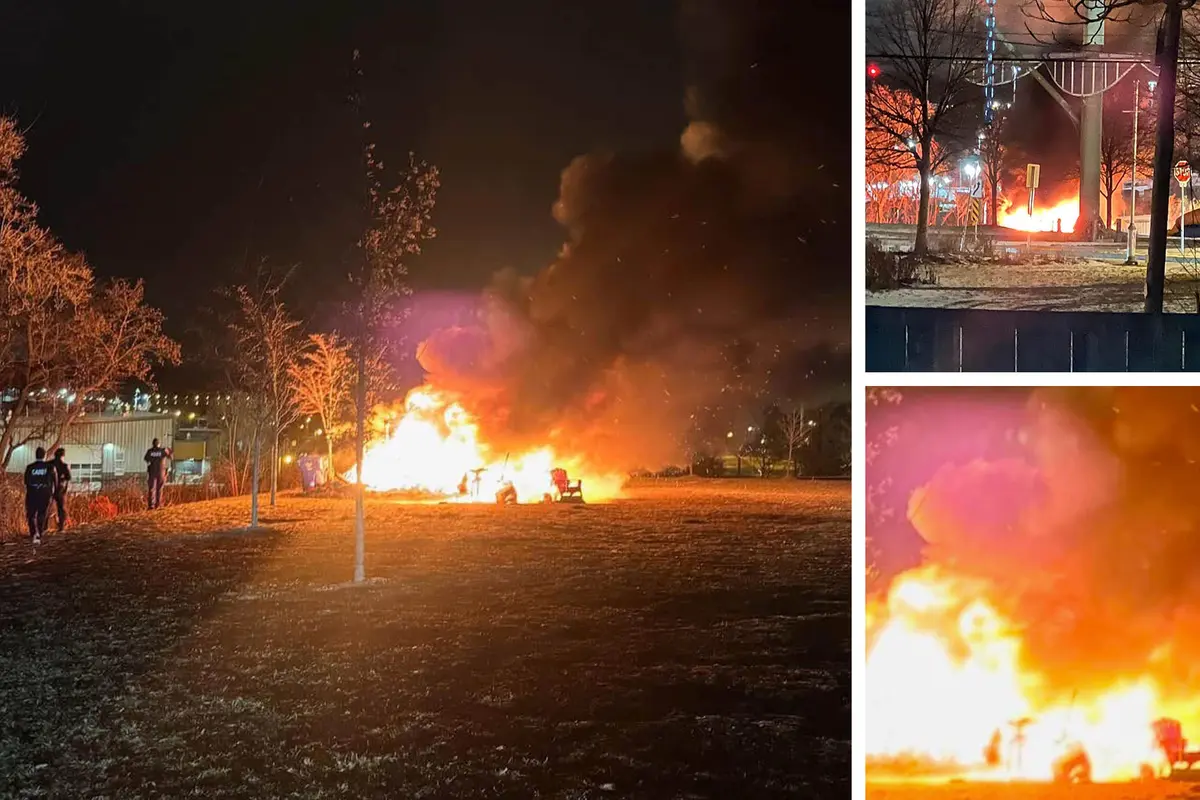
“Oh my God, I can see it,” Christine said, realization hitting her as she gazed out her back window into the empty lot. Through the receiver she heard the screams of the man still trapped inside.
“Don’t go in there because you don’t know what’s in there, it could explode,” she warned her son. “I know how homeless people heat their tents in winter, and it’s with propane tanks.” She urged him to wait; the fire department was just minutes away.
He replied: “Mom, we don’t have a few minutes. If I don’t go, he’s going to die.”
Then he hung up.
The Heat of the Moment
Placing his phone down on the snowy ground, Fox rushed to the side of the tent. He found a zipperless flap and pulled it back, instantly catching a billow of thick, black smoke directly in his face.
“It was hot, I couldn’t see anything. My eyes were watering and burning,” he said.
Peering through the haze, Fox spotted the victim, later identified as Shawn Goodwin, just five to ten feet inside the opening. Despite wearing only a light sweater, jogging pants, and steel-toed work boots, he lunged forward and grabbed the man’s arms. Goodwin was heavily tangled in a burning tarp, and as Fox tried to pull, his hands slipped and fumbled, unable to seize the man’s blistering skin.
Ignoring the blazing heat, Fox dove in. The fit 17-year-old struggled to hook his arms under the grown man’s underarms and drag him out of the tent, but eventually managed to pull Goodwin out of the inferno and into the snow.
On his knees, Fox coughed and wheezed. Goodwin lay silent, slipping in and out of consciousness. Fox caught the flicker of flashlights coming around the smoldering heap. It was an officer with the Hamilton Police Service (HPS).
“You did a good job, kid,” the policeman said, looking down at him.
The Aftermath
Even though the fire outside Hutch’s diner occurred during Christmas break, Fox missed several weeks of classes once school resumed. The rescue left him with severe physical and emotional trauma. Besides a few cuts on his lower back, he was later hospitalized with viral encephalitis—a brain inflammation triggered by inhaling the toxic burning plastic—and had to relearn basic motor skills, including how to walk.
But although he has made a full physical recovery, the emotional scars of post-traumatic stress disorder linger.
“If I hear sirens, I would start getting flashbacks,” he said. “I would hear screams in my sleep. I would hear Mr. Goodwin yelling for help.”
There are moments when Fox feels as though he’s back in the furnace, feeling Goodwin’s blistering arms slipping or seeing vivid images of his severely burned body. Today, more than a year and a half after that fateful night, the flashbacks have begun to fade. He continues to undergo counselling.
Goodwin, meanwhile, faced a grueling recovery. After being rolled in the snow by first responders to cool his wounds, he was rushed to hospital with toxic smoke inhalation and severe burns across his arms and torso, ultimately requiring multiple skin graft surgeries.
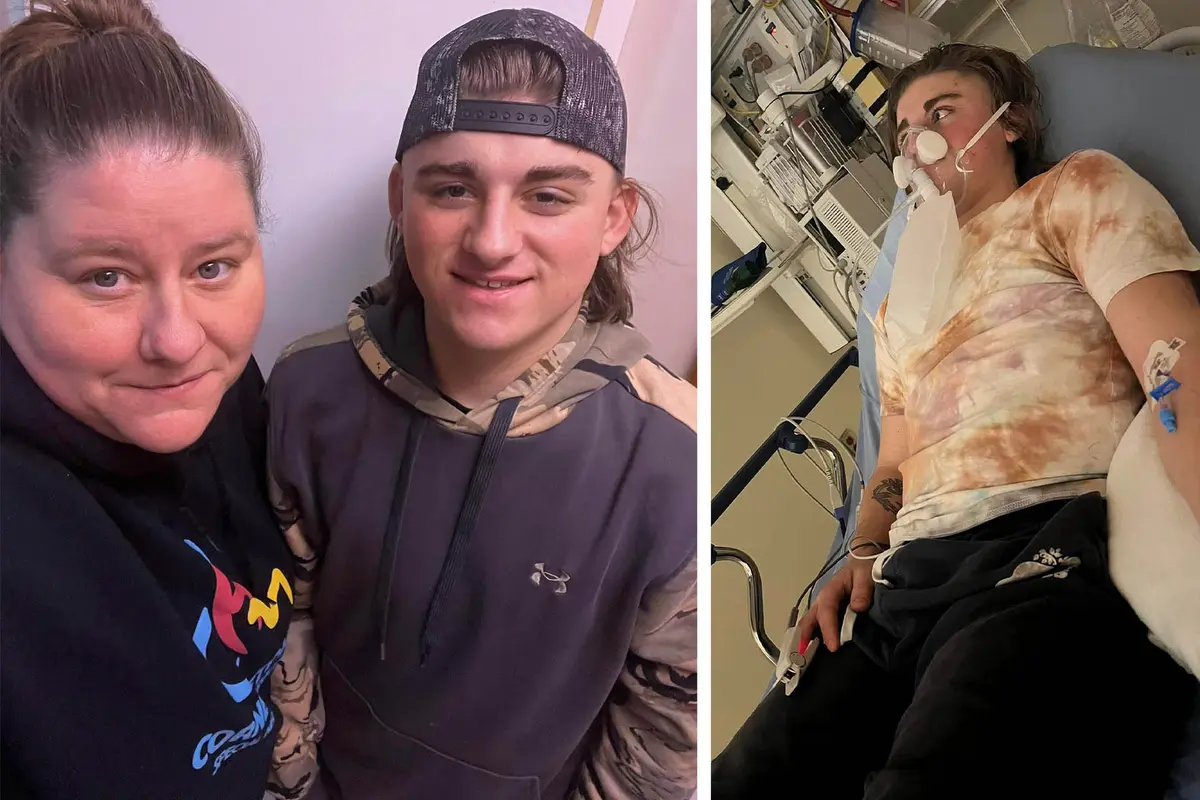
Though Fox has been widely praised in the media as a hero, he admits it’s still “hard to comprehend” what impact his actions had. Seeking closure to his own trauma, he visited Goodwin in the hospital numerous times while they processed what had happened.
“We had some conversations when he was doing a little better,” Fox said, adding that Goodwin was “super grateful.” “We connected there and talked about the outdoors and camping and all that stuff.”
Through their bedside conversations, Fox learned the harsh realities that led up to the fire. Goodwin had been living on the Ontario Disability Support Program (ODSP), but a struggle with addiction combined with skyrocketing living costs later left him unable to afford housing.
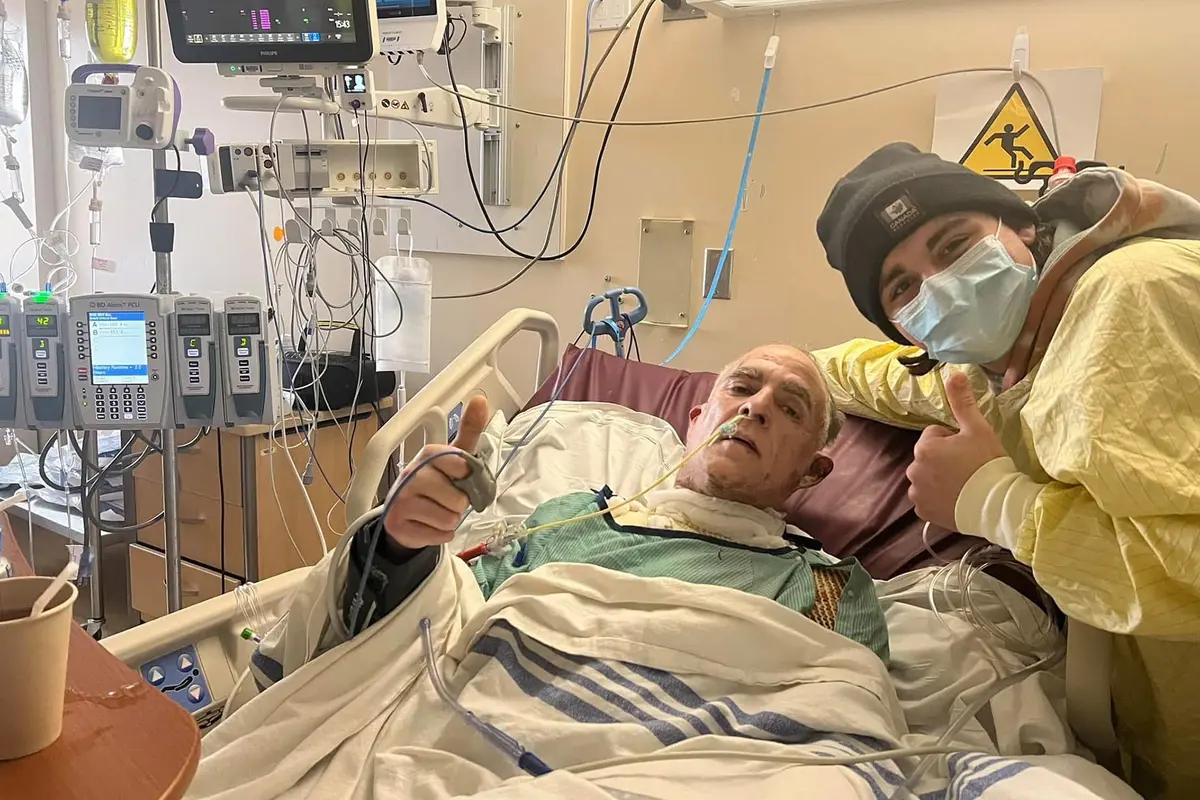
“ODSP did not go up, so it was no longer able to cover Shawn’s living costs,” Fox explained. “He was also very experienced with wilderness survival, so he lived a long time in a tent.”
The blaze itself might have been triggered by unsafe storage of materials or, as Goodwin told Fox, someone might have set his tent ablaze. The impact was the same: Goodwin lost everything, and nearly lost his life.
Neither Fox nor his mother have heard from Goodwin since he was discharged from hospital.
A Calling to Help Others
As Fox searched inward to heal emotional scars, undergoing therapy and meeting with Goodwin several times in the hospital, the rest of North America took notice. Impressed by his actions on that freezing night, a paramedic who was onsite nominated Fox for formal recognition.
The accolade reflects the 19-year-old, whom his mother describes as someone always selflessly helping others—whether it’s supporting his autistic younger brother or caring for the vulnerable in his current job as a personal care attendant.
The life-changing incident also solidified his career ambitions to become a policeman. In a poetic twist, Constable Carter Taylor—the HPS officer who first comforted him at the scene of the fire—has become a close mentor. Fox will study police foundations at Mohawk College next fall.
“He’s always looking to help somebody,” said his mother, adding that she was “not at all surprised” he crawled into the burning tent to save a stranger. It’s not the first time he’s intervened to help others.
When asked what drove him to risk everything, Fox’s response was simple: “It wasn’t a decision—this has to happen,” he said. “I knew what I had to do, I knew what I could do, and I just did it.”