Sixty miles above the Earth, a flurry of silent, incandescent flashes will soon sprinkle across the midsummer night sky.
There’s a good chance you'll see beams of light and fireballs when the Perseids—arguably the year’s best meteor shower—rendezvous with Earth again this August. A highly favorable lunar calendar will make the annual event look even more magnificent this year, promising ideal dark skies.
Overnight on Aug. 12, the Earth will plow through the densest part of an ancient stream of space debris. Pieces of a comet will collide with our atmosphere, blazing by at 37 miles per second and vaporizing into bright tails of light—or, in the case of larger fragments, fireballs. During this cosmic intersection, an observer might see up to 100 shooting stars per hour.
Every summer, the Perseids build to their crescendo gradually before dropping off sharply post-peak. Because of this permanent asymmetry, the best viewing is always the weeks leading up to the climax rather than after; this year, that slow build-up begins around July 14, giving stargazers a long runway of dark skies before the cosmic curtain falls abruptly in mid-August.
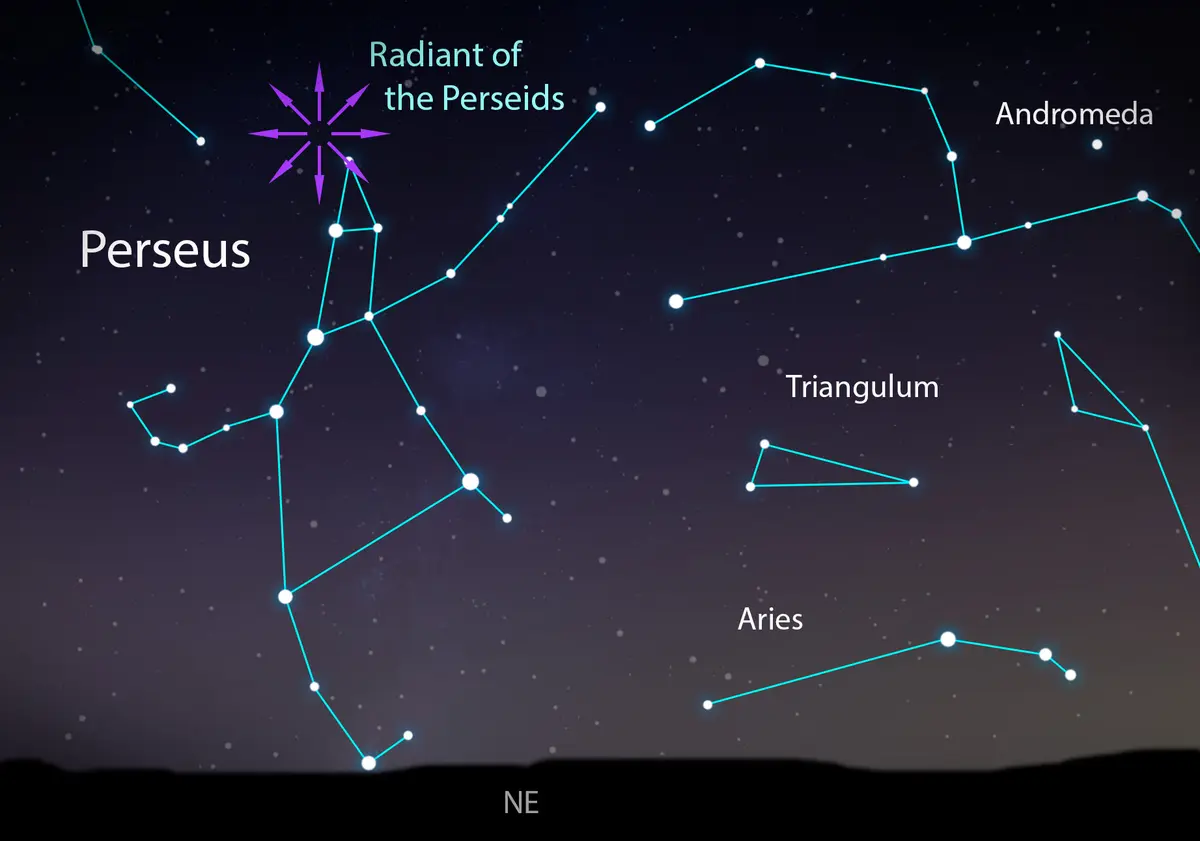
For anyone hoping to catch the display, experts offer an unexpected piece of advice: look away from the source. The shower appears to radiate from the northern constellation Perseus—hence their name. But meteors appearing here have short, stunted tails while the longest, most dramatic streaks will flash across the wider expanse of the sky. So the best approach is to lie back on a blanket between midnight and dawn, allowing your eyes to adjust to the darkness.
Darkness is a necessity when watching meteors. It’s imperative to find a vantage point with few city lights and as little moonlight as possible. Fortunately, an invisible new moon occurs precisely on Aug. 12—the night the Perseids peak—creating the most pristine viewing conditions in years.
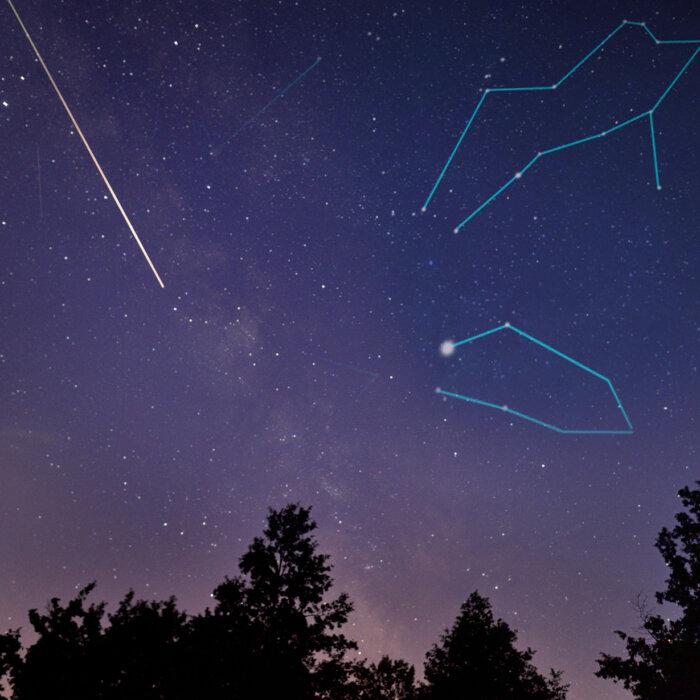
To see this flurry, observers should wait for constellation Perseus to rise high. While a few long, grazing meteors known as “earthgrazers” can be spotted skimming the horizon early in the evening, the real volume begins closer to midnight. As the morning hours approach, the Northern Hemisphere tilts directly into the oncoming stream of particles, making the display vastly more abundant.
Because the meteors seem to blast outward from a single point anchored against stars dozens of light-years away, it is easy to imagine them as messengers from deep space. But this cosmic alignment is a pure optical illusion; meteors appear to converge for the same reason railroad tracks seem to merge at the horizon. In reality, the flashes are entirely local, occurring as close as 60 miles above our heads.
The true birthplace of the Perseids lies within our own solar system. This debris stream consists of crumbly leftovers of a space object so large it could have ended the dinosaurs.
Comet Swift-Tuttle is a monolithic mountain of ice and rock that spans roughly 16 miles across. First mapped during the American Civil War, Swift-Tuttle takes 133 years to complete a single, highly eccentric loop around the sun. As solar heat warms its icy surface, the comet sheds a heavy trail of frozen gas, dust, and rock, seeding the cosmic highway with meteoroids.
But while physics dictates how particles burn up in the night sky, it is human curiosity that leads us to celebrate them. For astronomers the Perseids are an event worth staying up for, while photographers will go to great lengths to capture them. It takes planning, patience, and the right equipment.
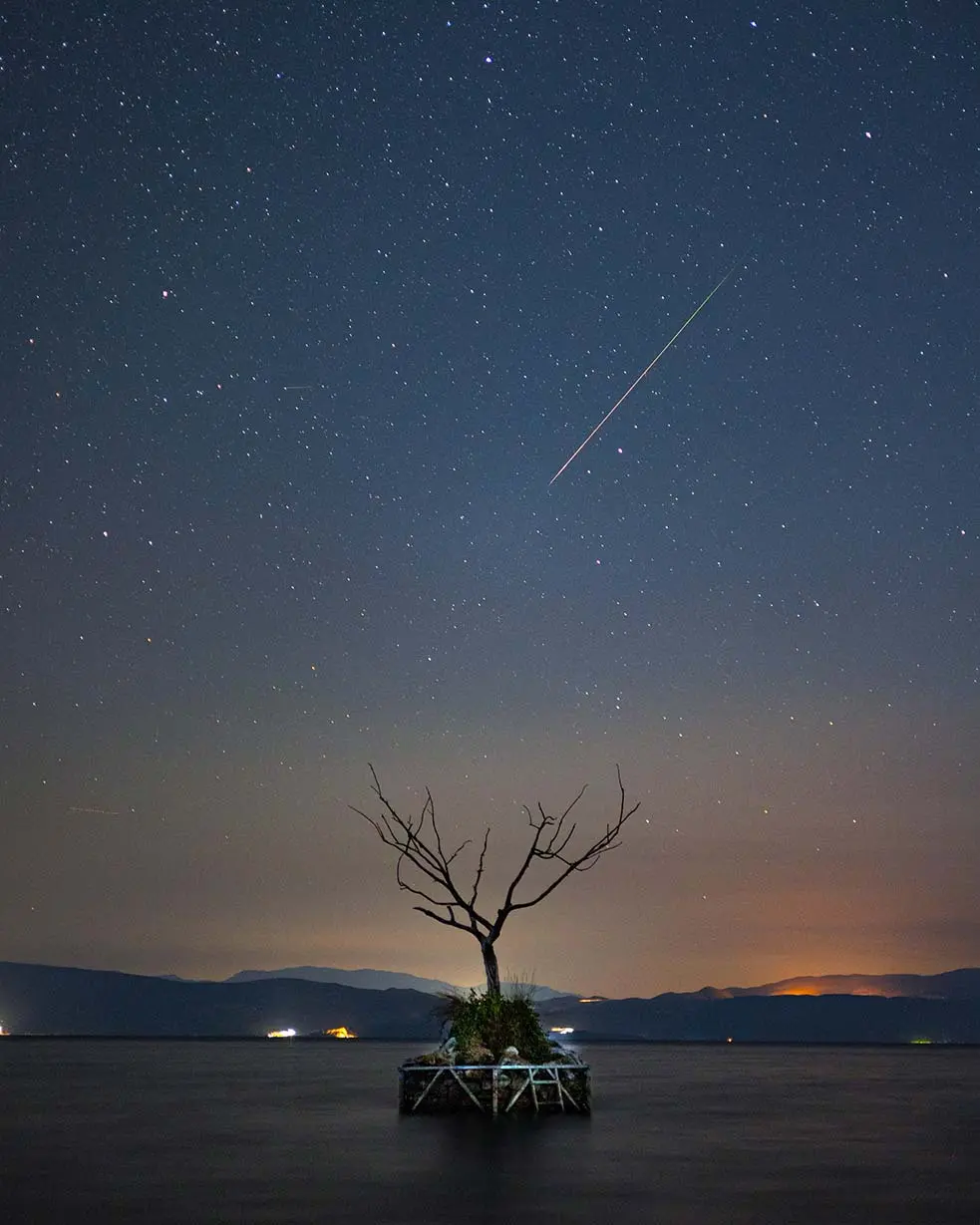
Macedonian photographer Riste Spiroski chose the ancient Lake Ohrid to capture this cosmic crossroads on camera.
“After nearly two hours of planning and patiently waiting under clear skies, I was fortunate to capture this bright meteor as it streaked across the night sky at around 1:40 a.m.,” Spiroski told The Epoch Times, speaking of his Perseid photoshoot in 2024. “It was one of many that lit up the sky that night, with more than 10 bright meteors visible in less than an hour.”
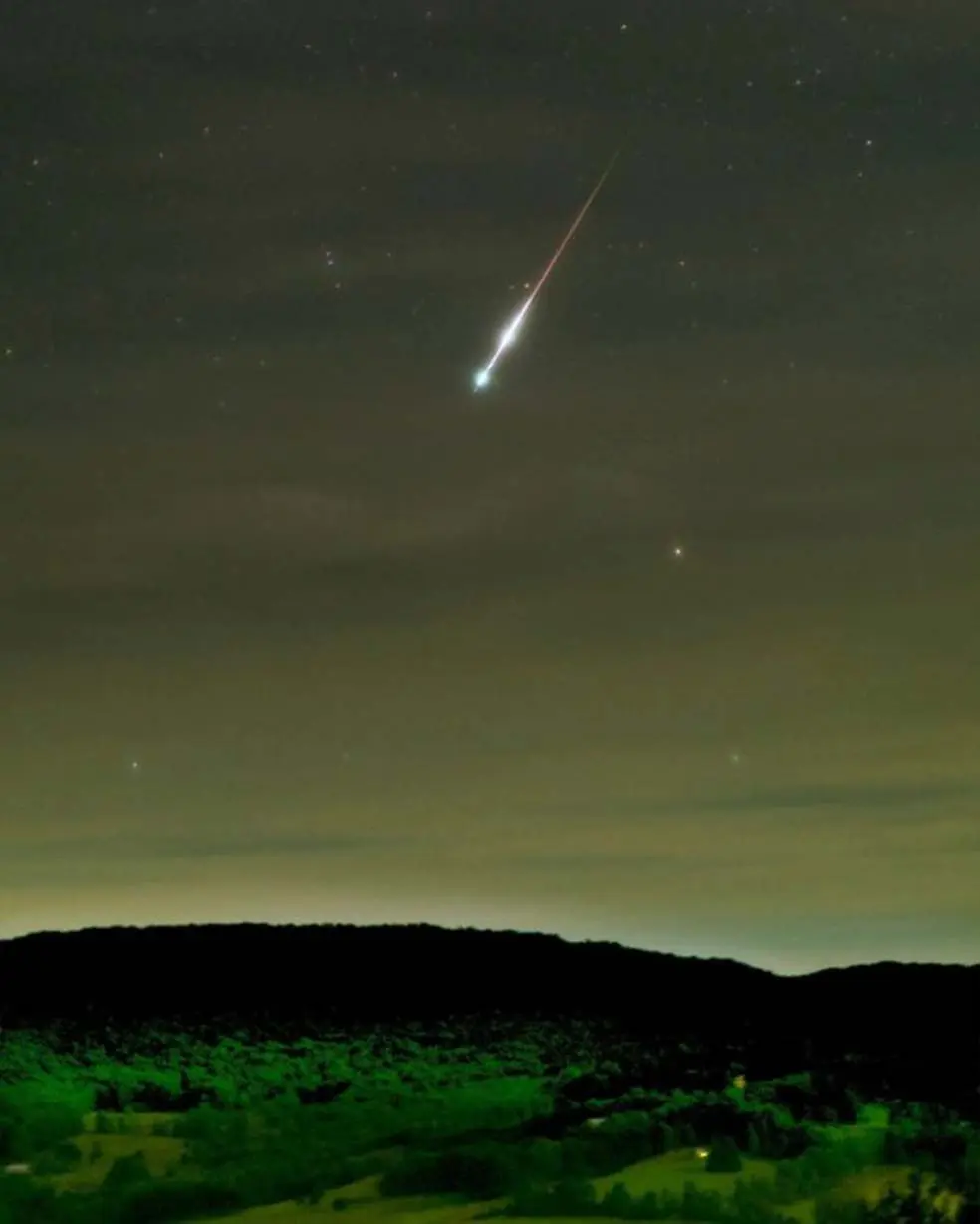
While lakes make lovely reflections of the stars, some prefer the beauty of their own backyards—particularly in the Catskill Mountains, near Halcottsville, New York, where photographer Garth Battista relies on dark skies and continuous automation.
Using his Sony a7 III camera paired with a wide-angle Sigma 16mm lens, Battista programs an intervalometer to record continuous 20-second exposures over the course of the night.
“We live there and feel extremely lucky that the skies are dark, and not washed out with light pollution,” Battista told The Epoch Times. “The moon had recently risen and lit the foreground.
“Every now and then you get lucky and a fireball meteor blazes across the frame.”