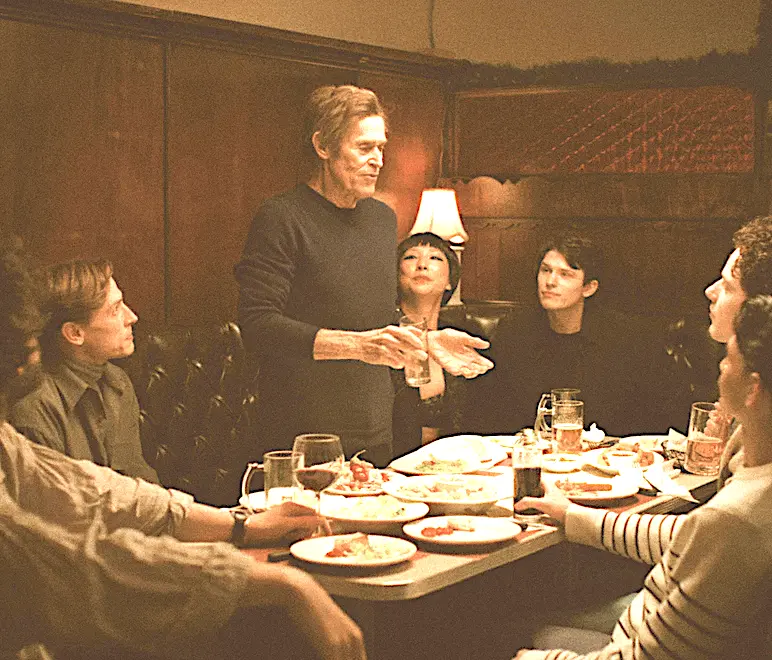
PG-13 | 1h 39m | Action, Adventure, Thriller | 2026
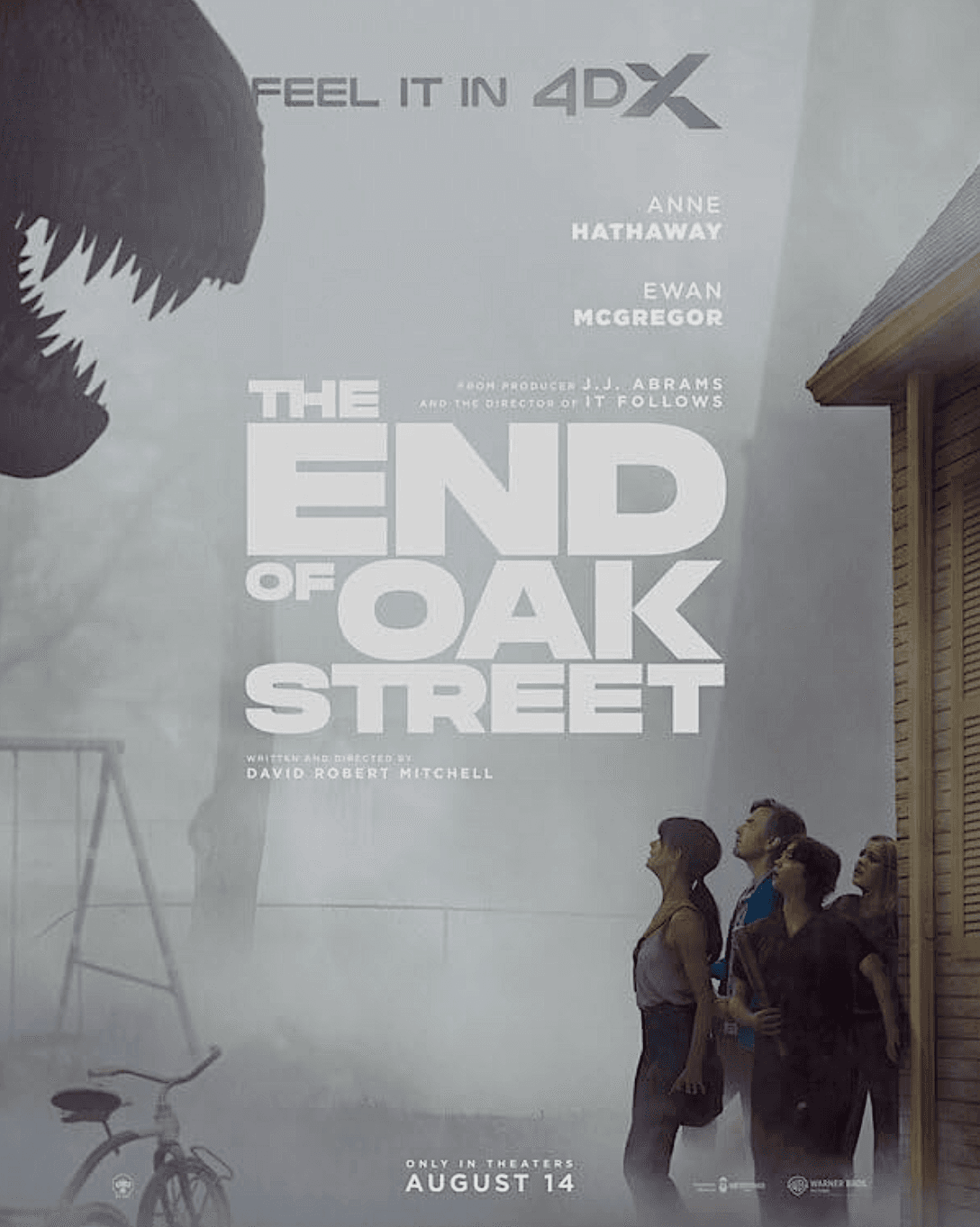
The Platt family lives in a cozy American suburb, circa 1982, in David Robert Mitchell’s action-adventure-thriller “The End of Oak Street,” a throwback to 1980s’ summer blockbusters. It’s “Jurassic Park” meets “Back to the Future,” but the comedy is darker and has more, er, bite.
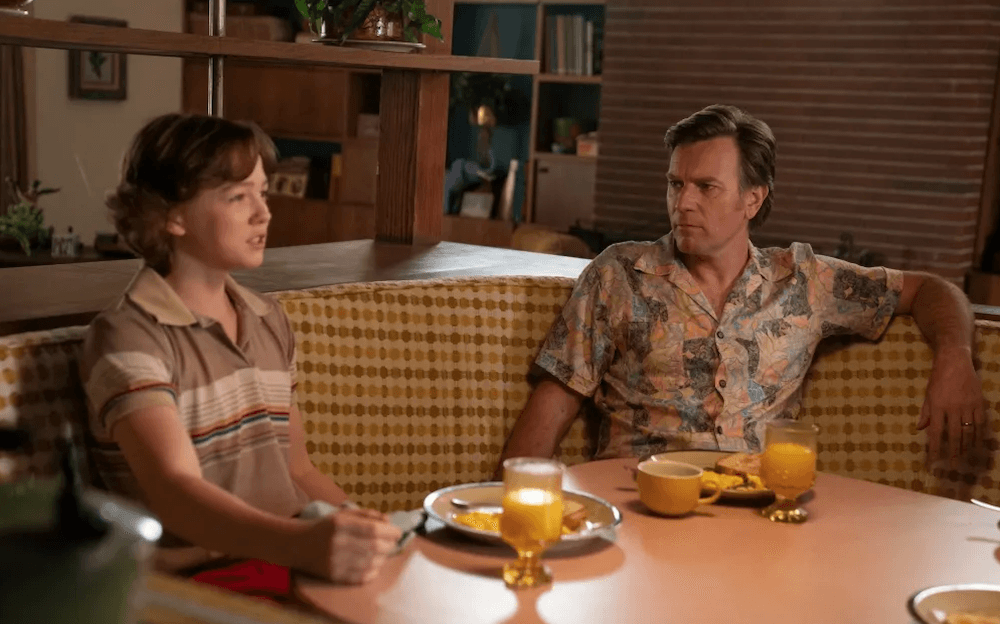
However, things are on shaky ground at home. Mom, Denise (Anne Hathaway), and dad, Greg (Ewan McGregor), bicker nonstop.
Denise is not happy. She fantasizes, via surreptitious basement novel-writing, about leaving the family and starting a brand new life. Greg has had to take a demeaning side-gig to make enough money to support their two teens—daughter, Audrey (Maisy Stella), and son, Brian (Christian Convery).
The Family That Avoids Becoming Dino Snacks Together, Stays Together
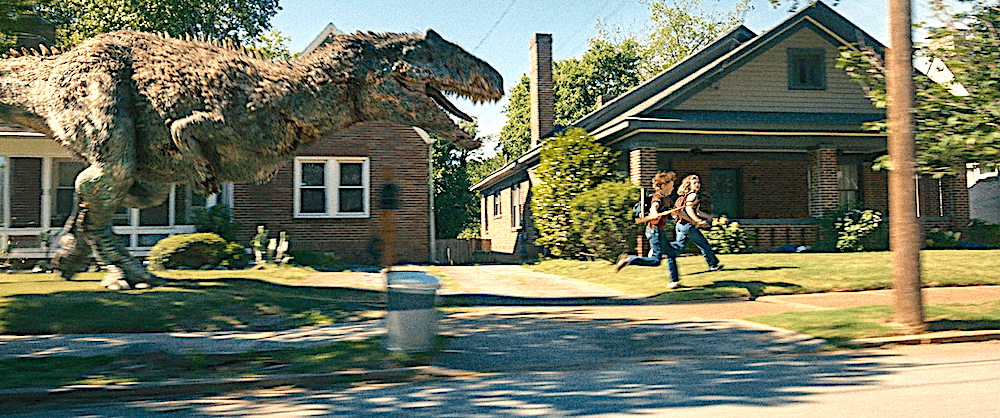
One night, there’s a bunch of lightning and wind! What the heck?? Due to some kind of wormhole science, a 10-miles-in-diameter disc of the Platt’s neighborhood zips backwards in time and plunks down in the middle of the Jurassic era. It used to be suburbia! But now it’s disturbia!The Platts must survive as T-Rex and a plethora of giant chicken-ancestors commence feeding, in bloody (but also comedically well-timed) fashion, on their neighbors. The dinosaur munch-fest hasn’t been this scary or amusing since the original “Jurassic Park” (1993).
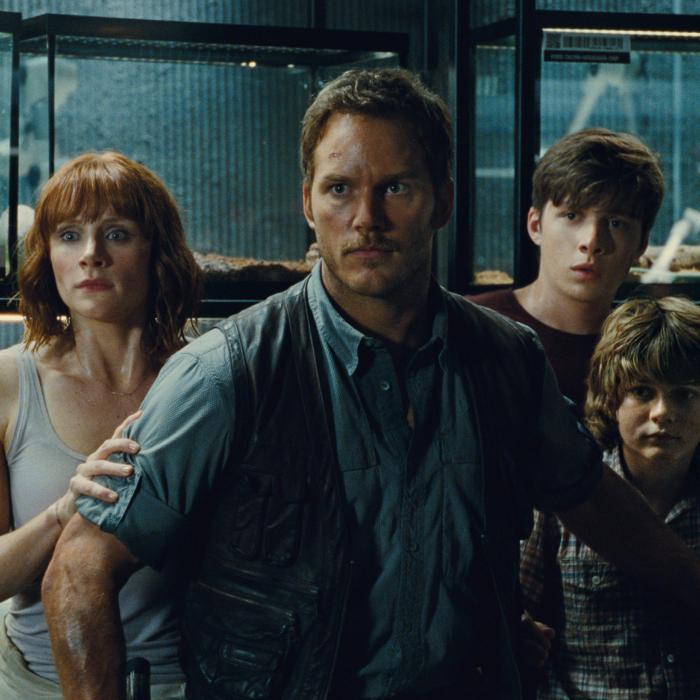
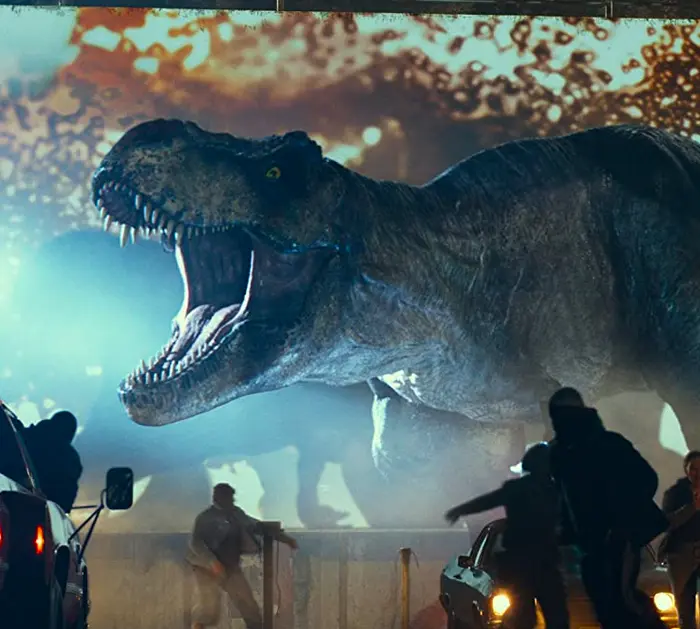
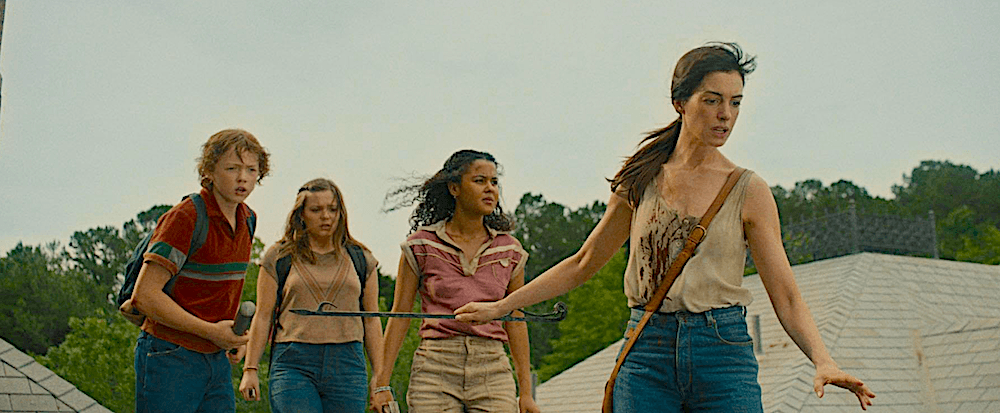
Suburbia is a good setting. While dinos occasionally made it off the island and into mainland settings in the Jurassic sequels, “The End of Oak Street” supplies both the danger and the family-first ethos that had dwindled in the sequels to Spielberg’s quintessential blockbuster.
Paved Paradise
The trickier maneuver is portraying the arc necessary for Denise and Greg to be able to grow, change, and ultimately get back together. All the sprinting from (it must be said) slightly ratty CGI dino-chickens, skinny pterodactyls, and an anaconda-sized, grey, proto-amphibious-worm-snake-thingie—rarely allows for that.Denise’s shotgun-wielding is impressive. After all, her cubs are being threatened. Kindly Greg dithers about rather ineffectually. Normally male inability to take charge and demonstrate warrior tendencies doesn’t reverse chronic disgruntlement in the female of the species.
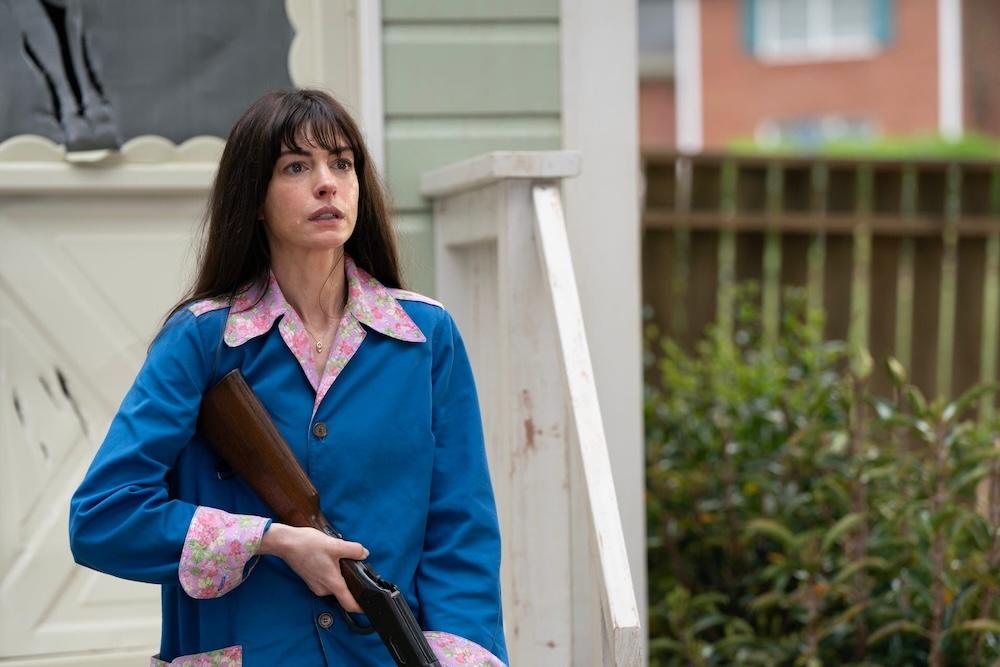
What takes the place of Greg growing into his inner boundary-setter is Joni Mitchell’s “You don’t know what you’ve got til it’s gone.” But that doesn’t really apply either, because the whole movie is the inverse of “Paved paradise—put up a parking lot.” Here, paradise grows through the pavement, bringing man-eaters with it.
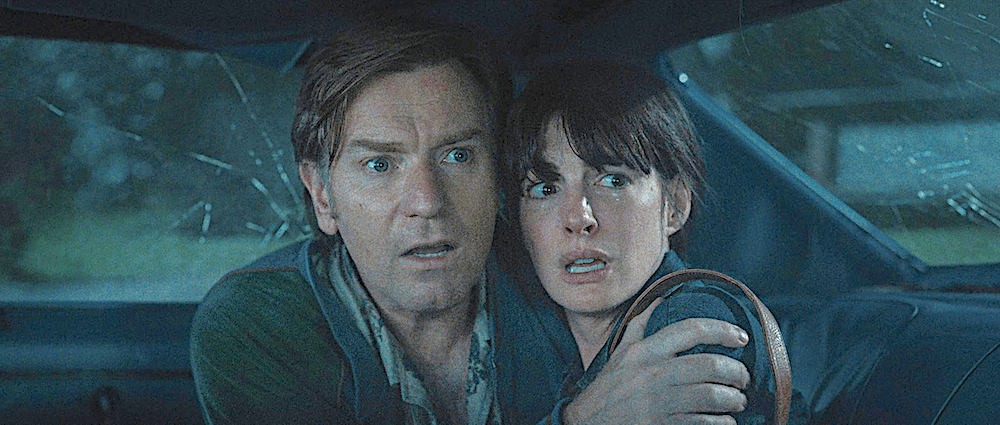
It’s strange to think that this kind of broad, family-based blockbuster is now an endangered species. All in all, this Amblin-like blockbuster-knock-off, with its middle-class suburbia supporting a family-sticks-together-through-great-danger narrative, works. It’s clearly not intended to set up a lucrative franchise. It’s a throwback to when movies could simply be enjoyable escapism.