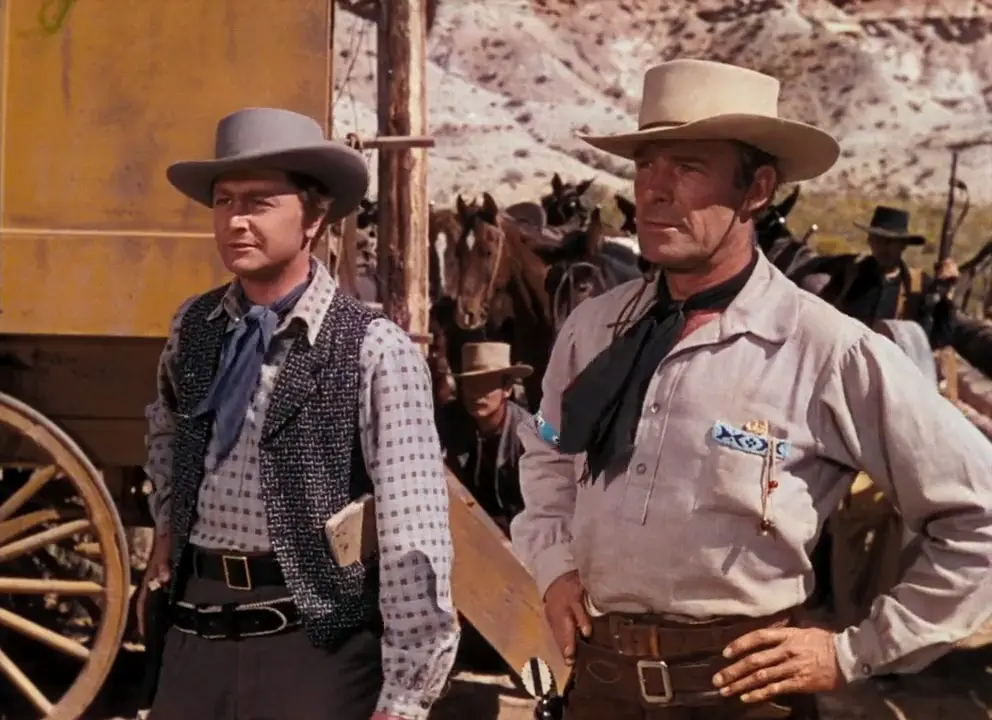
Set during the American Civil War in Confederate stronghold Virginia, “Shenandoah” ponders the futility of war while acknowledging its mournful mandate for young, able-bodied men.
The Confederacy needs new soldiers in its losing battle to the Union. Who better to recruit than sons? The Shenandoah Valley’s widower and landowner Charlie Anderson (James Stewart) has six.
Charlie has defended his family from threats for decades. But when a Confederate officer pleads, “Virginia needs all of her sons,” he fumes. Why should he sacrifice his sons to a war that isn’t his? After all, he’s never owned slaves and consistently denounced the Confederate defense of slavery.
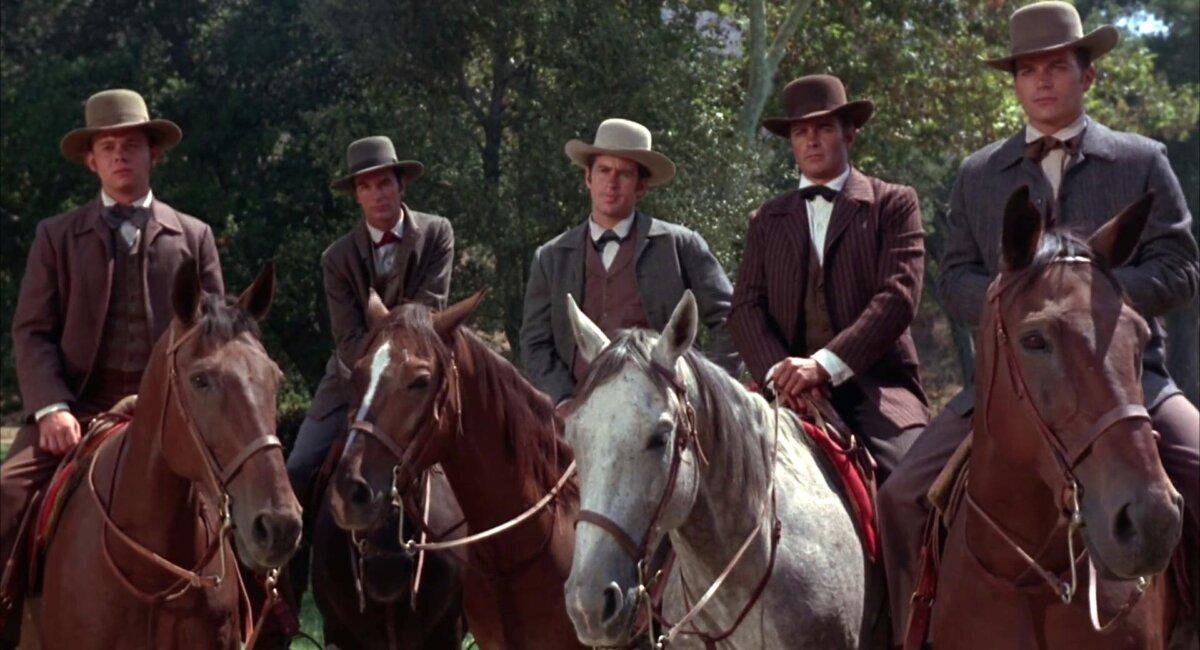
His otherwise respectful sons bristle at this; they believe their duty is to the state as well as their families and farms. As the war takes its toll, Charlie wonders if he must broaden his definition of family to include Virginia.
Charlie is a man of contradictions. A self-important individualist, he still can’t imagine life without his beloved wife Martha. His issue isn’t with the Civil War in particular, but with fighting in general. He’d rather be farming instead.
All Life’s a Battle
If the American Revolution was a fight for freedom, the American Civil War is now a fight to preserve, refine, and even redefine that freedom. Charlie has been fighting his whole life; he just hasn’t acknowledged it.
He’s fought brutal floods, parched summers, bitter winters, pestilence, and crop failure. Martha had once fought alongside him. She fought off death by childbirth, year after year, until she could fight it no longer when their youngest son, Boy (Philip Alford) was born.
Boy is special to Charlie, but it doesn’t mean he loves his other children less. It’s just that he responds differently to each child.
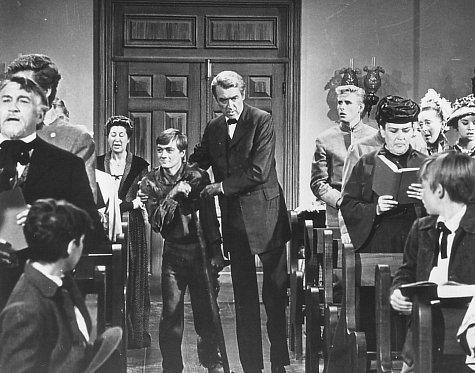
Opening Scene
As cannonfire booms in the background, Jacob hints that the fighting is getting closer to their farm. It’s time he and his brothers signed up for soldierly duty.Charlie asks, “Are they on our land?” Jacob replies, “No, Sir.” Charlie smirks, “Then it doesn’t concern us,” and pauses, as if asserting and asking at once, “Does it?”
That’s Charlie’s conundrum. It haunts him until he acknowledges privately what he won’t admit publicly.
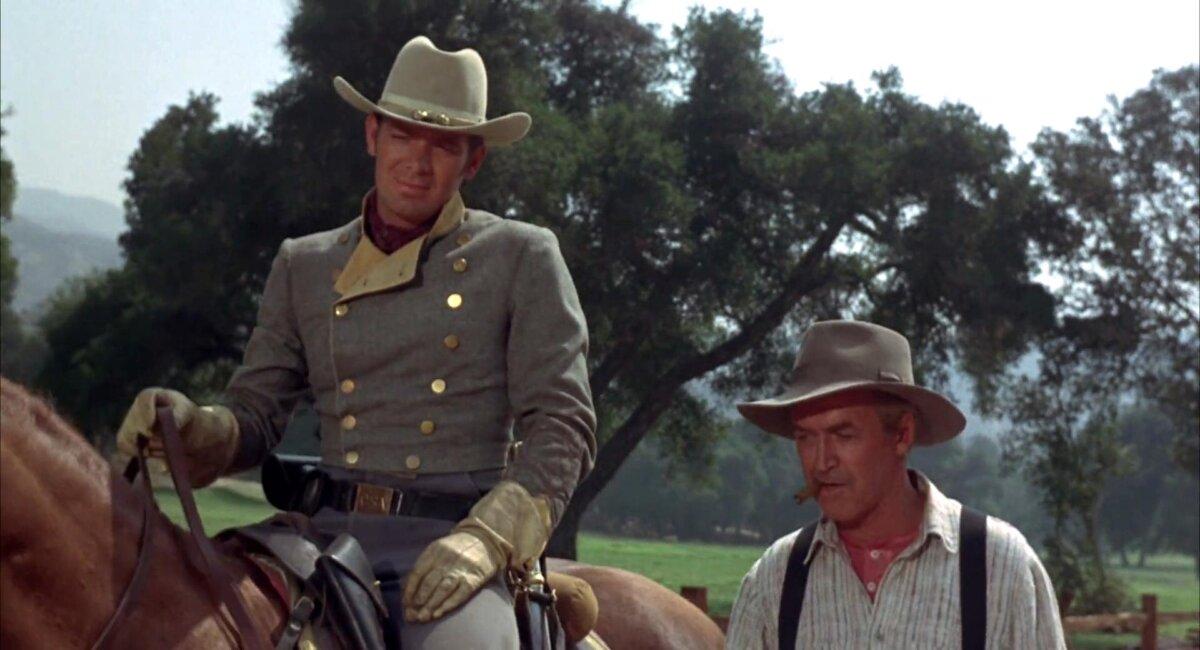
Later, that poser finds its echo when Boy, caught up in the chaos of war, goes missing. Bitter, Charlie says with finality, “Now it does concern us.” He and the family mount up a search posse.
Every day, for years, Charlie has acted like he owns his sons, ordering them about even as adults so he can protect their shared way of life. But he finds it inconceivable for a state to call upon its citizens, once every few years or once in a lifetime, to protect their shared way of life.
Jacob tells Charlie as politely as possible, “You say it’s not our fight. But we’re Virginians and anything that concerns Virginia concerns us.”
For his myopic view of what (and who) deserves defending, Charlie pays a price. As if teaching him a lesson, at church the pastor lists three duties: to God, to our neighbors and to our state that gives us sustenance and provides for us.
Eventually, Charlie senses that putting up a fight is necessary at times. He wishes it wasn’t because of the senseless waste of young lives.
As long as selfishness or cruel ambition prevail, wars may continue to be fought. Brave men must defend their own. Charlie wonders, how nice if wars didn’t have to be fought in the first place. Sure, that’s idealistic. Does it mean it will ever go out of fashion?