Some of history’s greatest monuments are surrounded by as many legends as the mythical heroes that inspired them. It is no surprise, then, that much of the artistic devotion given to these inspiring works was born from a deep reverence and the idea that the statues were more than stone and metal; they were imbued with the divine presence of their deities.
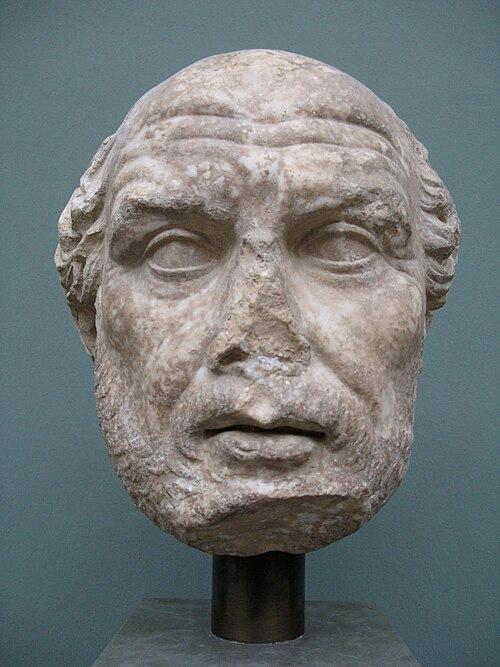
Of the many tales attributed to these masterpieces and their artists, few hold a higher position in the history of architecture and mythology than that of the Greek sculptor Phidias. His depiction of Zeus, taken from Homer’s “Odyssey,” became the standard characterization at the time of its inception in the 5th century B.C. and has remained so for 2,400 years.
The roots of Western civilization trace back to a single lineage of great teachers. Alexander the Great was the pupil of Aristotle, who was Plato’s pupil, and Plato was Socrates’s pupil. All three were products of the Grecian Golden Age, and all three praised the genius of the architect who largely defined the visual and spiritual aesthetics of their age: Phidias.
Phidias, the Innovator
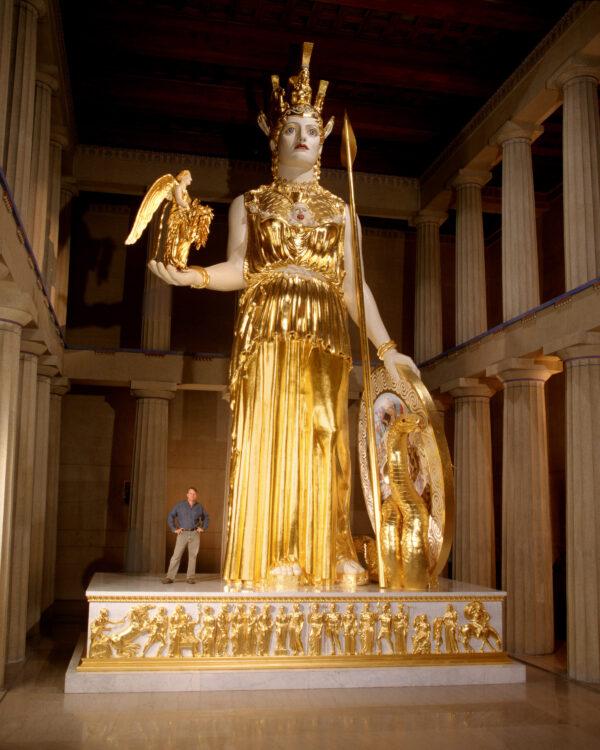
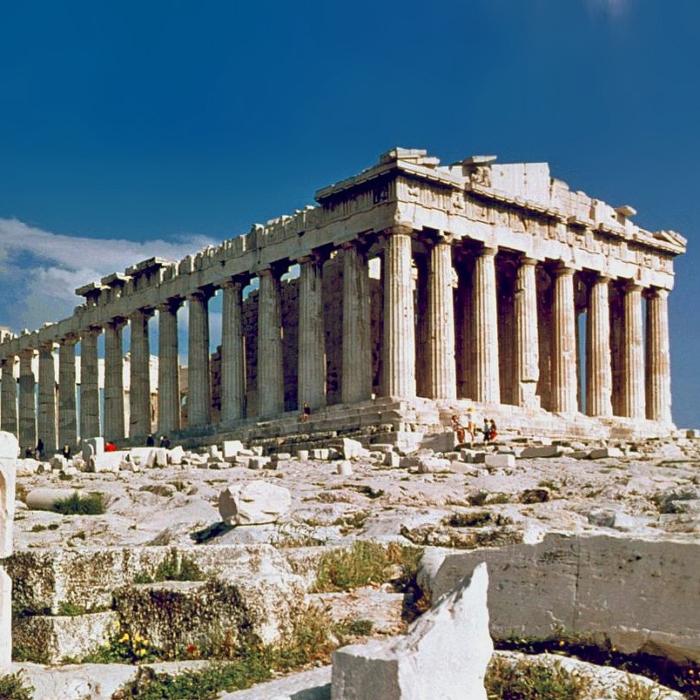
Philias was responsible for both the designs of the temples and the statues that filled them. He championed the technique of “chryselephantine”—adorning statues with a layer of skin made of ivory, and he accentuated their hair and clothing with bronze and gold. He was the guiding force behind the rebuilding of the Acropolis and Parthenon after the Persian wars. His captivating statue of Athena for the Parthenon won him both wide acclaim and jealous rivals.Accused of embezzling portions of the statue’s allotted gold, Phidias was able to use his chryselephantine technique in his defense. Because the gold portions were layered over an internal wooden frame, he directed that the entire statue’s gold be removed and weighed under strict supervision. It is estimated to have held roughly 2,500 pounds of gold, and all of it was accounted for. As practical as this technique proved for accounting purposes, it sadly proved just as useful in centuries to come for thieves and emperors to strip the gold for less noble purposes.
Out of Athens
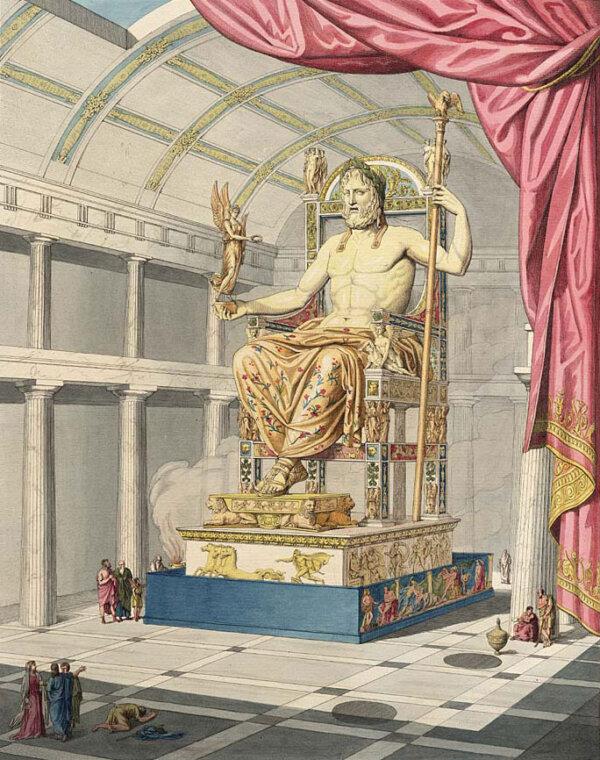
Despite his innocence, the continued hostilities Phidias faced in Athens led him to take the commission for the Statue of Zeus in Olympia. The site of the first Olympic games in 776 B.C., it was not so much a city as a sanctuary occupied year-round solely by the priests maintaining its temples. Whereas the Parthenon and its Athena had been designed in tandem, the Temple of Zeus had been completed decades prior. This forced Phidias to make the best use of the available space. His design depicted Zeus seated, in a much larger figure, giving the impression that if the god were to stand, he would burst through the ceiling.
Wielding a figure of Nike, the goddess of victory, and a scepter topped with an eagle, Zeus was depicted as a wise elder judge rather than a young warrior. His golden robes were adorned with animals and flowers, and the pedestal contained a pool of olive oil to prevent the statue’s ivory skin from cracking. Nearly every account of the statue by witnesses, whether citizens or soldiers, describes an experience of overwhelming beauty and majesty.
Defiant Laughter
The statue was associated with another famous lineage. Outliving the reigns of Julius Caesar and the first Roman emperors, Augustus and Tiberius, it was not until Caligula took power that the statue’s existence was first threatened. Caligula was the great-nephew and adoptive grandson of Tiberius, and the son of the beloved Roman general Germanicus—who was himself Tiberius’s nephew and adopted son. Following Germanicus’s death, Tiberius brought the young Caligula to live with him on Capri, later naming him as joint-heir before Caligula succeeded him as emperor.Having endured relentless family political upheaval and assassination attempts during his youth, Caligula’s subsequent paranoid and sadistic behavior was almost predictable. Indeed, Tiberius famously stated that he felt that in raising Caligula, he was “rearing a viper for the Roman people.” Once on the throne, the young Caligula became so intolerant of any possible threat to his power or his vanity that he ordered the heads of many prominent statues to be removed and replaced with his own likeness.
Caligula’s soldiers prepared a massive ship to transfer the statue from Olympia to Rome and set up scaffolding around it for dismantling. The story is repeated in two accounts by Roman historians, Suetonius and Cassius Dio: Before any piece of the statue could be removed, the scaffolding suddenly collapsed amid the sound of roaring laughter emanating from the statue. Caligula’s men fled in terror, only to discover the ship they’d prepared had been destroyed by thunder.
Two possible theories account for the final disappearance of the statue, and both begin with Emperor Theodosius and end in fire. As Christianity increasingly eclipsed the Roman pagan traditions, Theodosius I made Nicene Christianity the official religion of the empire and banned all pagan ritual practices.
Theodosius II, in turn, ordered the burning of the Temple of Zeus. Various accounts suggest that Theodosius II had either the gold and ivory or the entire statue relocated to his collection in Constantinople’s Palace of Lausus, which was later destroyed by fire in 475.
What cannot be contested is the frequency with which Phidias and his works appear in dozens of Greek and Latin records and in retellings throughout every empire that followed. Though none of his works survive, his influence is clear in such modern-day masterpieces as the Lincoln Memorial. Henry Bacon’s design was inspired by the Parthenon, and Daniel French’s depiction of a seated Lincoln with asymmetrical hands was inspired by the Statue of Zeus.
Though many prominent architects, including Frank Lloyd Wright, famously criticized the monument for promoting Greek traditions more than American ones, it remains one of the most beloved images of American culture. It is a fitting testament to the timeless beauty and spirit of Phidias’s legacy, which outlasts every emperor and empire.