PG | Season 1 | Fantasy, Drama | 2026
The therapeutic, transformative power of a tune or tale lies not in its teller or its telling, but in its truth. It is truth that unites man, makes him whole, and helps him rise above his warring inner selves.
Based on novelist Stephen Lawhead’s series, “The Pendragon Cycle,” mixes myth and history to depict Christianity rising from the embers of paganism. It’s set in the Island of the Mighty (Roman-occupied Britain), the City of Atlantis to its west, and the Islands of Fear to its east. It draws on the Briton-Saxon clash of cultures.
Britain’s squabbling clans worship as many gods as the kings and kingdoms they swear allegiance to. Among the kingdoms are the Cymry of Caer Dyvi and the Atlanteans of Avallach and Goddeu. There’s also the Roman and Powys Britons, Belgae, Cornovii, and Cymry of Maridunum. They’re as prone to treachery and selfish violence as the wantonly savage Saecsens (Saxon invaders from Europe), against whom they claim to defend a besieged Britain.
Christian missionaries from Gaul, however, envision another kind of kingdom—one that wins by virtue, not vice. Albeit dimly, Britain’s peaceable Hill Folk mirror this vision. It’s adopted and then amplified by poet-turned-prophet Caer Dyvi’s Taliesin (James Arden) and his wife, Avallach’s Princess Charis (Rose Reid). Consumed by envy, Charis’s half-sister Morgain (Emree Franklin) charts a different, eventually defiant, path.
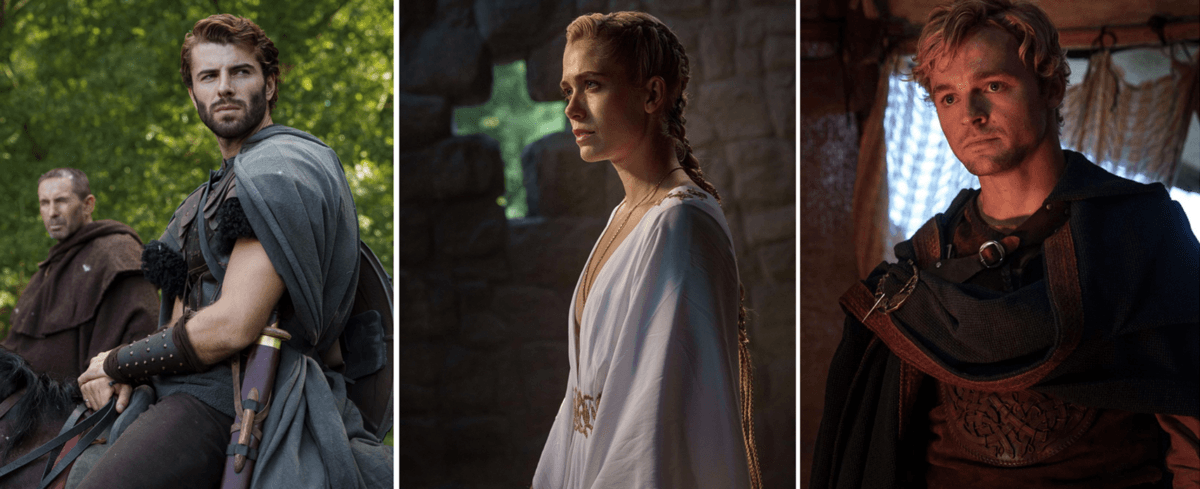
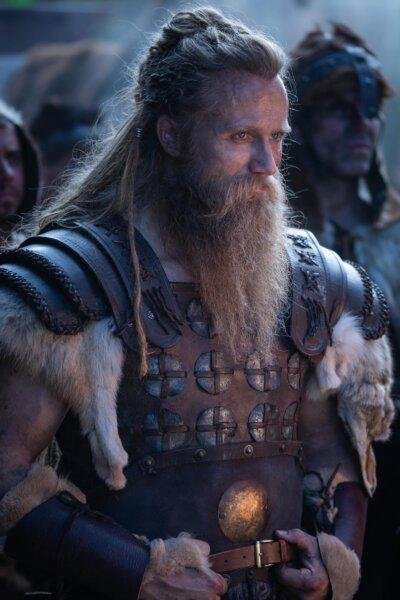
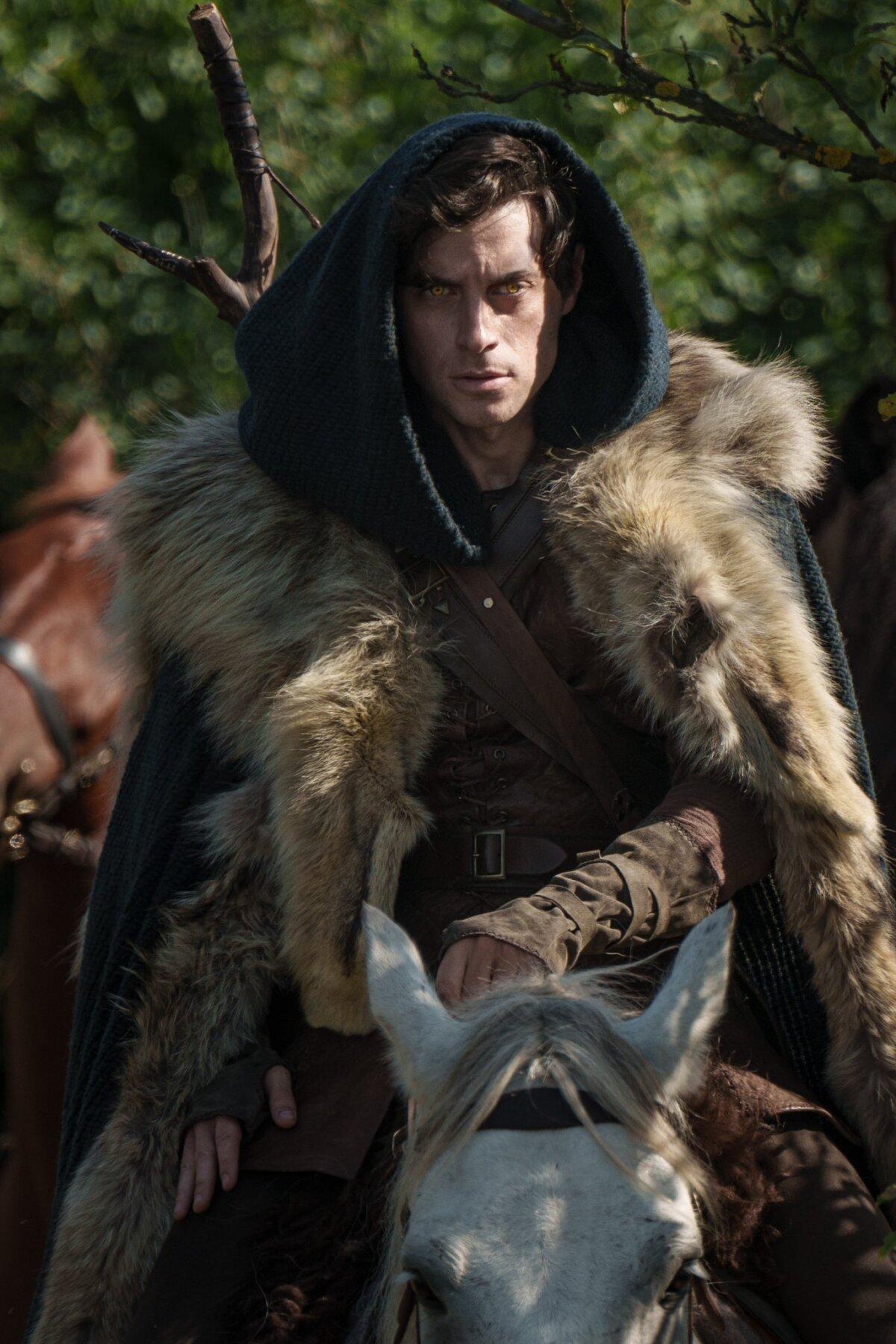
Meanwhile, Roman Briton half-brothers Aurelius (Finney Cassidy) and Uther (Myles Clohessy) seek to unite Britain against Saecsen warlord Hengist (Thor Rosland) and his hordes. It takes years for Taliesin’s son—the ageless, hawk-eyed, near-invincible wizard-prophet Merlin (Tom Sharp)—to rise, interpret, and reinterpret his father’s vision.
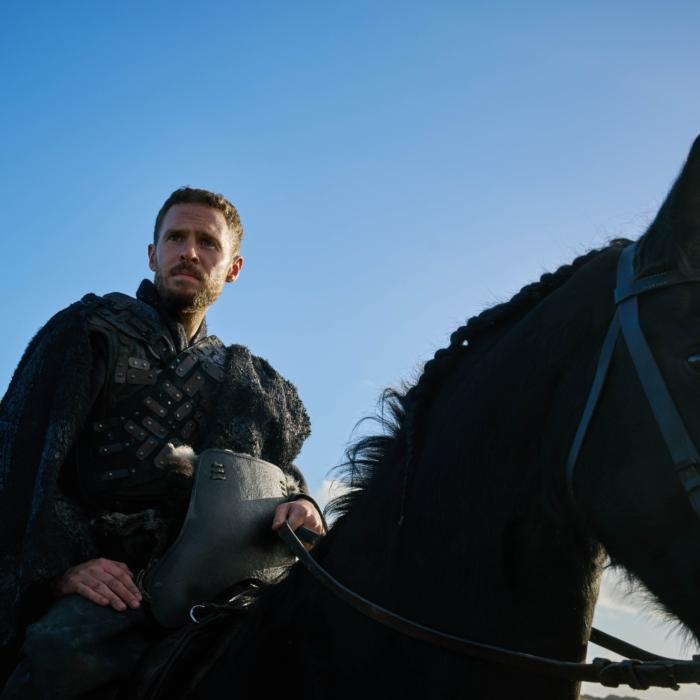
Can Merlin finally declare Aurelius as Pendragon, or king, of Britain? More importantly, can Aurelius defend not just Britain’s borders but also its soul?
Reid lends statuesque, steely grace to her Charis. Sharp’s silken voice and striking visage evoke a young Ian McShane. Perhaps too faithfully, filmmakers portray each of Lawhead’s many clans instead of making composites of each, rendering the script a tad unwieldy. So timeline jumps initially confuse rather than clarify.
Spiritual Symbolism
Lawhead continues in the tradition of J.R.R. Tolkien and C.S. Lewis, bringing a flavor of faith to fantasy fiction. Tolkien and Lewis brought British sensibilities to Europe, America, and the world. Lawhead, a Nebraskan, studied theology in America before studying Celtic lore in Britain. He brings American sensibilities to Britain, Europe, and the world. In an interview from the John Nottinger Live Journal, he’s emphatic: “Faith affects everything. … My own faith enables me to embrace certain realities of the human condition that other writers shy away from.”The setting of the opening episode in the fourth century seems a deliberate, purposeful use of the more traditional “Anno Domini” (Latin for “Year of Our Lord”) historical milestone, instead of the fashionably agnostic-atheistic C.E., or Common Era.
Sociopolitical Allegory
The show’s sociopolitical allegories are obvious: patriotism, nationhood, righteous masculinity. But its less-obvious spiritual allegories may be more rewarding for audiences.Here, Britain is a metaphor for the soul, besieged not so much by military as by moral challenges that attack not from outside but inside. Hengist may scowlingly challenge Merlin as an enemy, standing before him in open battlefield. But he’s less insidious than Morgain, smiling her support as a friend as she rides beside Merlin.
Truth and righteousness are like a king and queen, meant to protect virtuous personhood from invaders like greed, envy, pride, and wrath. Physical death needn’t be feared. Spiritual death? That’s another matter.
What do converts like Taliesin or Charis find attractive about this new faith? Pagan gods demand sacrifices, but this God insists on being a sacrifice himself. As Taliesin asks his mentor, pagan-priest Hafgan (Paul Clerkin), “Why worship the creature when the Creator is present?”
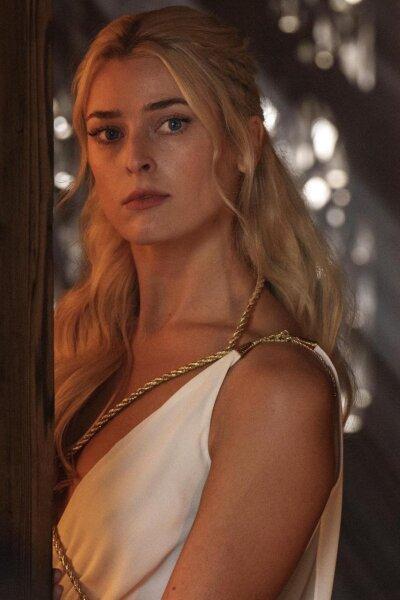
Charis and Taliesin are drawn to each other more by their moral choices than by mere physical attraction. Aurelius’s choices also set him apart. Charis’s father tells Aurelius that his habit of wanting to lay down his life for his people might just ensure his kingship. To Aurelius, mercy toward the sick and suffering is stronger than the strength of armies.
Great kings trust their morally guided conscience to find a way where there seems none. Lesser kings are more easily cornered into inertia or surrender; fearing destiny or fate, they see “no other way.” This phrase recurs through the series this season. Aurelius says, “If I do not allow my conscience to guide me, I’m unworthy of the crown.”
Britain’s Soul
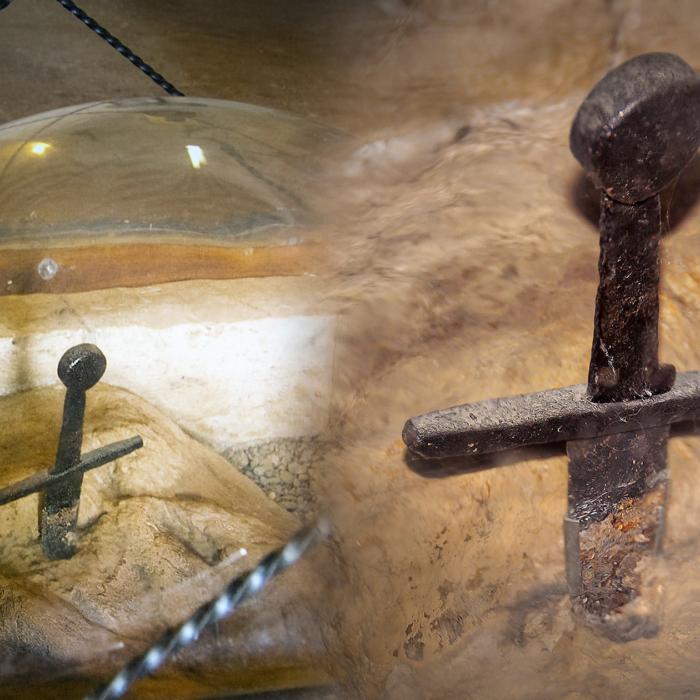
The screenwriters mean that as Britain is greater than the sum of its parts, man is more than body, mind, and heart. He’s soul, too. Charis and Aurelius each believe their special sword is the soul of Britain, and “is” Britain, embodying assertiveness. But Charis wonders why all the men in her life, to whom she offers her sword, refuse it. She wonders if her son is, after all, meant to “wield a different kind of weapon.”In one spectacular scene, the “oo-aah” from a bard’s song becomes not just an explicit battle cry but also an implicit spiritual Amen—a promise to bravely confront falsehood and evil against seemingly overpowering odds.
The character who appears least likely to take up that spiritual chorus becomes most qualified to do so. It heralds call-and-response cries across centuries that represent at once a “yes,” a resolve to march onward and ahead, and a “no,” a vow to never retreat from battlefields—military, or moral.