One of the most enduring Greek myths is about the poet and musician Orpheus. His tale has been recounted in sculptures, mosaics, and paintings throughout the ages, as well as with film. The aspect of Orpheus’s tale in which he plays a lyre with such sweetness that diverse beasts and birds come together and gather around him was a particularly popular subject with Northern European artists in the 16th and 17th centuries. As it was a time rife with political and religious conflict, including the Eighty Years’ War, the Orpheus theme symbolized the hope of reconciliation.
Flora and Fauna
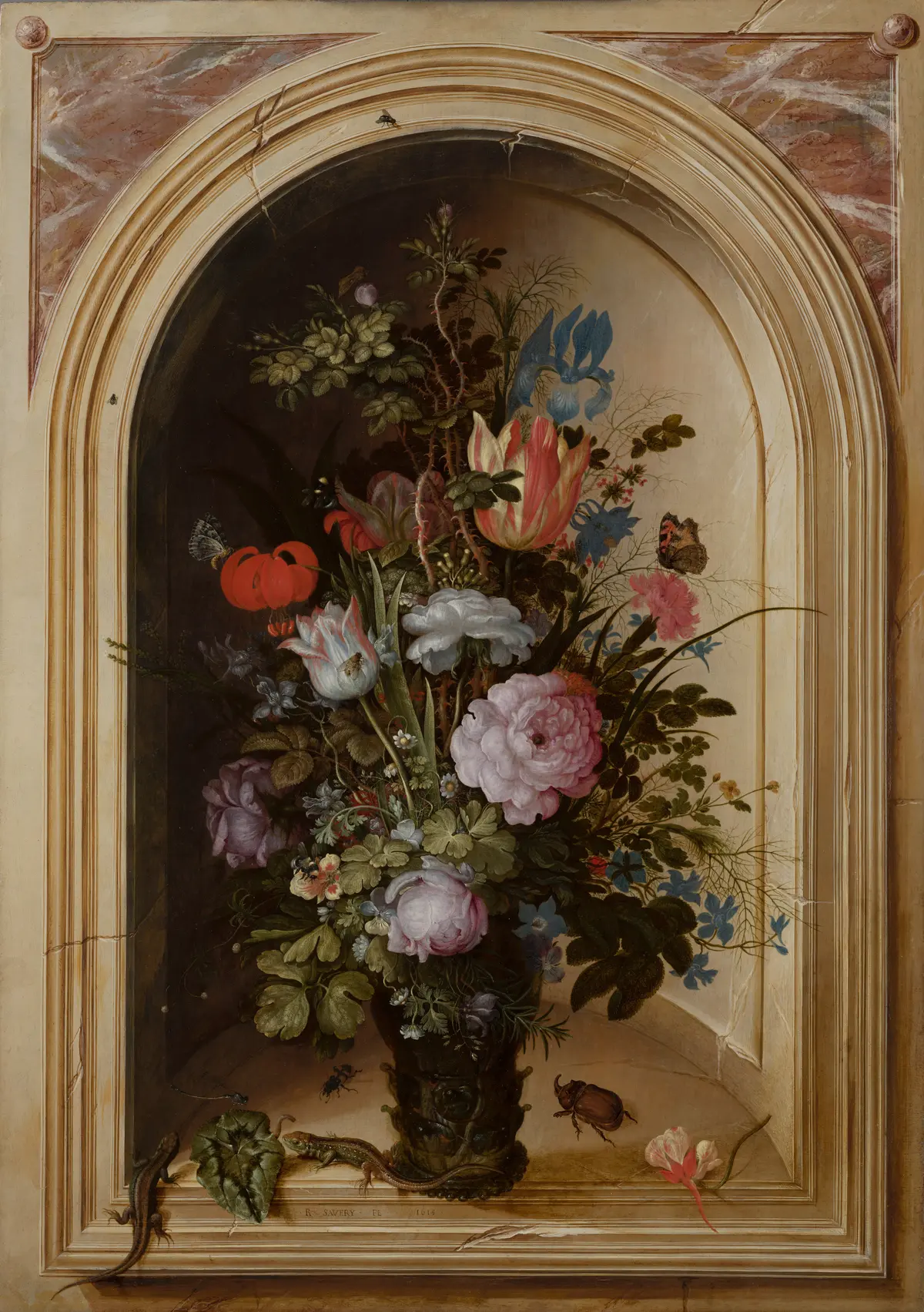
Savery (1576–1639) was a versatile artist, skilled in painting landscapes, animals, and floral still lifes, as well as a talented draftsman. The artist was an original on several accounts: Savery was among the first in the 17th century to paint forest and animal landscapes without those elements being merely background; his 1603 floral still life is the earliest known Dutch picture in the genre; and he was the first to paint the legendary dodo bird.
Born into a Protestant family in Kortrijk, a city in present-day Belgium, Savery’s family moved to the Northern Netherlands when he was 6 years old due to religious riots. Savery received artistic instruction from his brother, first in the Dutch city of Haarlem and then in Amsterdam.
Around 1603 to 1604, Savery moved to Prague to work for the era’s greatest collector, the Holy Roman Emperor Rudolf II. At the emperor’s direction, Savery traveled throughout the Swiss and Tyrolean Alps to record natural wonders. In addition, the artist drew extensive stock images of the emperor’s menagerie. Savery’s forest and mountain landscapes are notable for their mix of realistic details and otherworldly atmosphere.
Savery’s Menagerie
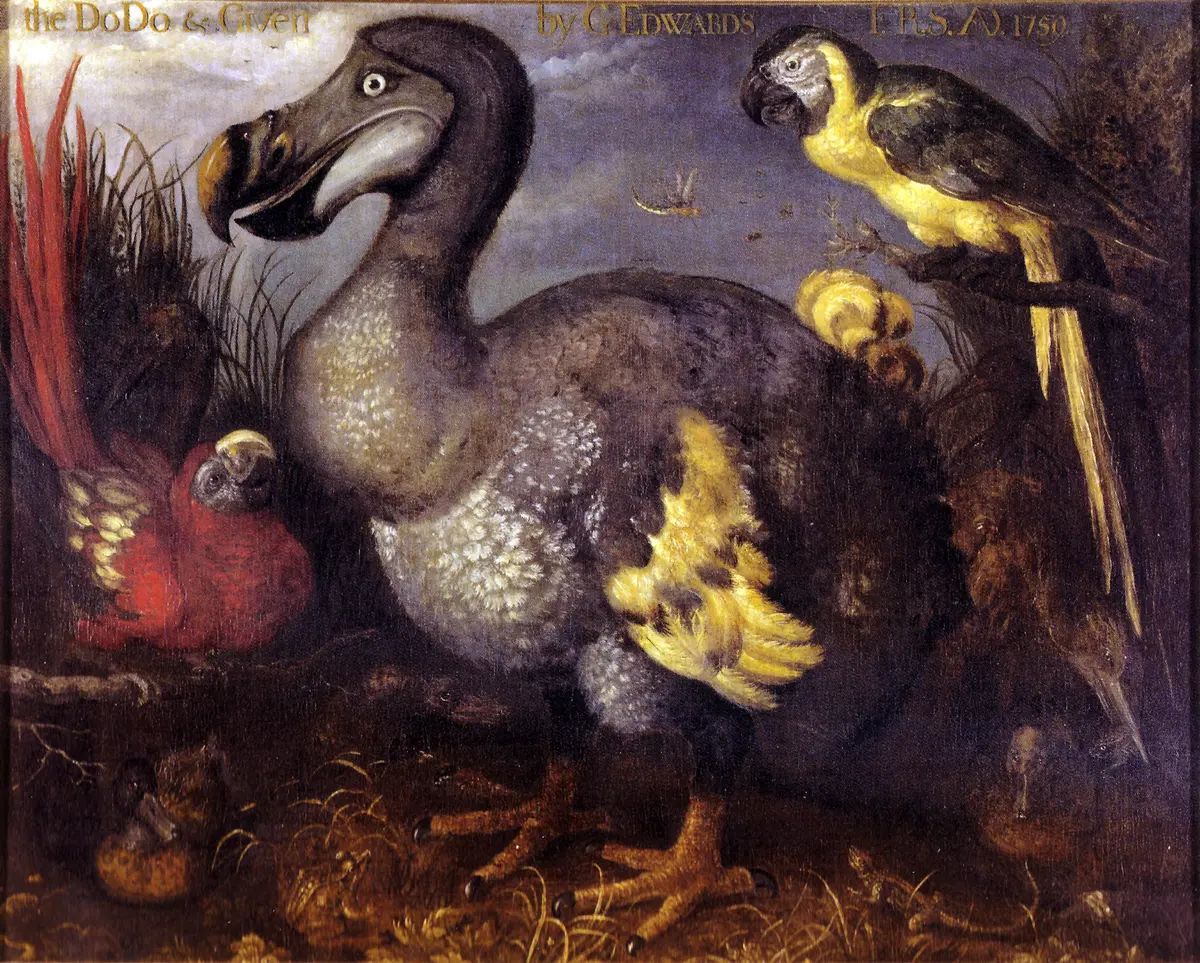
Rudolph was an insatiable acquisitor of art, curiosities, scientific instruments, and natural wonders, including exotic plants and animals. During his time in Prague, Savery was able to paint the dodo, as the emperor had one in his collection. The dodo was a flightless bird native to the island of Mauritius in the western Indian Ocean. It became extinct due to the arrival of Dutch sailors who hunted the creature and brought foreign predators brought by the sailors.
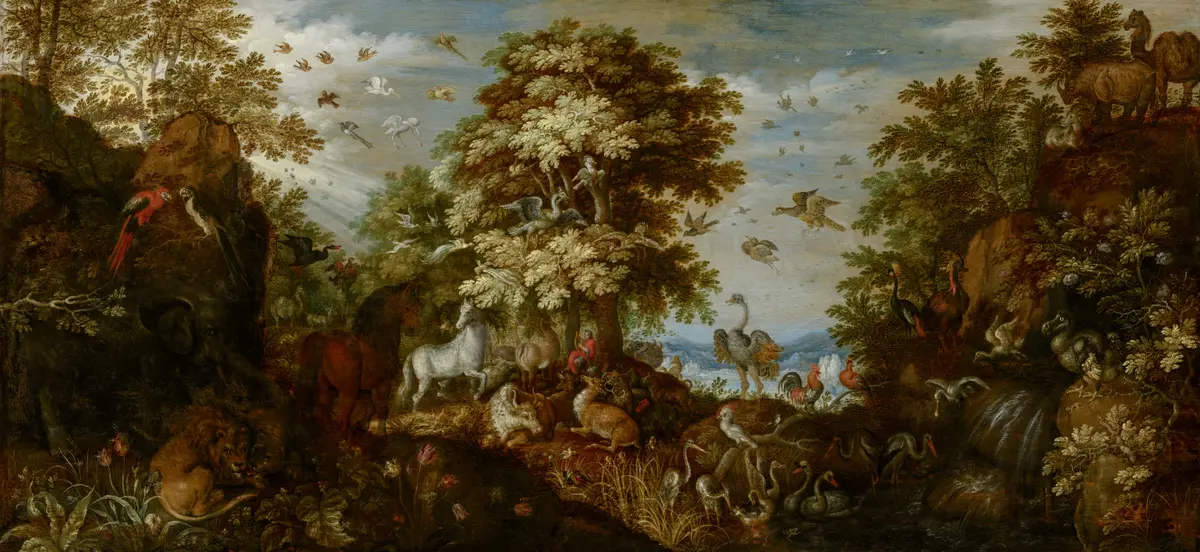
In 1627, Savery painted “Orpheus Charming the Animals With His Music.” This panel, held in the collection of Mauritshuis, features at the far right a dodo perched on a rock. Orpheus was one of Savery’s favorite subjects; it allowed him to showcase his skills in depicting a wide range of lush flora and fauna.
Savery’s dreamy Orpheus paintings beguile the viewer akin to Orpheus’s charming of the animals, trees, and even gods with his music. In the NG’s version, Orpheus looks out of the picture with an inquiring expression as he plays a violin, instead of the lyre associated with the myth. Savery conjures an idyllic setting of misty colors and deep shadows that lend an ethereal air to the scene.
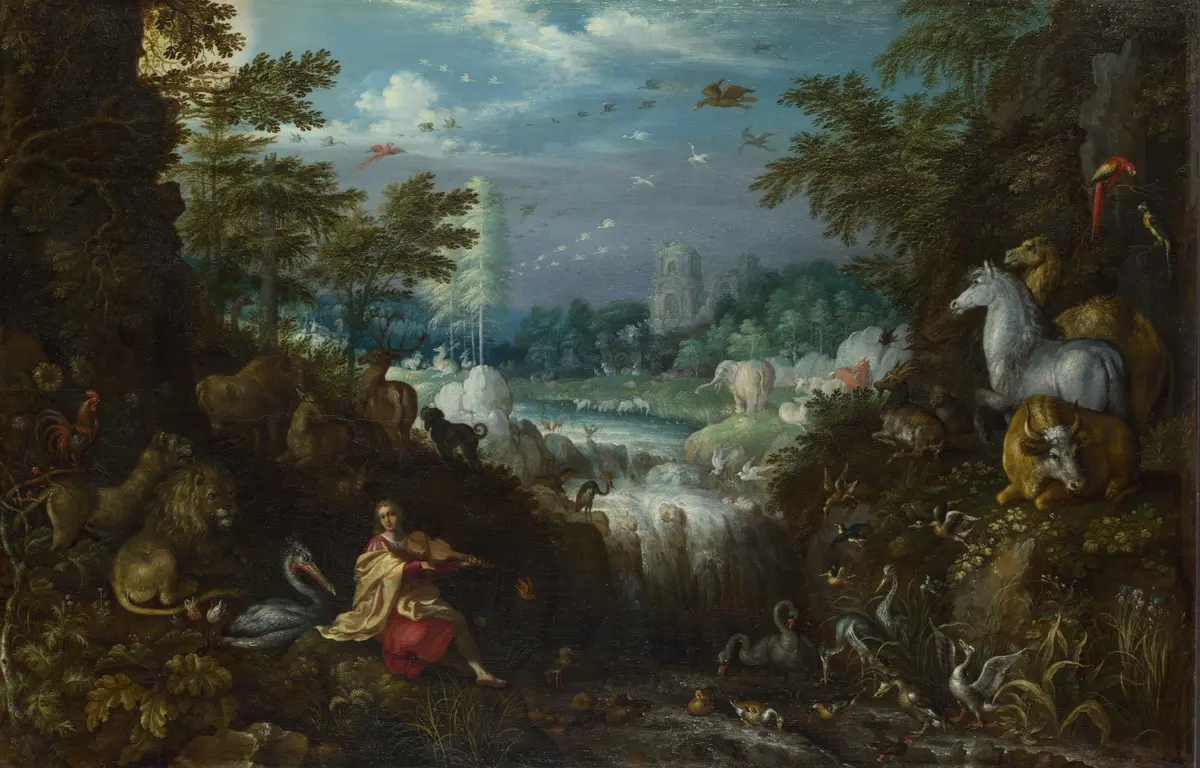
Animals that in real life are antagonistic to one another are portrayed as living harmoniously together. European animals and exotic species are placed side by side: In the foreground at left, a lion and lioness are paired with a cockerel and a pelican. Behind them are a buffalo, stag, and ostrich. The center of the picture is delineated by a little stream in which ducks, geese, and swans splash. At right, a beautiful horse and camel are coupled; both look to a luminous elephant in the background. One can also spot cranes, a fox, a wild boar, and a wolf. The composition, replete with trees, plants, and flowers, is overseen by a skein of geese, a parrot, and storks.
Throughout Savery’s career, his subjects included scenes from religious, mythological, and allegorical sources. Abounding in elements from the natural world, these works attest to the artist’s powers of keen observation and passionate curiosity. His depictions of people are also rendered with sensitivity. Savery’s paintings of Orpheus are not only beautiful but remain topical about the hopeful power of art to unify.