The 16th-century Florentine painter Jacopo da Pontormo (1494–1557) was a leader in the mannerist movement. This art style, which emerged between the High Renaissance and baroque periods, was inspired by the later works of Michelangelo and Raphael. Popular with Italian rulers and court intellectuals, mannerism spread later throughout Europe.
In the “mannered” approach, the naturalistic and harmonious renderings of the Renaissance were superseded. Mannerist artists favored stylized pictorial space and idealized figures, and they utilized vibrant and unusual colors in their elegant and sophisticated compositions.
Pontormo worked principally in the genre of religious paintings. In addition, he produced frescos, drawings, and portraits. Only 15 portraits are known today. These works reflect Pontormo’s distinctive ability to sensitively suggest a sitter’s inner psychology while presenting their refined public image.
The Florentine Mannerist
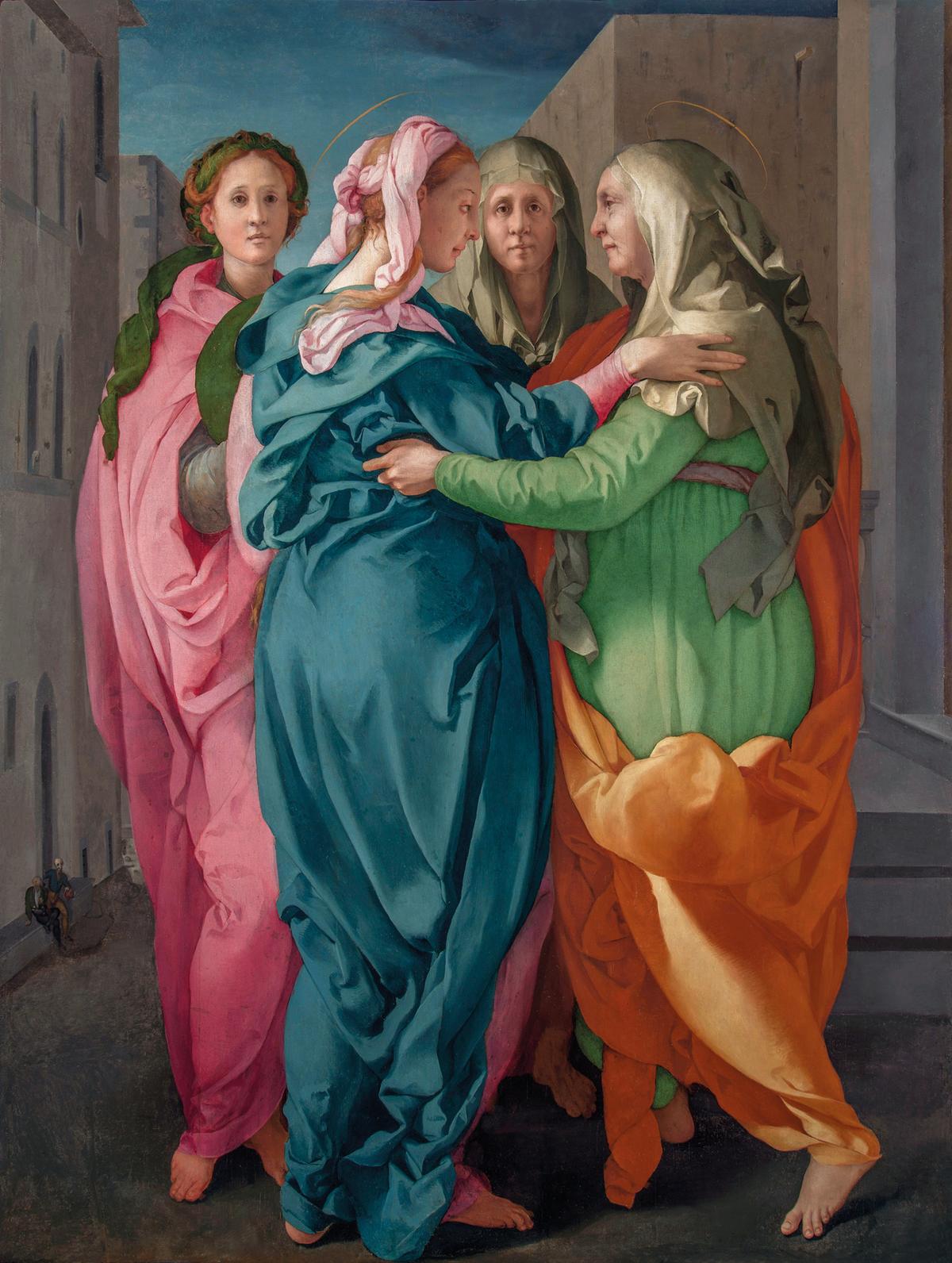
The artist was born Jacopo Carucci in the Tuscan town of Pontormo. He apprenticed to two giants of the Renaissance—Leonardo da Vinci and Andrea del Sarto. In addition to their influences, Pontormo absorbed lessons from Michelangelo’s later works and artists of the Northern Renaissance, especially Albrecht Dürer’s prints. Although Pontormo’s innovative aesthetic evolved as his career developed, his foundational stylistic elements can be found throughout his oeuvre. As the Getty Center explains in its artist biography, these were “psychic energy over physicality, beautiful linear rhythms, restless movement, ambiguous space, [and] vivid colors. For Pontormo, the work of art was ornament.”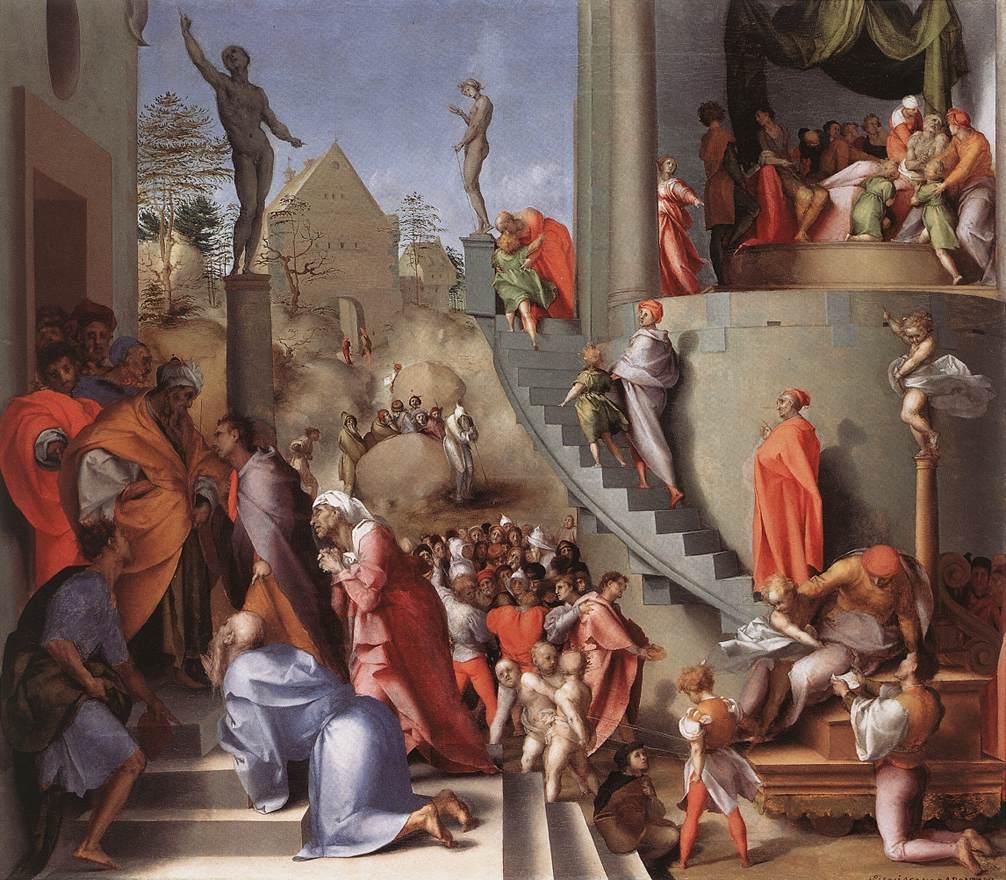
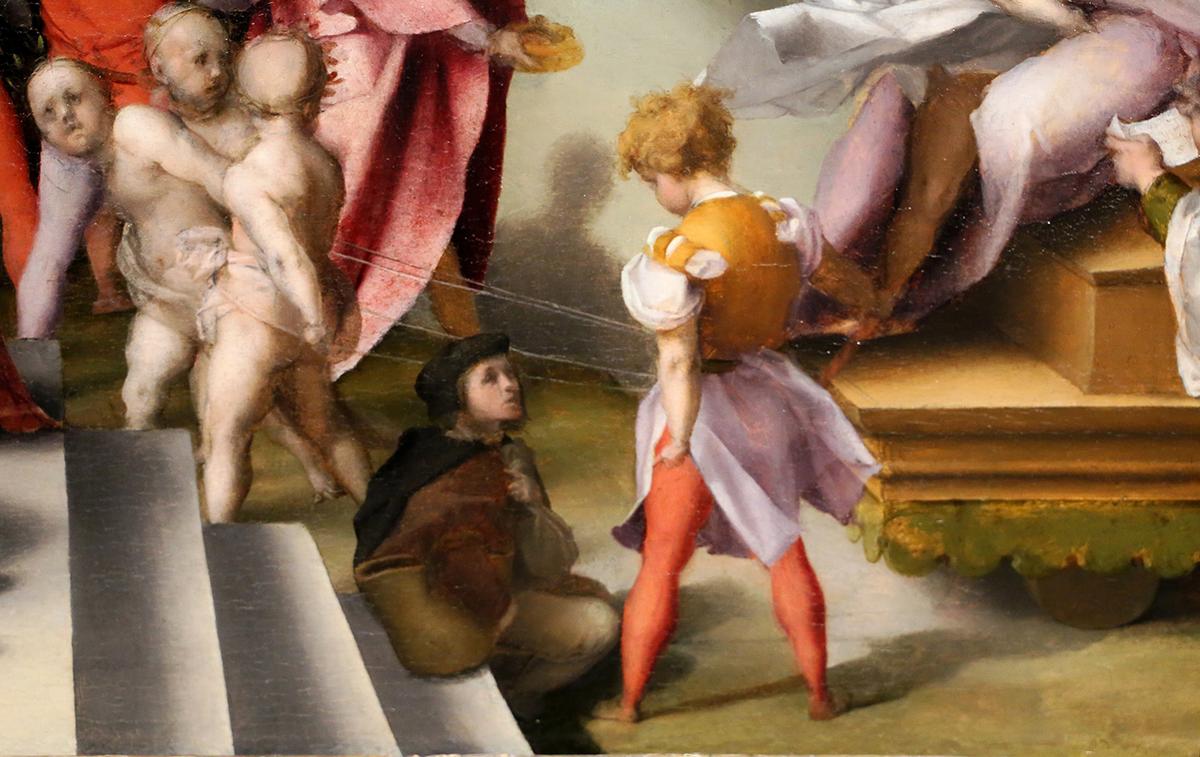
In addition to this allusion to his predecessor, this work reflects the continuity of artistic lineage. Agnolo Bronzino, Pontormo’s own pupil who went on to become a famous mannerist painter, is believed to be pictured. In the foreground, seated on the bottom step of Pharaoh’s palace, the young Bronzino wears a black hat with his arm over a basket.
The picture is an example of a continuous narrative, with several successive parts of a story depicted in one composition. Pontormo shows four vignettes from the Old Testament story of Joseph: Joseph presenting his father, Jacob, to the Pharaoh; Joseph seated on a chariot as he hears from famine victims; Joseph climbing the staircase with his sons to visit his dying father; and Jacob blessing his grandchildren. This painting exemplifies Pontormo’s unique artistry and vivid imagination.
Portrait of a Halberdier
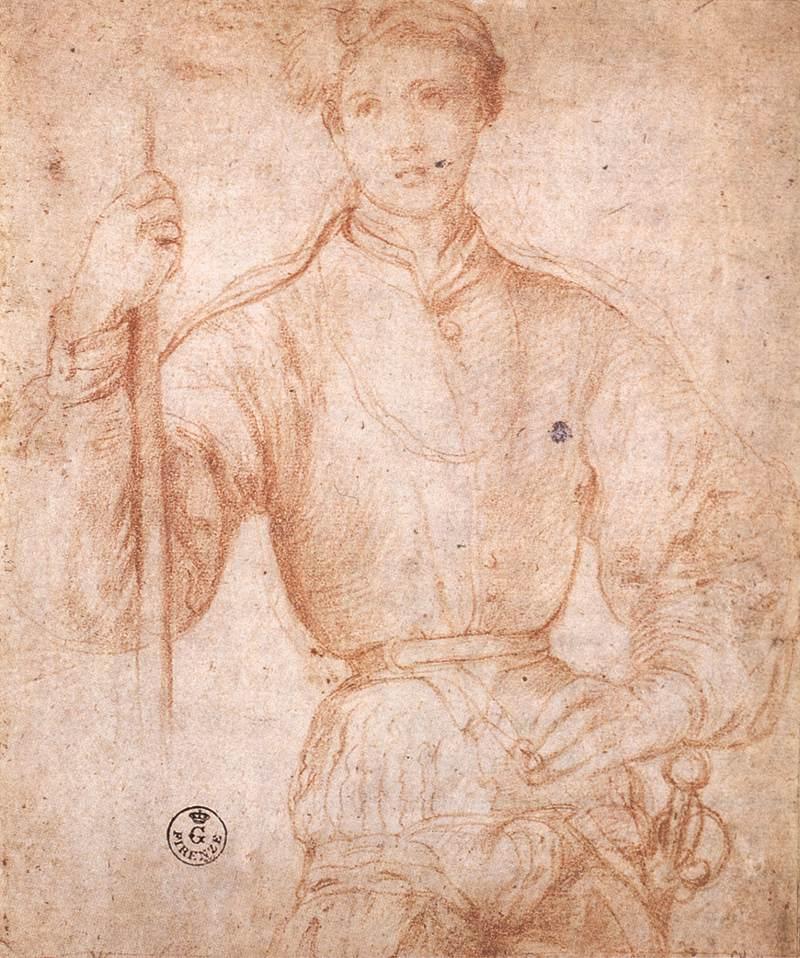
Pontormo’s portraits are highly coveted by private collectors and museums alike. In 1989, what was considered one of the finest Old Master paintings in a private American collection came up for auction at Christie’s. Pontormo’s “Portrait of a Halberdier (Francesco Guardi?)” has an illustrious provenance that includes a notable Florentine family, a French cardinal, a Bonaparte princess, and an American banking dynasty.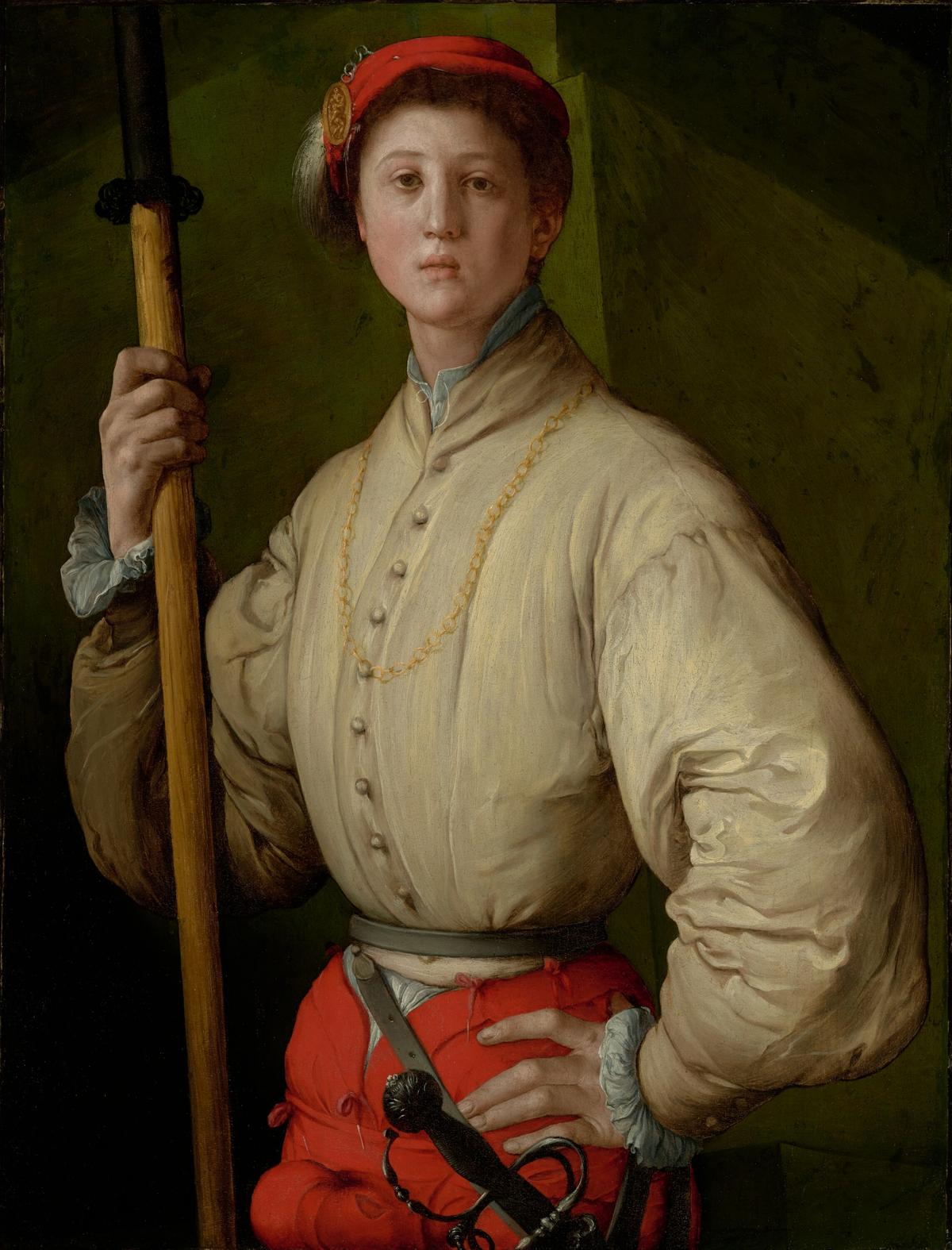
Art professionals monitored the sale closely. Many feared that the painting would once again vanish into an individual’s collection, away from public view. However, the painting was won by the Getty for the astounding price of $35.2 million—then a record for an Old Master painting. Among the world’s richest museums, the Getty was one of the few institutions that could purchase the picture. It ensured that the public would be able to enjoy this masterpiece.
At the time of its auction, the painting was believed to be a portrait of Duke Cosimo I de’ Medici, of the powerful Florentine family and a historic ruler of the city. If so, it would have been painted after the young man’s significant 1537 battle victory. Great connoisseurs of the arts, the Medicis did patronize Pontormo, but the more generally held identification of the sitter is now Francesco Guardi, of whom little is known.
If it is Guardi at the age of 14 or 15, then the portrait was created at some point between 1529 and 1530, a pivotal period for the city. During this time, Florence was under siege. The Medicis had been ousted from power, and a republic had been established in their place. However, per an agreement with the pope, who was a member of the Medici family, the Holy Roman emperor committed a large army to the Medicis’ restoration. Soldiers loyal to the Florentine Republic, like the teenage Guardi, defended it bravely, but they were defeated, and Medici rule was reestablished.
The dashing young man in the picture stands before an indeterminate green fortification wall and carries a halberd, a battle-axe and pike combination mounted on a long handle. The weapon’s rough texture contrasts with the soldier’s fine clothing. His red cap displays a fashionable oval hat badge with a mythological image from the story of Hercules’ defeat of the giant Antaeus.
Pontormo depicted the halberdier as an idealized heroic youth with blooming cheeks and a lissome physique. Despite his military inexperience given his age, the soldier projects a seasoned confidence, looking coolly at the viewer with an arm akimbo. Poignantly, Pontormo conveys still the sitter’s vulnerability.
A Pontormo Portrait
Pontormo painted another famous portrait of a young republican militant during the siege of Florence. The oil on wood panel “Portrait of a Young Man in a Red Cap (Carlo Neroni?)” dates to around 1530. For over 200 years, the original painting was believed to have been lost. Specialists knew of this work only from documents and engravings. In 2008, it was rediscovered in the private collection of the British aristocrat Nicholas Alexander, the Earl of Caledon, who agreed to have it displayed at the National Gallery in London on a long-term loan.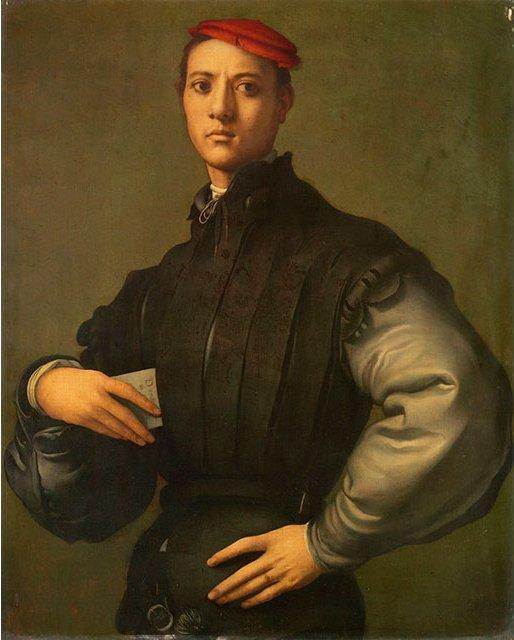
Controversially, in 2015, the earl sold the painting to the American hedge funder J. Tomilson Hill. Hill, a renowned art collector of Old Masters and Contemporary art, had first seen the painting at the museum and had been alerted by an art dealer that the owner was looking to make a cash deal. According to Hill, he purchased the work in dollars for $48 million. Afterwards, he applied for an export license.
The NG was distressed that such a rare work as a Pontormo portrait would leave the UK. In December 2015, the British government placed a temporary export ban on the painting, giving the museum time to raise funds to match Hill’s purchase price. The ban was extended several times, and nearly a year later, the NG had raised, in pounds, what Hill had paid. However, by that time it was the post-Brexit era. The sum’s conversion to cash, which was the purchase currency Hill had used, was only $37.35 million. Hill refused to sell, as it would have meant a loss of around $10 million.
The painting’s status remains in limbo. Hill is the official owner, but he cannot apply for a permanent export license until 2027. A temporary export agreement has allowed the newly restored painting to travel to exhibitions in Florence, New York, and Los Angeles. The L.A. show was held at the Getty, allowing visitors to see its Pontormo alongside Hill’s “Portrait of a Young Man in a Red Cap (Carlo Neroni?).” As with Francesco Guardi, little is known about the life of the 19-year-old volunteer republican fighter Carlo Neroni.
There are stylistic similarities between the two paintings. Both men are depicted as young and haughty aristocrats in tilted side poses with a hand on their hip and wearing a red hat. In the NG’s press release announcing failure to purchase Hill’s painting, the museum praised the work:
“Executed over bold freehand underdrawing, ‘Portrait of a Young Man in a Red Cap’ conveys the sitter’s character and ideals through composition, pose, and bravura paint handling. The brushwork is applied with swooping, energetic motions.”
While the soldier in the Getty picture has his weapon at the ready, the other painting shows a striking young man holding a mysterious letter. One wonders whether he wants to display the correspondence or is trying to conceal it. It is perhaps a love letter. Coupled with the ring on his other hand, these may be signs of his betrothal. Indeed, Neroni married the daughter of a wealthy Florentine banker in 1530. Art historians suggest that their nuptials may have been the reason for the portrait’s commission.
Giorgio Vasari, the Renaissance art historian and painter, wrote that upon seeing an early work by the young Pontormo, Michelangelo said, “This young man, judging from what may be seen here, will become such that, if he lives and perseveres, he will exalt this art to the heavens.” These two magnificent Pontormo portraits exemplify the artist’s idiosyncratic talents. That both were probably created during a time of great civil unrest speaks to art’s ability to flourish in the worst of circumstances.