Soddy-Daisy, Tennessee, about 16 miles north of Chattanooga, is a relatively new town. It was formed in 1969 when two communities—Soddy and Daisy—merged. The interesting names reportedly derived from the Anglicized version of the Cherokee word “tsati” and the name of the daughter of a 19th-century coal company’s vice president.
Roughly 3,000 people live in the small rural town. There is little to draw outsiders—except for a small log cabin situated in a centralized park. Known as Poe’s Tavern, it sits on the main thoroughfare of Dayton’s Pike, which was the original road running into Chattanooga. Today, the town is part of U.S. Route 27.
The log structure has the common pioneer home layout: a main open living and sleeping space and a central fireplace. At various points during the 1800s, it was a home, tavern, inn, hospital, courthouse, and general meeting space.
Poe's Tavern has been lovingly restored to its original condition. Deena Bouknight
The Builder’s Backstory
Hasten Poe was born in 1786, two years before the U.S. Constitution was ratified. When he died at age 91, he was buried in the Poe Cemetery in Hamilton County, which is now Soddy-Daisy. He was a planter and veteran of the War of 1812. But it was the log home he built in 1818 that made him famous.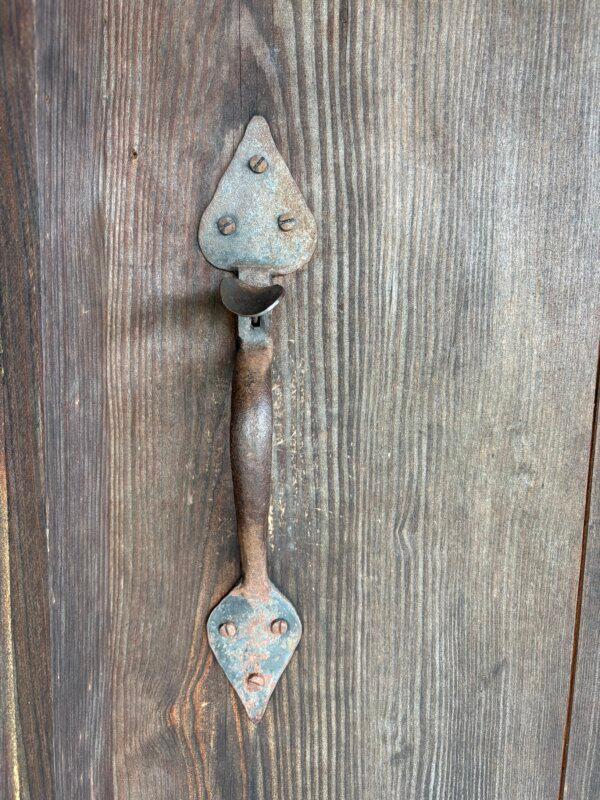
Original handles still remain at Poe's Tavern. Deena Bouknight
Because it was in a central location and on a main route to Chattanooga, the log house became a meeting place for residents and community leaders to discuss politics and local affairs. Eventually, court hearings were held at the cabin. Then, during the Indian Removal Act of 1830—and the Cherokee Trail of Tears—the cabin and Poe’s surrounding few hundred acres served as a way station for thousands of Cherokee families and soldiers on their way to Oklahoma.
At different times, Hasten Poe and his family witnessed the incursion of both Union and Confederate troops into their home. Each side used it for a temporary hospital during the famous battles of Chattanooga and Chickamauga. Since so many people passed by, it became an inn and tavern. The Poe family home soon garnered the name Poe’s Tavern, which stuck for perpetuity.


The local legacy of the log home remained even after it deteriorated in the early 1900s and another dwelling was built on its foundation. In 2011, Soddy-Daisy resident, history buff, and director of the Chattanooga Woodworking Academy, Bill Carney, oversaw the construction of an exact replica of Poe’s Tavern in what is now Poe’s Tavern Historical Park.
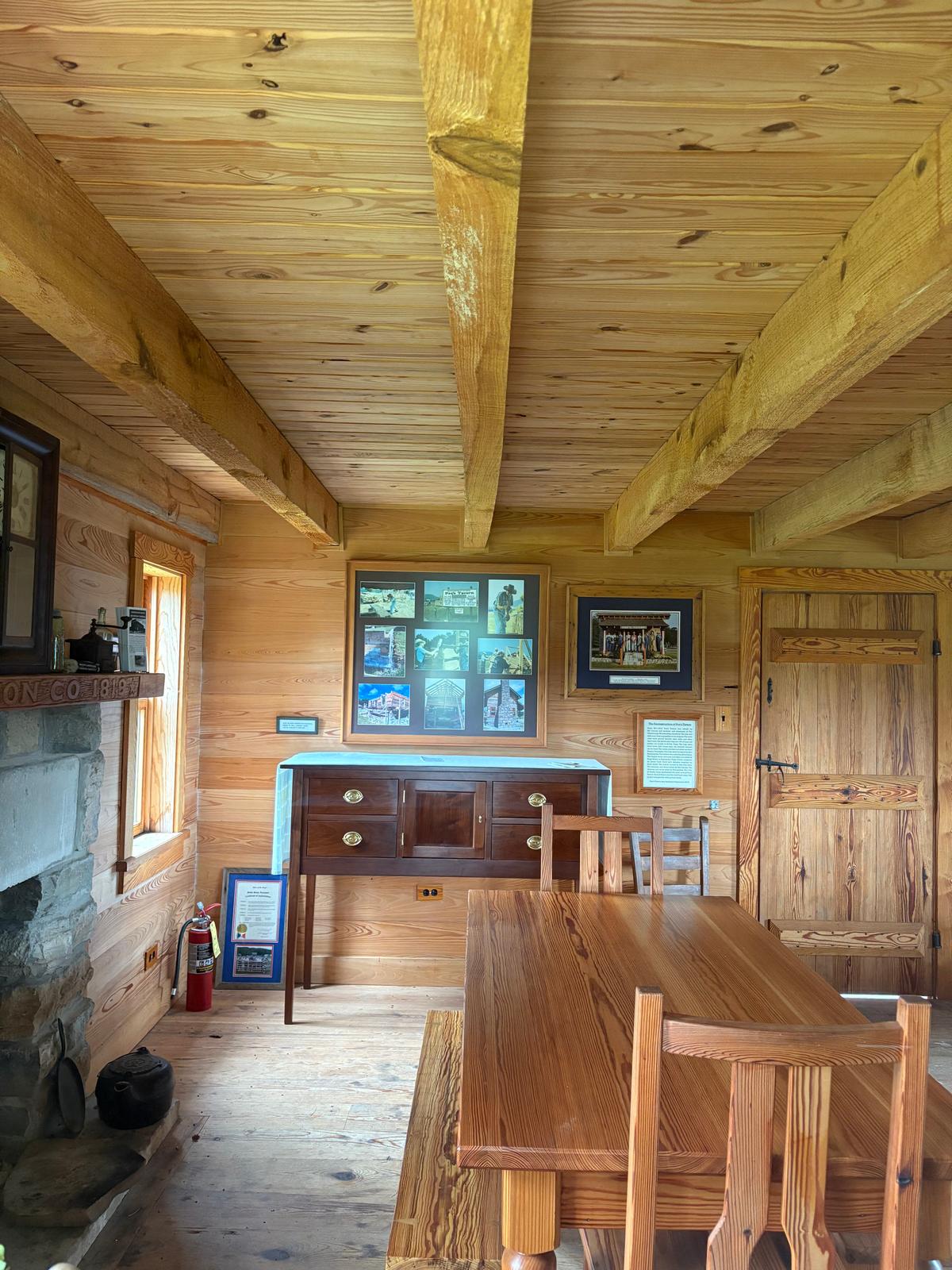
Without electricity or modern tools, Carney’s woodworking students hand hewed yellow pine and cedar logs to craft the log structure as it appeared in the early 1800s. The stonework, doors, windows, and iron hardware were also made authentically by area craftsmen.
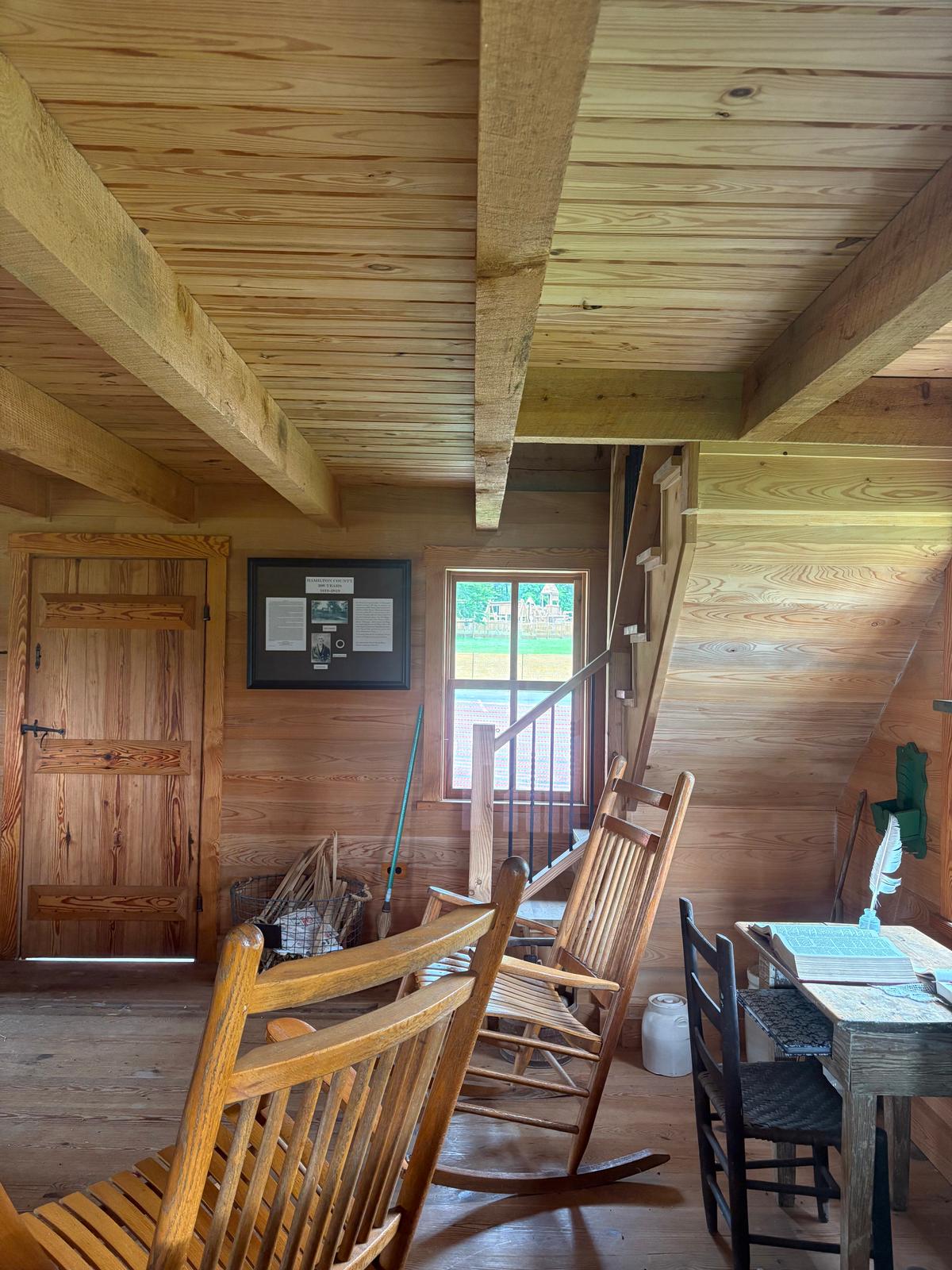
Young craftsmen replicated the wooden beams and finishing in the interior of Poe's Tavern. Deena Bouknight
Inside Poe’s Tavern, which is appointed with 19th-century-style furnishings, are displays of artifacts, documents, photographs, and antiques that convey the time in which Hasten Poe lived.
Interestingly, in Hasten Poe’s last will and testament of 1873, he provides this note after his signature: “My cousin, Dorothy Mae Poe, now deceased, had a broad axe head framed and hanging on her wall. This axe was used to cut and shape the logs that built [Poe’s Tavern]. … It was a broad axe.”
According to Steve Smith, curator at Soddy-Daisy’s Good Old Days History Museum, the axe currently resides in the home of one of Hasten Poe’s descendants.
No Relation to the Famous Poe
Although Hasten Poe’s log home garners historical significance, his great-grandson’s name is linked to the famous author and poet, born in 1809, who penned the classic “The Raven,” as well as other works.One of Hasten Poe’s sons was Samuel Porter Poe. He had a son named Hasten Hamilton Poe, who had three children, one of whom was born in 1887 and named Edgar Allen Poe. He was no relation to “the” Edgar Allen Poe. Yet the great-great grandson of the builder of Poe’s Tavern who lived his 65 years (from 1887 to 1952) in Hamilton County, Tennessee, undoubtedly was dogged more by questions about his name than by inquiries into his family’s historically relevant log structure.
What arts and culture topics would you like us to cover? Please email ideas or feedback to [email protected]