Mention the movie “Field of Dreams,” and people immediately think of baseball. But the film is about much more than the game itself. As the character Terence Mann observes, “It reminds us of all that once was good, and it could be again.”
Taking the Field
Though baseball existed in various forms for centuries, it began its rise as America’s pastime in 1846 with the first officially recorded game in Hoboken, New Jersey. Over the following decades, it evolved from a regional recreation into a national institution. As it grew, artists documented the game and helped shape how it was seen and celebrated.One of the earliest artistic depictions appears in the 1863 lithograph “Union Prisoners at Salisbury, N.C.” The print was based on a watercolor created by Union officer Otto Boetticher during his imprisonment at Salisbury Prison, a Confederate prison camp in North Carolina.
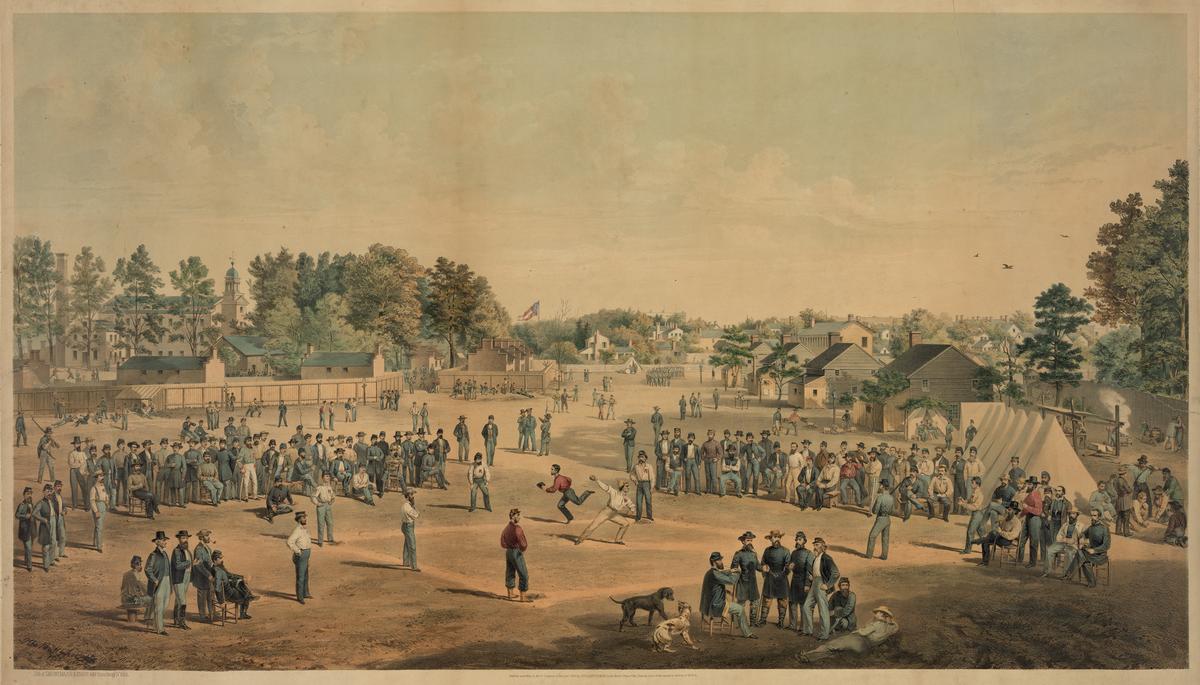
Conditions in prisons like Salisbury were harsh and overcrowded. Playing baseball allowed imprisoned soldiers to maintain familiar routines despite uncertainty and deprivation. Diaries from Union prisoners confirm that baseball games were played regularly when weather permitted, offering a sense of normalcy amid difficult conditions.
From Players to Public Figures
In 1869, the first openly all-professional baseball team was formed. Known as the Cincinnati Red Stockings, the team took its name from the bright red, knee-high socks worn by its players. It would eventually evolve into the franchise known today as the Cincinnati Reds.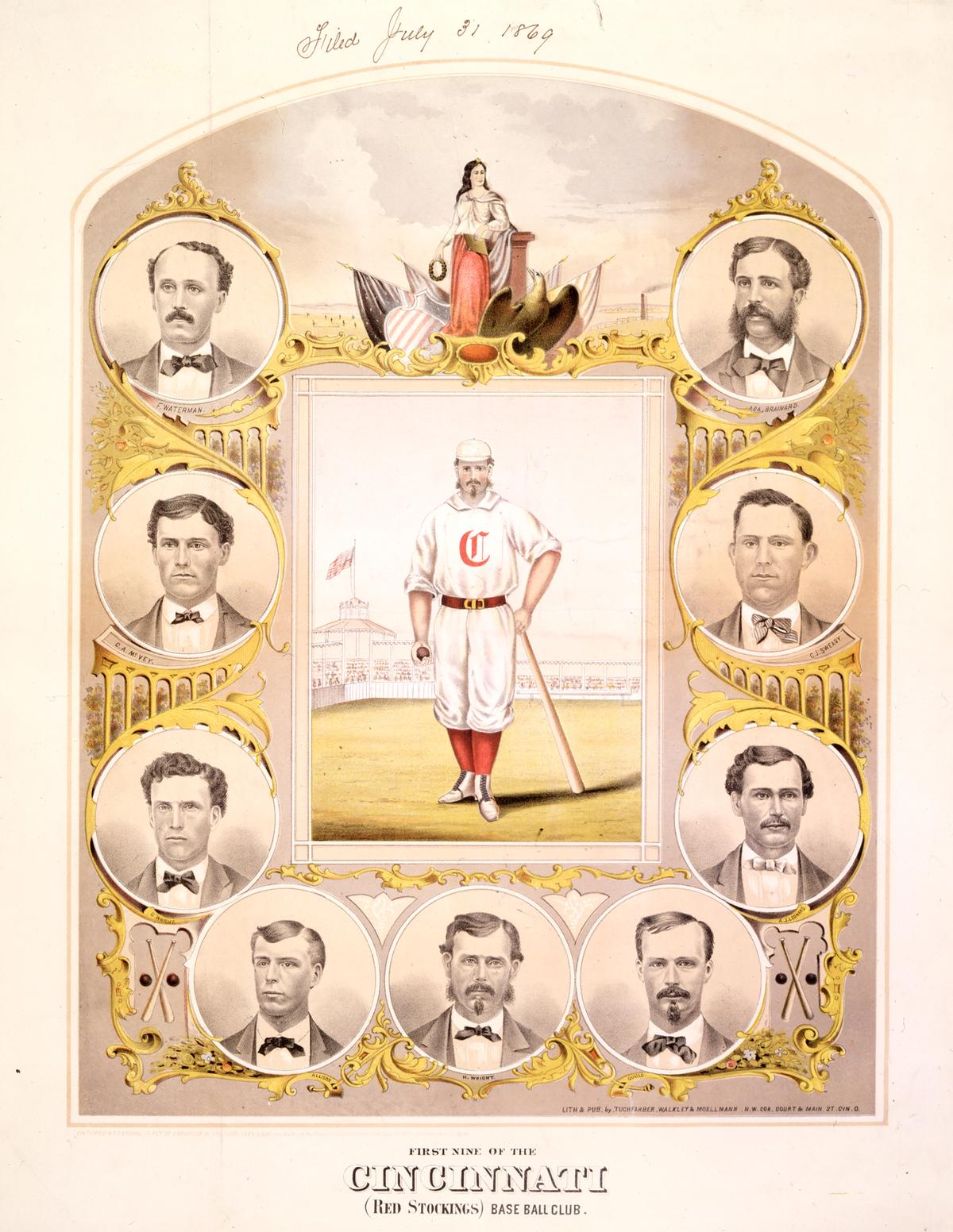
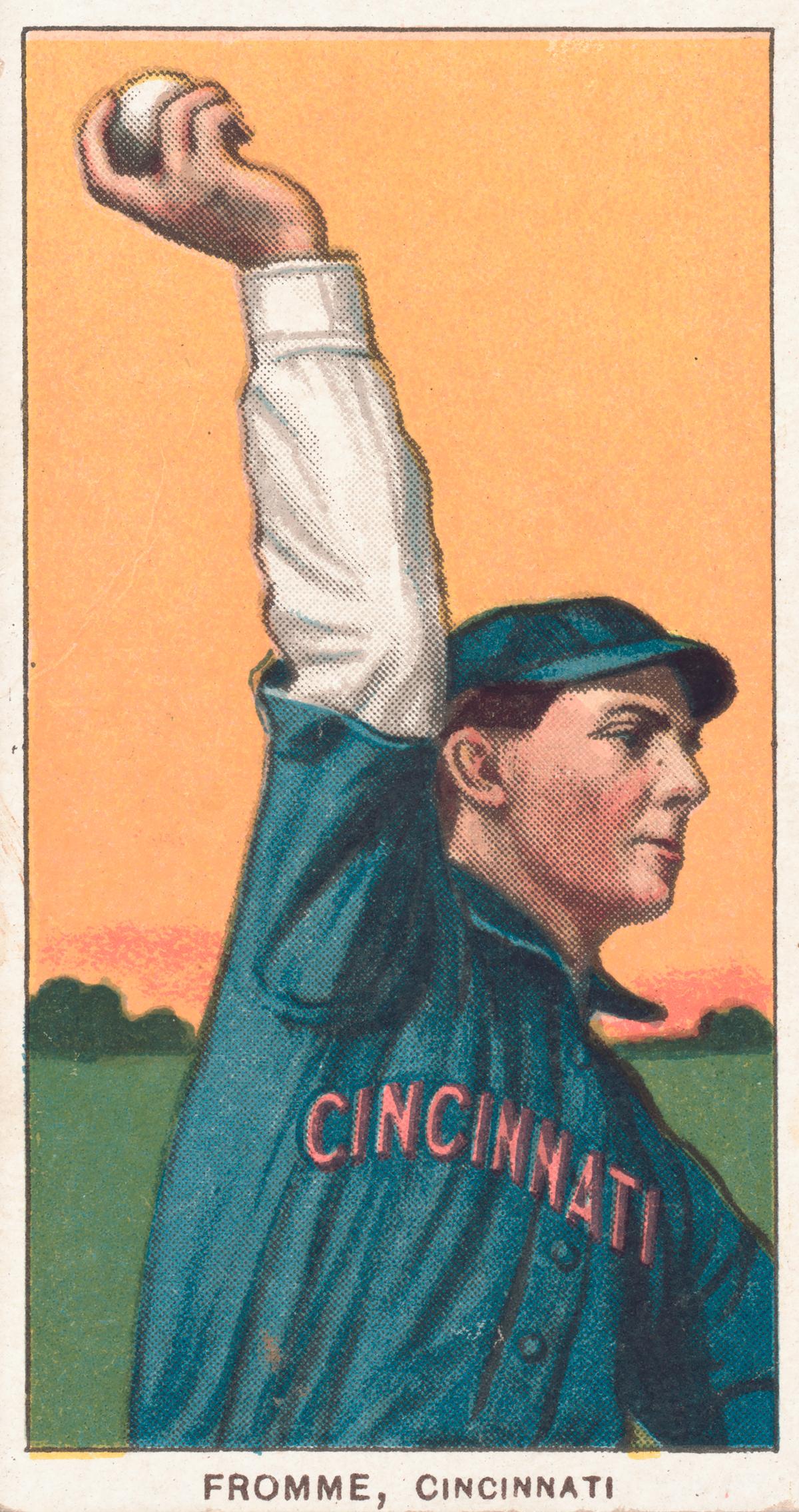
As professional baseball matured in the late 19th and early 20th centuries, players became celebrities, and the baseball card emerged as a new way to celebrate them. Unlike earlier illustrations focused on teams or the playing field, baseball cards centered on the individual athlete.
Players posed formally in crisp uniforms, becoming instantly identifiable figures to fans. In this way, baseball cards functioned as miniature portraits, encouraging collectors to preserve images of athletes much as they would those of political leaders or cultural figures.
Baseball Enters Commercial Advertising
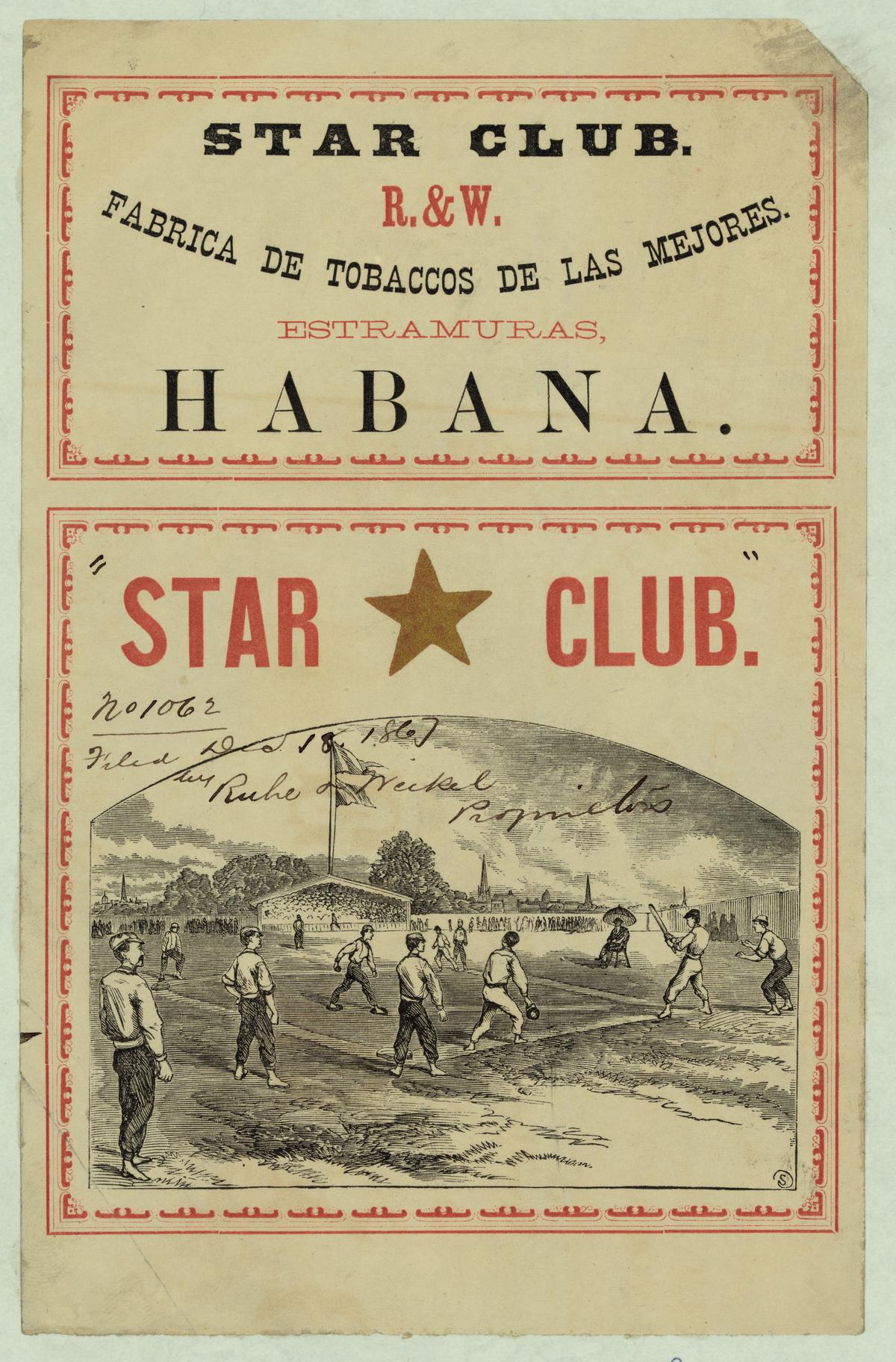
As baseball imagery spread through cards and print media, it became a powerful tool for advertisers outside the sport. The same visuals that fueled fan culture also worked as commercial symbols, linking products to the popularity of America’s pastime.
The 1867 “Star Club” tobacco label illustrates how quickly baseball entered commercial advertising. Baseball imagery had already appeared in political cartoons before the Civil War, including an 1860 Currier & Ives print depicting Abraham Lincoln playing baseball against his political rivals. By the late 1860s, advertisers understood that the sport was instantly recognizable to the public. Unlike lithographs that recorded history, these commercial images used baseball to suggest youth, leisure, and camaraderie.
Beyond the Ballpark
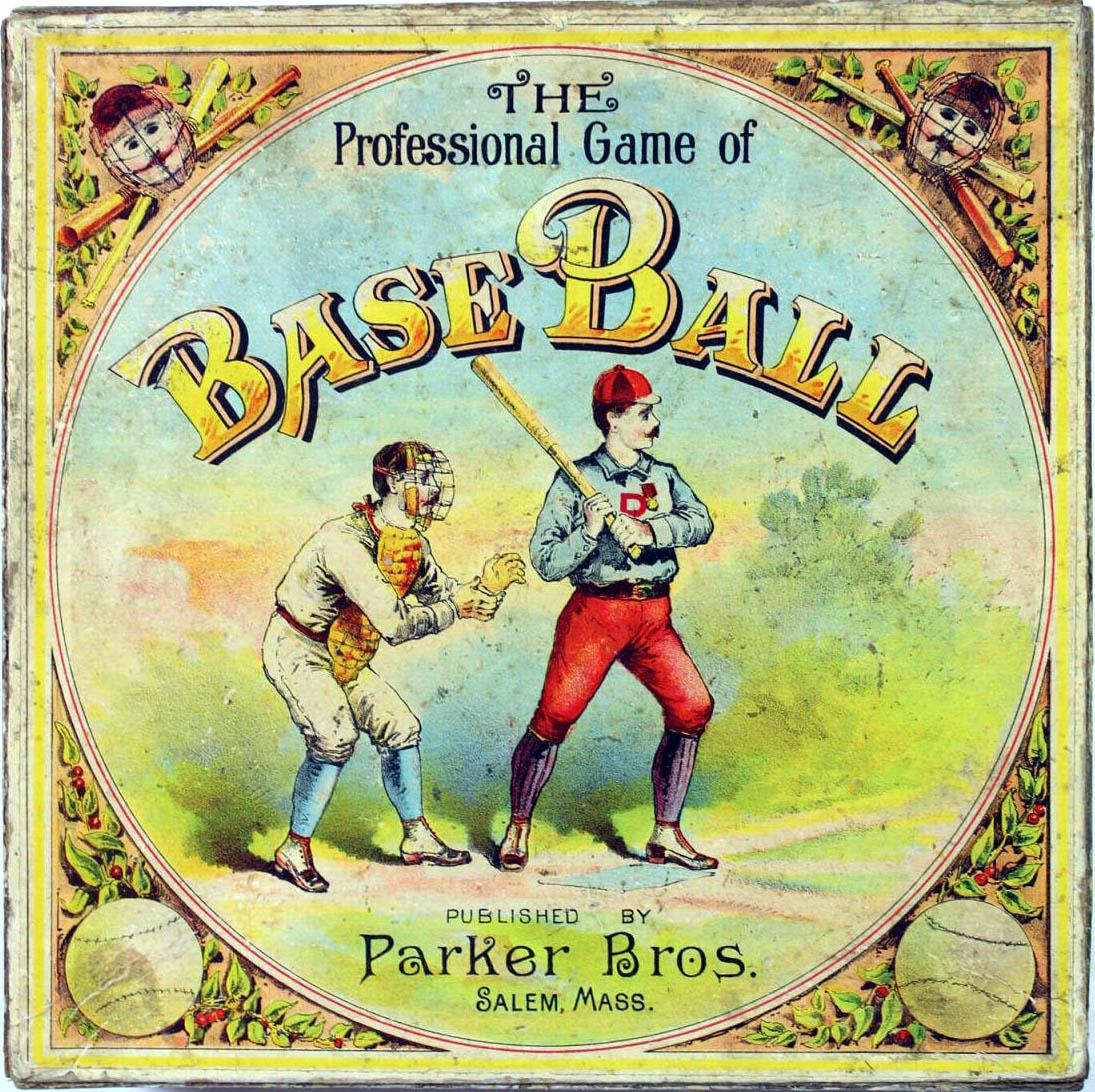
Baseball had become so firmly embedded in American culture that it extended beyond the field and into the home through board games, making it accessible to a wider public. The Professional Game of Baseball, produced at the end of the 19th century, reflects the expanding appeal of both organized baseball and family entertainment. Made from cardboard, paper, wood, and bone, the tabletop game attempted to recreate the sport’s strategy and excitement for indoor play.
At the same time, professional baseball was becoming increasingly segregated. In 1887, the International League, which included teams from New York, New Jersey, and Ontario, banned new contracts for black players. By 1889, owners in the National League and the American Association had reached an unwritten “gentlemen’s agreement” barring the signing of black players. The policy affected the entire system: Teams that attempted to sign black players faced pushback from other owners due to blocked contracts, loss of exhibition opportunities, and financial pressure tied to fan attendance. In practice, these pressures often made contracts unstable and effectively forced players out of the league without any formal rule or punishment.
Despite this exclusion, black baseball thrived. Teams organized through schools, churches, factories, and local communities, touring nationally and drawing strong crowds. Their popularity occasionally led league owners to rent out ballparks, even as they maintained segregation within their own ranks. These independent teams helped lay the groundwork for later institutions, including the Negro Leagues and the All-American Girls Professional Baseball League.
What Was Once Good
Few sports have shaped the American imagination as deeply as baseball. Before radio, television, and photography, artists and printers played a central role in shaping how the game was seen or understood. Each form served a distinct purpose while reflecting baseball’s place in American culture. They presented baseball as wartime resilience, leisure and advertising, individual achievement in portrait cards, and collective energy in popular illustration. This visual tradition helps explain why “Field of Dreams” continues to resonate.From Civil War lithographs to early commercial graphics, these images trace how the sport entered American visual life and how its cultural meaning developed alongside the game itself.