Norman Rockwell’s prolific paintings of everyday American life have had a profound impact on the country’s culture, becoming emblematic of its traditions and history. While drawing on the values of the past, his work also addressed the political and social issues of his day. One of his most beloved and well-known images is of a Thanksgiving meal. The 1943 “Freedom From Want” played an important role during World War II and is a testament to Rockwell’s artistic talent.

Chronicling America
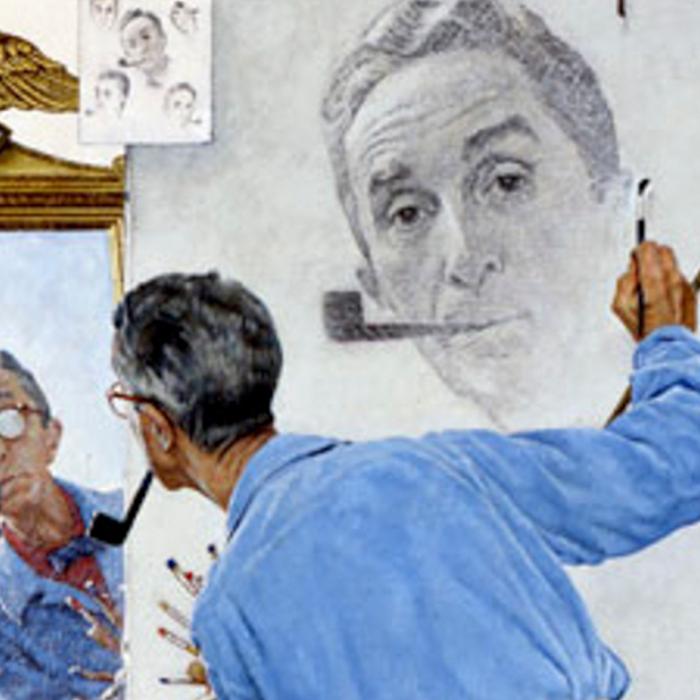
Rockwell (1894–1978) was born in New York City. He achieved career success soon after graduating from art school. By the age of 19, he was the art director for the Boy Scouts of America’s official publication. In 1916, at only 22, he made his first painting to be used as a cover illustration by The Saturday Evening Post.‘Freedom From Want’
The holiday-themed oil-on-canvas “Freedom From Want” is one of a four-part series that includes “Freedom of Speech,” “Freedom of Worship,” and “Freedom From Fear.” These four images were inspired by President Franklin D. Roosevelt’s 1941 State of the Union address in which he designated the preservation of these democratic values as essential. The importance of this was elevated by the end of that year, when the United States entered World War II.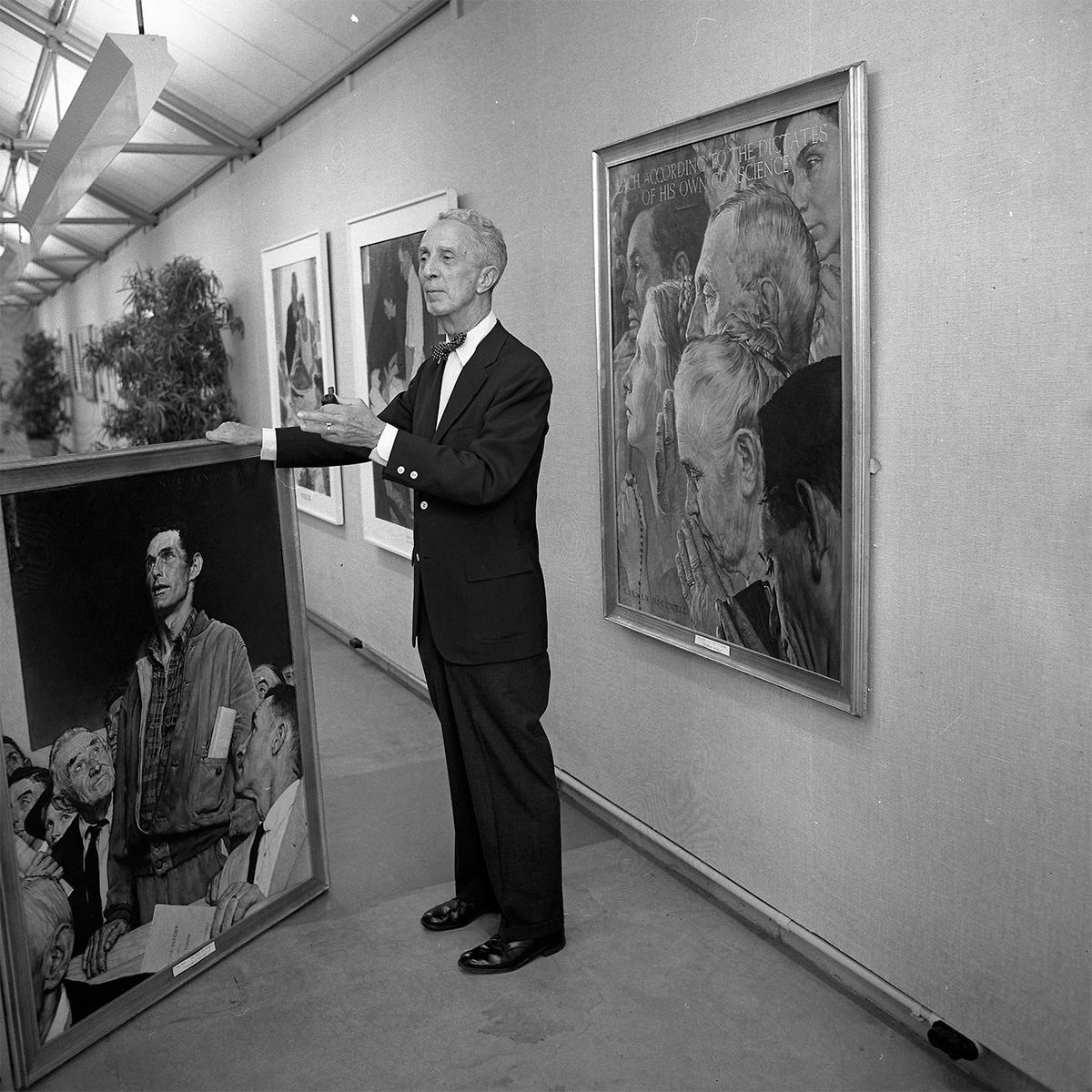
Thankfully, Rockwell’s “Saturday Evening Post” editor loved the idea, instructing the artist to finish the concept in eight weeks. Instead, it took him seven months of work to complete the project in his Arlington, Vermont, studio that was destroyed by a fire just a few months afterward. Each painting was published as a full-page interior illustration along with an accompanying essay.

“Freedom From Want” shows the gathering of three generations at a dining room table to partake in a Thanksgiving feast. The scene exudes comfortable prosperity. The brilliantly lit room is decorated with verdant wallpaper. At its center is a spotless tablecloth laden with food. The plate of celery, the cranberry sauce, fruit bowl, and covered casserole dish are crowned by a golden turkey that a grandmotherly figure brings to the table.
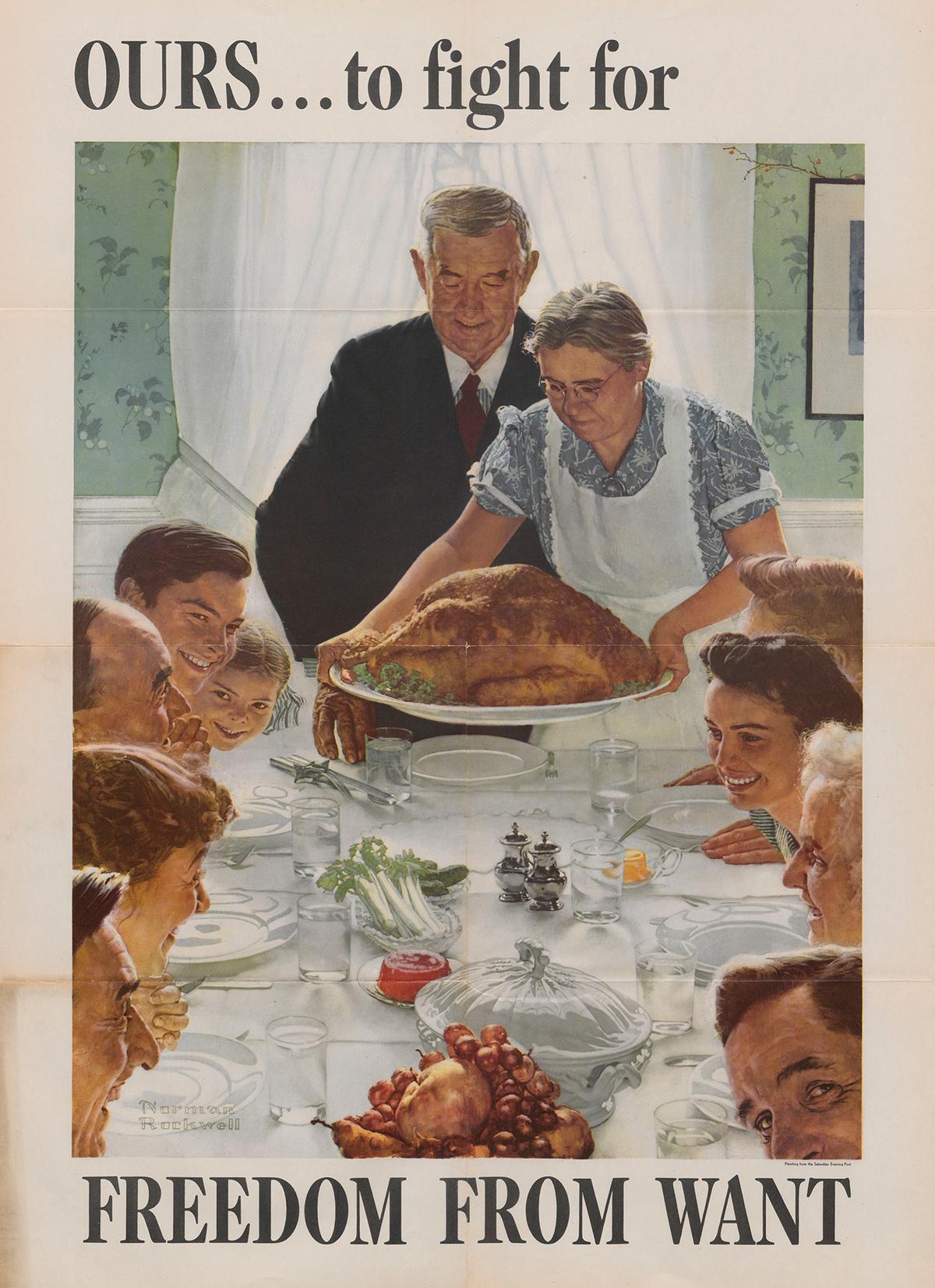
Importantly, the people gathered around smile at each other instead of looking at the food. Their focus is on togetherness and affection, not hunger. There is no want—not for food and not for love. Rockwell’s work conveys that these are ideals worth fighting for, encouraging the public’s commitment to win the war.
Rockwell’s composition positions the viewer as one of the guests. The face at the bottom right, who looks out of the canvas, emphasizes this pointed welcome to join in the abundance. The model for this figure was the artist’s neighbor, Jim Martin.
In fact, the painting is set with figures drawn from both Rockwell’s family and community who posed individually in his studio. These guests include his mother, Nancy Hill Rockwell (second at bottom right); his wife, Mary Barstow Rockwell (second at bottom left); and Mrs. Thaddeus Wheaton, the family’s cook (shown as the matriarch serving the bird).
The painting attests to Rockwell’s fine artistic skill in depicting color, texture, and light. The tablescape’s white china, white tablecloth, and transparent water glasses showcases his technical mastery of white-on-white painting. This reflects the artist’s study of Old Master paintings during his education at the National Academy of Design and the Art Students League, both in New York City.
In 1953, Rockwell and his second wife, Mary, moved to Stockbridge, Massachusetts. The town is now home to the Norman Rockwell Museum, which he helped found. Its collection includes the “Four Freedoms.”