This copy is for your personal, non-commercial use only. Distribution and use of this material are governed by our Subscriber Agreement and by copyright law. For non-personal use or to order multiple copies, please contact The Epoch Times Reprints.
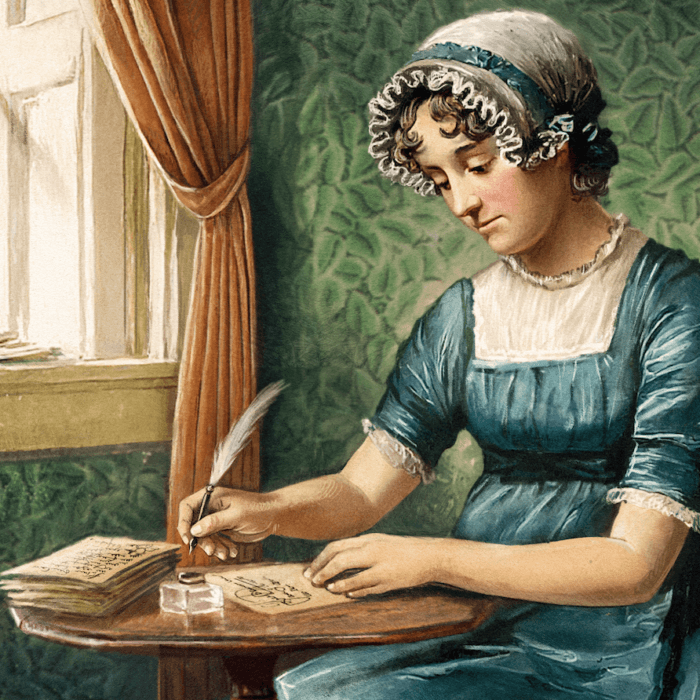
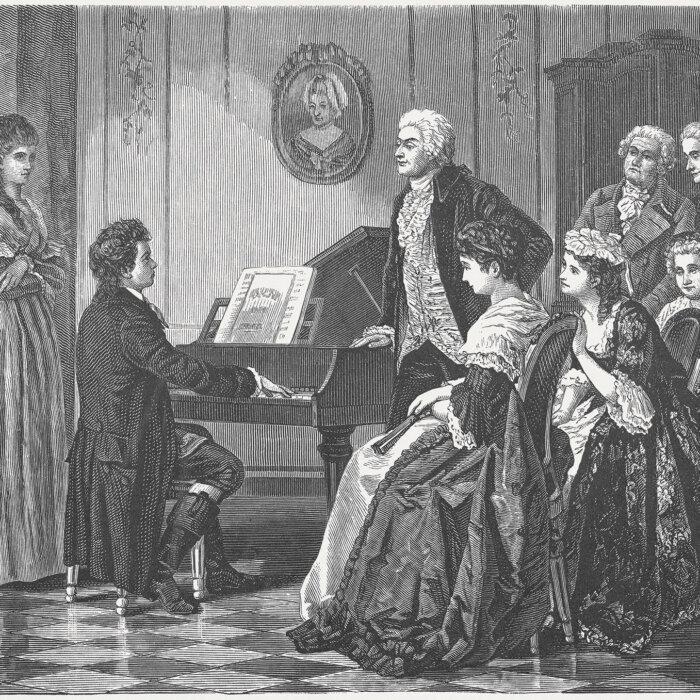
Mozart often began his mornings by setting down the musical ideas that came to him in the night. Biba Kajevich. This digital illustration was drawn by hand, not with artificial intelligence.
How do you compose more than 600 musical works, including 21 stage and opera works, 15 Masses, and more than 50 symphonies, in just 35 years? You work voraciously, following an intense daily schedule of writing music, playing music, and teaching music.
Such was the daily routine of Wolfgang Amadeus Mozart—not only an incredibly prolific composer but also one whose works are considered among the great masterpieces of classical music.
Early to Rise
Mozart’s creativity seemed to bubble up over the course of the night, and he got to work early in the morning, putting down on paper his nighttime inspirations. Sometimes, ideas simply flowed into his mind, with Mozart himself not always aware of their origin. As he described it, “When I am ... completely myself, entirely alone ... or during the night when I cannot sleep, it is on such occasions that my ideas flow best and most abundantly.”
He generally woke before 6 a.m., and the first order of business was to have his hair dressed. Mozart placed great importance on his appearance. He would complete the hairdressing process and his other morning hygiene by 7 a.m.—but not without some interruptions, however, when a bolt of musical genius would strike him, forcing him to the keyboard in the middle of his preparations for the day. Mozart’s hairdresser described one such incident:
“While I was doing Mozart’s hair one morning, just as I was finishing his ponytail, Mozart suddenly jumped up and, although I was still holding his ponytail in my hands, he went into the next room, dragging me behind him, and began to play the piano. Admiring his playing and the beautiful tonality of the instrument—it was the first time I had ever heard a piano like that—I let go of his ponytail and did not finish combing his hair until he got up.”
Consistently Creative
After this routine and a light breakfast of bread and coffee, Mozart would begin his first stint of composition. According to a 1782 letter to his sister, Mozart would compose from about 7 to 9 in the morning. With a solid period of uninterrupted creativity under his belt, Mozart would then teach music lessons from 9 until 1 p.m., at which point he ate lunch. Afternoons often involved some socialization or a concert and, during some periods of his life, additional music lessons. Mozart was also an avid billiards player, often competing with (and beating) his friend, the Irish tenor Michael Kelly. But the day’s composing was far from over.
At about 5 or 6 p.m., Mozart began composing again, submerged in musical wonders for several hours, sometimes until 9 p.m. After this second period of writing music, Mozart, during his courtship. would go visit his soon-to-be wife, Constanze, whom he stayed with until 10 or 11:30, enduring what he described as the “unkind speeches of her mother.” After returning home, he would often put in even more time on his latest composition—working until 1 a.m.—before finally retiring for a mere five hours or so of sleep.
Mozart described the periods of creative flow he could enter when free from distractions:
“Then my soul is on fire with inspiration, if however nothing occurs to distract my attention. The work grows; I keep expanding it, conceiving it more and more clearly until I have the entire composition finished in my head though it may be long. ... It does not come to me successively, with its various parts worked out in detail, as they will be later on, but it is in its entirety that my imagination lets me hear it.”
A Passion for Life
Mozart embraced this intense schedule despite his poor health and weak constitution. Most sources described him as a small (only about 5 feet tall), pale individual, rather unimpressive in appearance, despite his expensive taste in clothing. He suffered from a number of illnesses over the course of his life, including smallpox (which left scars on his face), tonsillitis, and multiple streptococcal infections. Despite his physical weaknesses, his spirit burned bright within him, allowing him to bequeath a treasury of music to the ages. However, for all his incredible productivity, the Mozart family endured chronic financial strain, although it always managed to keep servants and a carriage.
The bustle of such a life, coupled with frail health, took its toll on Mozart. He fell ill and passed away in December 1791. He was only 35 years old. One theory is that he died of Henoch-Schönlein purpura, which can be a complication from a strep infection. Had the young musical genius lived longer—and continued to operate in his full-throttle manner—what other masterpieces would he have created? We’ll never know. But even with the limited span of his earthly years, Mozart managed to leave an immutable legacy in the world of music, one that places him among the greatest musicians of all time.
Before becoming a freelance journalist and culture writer, Walker Larson taught literature and history at a private academy in Wisconsin, where he resides with his wife and daughter. He holds a master’s in English literature and language, and his writing has appeared in The Hemingway Review, Intellectual Takeout, and his Substack, The Hazelnut. He is also the author of two novels, “Hologram” and “Song of Spheres.”