Miss Trevor walks along the beach one evening as the sun sets and happens upon a little boy sitting on the rocks. He stares at the setting sun, yet his gaze is beyond it. Suddenly, a smile shines from his face that seems to fill his body.
Taken by the boy’s childlike wonder and joy, Miss Trevor approaches him. “I want to know your name and where you live and what you were looking at beyond the sunset.”
The boy is Paul Hubert, he lives in the house on the cove rocks, and he can’t tell her what he saw in the sunset. She asks him more questions. “I’m eleven years old. I haven’t any father or mother. ... I live over there with Stephen Kane [his guardian]. ... I love him, and I love my rock people too,” he said.
Miss Trevor quickly discovers that Paul’s “rock people” are his imaginary friends. He has a few rock people: Nora (who was the first), the Twin Sailors, and the Golden Lady of the Cave. He loves them dearly and collects the stories they tell, as well as his own imaginary adventures, in his writing pad at home.
New Opportunities
The more and more she sees of Paul, the more and more Miss Trevor believes that a good education will benefit him. After some deliberation, she approaches Kane and suggests that she take Paul into town with her.
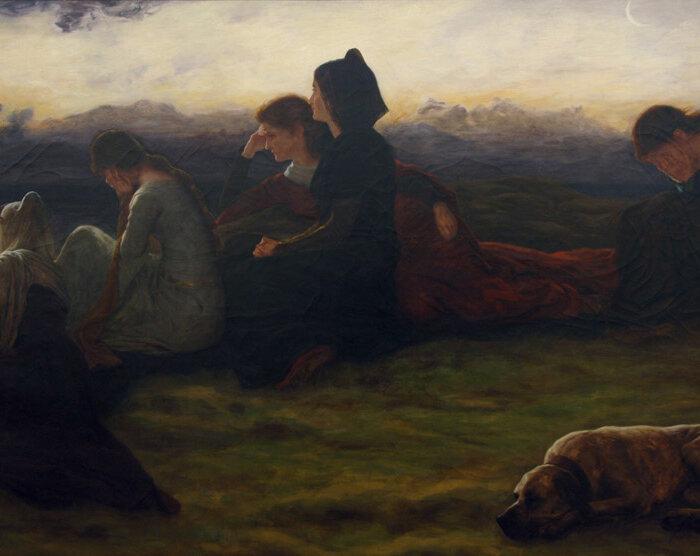
Kane says that he expected her to make such a proposition and this saddens him. “If you took Paul away,” he says, “he'd grow to be a cleverer man and a richer man maybe, but would he be any better—or happier? He’s his mother’s son—he loves the sea and its ways.” Nevertheless, he says that Paul must decide.
Paul decides to go with Miss Trevor into the city to learn new things and see new people. Yet the moment he lays down in his new bed in town, he suddenly feels the strongest, most awful feeling of longing—longing for something he left behind.
Through her story, Montgomery shows how our minds and souls may seek things they neither want nor need, and then abandon what they long for most.
Montgomery shows through Paul that, as Confucius says in “The Ethics of Confucius,” “The scholar does not consider gold and jade to be precious treasures, but loyalty and good faith.” For Paul learns that seeking more doesn’t mean that he will learn more or gain more.
Loyalty to our friends and home brings more contentment than any materialistic goal. Loyalty grounds us in the beauties of our current home and helps us recognize, appreciate, and love the world around us. Such love produces more wisdom than new knowledge ever could.