This copy is for your personal, non-commercial use only. Distribution and use of this material are governed by our Subscriber Agreement and by copyright law. For non-personal use or to order multiple copies, please contact The Epoch Times Reprints.
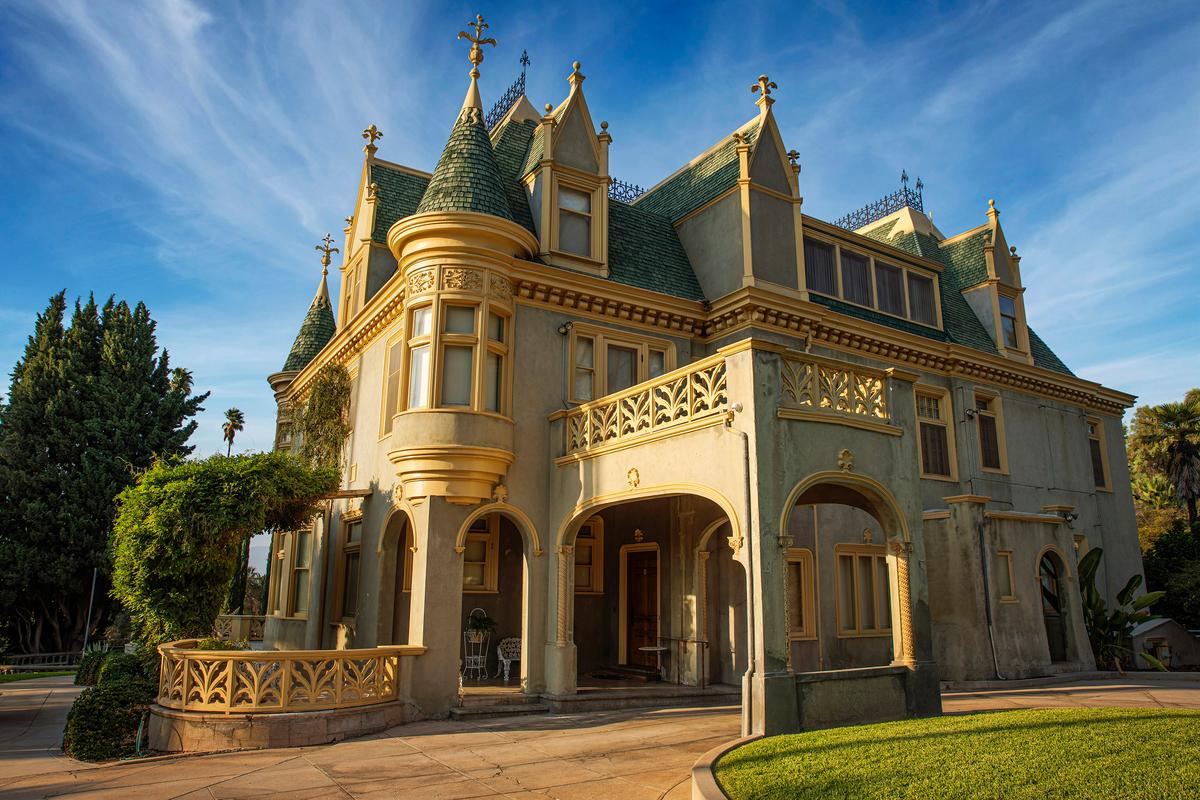
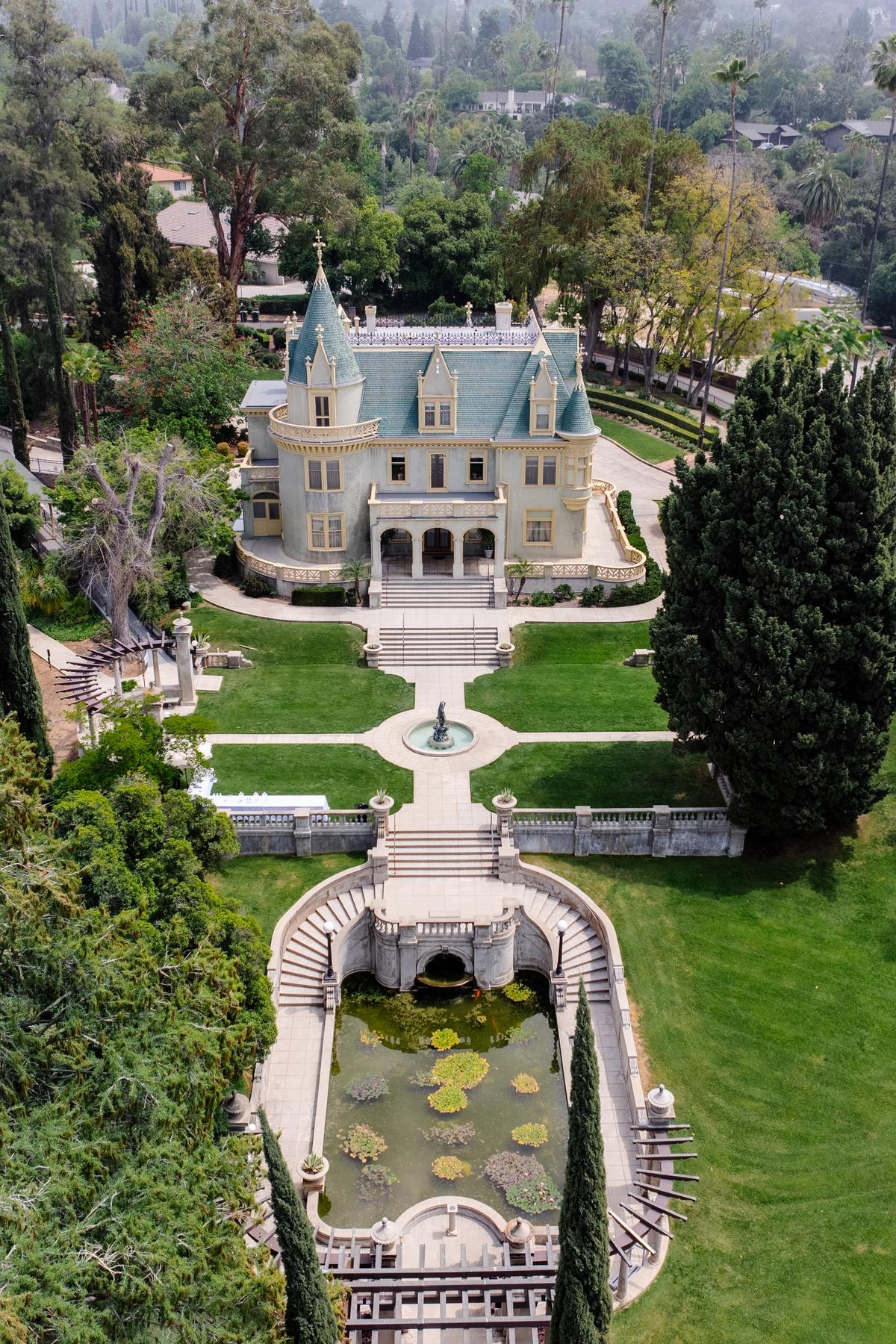
A wide expanse of concrete stairs with a concrete railing, topped with two decorative urns, leads to the impressive petite château. A signature yellow-gold paint color, which embellishes the mansion’s corbels, dentil molding, arches, and decorative balcony, contrasts with its neutral stucco exterior. Setting off the estate’s visual presentation is the roof, which features wood shake shingles that have been hand-dipped in a blue-green stain. Mathew Reiter/Kimberly Crest House & Gardens
In a land once abounding in orange groves, the commanding presence of the Kimberly Crest House and Gardens leaves visitors captivated. In comparison to Europe, few palatial 19th-century châteaux exist in the United States, yet Kimberly Crest stands as one of them.
Located on six acres in Redlands, California, the French château-style mansion was constructed in 1897. The surrounding gardens are an exquisite example of the Italian Renaissance style favored by Victorian homeowners.
A 1915 edition of Sunset Magazine reads: “All the majesty of perfect lines, all the luxury of tone and color that plant life is capable of producing, all the skill of artist and artisan together with a magnificent vista of valley and distant mountains are combined in Kimberly Crest, one of the most beautiful and attractive home places in California.”
A Los Angeles architectural firm designed the 7,000-square-foot property, with three floors, a balcony-wrapped turret, a porte-cochere, and immense stairs leading to a notable garden.
While a Redland pioneer, Cornelia A. Hill, had the home built, its second owners named it. John Alfred Kimberly, a cofounder of the Kimberly-Clark paper company, and his wife, Helen Cheney, purchased the estate in 1905. They enlisted their architect son-in-law, G. Edwin Bergstrom, to assist in establishing the concept for the Italian Renaissance gardens in 1909. The Kimberly family resided at Kimberly Crest until the 1970s; it was left to “the people of Redlands” and opened as a museum property in 1981.
A second-floor tower and a porte-cochere (covered entrance for a carriage or car) are the defining architectural elements on the southwest corner of the Kimberly Crest house. The private terrace above the porte-cochere features the same decorative patio railing design used in the front entrance’s second-floor balcony and the southwest corner’s patio. Mathew Reiter/Kimberly Crest House & Gardens
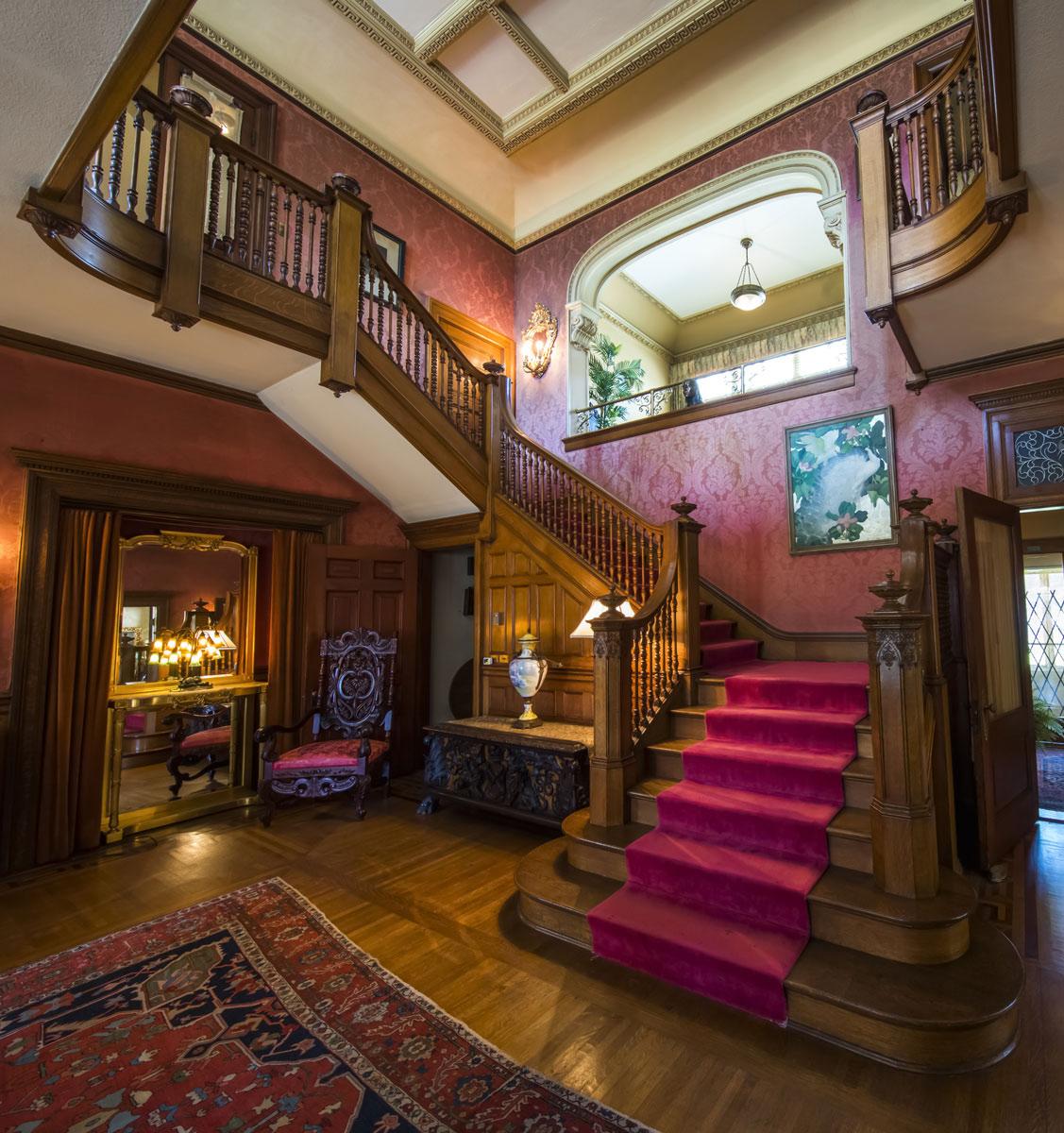
A cantilever floating staircase in the main hall greets guests of Kimberly Crest. Richly stained carved oak characterizes the woodwork in the staircase’s railings, newel posts, and handrails, as well as the paneled doors. The tray ceiling visible in the entryway is outlined in decorative molding, and a wide arch window niche allows light to flood the space. Kimberly Crest House & Gardens
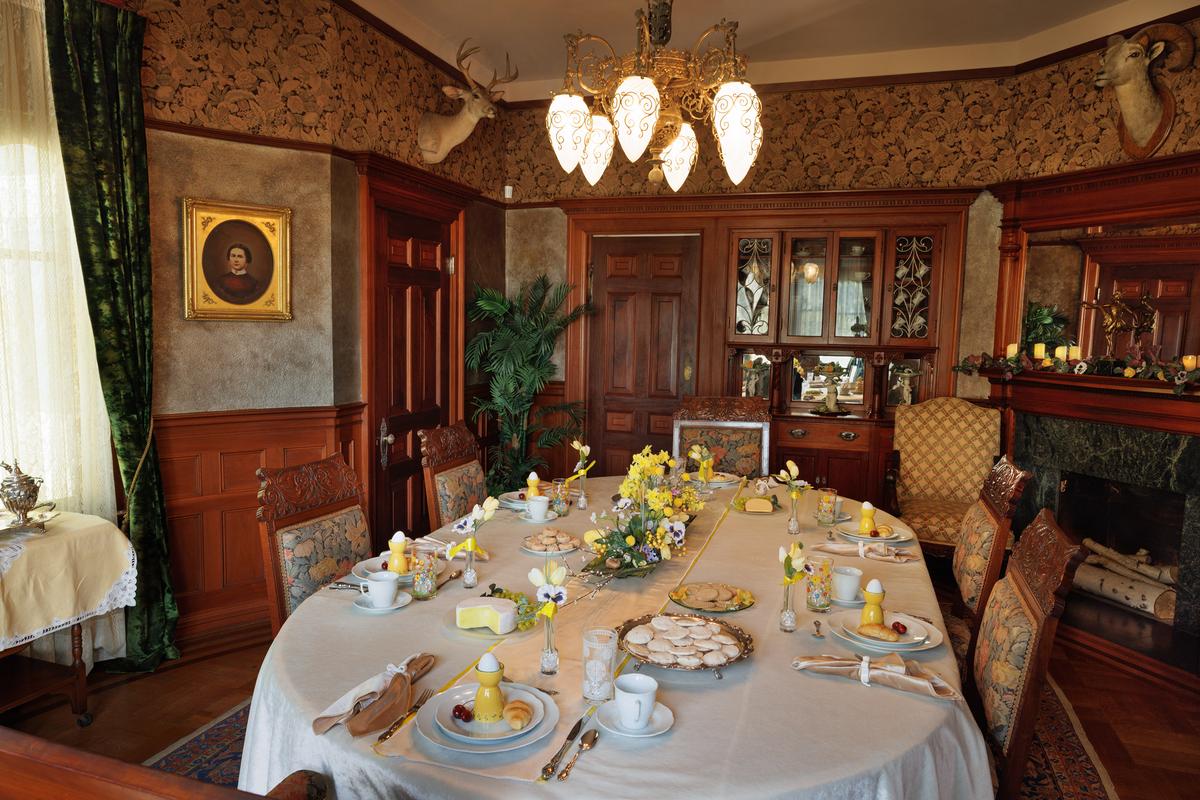
The dining room is the only room in the house that features mahogany instead of oak. Because of its high cost and exceptional durability, mahogany is considered an upscale wood species. The dining room doors and wainscoting, as well as the table and sideboard, are crafted in mahogany. A focal point in the room is the Victorian gilted metal, six-light chandelier with milk-glass conical shades. The multi-leaf dining table and the hand-carved chairs, which are upholstered in tapestry fabric, belonged to the Kimberly family. Ryan Schude/Kimberly Crest House & Gardens
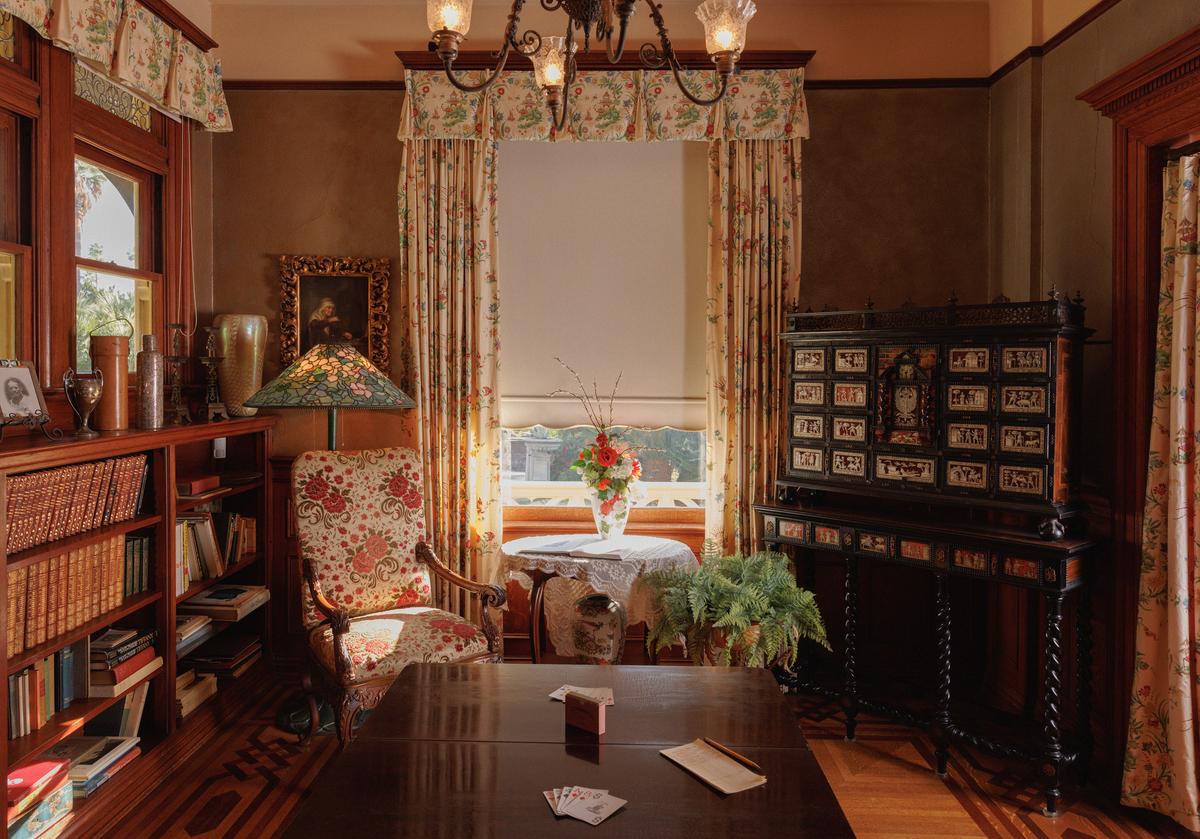
With its intricate Spanish chest and wood parquet-patterned floor, the first-floor library was the Kimberlys' favorite room. A stained-glass floor lamp, a patterned fabric chair, and window treatments bring color to the room. Additionally, the lavish brass Victorian lighting fixture adds interest with its ruffled-edge etched glass shades. Ryan Schude/Kimberly Crest House & Gardens
The encircled fountain and koi pond are the centerpieces of the impressive Italian Renaissance gardens. The statue represents Greek and Roman mythology: The goddess Venus is flanked by two dolphins ridden by cherubs, referred to as “Trumpeters of the Sea.” Distinct in its symmetry and grandeur, the garden layout was created to remind long-time owners, the Kimberlys, of their visits to Italian gardens. Wide and Roam Co./Kimberly Crest House & Gardens
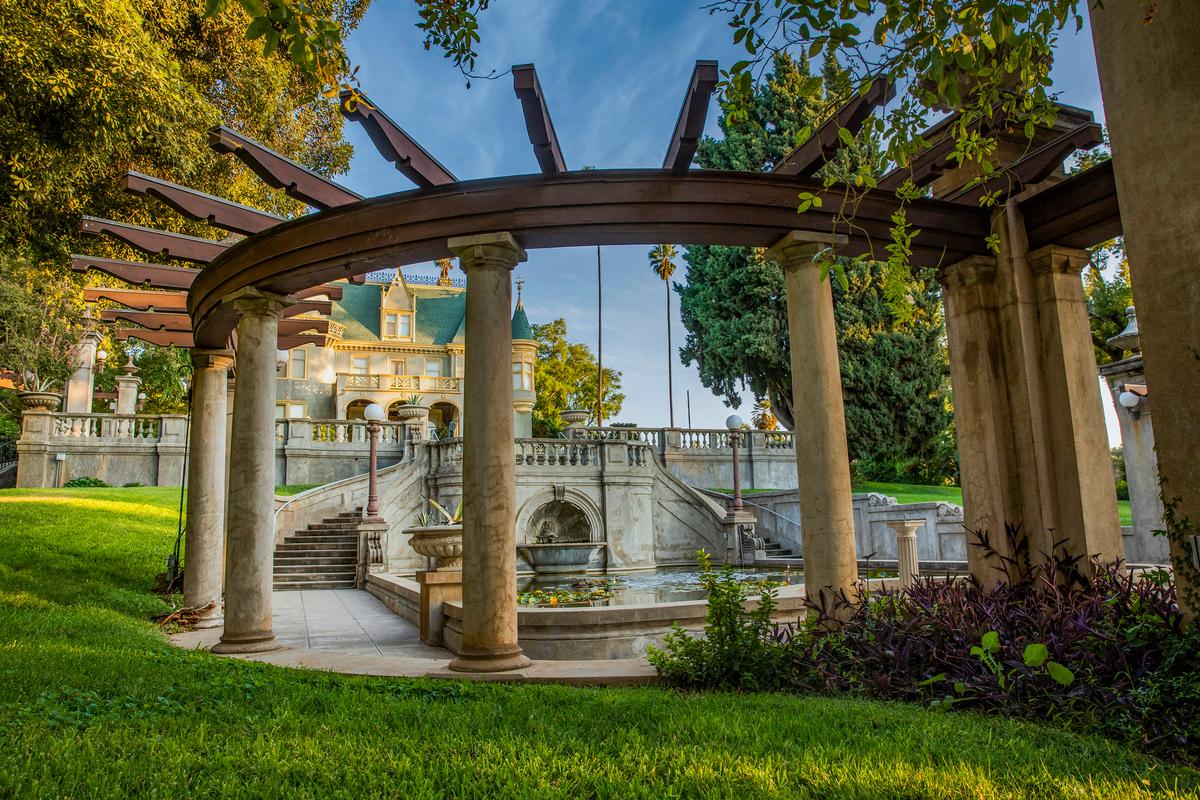
A highly Romanesque horizontal arched colonnade is part of the garden pathway. Made of cast concrete columns adorned with capitals, the colonnade frames the end of the koi pond. Mathew Reiter/Kimberly Crest House & Gardens
What arts and culture topics would you like us to cover? Please email ideas or feedback to [email protected].
A 30-plus-year writer-journalist, Deena C. Bouknight works from her Western North Carolina mountain cottage and has contributed articles on food culture, travel, people, and more to local, regional, national, and international publications. She has written three novels, including the only historical fiction about the East Coast’s worst earthquake. Her website is DeenaBouknightWriting.com