LONDON—Artists have portrayed St. Francis of Assisi (circa 1181–1226) more than any other saint, except for New Testament saints. In the century after his death, some 20,000 images of Francis may have been created, an estimate that omits illuminated manuscripts.
‘Saint Francis in Meditation’
Around 1635, the Spanish artist painted “Saint Francis in Meditation,” a striking portrait of Francis kneeling in prayer and gazing up to God in adoration.Zurbarán made Francis’s faith palpable by painting Francis the man, without the fanfare of his miracles. Francis wears the habit of the Capuchin order of Franciscans. His habit is well-worn, and patched up. He’s tied three knots in his belt to represent poverty, chastity, and obedience. (Two knots are seen in the painting.) Traditionally, each knot is coiled five times, one for each of Christ’s wounds. Francis holds a skull, symbolizing the impermanence of life and Christ’s crucifixion (a motif that Zurbarán’s elder, El Greco, first introduced to Spanish paintings of St. Francis).
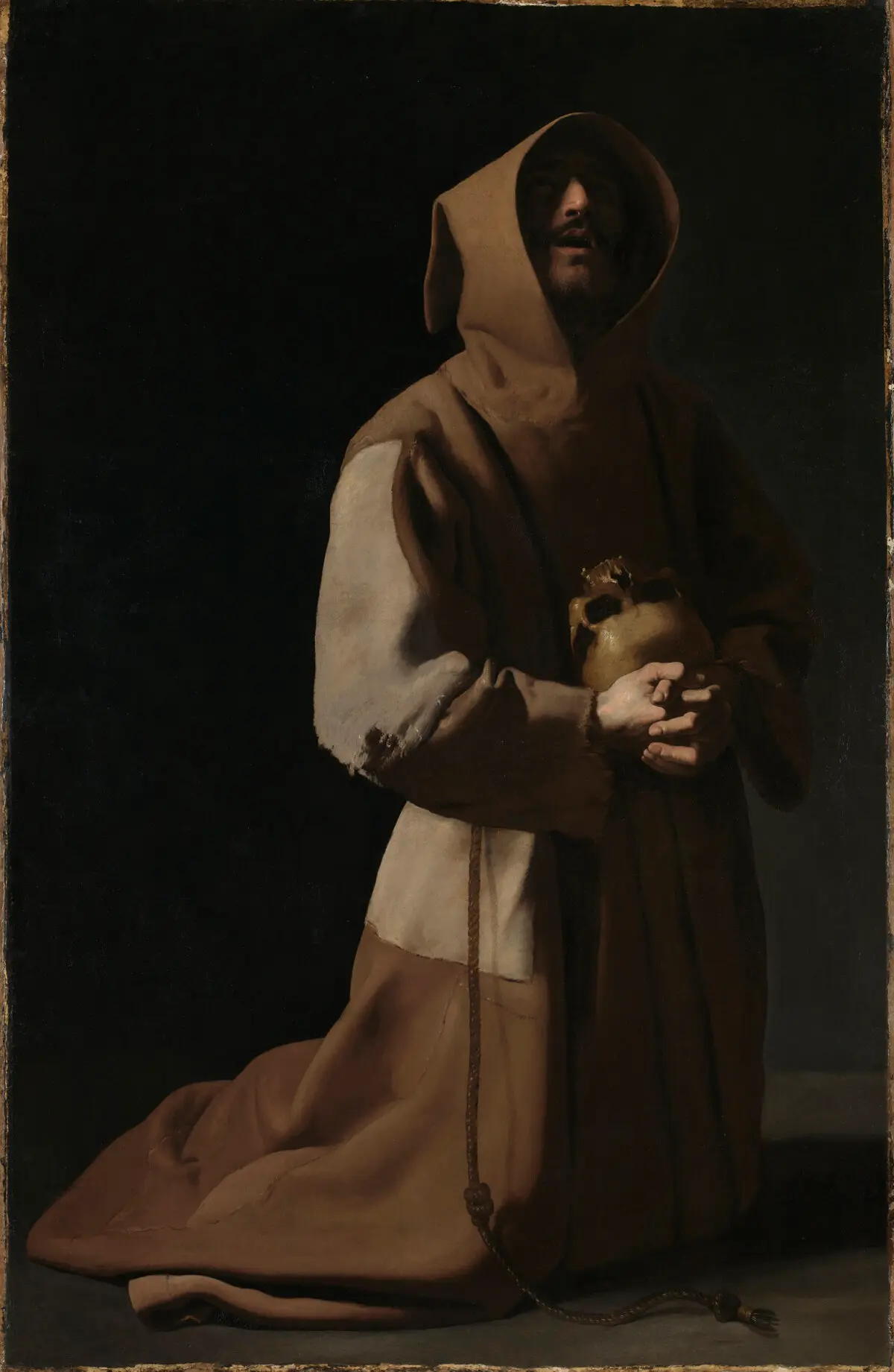
The painting’s dark background reflects Francis’s ascetic life. We can almost smell the stale air. We can feel the hard stone floor he kneels upon, and the rough woolen cloth of his habit scratching against his skin.
Zurbarán used Francis’s emotions to draw us into his world and ensure that the light shone on Francis’s hands in prayer and his ecstatic facial expression.
‘Saint Francis of Assisi’
In 1636, Zurbarán rendered the saint standing, with his habit drawn over his head and his hands clasped in prayer.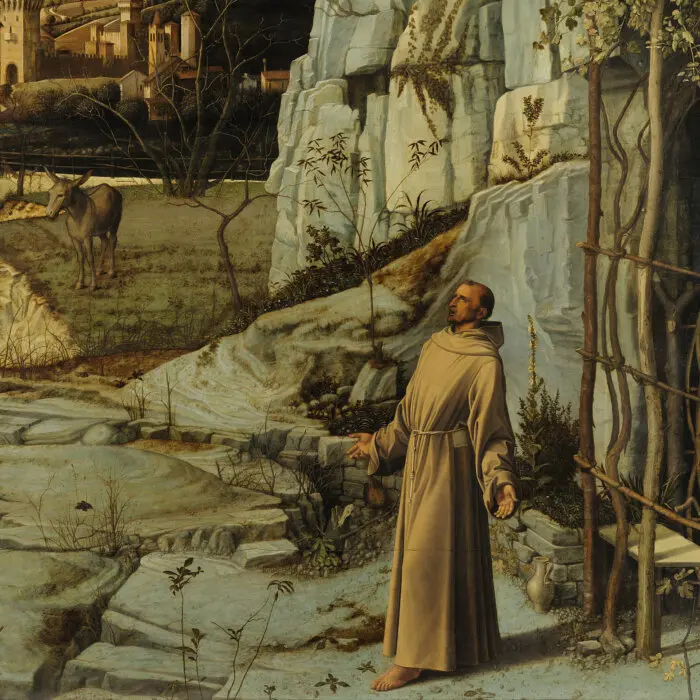
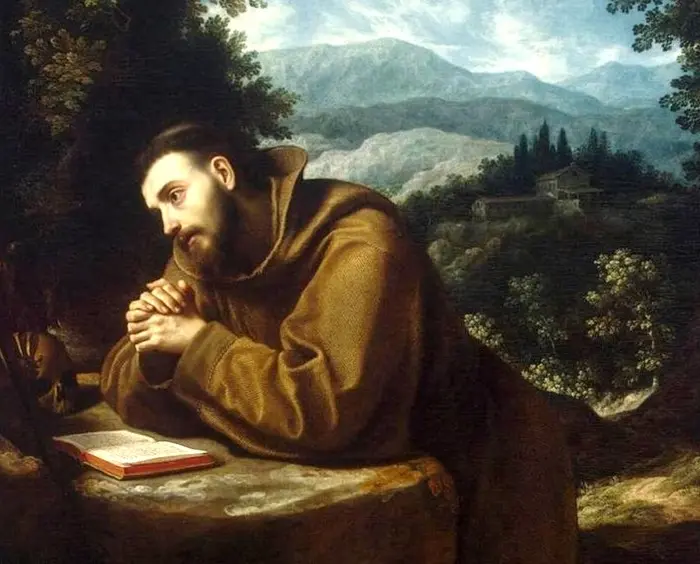
Experts believe Zurbarán created the extraordinary life-like painting for the Franciscan Convent of Las Descalzas Reales, a royal monastery, in Madrid. It is a rare rendering of the saint in his crypt, based on a vision that Pope Nicholas V had when he visited the saint’s tomb in 1449.
The pontiff visited the saint more than two centuries after he died. Yet he found no skeletal remains. Instead, he experienced a miracle: The saint’s body was intact, with fresh blood on his stigmata points. When bowing down to kiss the saint’s feet, the pontiff looked up at the saint who stood, statuesque, in a state of ecstasy.
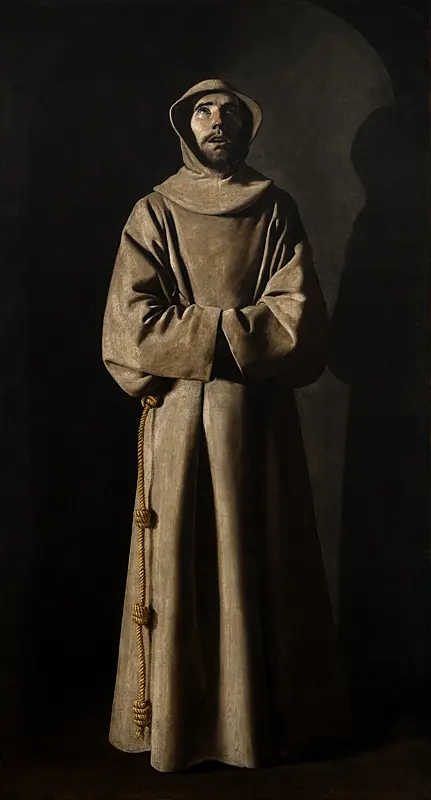
Zurbarán illuminated the saint in torchlight, as if we, too, are discovering the saint in the dark crypt with the pontiff. The light casts the saint’s shadow on the wall, perhaps reaffirming the pontiff’s vision of the intact ecstatic saint, who gazes up to God.
Both of Zurbarán’s paintings show us the spirit of prayer and devotion, which Francis believed was most important. As Francis’s work spread, he issued a warning to Franciscan orders that may have overemphasized theology; he encouraged members to study, but to never “extinguish the Spirit of prayer and devotion.”