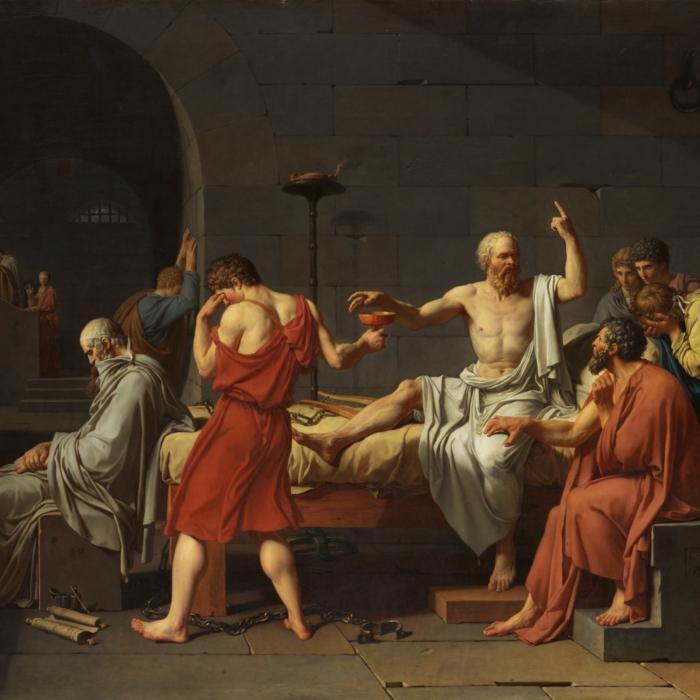
According to the ancient Greek philosopher Socrates (470 B.C.–399 B.C.), the key to a good life is self-sufficiency, and that good life depends on virtue.
Socrates’s friend Antisthenes (455 B.C.–365 B.C.) founded the philosophy of Cynicism based on freedom as well as Socrates’s ideal of self-sufficiency, and on the belief that these can be realized amid the rigors of toil and hardship.
The ‘Cynic’ Way of Life
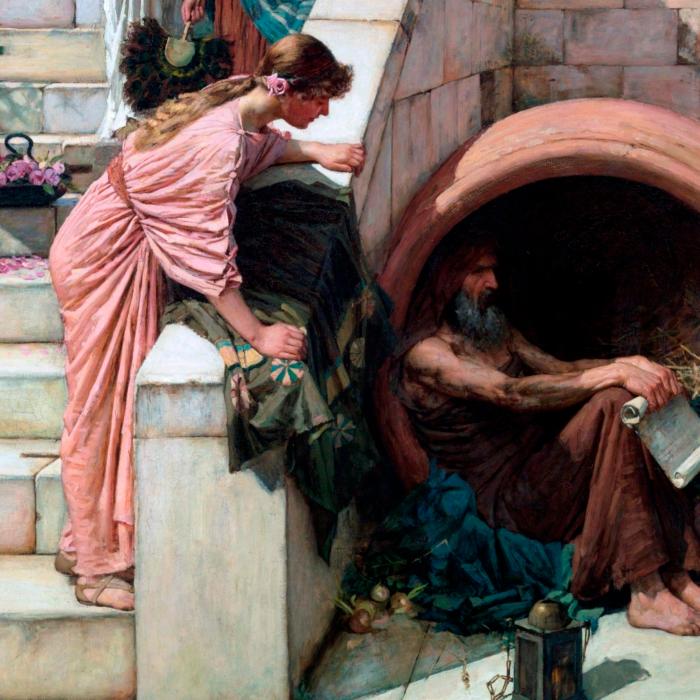
The root of the word “cynic” comes from the Greek word “kunikos,” meaning dog-like. Theories differ on exactly how and why the Cynics chose this word for their way of life. Some say it’s because the dog is shameless. It was certainly a description Diogenes embraced for his behavior.Diogenes lived a simple life on the streets of Athens, outside of social customs and etiquette. He slept in a wine cask and would eat, drink, and defecate on the street, with no care to conceal any of his body’s natural functions.
Three Anecdotes About Diogenes
Diogenes left us useful life lessons. On hearing a fool tune a harp, Diogenes said, “Are you not ashamed to give this wood concordant sounds, while you fail to harmonize your soul with your life?”One day Diogenes saw a boy cup his hands to take a drink of water from the river and exclaimed, “He teaches me that I preserve an unnecessary utensil,” and he tossed away the only utensil he owned, a shell he used as a cup.

While sunbathing in Craneum, Diogenes was approached by Alexander the Great, the most powerful man in the Western world, who stood before him and said, “Ask me any boon you want.” Diogenes replied, “Stand out of my light.” When Alexander declared he was the king, Diogenes said, “I am Diogenes the Cynic,” which means “Diogenes the Dog.”
The king said, “If I were not Alexander, I would wish to be Diogenes.” Perhaps, Alexander the Great encountered true power for the first time. Here was Diogenes, who lived true to his beliefs and who needed nothing and no one.