
The tale of George Washington and the cherry tree is one of virtue and paternal love that has endured for generations, shaping our perceptions of the first president’s early life. It’s also the source of Washington’s famous line: “I cannot tell a lie.”
Ironically, the legend is likely fictitious. But that’s another story. Whether historically accurate or not, the story is part of American heritage.
The story first appeared in 1806, in the fifth edition of “The Life of George Washington With Curious Anecdotes, Equally Honourable to Himself and Exemplary to His Young Countrymen,” by Mason Locke Weems.
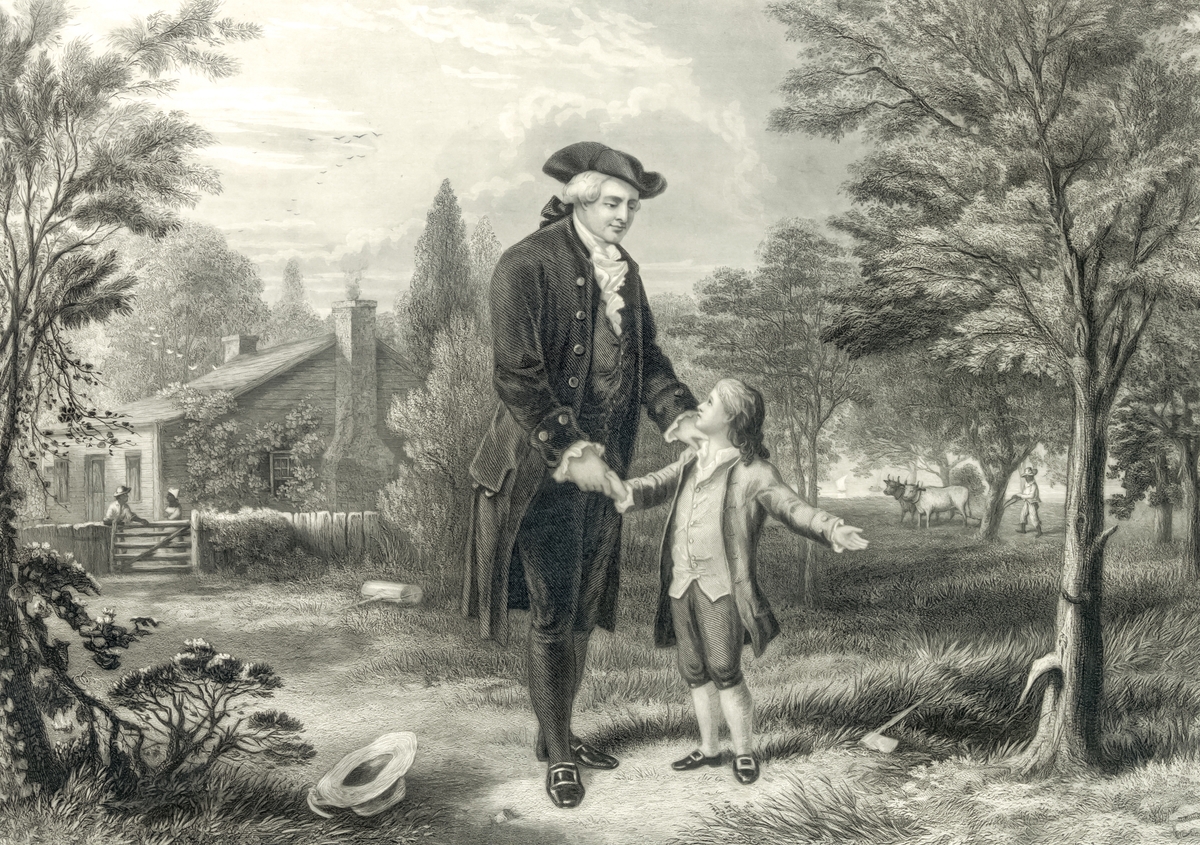
As the story goes (in the 1808 edition), a 6-year-old Washington had just been given a hatchet as a gift. So, naturally, as with most 6-year-olds when given a present, he went to try it out. He swiped it at his mother’s pea-sticks and accidentally “barked” his father’s young English cherry tree. It never recovered.
When his father asked George who had cut his favorite tree, George looked “at his father with the sweet face of youth brightened with the inexpressible charm of all-conquering truth,“ and said, ”I can’t tell a lie, Pa,” and confessed all.
Teaching Truthfulness
In the book, Weems uses the cherry tree story to illustrate the importance of telling the truth, no matter the consequences. Before he tells the story, he notes that parents serve as guardian angels. He uses Washington’s father to illustrate the point and to demonstrate how parents should be responsible for their children’s character and behavior. In one such example, his father tells George how some parents beat their child for every little fault, so much so that the “little terrified creature slips out a lie! just to escape the rod.”
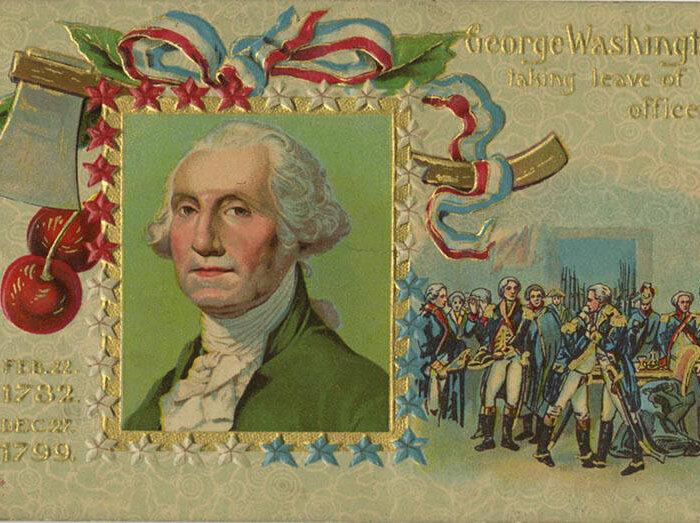
For 220 years, this story, demonstrating the integrity of the first president, has been passed down through generations.
The story was published in 1806, seven years after Washington died. The American people wanted to hear more about Washington; they knew of his famous public endeavors, but little was known about his private life. Weems delivered this tale, true or not, and the public treasured its morals.
Not only does the tale show Washington’s good character as a child, but it reminds us to value honesty—that honesty really is the best policy.
Washington showed these traits in the way that he led, as our forefather and our nation’s “Guardian Angel.”
“I hope I shall always possess firmness and virtue enough to maintain (what I consider the most enviable of all titles) the character of an honest man,” wrote George Washington to Alexander Hamilton on Aug. 28, 1788.