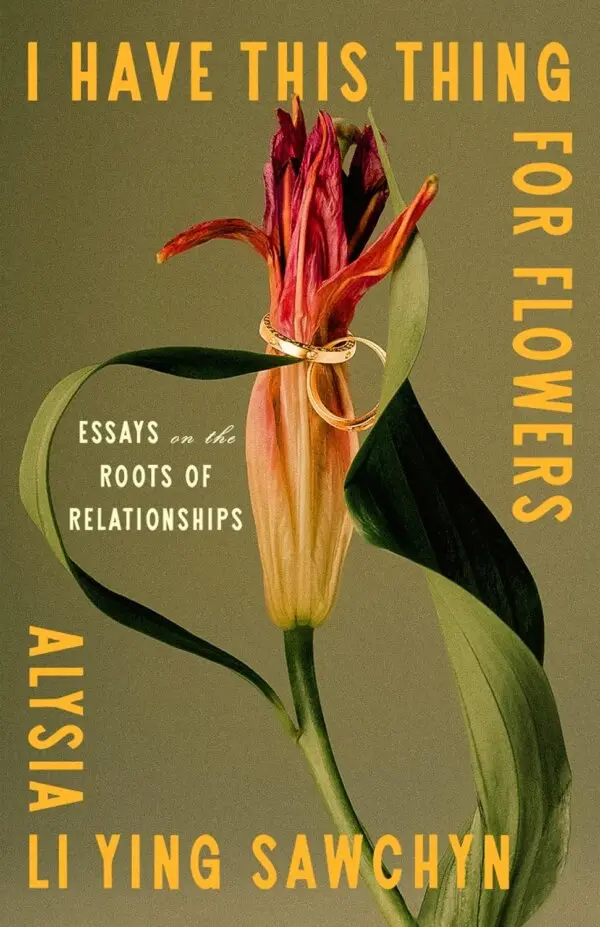
An essay collection that compares the ups and downs of a chaotic life to a variety of flowers may seem an odd choice for Alysia Li Ying Sawchyn’s upcoming memoir, “I Have This Thing for Flowers: Essays on the Roots of Relationships.”
Each essay depicts the different people, places, and things from throughout her life, weaving stories about a particular flower into the narrative. It may be connected by the flower’s history, its Latin name, how it grows, or a characteristic during its lifespan.
How flowers match up with the author’s life experiences isn’t always obvious, which sends readers on a journey of discovery into deeper meanings for pairing. For instance, she chose the Achillea, or common yarrow flower, to coincide with her experience of helping a friend manage a series of family crises.
One needn’t have an interest in gardening or a green thumb to find fascination in the matchups chosen. She includes the bleeding-heart, or Dicentra, for example, in an essay about an abusive relationship.
“Bleeding heart flowers,” she says, “are named for their shape” which could either be a limb or “beads of blood.” She likes this flower because it’s “delicate and unshowy, happiest in the shade.” Is she speaking about herself or the flower?
Flowers by Chapter
Sawchyn trusts the reader to understand the metaphors and presents enough evidence via lyrical and rhythmic prose. If one of her stories and its flower don’t seem to fit, one moves on to the next, knowing perhaps a clue will emerge.
Her extensive knowledge of the 21 plants included is remarkable considering that there’s no mention of her having prior botanical studies. One by one and in alphabetical order by flower names, her story starts at the yarrow plant (Achillea) then moves on to Echinacea, Hydrangea, Iris, Laurel, and Paeonia, ending with Vinca and Zinnia, with lots more in between.
Readers can learn about the strengths and weaknesses of the plants in their own gardens.
In her previous book, “A Fish Growing Lungs,” Sawchyn was praised for the “brutally honest” essays concerning her mental health journey and her eye for detail and description.
She’s continued along the same path with this new release but with a more mature eye and more confidence. She’s eager to figure out where she belongs, while navigating the comings and goings of the people in her life, as referred to in the book’s clever subtitle.
From the description of the Gardenia and its powerful fragrance, she morphs into a story about a biophysicist and, interestingly enough, a perfume reviewer who’s an expert on the nose and how its receptors detect odors.
New Orleans Connection
The essay shifts to Sawchyn’s visit to a New Orleans botanical garden, where she discovered almost 10 gardenia varieties. “Their fragrances are nonetheless distinct to my smoker’s nose,” she writes, as the flowers remind her about favorite floral scents from her childhood.The level of detail in the backstories she includes makes for fascinating tidbits of information. The correlation she makes to her life more than keeps the reader engaged and encouraged to seek out where their own stories connect to the natural world.
Sawchyn brings the reader to her recovery. She was living in a halfway house, and her ability to smoke a cigarette outside was associated with the flower. Now healthy, she reviews her past and finds a new understanding of herself.
With a nod to Billie Holiday and her trademark gardenia, Sawchyn writes that the blues singer “was also famous for creating her own methodology.” She quotes the closing line in Rita Dove’s poem “Canary,” which became the title of a biography about Holiday: “If you can’t be free, be a mystery,” a motto the writer embraces.
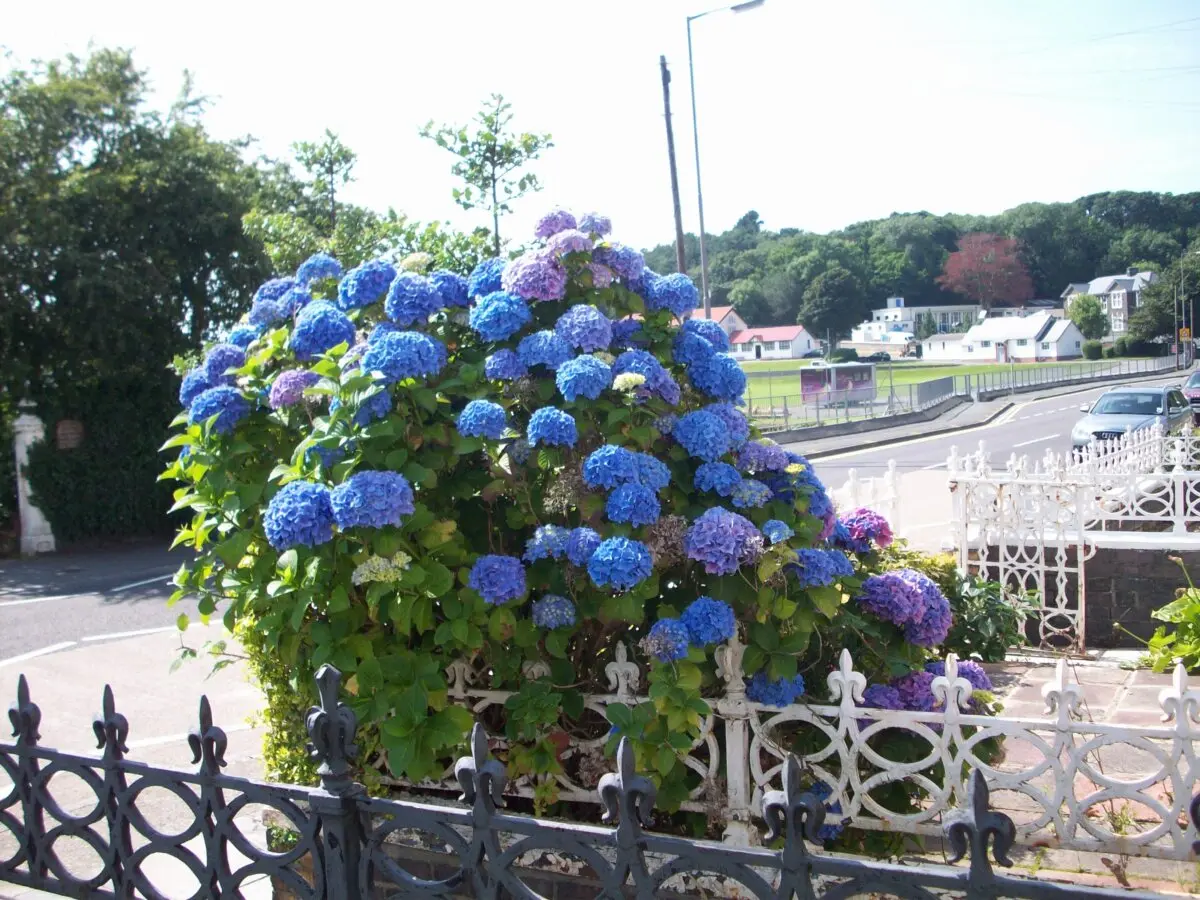
The Hydrangea Summer
The flowers are also symbols of her own difficult personality. This refers to the plant that takes longer to bloom and is used to reflect a time when the author was on guard or holding back. In the essay titled “Hydrangea/The Hermit,” Sawchyn finds much to connect to.While living in Lisbon, she sees the “proliferation” of them around the city. She also sees them in the ceramic tiles of ancient buildings and remembers seeing them while visiting Spain. These memories are linked together by the time she refers to as her “hydrangea summer.” She muses about the irony that it’s the “acidity that gives all these blue hydrangeas their color.”
There’s no timeline, so the essays move through memory; the only order is the alphabetical list of flowers as chapter headings. Just as flowers bloom at different times based on their natural timelines, so the author’s growth emerges as she makes her way through romantic relationships, a broken engagement, the pandemic, and a marriage of convenience that unexpectedly turns to authentic love.
This book may not appeal to those who enjoy the standard memoir format, one that moves along chronologically or with a strict theme.
With a more poetic style than a formal narrative, the essays will take on more meaning when the reader plays along to unravel the emotional connections. After finishing the book, readers may find they have a thing for flowers, too.