Both reactions focus on the wrong question.
Before you sell or buy anything, it helps to know what gold has done after every record high of the modern era, because this correction is just part of the pattern.
Quick Answer: Should You Sell Your Gold Now?
For most households, a 26 percent decline is not, by itself, a reason to sell. World Gold Council data show that since 1971, gold has fallen more than 20 percent after a record high on eight occasions, with an average drawdown of 36 percent. Deep pullbacks after peaks are how gold has always behaved. The better question is not where the price goes next, but why you own gold. How much of your savings does it represent? What would need to happen to change your strategy?
What Actually Drove the Swing

The run-up and the retreat came from the same place: gold’s role as the asset people reach for when they are nervous.
The January Spike
Safe-haven demand surged as investors sought shelter from geopolitical tension and market uncertainty. Central bank buying and heavy fund inflows pushed the price past $5,500.
The Pullback
As inflation pressure and interest-rate expectations shifted through the spring, the math changed. Gold pays no interest, so when yields on cash and bonds look more attractive, the cost of holding gold, or the opportunity cost of not holding interest-bearing assets, rises. Some of January’s nervous money took profits and moved on.
Gold responds sharply to fear on the way up and to rising yields on the way down. This is perfectly in line with this asset’s character.
What History Says About Gold Corrections
The decline feels dramatic because the record is so recent. Zoom out, and it looks routine.
Since the United States left the gold standard in 1971, every major gold peak has been followed by a deep pullback. Figures below are approximate peak-to-trough declines.
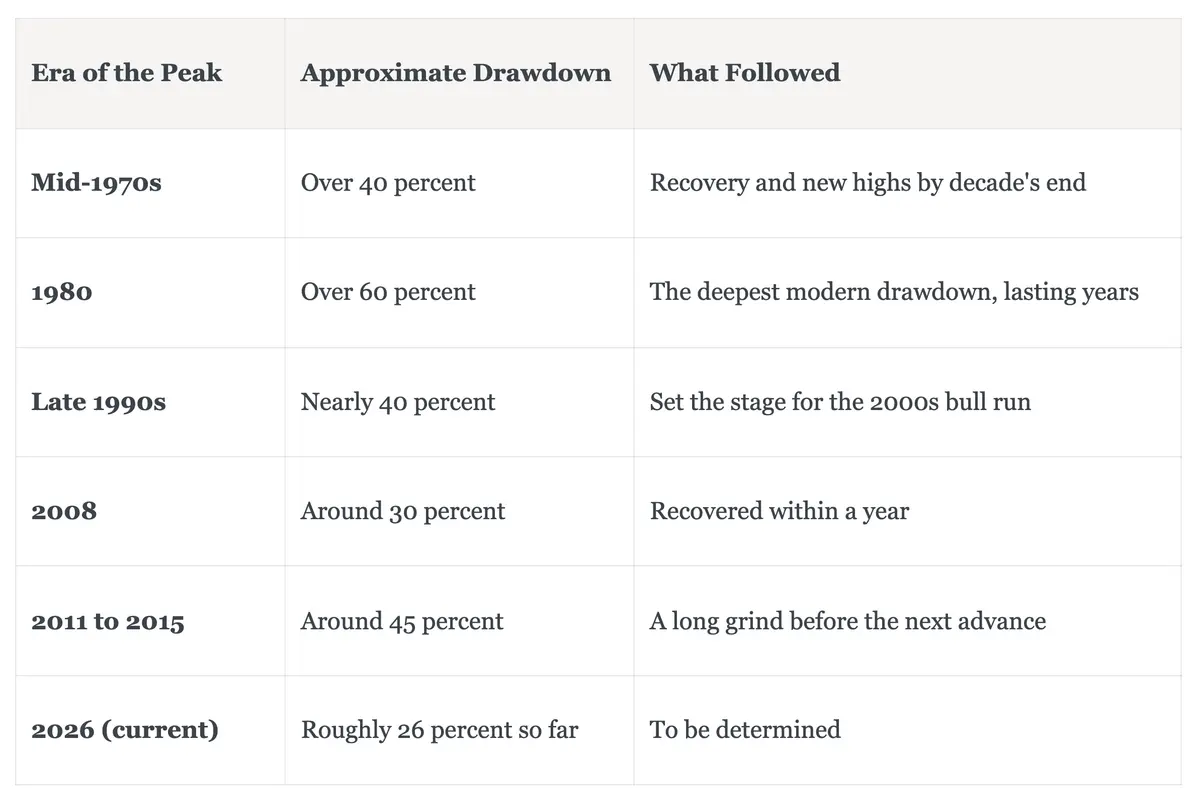
Across all eight episodes of 20 percent or more, the average drawdown was 36 percent. That makes today’s correction shallower than the historical average.
It could deepen or recover from here. History supports both possibilities, which is exactly why “timing it” is a risky maneuver.
The Mistake Behind the Panic: Filing Gold Under ‘Safe’
Many people buy gold because it is marketed as a safe haven, then mentally file it in the same drawer as a savings account. When the price drops 26 percent, it feels like a betrayal, and betrayal is what makes people sell at the bottom.
The 3 Questions That Actually Matter
Instead of asking whether gold falls further, ask these:
Why do you own gold? If you bought it as long-term insurance against inflation or currency trouble, a price swing does not touch that reason. If you bought it in January because it was going up, ask yourself if you ever had a strategy—it’s an answer worth knowing.
What share of your savings does it represent? Planners who use gold often suggest 5 to 10 percent of a portfolio. At that size, a 26 percent drop in gold moves your total savings by a percentage point or two. If the decline is keeping you up at night, the problem is probably your allocation, not the market.
Is there a genuine need to change your strategy? Price drops don’t automatically signal strategy adjustments. Real change stems from a shift in your time horizon, a need for liquidity, or a considered decision that your reasons for buying no longer apply.
If your answers still hold, so should your gold.
The Context Panicked Sellers Miss
Even after falling 26 percent from its January record, gold remains up more than 20 percent over the past 12 months. An investor who held through the entire round trip is still well ahead of a year ago.
The people most at risk of real loss are the ones who bought at the peak out of excitement and sold at the trough out of fear, converting a paper decline into a permanent one.
FAQs About the Gold Price Correction
How Often Does Gold Fall After Hitting a Record High?
Regularly. World Gold Council data shows eight episodes since 1971 in which gold dropped more than 20 percent after a record high, with an average peak-to-trough decline of 36 percent. Every major gold peak of the modern era has been followed by a significant pullback. The current 26 percent correction sits below that historical average, which makes it typical rather than alarming by gold’s own standards.
Is Gold Still a Safe Investment in 2026?
It depends on what you mean by safe. Gold has preserved purchasing power over long periods and often performs well during inflation or market stress, which is why it works as a hedge. But it is not stable. Price swings of 30 percent or more are part of its documented history. Treat gold as volatile insurance within a diversified portfolio, not as a substitute for cash savings or an emergency fund.
Should I Buy Gold During This Correction?
Only if gold already fits your plan. A lower price improves your entry point, but it does not guarantee the decline is over, and corrections can run deeper and longer than anticipated. If you have decided gold deserves a modest place in your portfolio, buying gradually through dollar-cost averaging reduces the risk of catching a falling price. Buying simply because the price dropped isn’t a strategy.