Any thriller worth its salt will try to include at least one despicable character, a few betrayals, red herrings, and, perhaps most importantly, an unforeseen twist.
Think of the double identity behind Robert Louis Stevenson’s “Dr. Jekyll and Mr. Hyde” or the collective culprit in Agatha Christie’s “Murder on the Orient Express.”
Modern thriller writers will often eschew the “less is more” rule, believing that a single well-placed twist is rarely enough. Many will stack shocking reversals, betrayals, secrets, and taboo subjects, one on top of the other. They hope the accumulation itself will keep a distracted reader turning pages.
Circle of Enemies

New York publicist Jackie Swift works for an image-obsessed firm. The firm’s entire circle of colleagues, clients, and execs could be described as ambitious professionals with few scruples about how they climb.
Before joining her current firm, Jackie spent years working for Erick Mortenson, a once-celebrated PR “dark wizard.” His parties for young influencers and journalists were coveted affairs, but the gatherings soon devolved into drug-fueled debauches. Jackie’s job sometimes meant cleaning up messes, perhaps felonious ones, that were never meant to see daylight.


Eve of Destruction
On the eve of the biggest presentation of Jackie’s career, her sister, Madi, sends a frantic late-night text message. She claims she’s overdosing at Erick’s townhouse and needs naloxone immediately.Jackie rushes over, lets herself in with an old security code, and finds the house eerily empty, with signs of sinister happenings but no Madi. Instead, she discovers Erick’s body lying in his walk-in freezer.
Pulp on Steroids
There are two reasonable ways to approach a book like this. One is to treat it as a darker, trashier cousin of prime-time soap opera. Think “Dallas” or “Succession,” but it’s steeped in an atmosphere of predatory wealthy men and women and the enablers around them.The setting is the seedy high-end underbelly of Manhattan—mortgage brokers, real estate agents, and reputation managers who lie as reflexively as they breathe. They also prove willing to go to extremes to protect their interests or advance their careers.
Davidson’s prose leans hard into pulpy sensationalism, and the results are uneven. Some of her descriptive choices land awkwardly; they hedge so much that a scene meant to convey dread instead reads as oddly noncommittal: “I didn’t see any blood on the metal steps of the staircase, but the lighting was shadowy and vague.”
Moments like this crop up so often that they start to feel like a stylistic tic rather than a deliberate choice.
Heroine Overdose
Jackie herself gets something resembling a redemption arc by the novel’s end, but the road there is hard. Readers spend the better part of 80 (very short) chapters in the company of a narrator who keeps revealing fresh ugliness from her past, layered on top of the lies she’s actively telling in the present.It becomes genuinely difficult to root for this heroine, and the supporting cast offers meager relief. Even characters positioned to be more sympathetic reveal choices that range from ethically dubious to disturbingly repugnant.
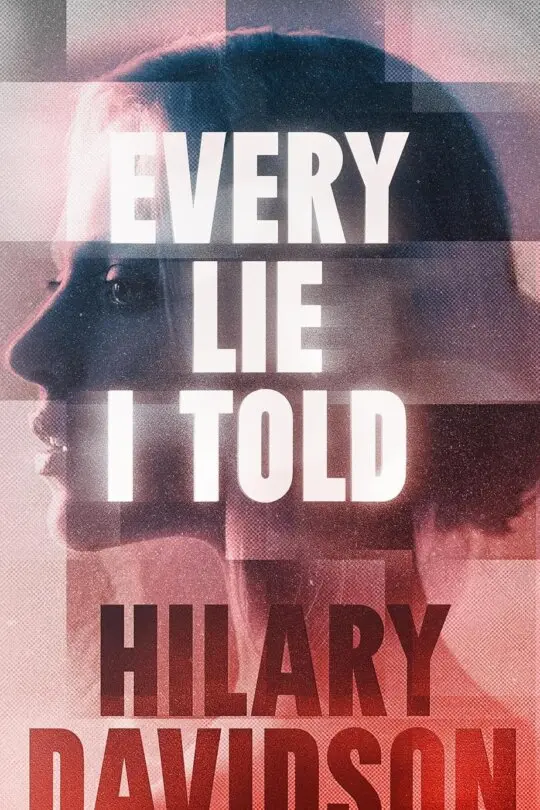
As for the plot itself, twists arrive at a punishing clip. Just when you think you’ve settled into an understanding of who did what to whom, the next batch of chapters complicates or outright contradicts it. The pattern repeats often enough that keeping track of every reversal, alliance, and secret motive can feel like a genuine chore rather than a pleasure.
Combine that with the novel’s fixation on exploitation, sexual and otherwise, which runs through nearly every relationship in the book, and the reading experience occasionally feels less like a twisty thriller and more like an endurance test.
None of this means “Every Lie I Told” lacks an audience. Readers who enjoy morally bankrupt characters, breathless plotting, and a steady diet of scandal will likely find plenty to enjoy here. Davidson clearly knows how to keep a story moving.
However, anyone hoping for characters one might empathize with or prose that doesn’t occasionally trip over its own effort to shock should go in with tempered expectations.
This is a novel that knows exactly what kind of engine it’s running on: sensation, secrets, and betrayal. Never once does it take its foot off the gas.