“The butler did it” is one of crime fiction’s most durable clichés, mostly used as a punchline these days rather than a plot point. The phrase is typically attributed to Mary Roberts Rinehart’s 1930 novel “The Door.” A household’s manservant turns out to be the culprit—although that exact line never actually appears in her book.
In fact, the device was already being mocked in silent-era detective films even before Rinehart’s novel cemented it in the public imagination. S.S. Van Dine’s famous 1928 rules for mystery writing explicitly forbade making a servant the villain, calling it “too easy a solution.”
Nearly a century later, the trope has also evolved into mystery shorthand for lazy plotting: The character everyone overlooks is unmasked as the killer because the author couldn’t be bothered to hide the guilt anywhere more interesting.
Clare Mackintosh’s “The Butler” takes the cliché and flips it. Here, the butler doesn’t do it; he solves it.
Butler Sleuth
Our hero is a veteran butler named, simply, Baxter. He does have a first name, but it’s been so long since anyone used it that even he seems to have half-forgotten it.Baxter works freelance now, hired out for short-term luxury postings through an agency run by the hard-nosed, no-nonsense boss, Anya Kovacs. He used to hold a permanent position with Lord and Lady Ashcombe at their Cotswolds estate until he was forced into the precarious life of a butler-for-hire.

In the first chapter, Baxter arrives at Villa Sérénité. The sprawling property in La Californie sits on a hillside enclave above Cannes favored by the ultra-wealthy during film festival season.
He finds the house trashed—not by burglars, but by a pair of feckless Australian caretakers who’ve been throwing parties instead of preparing the home for guests.
Trouble in Paradise
Baxter’s been hired to oversee the 21st birthday celebration for Carter, son of wealthy investor Alec Prescott. The guest list arrives in an unglamorous parade of dysfunction—a bitter ex-wife, a much younger girlfriend, actor friends, and a producer angling for financing. It’s clear from the outset that not everyone at Villa Sérénité likes each other very much.Anya, meanwhile, asks Baxter to quietly report back on Prescott’s business dealings. This request violates every instinct of a butler’s discretion, but is one he can’t easily refuse, given how indebted he is to her for taking him on without references.
As the week unfolds, cracks begin to show in the guests. He sees those with money troubles, an aging actress anxious about being pushed out of her own career, and other characters with secret pasts they don’t want to surface.
There are also signs that someone may be casing the villa itself. “Wherever there were million-dollar properties, regrettably, there was crime.” Even while shopping in Cannes, Baxter catches a young pickpocket named Red mid-theft, but takes pity on her and lets her go. It turns out to be a fateful decision.
Two Authors?
“The Butler” is a fun and attractive premise, and the prologue is easily the book’s best asset: a slow, cinematic pan across the villas above Cannes that ends on the unforgettable image of a body floating in the pool, waiting to be found. It promises a richly textured, atmospheric mystery and, for the first few chapters, “The Butler” seems poised to deliver.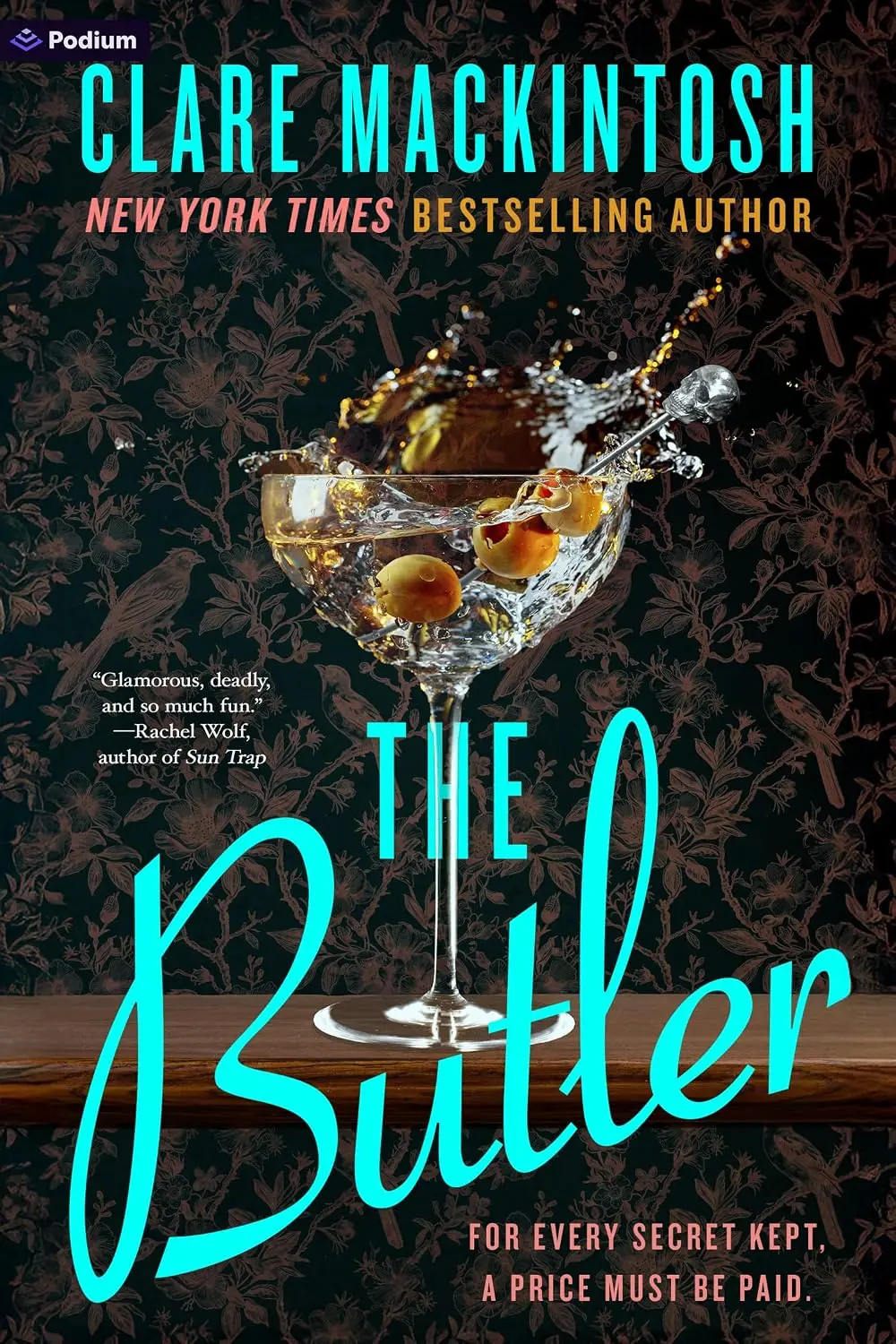
Then it doesn’t. It’s almost as if two different writers had a hand in it: one who wrote gorgeous opening chapters, and one who wasn’t interested in, or capable of, sustaining it.
The central problem is Baxter himself. He’s a highly competent and conscientious man who is almost entirely devoid of character. Throughout the book, Baxter has the requisite “save the cat” beats (a story-writing method): rescuing a starving pickpocket and laying leftover centerpiece flowers on unloved graves in the local cemetery. But these gestures land as saccharine rather than affecting.
Mackintosh has made him gay, but it functions purely as decoration. It’s identity, not character, and a detail entirely irrelevant to the present-day plot that never shapes a decision or complicates anything. It reads less like a facet than a DEI box to be checked.
Sketched in broad strokes that rarely surprise, the supporting cast fares only marginally better. When the killer is finally revealed, the motive is depressingly thin, and the actual mechanics of the murder itself are never fully explained—a gaping plot hole.
The dialogue throughout has the stiff, over-explanatory quality of an early student manuscript: Characters practically spell out their feelings and thoughts.
But the real crime of “The Butler” isn’t its weak plotting or thin character so much as its false promise. It opens with the confident hand of a talented writer who knows exactly what kind of story she’s telling—and then spends the rest of the book failing to follow through.