Are you looking for a sprawling Civil War epic? Look no further. Over four hours long, “Gettysburg” is screenwriter-director Ronald F. Maxwell’s love letter to the soul of a nation. To some, its run-time may seem excessive, but to those who care about such things, it’s worth every minute.
Following two years of bloody battle, in June 1863, Gen. Robert E. Lee (Martin Sheen) leads the Confederate Army of Northern Virginia; 70,000 of his men cross the Potomac to invade the north.
Simultaneously, the Union Army of 80,000 men marches to challenge Lee. Come July, both sides head for a decisive clash at a then-obscure place called Gettysburg. Over 50,000 men die in those confrontations, culminating in two crucial engagements.
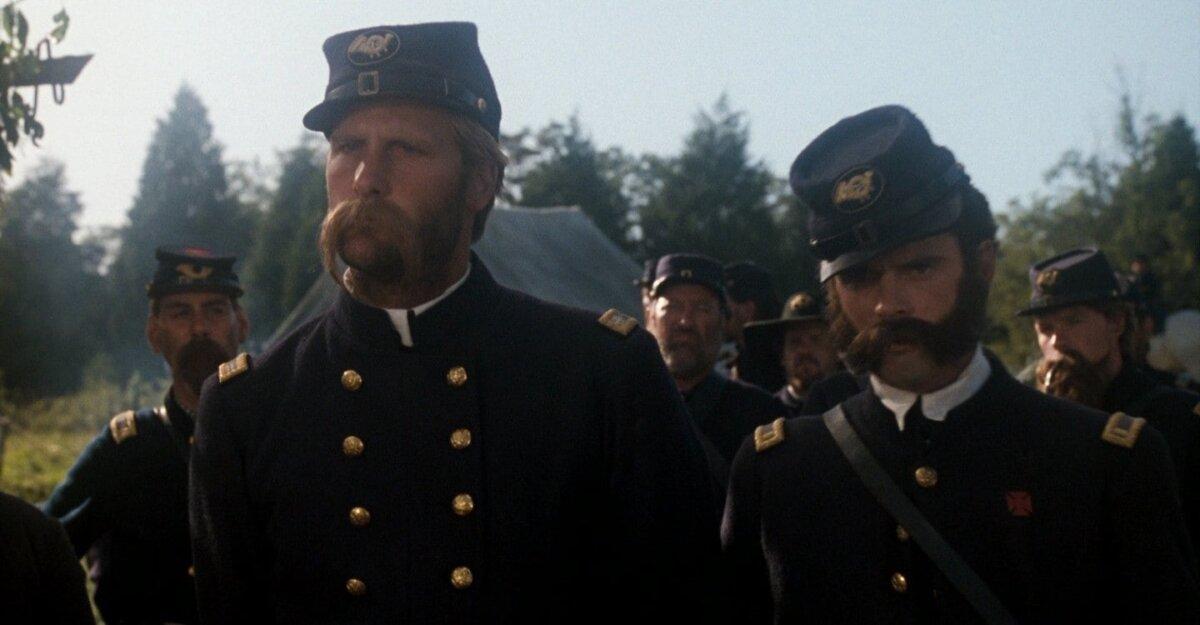
First, beleaguered Col. Joshua Chamberlain (Jeff Daniels) and his Maine regiment try to hold Union Army defensive lines at a tiny hill called Little Round Top. Second, Lt. Gen. James Longstreet (Tom Berenger) leads a Confederacy offensive, alongside Maj. Gen. George Pickett (Stephen Lang) and others in what would become known as Pickett’s Charge.
Gettysburg Address
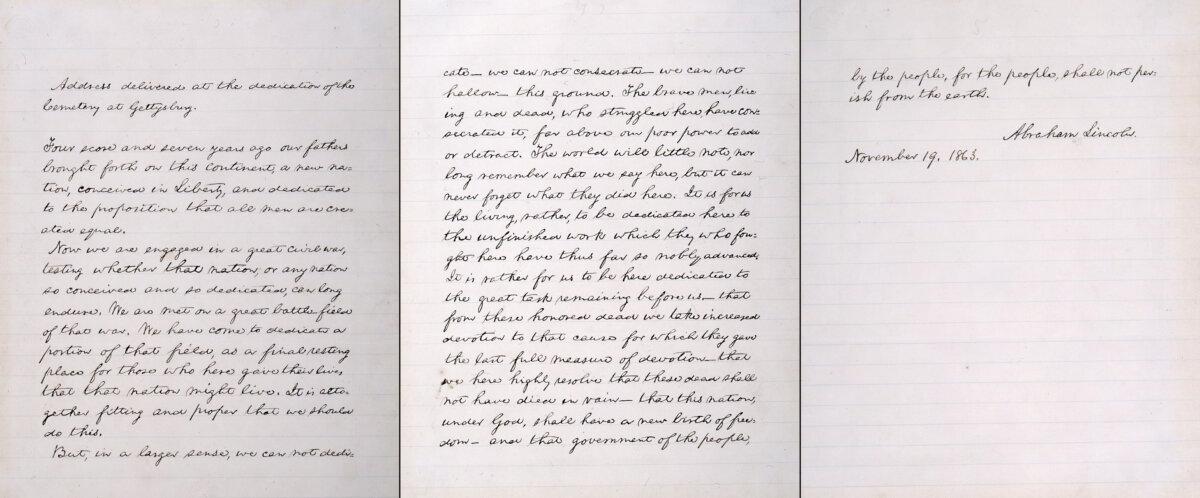
Just months after this Union victory, at a memorial ceremony near that battlefield, President Lincoln delivered one of the most revered speeches in American history: the Gettysburg Address. There, orator Edward Everett’s speech ran into thousands of words; he spoke for nearly two hours.

Lincoln? He spoke for scarcely two minutes, but in fewer than 300 words he summed up how momentous Gettysburg was. He acknowledged that the idea of America grew out of the truth that all men are created equal.
Truths like these contain contradictions. That’s acceptable as long as those contradictions are resolved according to, and in service of, truth. Likewise, union and unity don’t need to mean sameness.
Lessons and Truths
What is Lincoln’s unspoken lesson from Gettysburg?Virginians don’t cease to be Virginians merely because they are also Americans. Love of state and nation can, and should, coexist. But citizens must learn to healthily embrace a hierarchy of loyalties, just as they happily accept the hierarchy of right and responsibility in military rank.
Generals enjoy greater privileges than sergeants because they shoulder graver duties. So too, the nation must take precedence above the state.
What battle here would have been fought, let alone won, without mapmakers drawing painstakingly precise maps of terrain? Or without scouts braving bullets as they track down stealthy rival reinforcements? Or without surgeons, tending to the wounded so they are still fit to fight?
Decisions that leaders like Lee or Chamberlain take are almost always based on their sense of the landscape, inspired by maps. Their grasp of a rival regiment’s real, not reckoned, readiness, is frequently inspired by a hawk-eyed scout’s debrief. Not all soldiers wield a revolver or rifle.
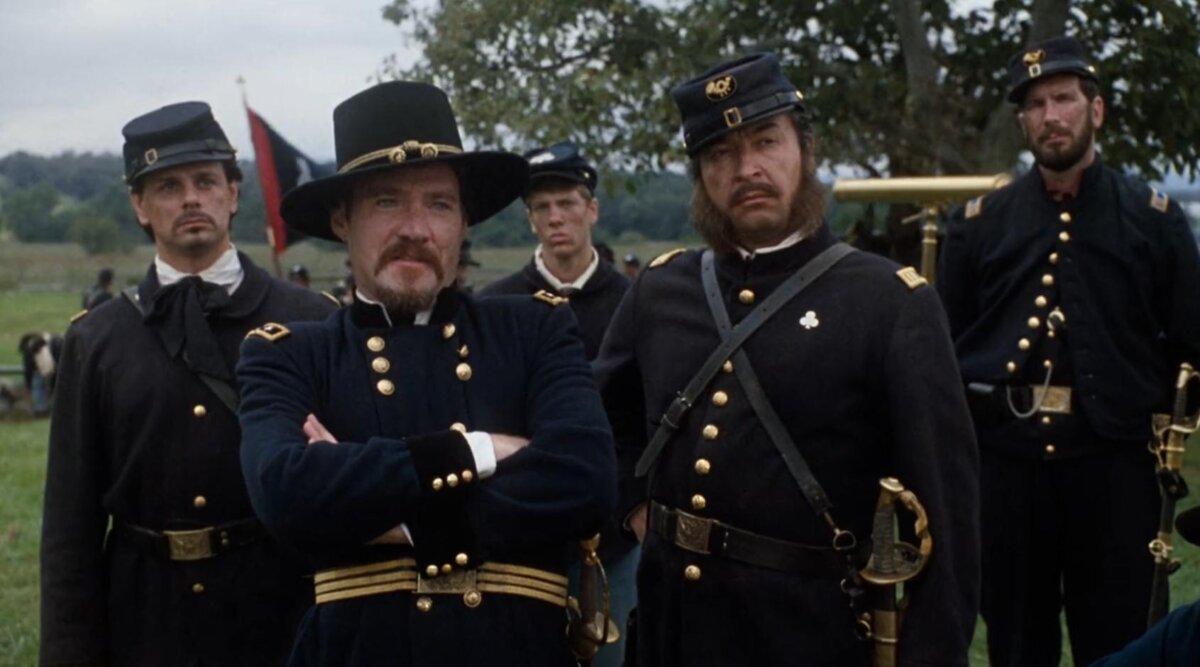
Maj. Gen. Winfield Hancock (Brian Mallon) and Brig. Gen. Lewis Armistead (Richard Jordan), who have spent nearly a lifetime being friends, fear the day they’ll find themselves on opposite sides. At some point they are compelled to sacrifice their friendship for something higher up the hierarchy of values.
Armies with fewer soldiers don’t necessarily lose, any more than armies with fewer casualties necessarily win. Often, it’s the side with relatively greater casualties, one that’s paid a heavier price, that wins. Generals usually lose many battles before they win a war.
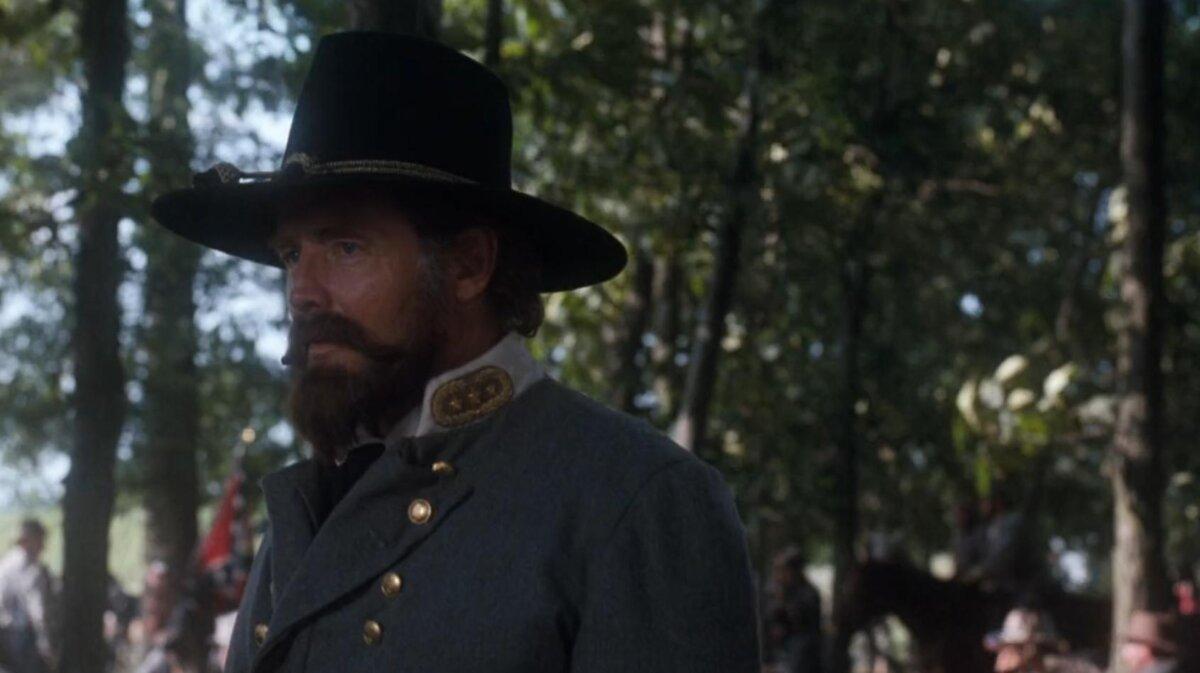
Wins and Losses
All success holds within it a great deal of, and a deep respect for, failure. Lee may remain one of the most admired generals, yet few others have contended with failure on the scale that he did. If anything, Lee’s conduct here is a masterclass in dealing, graciously, with failure.Two scenes show a dignified Lee expecting his officers to learn from, not merely lament, failure; one with Lt. Gen. Richard Ewell (Tim Scott), another with Maj. Gen. J.E.B. Stuart (Joseph Fuqua). Lee faults both, gently. He implies that real loss lies in not learning from it. In allowing for failure (and learning), he also allows room for future success.
The unspoken question asked of, and answered, by every soldier is, “Are you prepared to die or be disabled prematurely?” Too few civilians understand or appreciate the weight of this.
Decisions
The quality of decisions that leaders here must make are of the highest order. That they implement or issue instructions several hours, even days later than desired, means they’re habitually second-guessing. They’re waiting for a courier on horseback to rush a letter or message to them. Yet they don’t allow deficient military intelligence to deter or delay them beyond a point.Yes, field glasses and telescopes help officers see farther than their men on foot, but not all officers hold indisputably higher moral ground. Their metaphorically loftier perch affords officers better appreciation of whether a regiment is retreating, resting, or regrouping. Still, lower-ranked officers can sometimes weigh the stakes more accurately; it pays to listen to them with an open mind.
Longstreet (Tom Berenger) discovers, and sees it more clearly than his superior officer Lee, that attacking a formidably fortified Union Army from wide open, lower ground is suicidal; in effect, the wrong thing to do. Yet Lee, otherwise used to trusting Longstreet, disregards his advice, and pays a price.
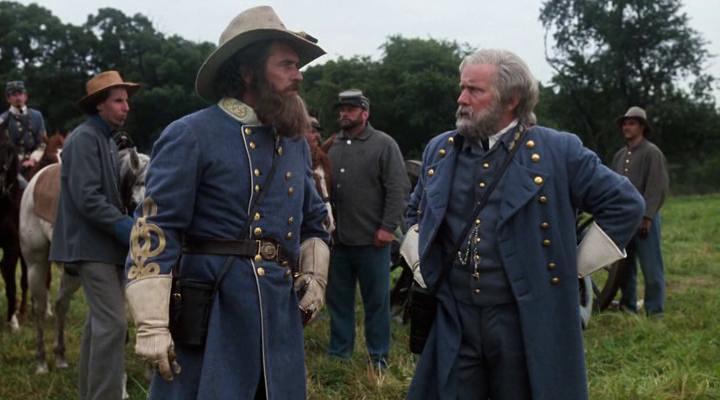
At Gettysburg, Lincoln salutes the fact that the dead soldiers have, through their deaths, already dedicated that battleground to the cause of a united America. So, it’s up to the living to dedicate themselves to the “unfinished work which they who fought here have thus far so nobly advanced.”
It’s up to a living, breathing nation to ensure that “these dead shall not have died in vain—that this nation shall have a new birth of freedom and that government of the people, by the people, for the people, shall not perish.”