Practically every elementary or middle school social studies or history teacher touches on the life of early American frontiersman Daniel Boone. Dozens of books have been written about him and a 1964–1970 television series starring actor Fess Parker celebrated the wilderness explorer. The hyperbolic theme song for the television series included similes like “tall as a mountain” and “eye like an eagle.” Even so, it conveyed factual aspects of his legacy: Boone “blazed a big wide liberty trail through history’s hall of fame.”
Most adventurous boys and history lovers connect Boone with what became Kentucky, due to his exploration in the 1700s of territory west of the original Thirteen Colonies. He is also famous for establishing the Wilderness Road through the Cumberland Gap and into Kentucky as well as for fighting in the Revolutionary War.
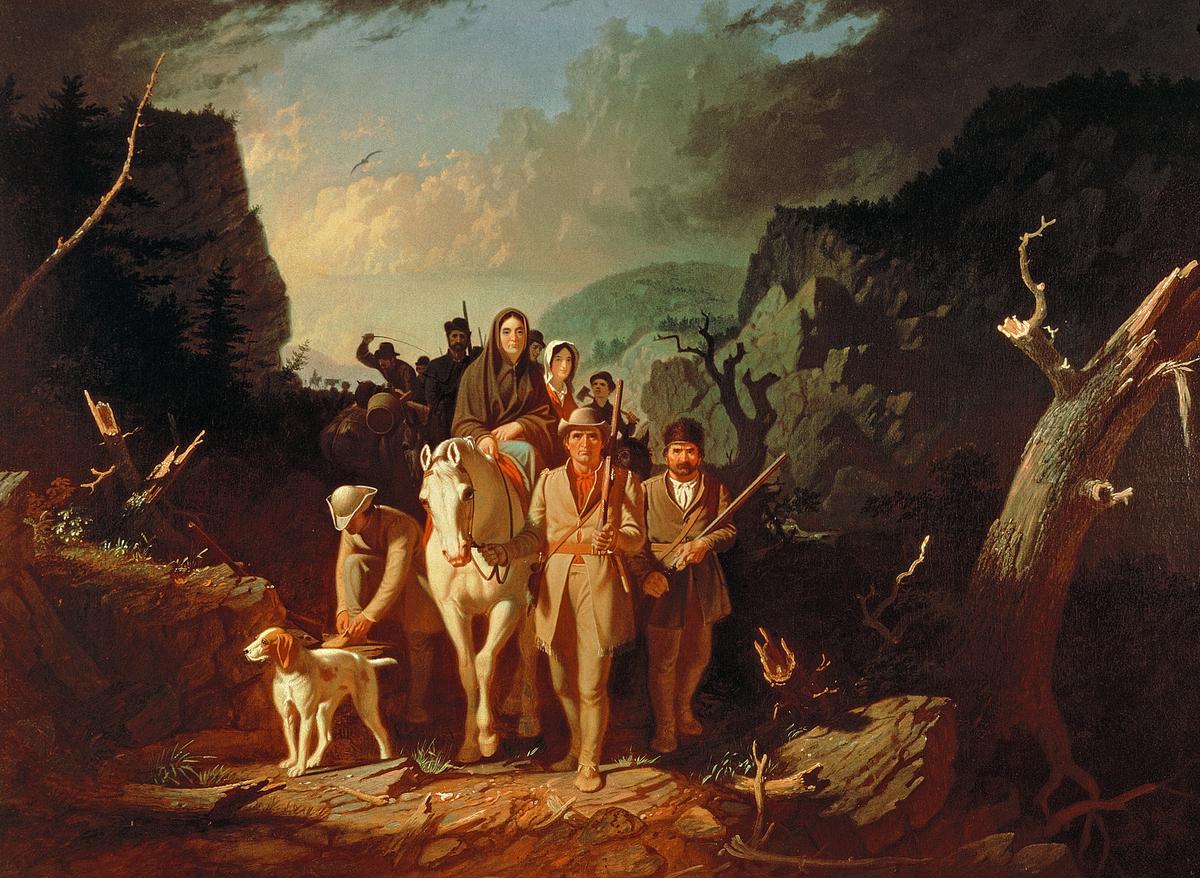
“Daniel Boone Escorting Settlers through the Cumberland Gap,” 1851–1852, by George Caleb Bingham, is a famous depiction of Boone. Public Domain
A Multi-talented Explorer
However, Daniel Boone was actually born and raised in Pennsylvania, established in 1781 as the 12th of the Thirteen Colonies. Why Pennsylvania? Boone’s grandfather, George Boone III, sent his son, Squire, and two of his other grown children to America in the early 1700s. George III followed in 1717 with his wife, Mary, and the remaining six of their nine children. The Boones immigration to America was primarily due to prompting by family friend William Penn, who established a Quaker colony in Pennsylvania.Remnants of George III’s log home are still visible to anyone meandering down the idyllic Oleyline Road in Exeter Township, which is part of Douglassville, Pennsylvania. Although what remains of George III’s homesite is now on private property, anyone can drive to see the chimney and fireplace, view the navigational indicators showing where the house stood, and read the historical information carved into a granite marker that was installed in 1925.
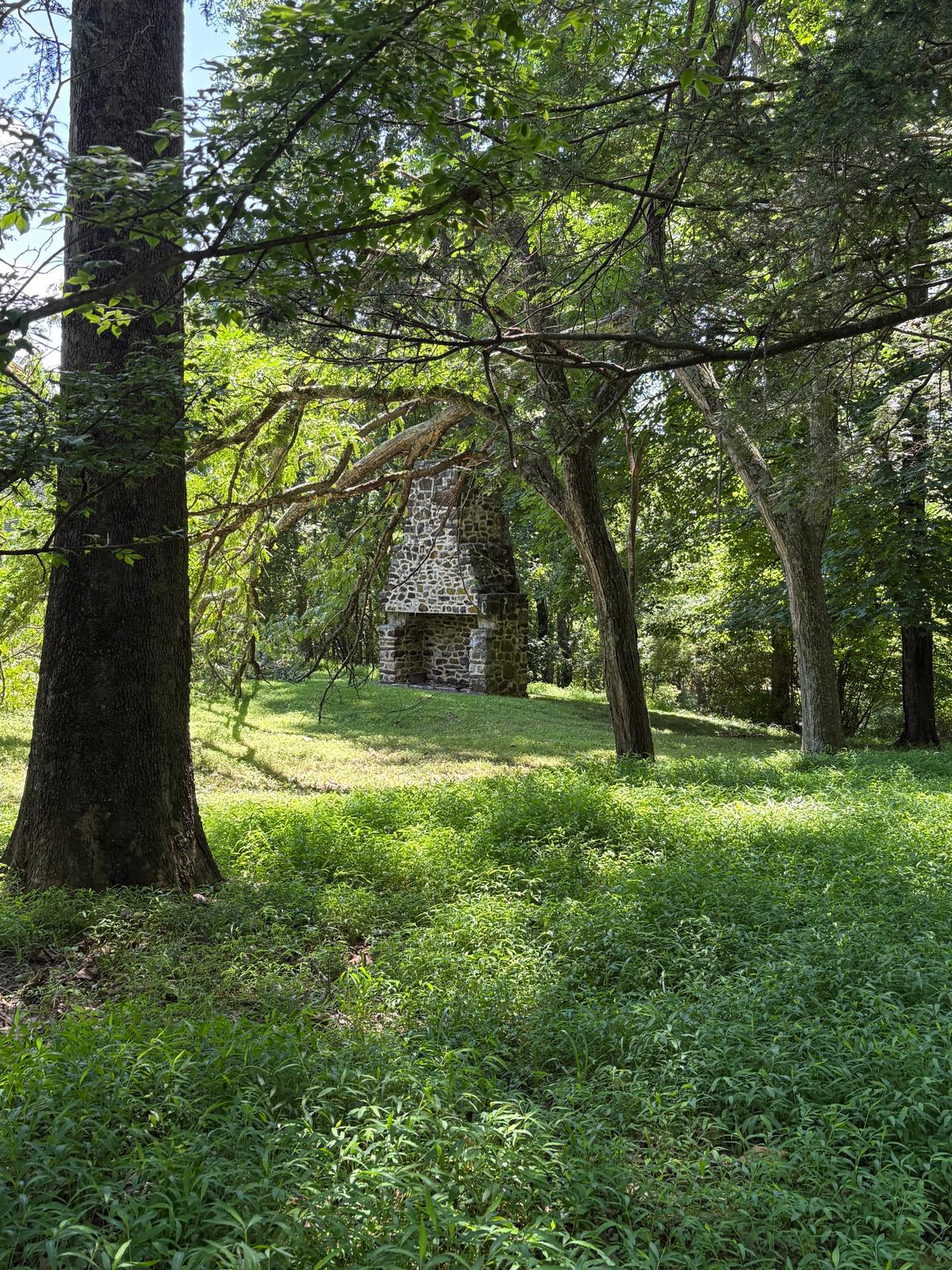
While the cabin has long since fallen down, the chimney of George Boone III's cabin still stands. Deena Bouknight
George III was a weaver and a tanner back in England, and he brought those skills to Pennsylvania. He built his log home on 400 acres, and some of his children established their own residences nearby—including Squire, who built his house in nearby Birdsboro, Pennsylvania, in 1730. His famous son was born in 1734.
George III and his wife lived on their property until their deaths. The Boone Society, in a 2012 presentation titled, “The First 5 Generations of the George Boone,” shared an excerpt from the 1788-published “Old James Boone Genealogy”:

“This last Place of their Residence is called the Township of Exeter. … George Boone died on the Sixth day of the Week near 8 o’clock in the Morning on the 27th of July 1744, aged 78 Years; and Mary his Wife died on the 2d Day of the Week, on the 2d of February 1740-1; aged 72 years; and were decently interred in Friends Burying-Ground, in the said Township of Exeter. When he died, he left 8 children, 52 Grand-Children, and 10 Great-Grand-Children, Living; in all 70, being as many Persons as the House of Jacob which came into Egypt.”
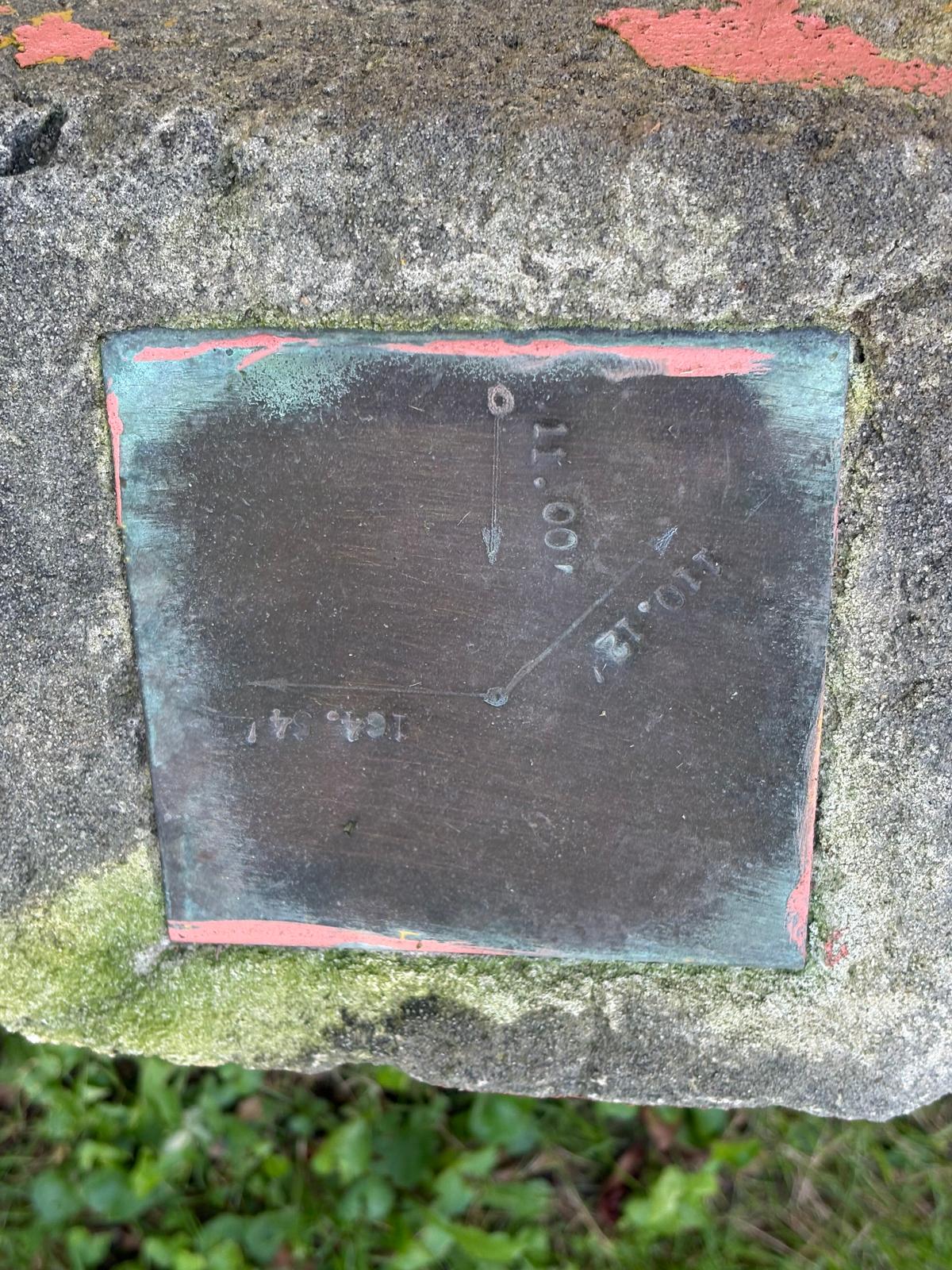
An old marker points visitors in the direction of the chimney. Deena Bouknight
While what’s left of George III’s 18th-century home may not be worth a trip on its own, the site is only five miles from the Daniel Boone Homestead historic site. It benefits travelers in this region of Pennsylvania to take advantage of the area’s rich history. They can easily see where things started in America for the Boone family.
What arts and culture topics would you like us to cover? Please email ideas or feedback to [email protected]