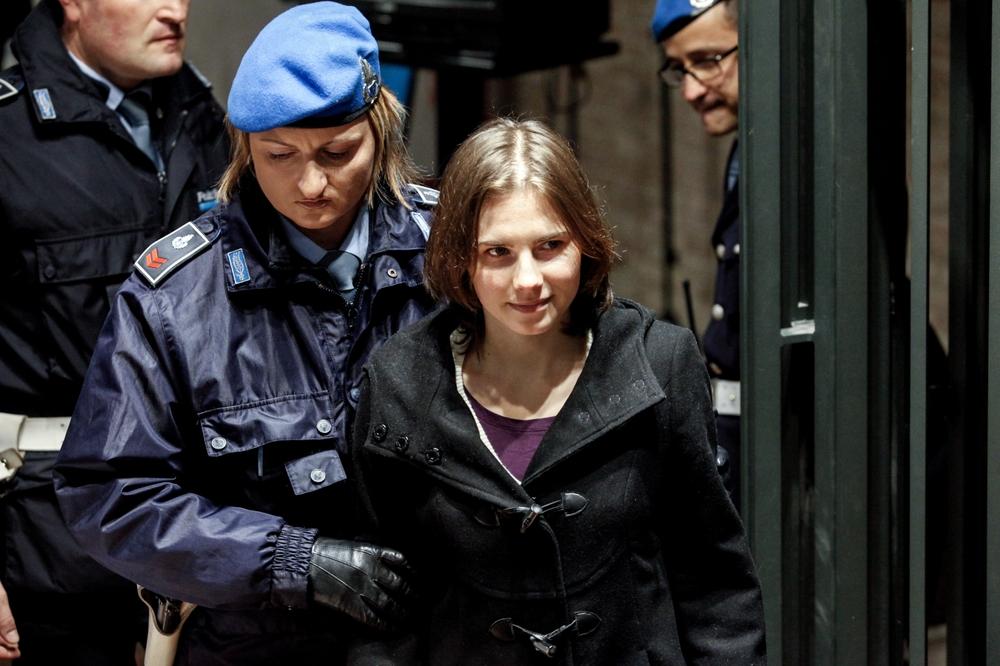
Since 2007, after enduring the arrest and guilty verdict in the brutal murder of her college roommate, the ensuing years in prison, and multiple trials to win exoneration, Amanda Knox has slipped out of the spotlight.
Under the control of the Italian judicial system, she suffered through global media frenzy and mental and physical anguish in a foreign prison that nearly broke her.
It seems surprising then that in her new memoir, “Free: My Search for Meaning,” Knox rehashes details of the murder, the interrogations, and the prison nightmare. One wonders why she would want to put herself through it. She explains that it’s her way to reveal her “personal growth and hard-fought wisdom” in returning to “ordinary” life.
Foxy Knoxy
One can’t help but find similarities between this book and Viktor Frankl’s classic “Man’s Search for Meaning,” detailing his life in a World War II concentration camp and his pursuit of spiritual survival and resilience.However, this one is a modern-day story, a former headline-grabber, when public and media scrutiny refused to let up. It’s deeply personal. Knox dispels the myth that she is anything but unemotional, as depicted at the time.
In fact, we find a young woman looking back at an active, happy youth, curious about the natural world. Through it all, her memoir says that she’s “carried that spark of wonder with me, the desire to believe in impossible things.”


In the early chapters, she recounts the murder details, her arrest, and questioning. Held without a translator, family support, or advocate at her side, the whole series of events are heartbreaking.
Comparisons to Frankl
Knox shares the minutiae of day-to-day life in an Italian prison, learning the routine, and her interactions with the guards and inmates. Her one bright spot during this time was permission to borrow books from the library.With Frankl’s book among her first loans, she credits it for being a “model and an inspiration.” From him, she learned to observe those around her, looking for incidents of kindness from prison personnel and her fellow female prisoners. A lesson she learned early on was being forced to live a “spartan” life. With so few items, her mindset shifted to the idea that “any sustainable form of joy or peace must come from within.”
No One Believed Her
A glimmer of hope that someone would believe her came in the form of the prison chaplain. Before his visit, Knox had anticipated this opportunity for someone to finally see she was not capable of such an act. However, the chaplain only acknowledged that he believed her sincerity, and that she “wanted” to be innocent. He believed that she was in prison “for a reason.” Knox was crushed.Knox spent four years in an Italian prison, and eight years going through trial after trial. She describes her continued nightmares, anxiety, hyper-vigilance, and awareness that this tragedy will follow her wherever she goes.
Since her official acquittal in 2015, she’s found purpose in working with others falsely imprisoned; just as she was judged unfairly, she works at not being quick to judge others.
Reconciling the Past
It’s admirable to read how she’s come to terms with the experience and is trying to live a normal life as a wife and mother of two children. In 2019, her life took a new turn as she was invited to speak at a justice conference organized by the Italy Innocence Project, a group formed because of her case.
Knox wrestled with accepting the invitation. She agreed for what the impact her story could have on the Italian people about being falsely accused, lessons learned to benefit their own judicial system.
Her message, presented in Italian, included that her intention was not to generate pity. It was to “show you what happens when we get it wrong, in the hope that the next innocent person on trial suffers far less than I have.”
Her final chapters show the growth and the reconciliation she’s made from the trauma; she shared that if she could change the past, she wouldn’t. She isn’t angry, but is grateful for the strength and wisdom gained, and how it shaped her life in 2025.
Knox’s memoir should intrigue those who followed her case to see how and where Knox ended up. It may also provide inspiration to those who have experienced injustice, and it may become the new go-to for today’s generation, and future ones, on building resilience through difficult times.