The paramount artistic talents of the Dutch Golden Age are often identified as Rembrandt and Vermeer. However, some connoisseurs, particularly in the second half of the 19th century, ranked Frans Hals (circa 1582–1666) the premier Dutch Baroque painter. Hals was popular in his lifetime for genre scenes, often of merrymaking, as well as individual and group portraits.
His tonal palette and bravura brushwork inspired subsequent generations of significant artists, such as the American expatriate John Singer Sargent.
He proclaimed, “It’s hard to find anyone who knows more about oil painting than Frans Hals.”
The Forgotten Master
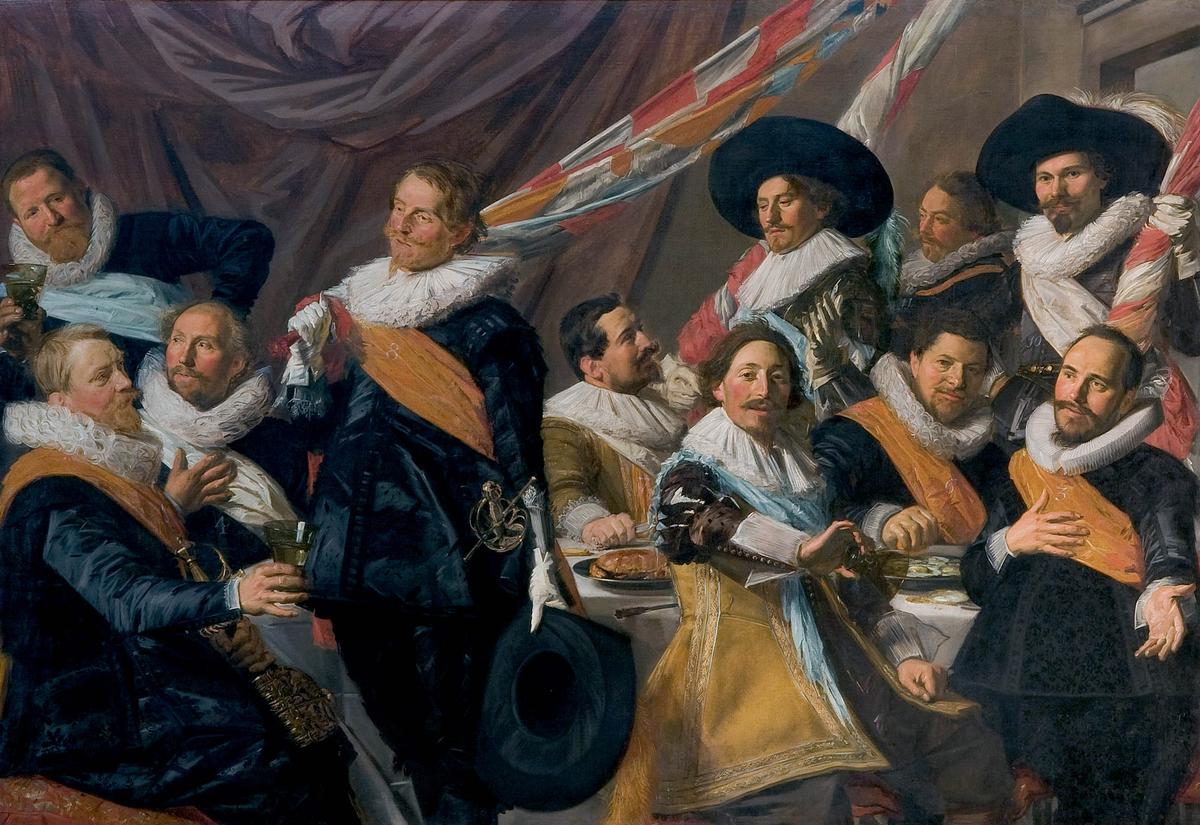
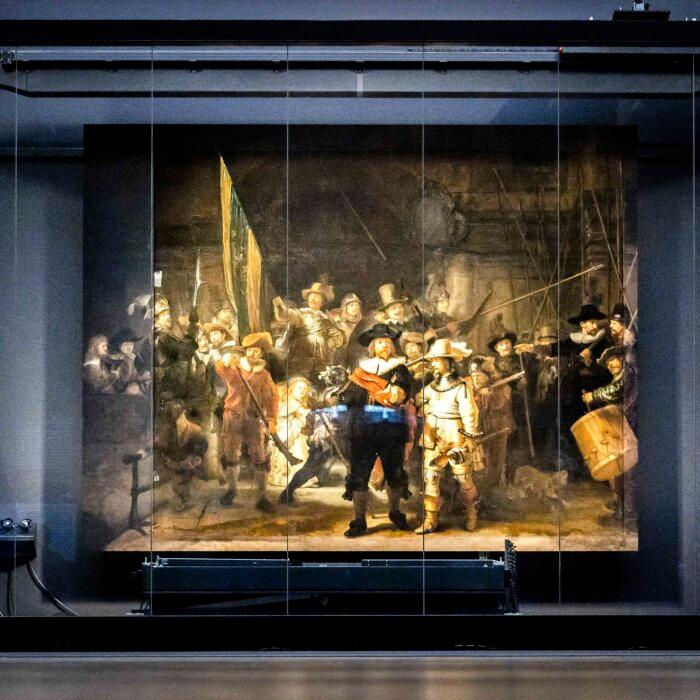
Hals was likely born in the Spanish Netherlandish city of Antwerp, but his family soon moved to the Dutch town of Haarlem. There is very little known about Hals’s artistic origins or personal life. The first documentation of his career dates to 1610. Six years later, Hals is believed to have made his only trip, which lasted a few months, to the city of his birth. Otherwise, he rarely left Haarlem, a flourishing artistic center at the time.The earliest surviving works by Hals are formal portraits deemed impressive for an artist early in his career. He was soon given commissions for large portraits of civil militia groups, a Dutch sub-genre also taken up by Rembrandt in the famous “The Night Watch.” In the 1620s and 1630s, Hals explored scenes of everyday life. These pictures are notable for their ability to convey individualized characters instead of generic types, a feat he also achieved in his striking lifelike portraits.
The Most Handsome Man
Hals’s “The Laughing Cavalier,” then known simply as a “portrait of a man,” made international headlines in 1865 when it came up for sale at a Paris auction. A bidding war ensued between Baron James de Rothschild and Richard Seymour-Conway, fourth Marquess of Hertford, whose storied art holdings became the basis for the Wallace Collection. The marquess won the painting for an eye-watering sum of 51,000 francs (more than $2 million today), which was eight times the estimate. The publicity helped catapult the artist and this particular painting to fame.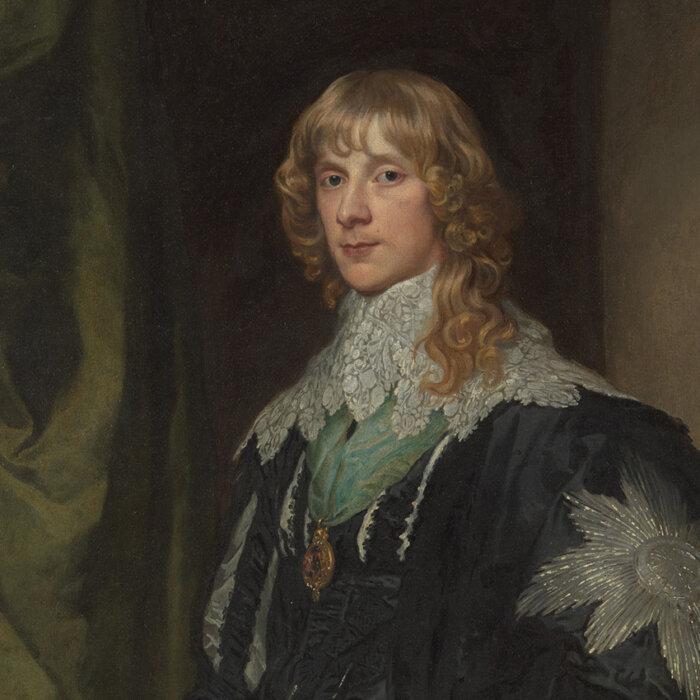
The marquess brought the artwork to London. In 1888, his heir, Sir Richard Wallace, lent it to an exhibition at the Royal Academy. It was during this show that Hals’s portrait was given the evocative sobriquet “The Laughing Cavalier,” although the man is neither laughing nor a cavalier. The title, bestowed more than 250 years after the painting was made, appealed to the public’s imagination and has endured into the present day.
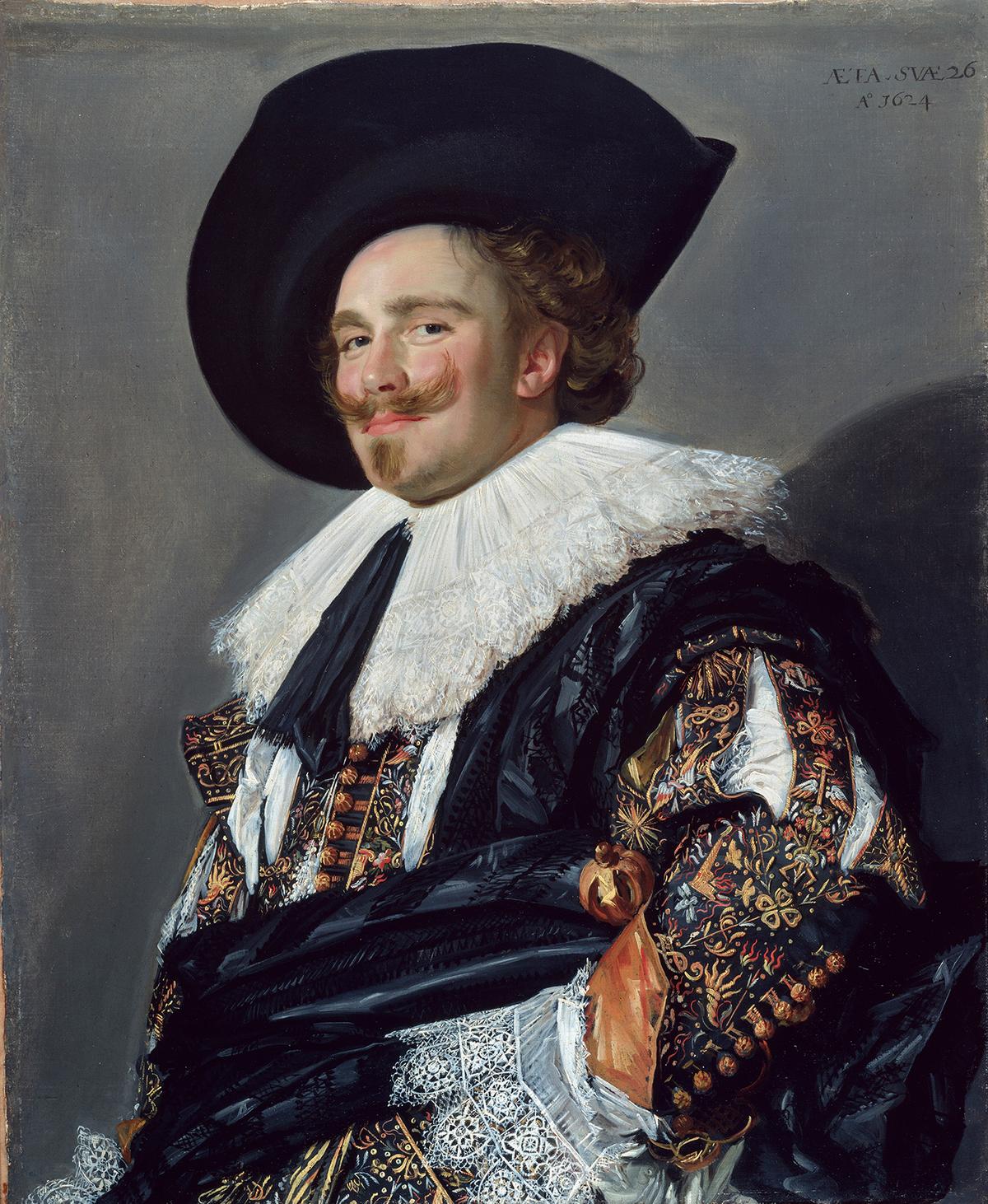
The life-size sitter depicted in a three-quarter length view has been called the “most handsome man in art history.” His identity remains unconfirmed and debated by scholars, although he is believed to be 26 years old due to the Latin inscription, Æ'TA SVÆ 26/Aº1624, at the upper right. The Wallace Collection wrote that Hals “revolutionised male portraiture, he infused his works with a vitality and animated presence that was at the time entirely new.” This characterization is especially apparent in “The Laughing Cavalier,” with its bold composition, colorization, and brushwork.
The man in the portrait is clearly wealthy. His clothes are lavish—the latest French fashions in menswear, which could only be afforded by the elite of Dutch society. Adaptation of French attire in the Netherlands was popular during the 1620s, the decade to which the painting dates. The doublet, which includes gold threads, is embroidered with symbols of fortune, love, and virtue.
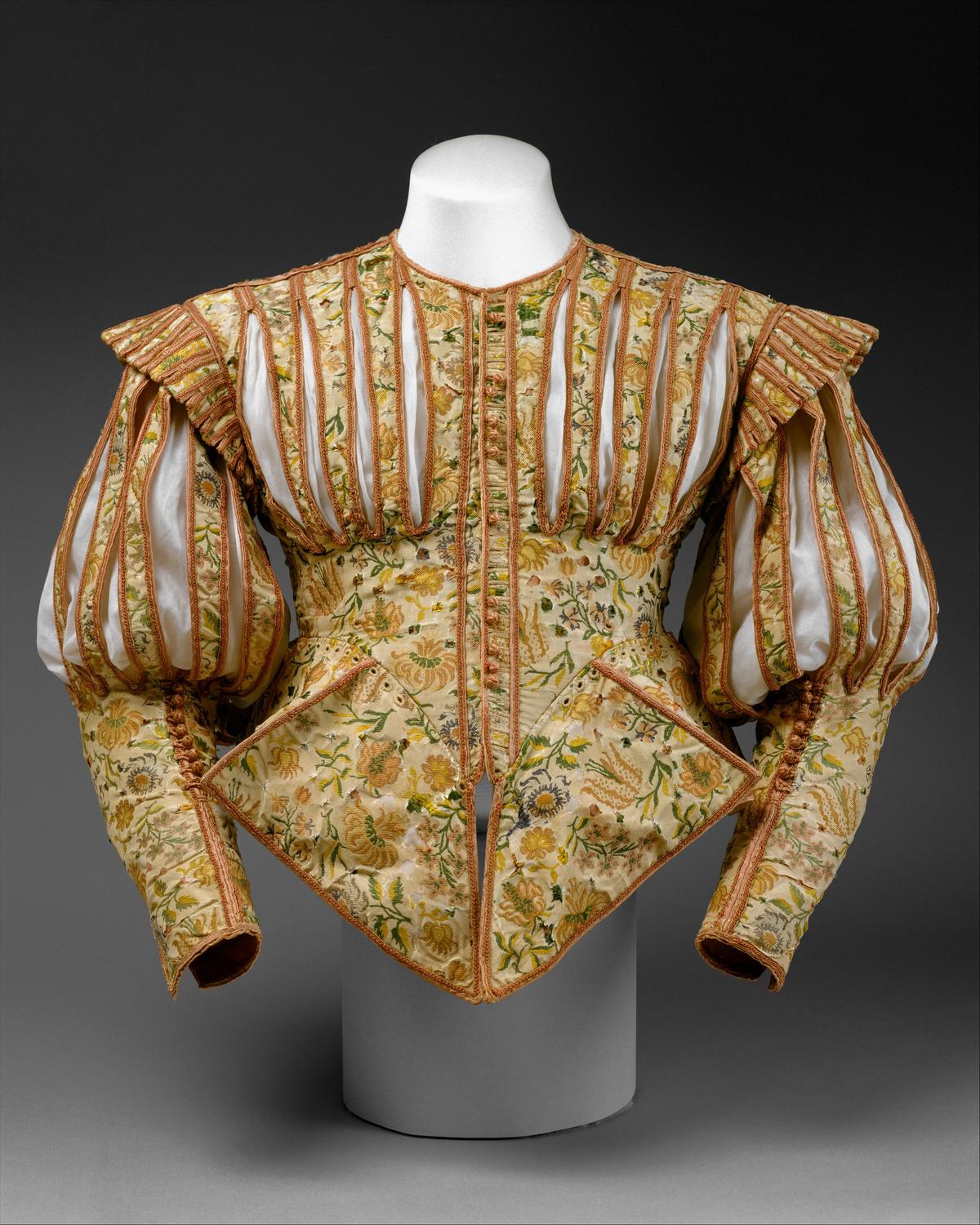
This type of iconography is uncommon in Dutch portraits from this period and may signify that Hals was well-educated. The doublet’s style is similar to a rare surviving example of a French silk doublet from the same period in the collection of the Metropolitan Museum of Art. Both are decorated with slits, a then-recent technique called pinking that revealed the wearer’s shirt below; in the portrait’s case, it is a white linen one.
The exuberant and opulent costume of “The Laughing Cavalier” is a marked contrast to the typical garments showcased in portraits by Hals and his contemporaries of the Dutch upper echelons. Many men, especially married ones, wore stark, modest black costumes, influenced by the Spanish court. An example of this can be seen in Hals’s portrait of Jacob Olycan, dated to 1625, a year after “The Laughing Cavalier.”
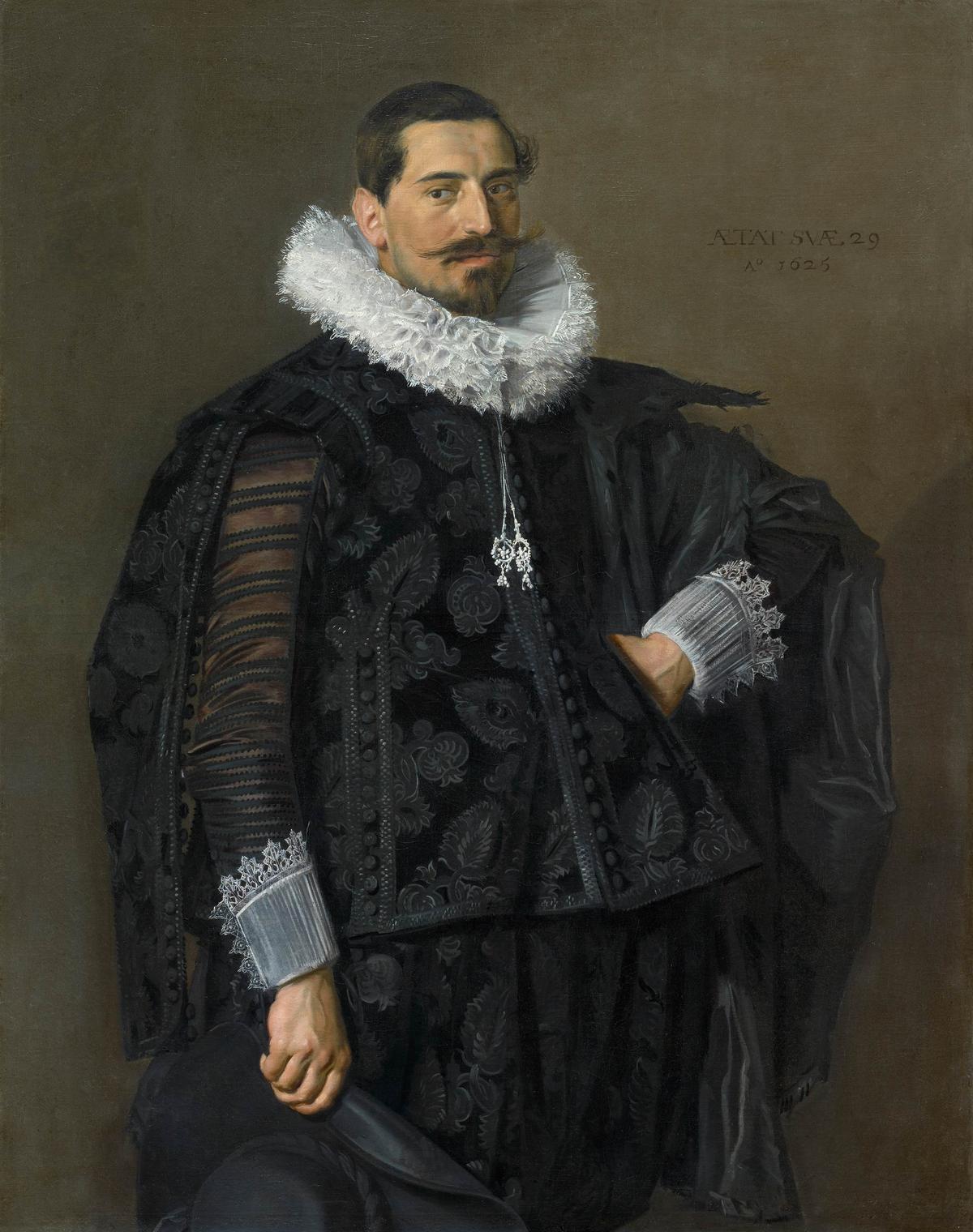
A contemporaneous viewer of Olycan’s portrait would have also deduced that he was married because of his right-facing orientation. Hence, the reverse position of the man in “The Laughing Cavalier” has been a factor in scholars’ belief that he was likely a bachelor.
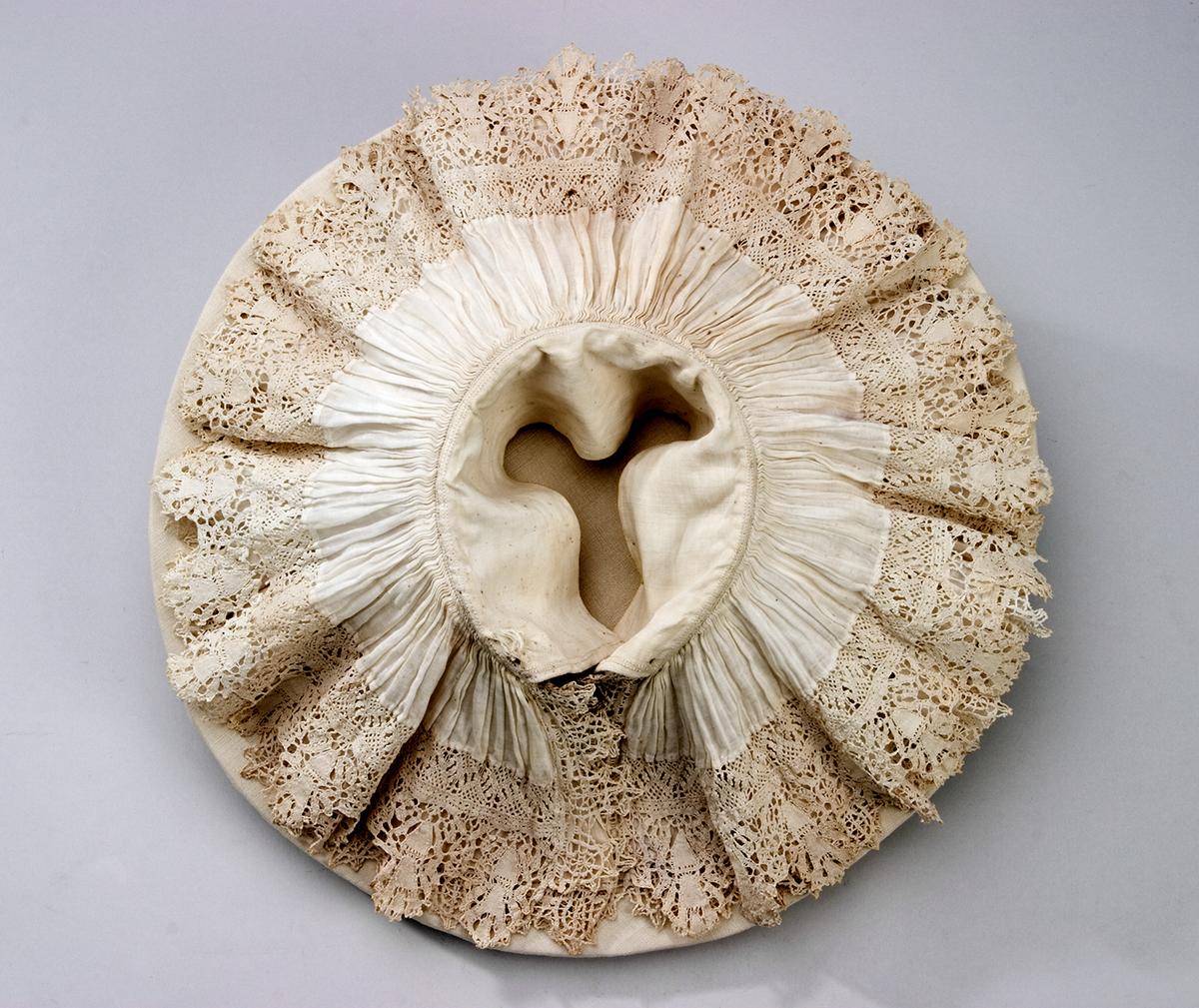
Olycan wears a traditional, heavily pleated ruff, while the man in “The Laughing Cavalier” has a more modern, soft-falling ruff, which was a trend that began in the 1620s. This ruff with multiple layers is made of linen and trimmed with delicate bobbin lace. Stockholm’s Royal Armoury has an exquisite surviving specimen from the decade.
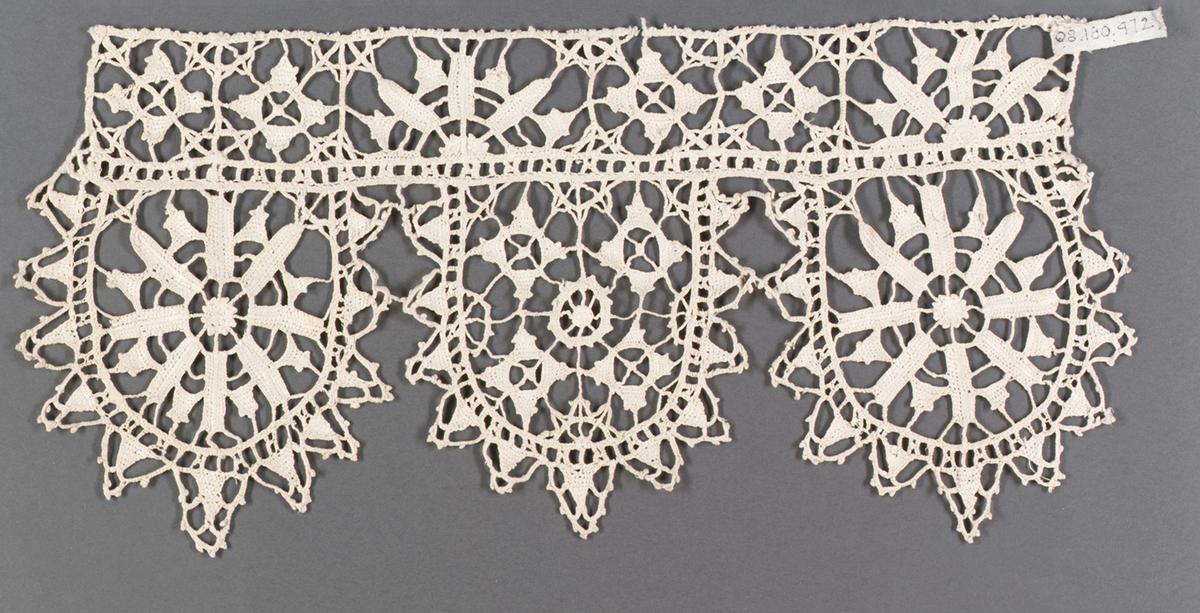
Expensive lace is also visible as trim at the man’s white cuffs. Hals brilliantly evoked the details of its geometric patterns and delicacy with thin brushstrokes. A similar real-life fragment can be found in the Met’s collection.
Hals’s mastery of capturing different hues of black, for which he was admired, is visible in the man’s silk cloak, sash, and broad-brimmed upturned hat. Careful looking reveals the man is also carrying a luxurious gilded rapier in the crook of his left elbow. In the 17th century, a sword was a basic accessory for a fashionable upper-class man. This specific type of sword was extremely rare, further emphasizing the sitter’s wealth.
The dazzling skill Hals displayed in depicting this man’s garb is matched by the artist’s choice of pose. The sitter exudes confidence with his left arm akimbo toward the viewer, almost entering their space. The man’s placement in the extreme foreground furthers the painting’s dynamism and immediacy. His blue eyes gaze at the viewer with a twinkle. His rosy cheeks, flamboyant mustache, and subtle smile contribute to an enigmatic, captivating face.
The fame of the exceptional “The Laughing Cavalier” has extended from the art world into popular culture. The painting’s image has been used in numerous advertisements, as well as referenced in television, literature, and theater. Although it was painted more than 400 years ago, it remains as vital and fresh as ever.