During the Golden Era of Hollywood, many film composers came from a rich classical music background, which inspired the film scores they wrote for cinematic masterpieces. This illustrious group includes many European immigrants, including Max Steiner, Dimitri Tiomkin, and Miklos Rozsa.
One composer left an impressive body of work for the concert hall and opera stage as well as memorable film scores. He’s best remembered for scoring Warner Bros. adventure films in the 1930s and 1940s, the most famous of which starred Errol Flynn. This Austrian American genius was Erich Wolfgang Korngold (1897–1957).
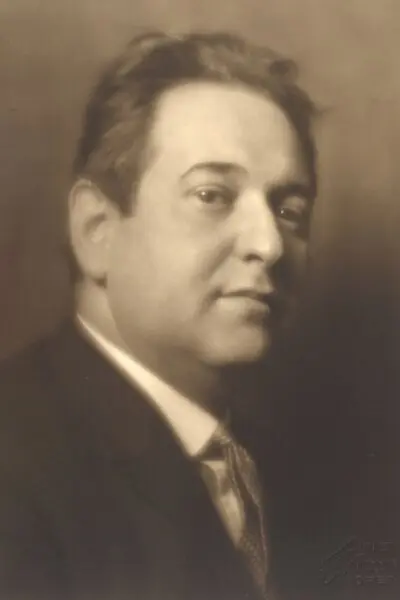
A Brilliant Film Composer
During his 13-year Hollywood career, Korngold penned 16 film scores. This is some of the most acclaimed movie music ever written, although he wrote only a fraction of the number of scores which his peers were composing.Korngold got his start in the motion picture business with “A Midsummer Night’s Dream” (1935). This screen adaptation of Shakespeare’s play was inspired by William Dieterle’s highly successful production at the Hollywood Bowl in 1934.
As the German director brought this production to the screen, he hired Korngold to arrange Felix Mendelssohn’s recognizable incidental music for the play. Korngold had never written a film score or even visited the United States. He insisted upon credit only as arranger, but he still wrote a few new passages of music for it.
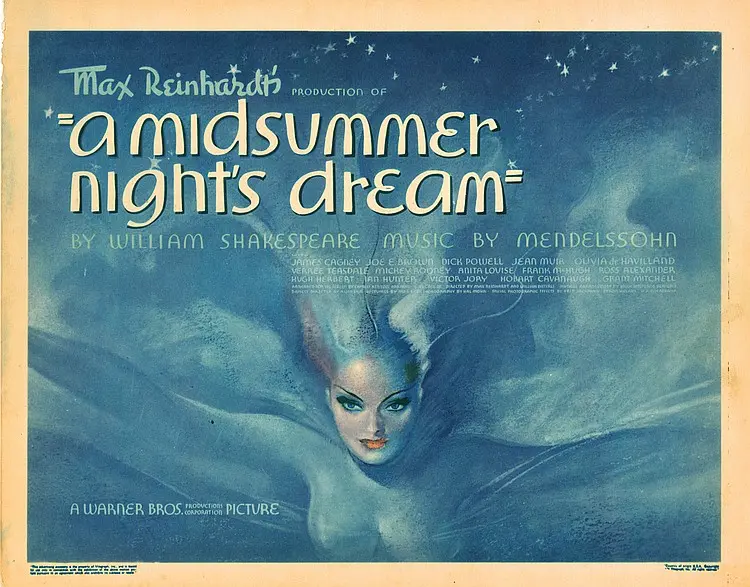
“A Midsummer Night’s Dream” was very well received, and the score was highly acclaimed. Warner Bros., at the insistence of producer Hal B. Wallis, immediately asked Korngold to score their 1935 swashbuckling film, “Captain Blood,” which made Errol Flynn a star.
Although he accepted, the composer was overwhelmed by the prospect of writing over an hour of music in under three weeks. He supplemented his original symphonic score with excerpts from two tone poems by Franz Liszt. He received credit only as “Musical Arrangements by Erich Wolfgang Korngold” although he wrote 90 percent of the music.
Korngold’s Hollywood Heyday
While working on his first few films, Korngold traveled back and forth between Hollywood and Vienna, where he was still writing and producing several successful operettas.The rising Nazi party in Europe made Austria increasingly unsafe for the Jewish composer. In March 1938, he was in Vienna conducting an opera when the Nazis invaded.
He said that the opportunity to return to America to write the score for “The Adventures of Robin Hood” (1938) saved his life. This was the fourth Errol Flynn movie he’d scored, after “Captain Blood” (1935), “Another Dawn” (1937), and “Prince and the Pauper” (1937), and it turned out to be a huge hit for him and the rising action star.
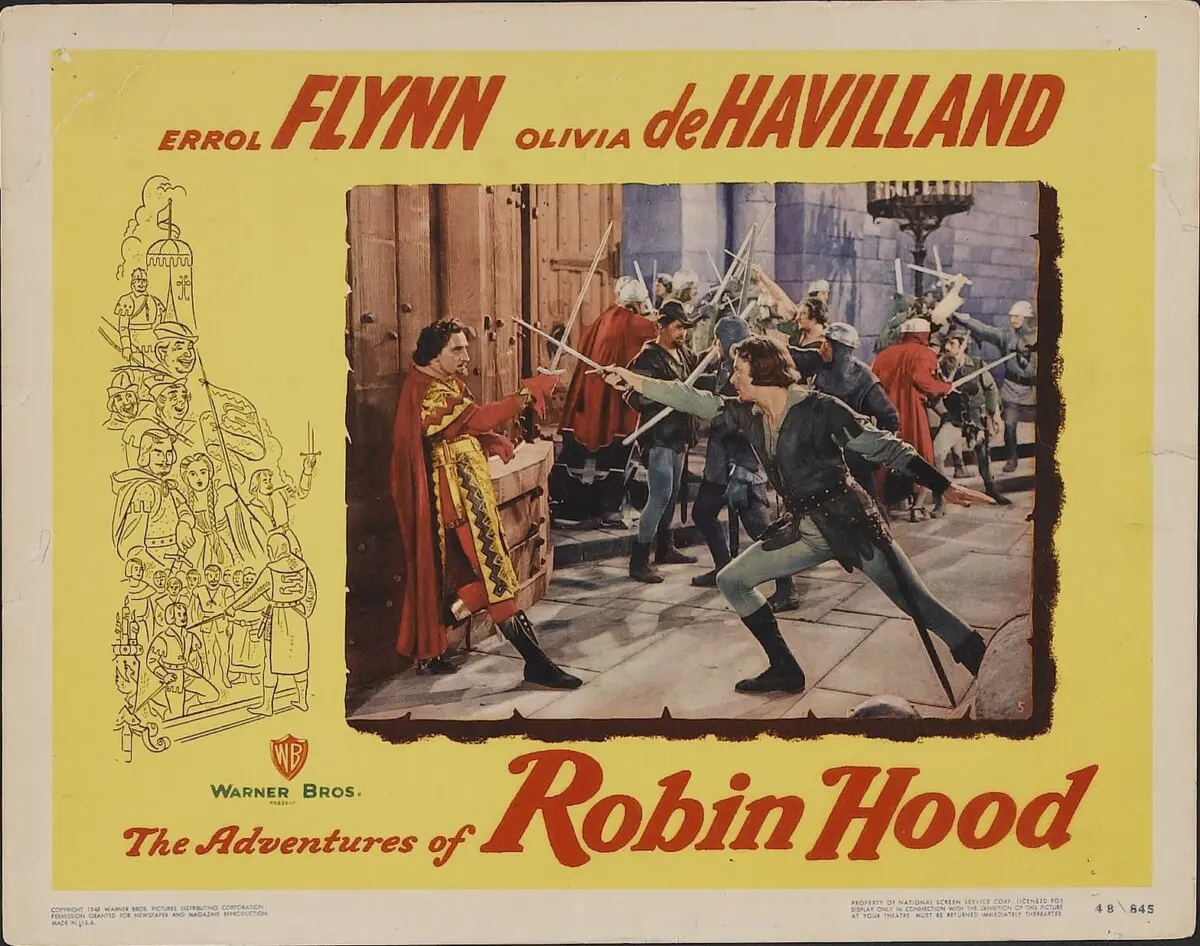
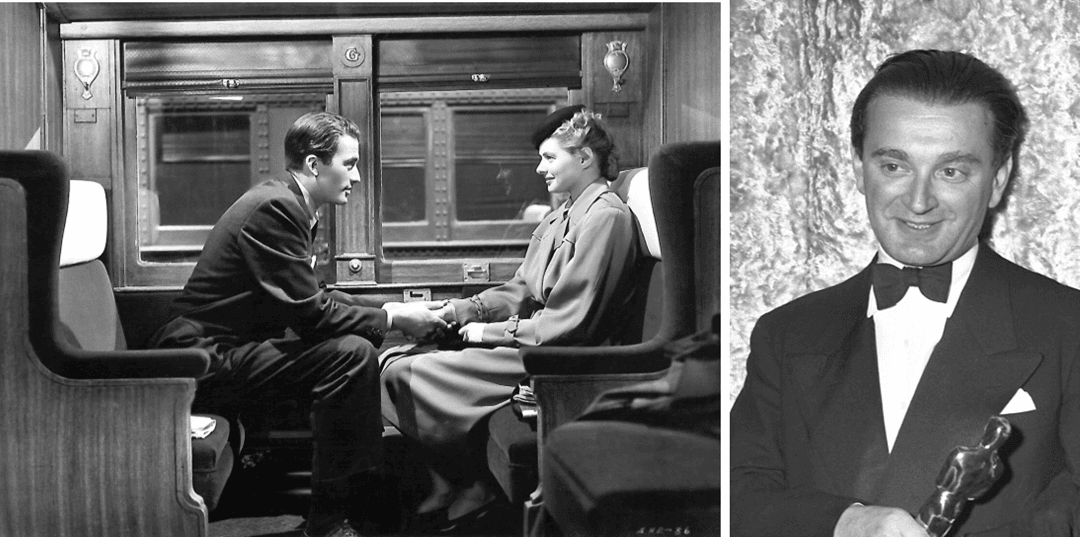
Korngold won the Academy Award for Best Original Score (having previously won for “Anthony Adverse” in 1936), and this was the first time that a composer received the award himself instead of the studio’s music director.
This dramatic score was credited as one of the reasons for this film’s success. Korngold’s music remains one of the most acclaimed scores in Hollywood history.
Korngold was nominated for Academy Awards the next two years for two more Flynn costume dramas, “The Private Lives of Elizabeth and Essex” (1939) and “The Sea Hawk” (1941). Although neither won, “The Sea Hawk” score in many arrangements has become one of his popular works to be performed in concert.
Other notable films he scored for Warner Bros. during the 1940s include “The Sea Wolf” (1941), “Kings Row” (1942), “The Constant Nymph” (1943), and “Deception” (1946).
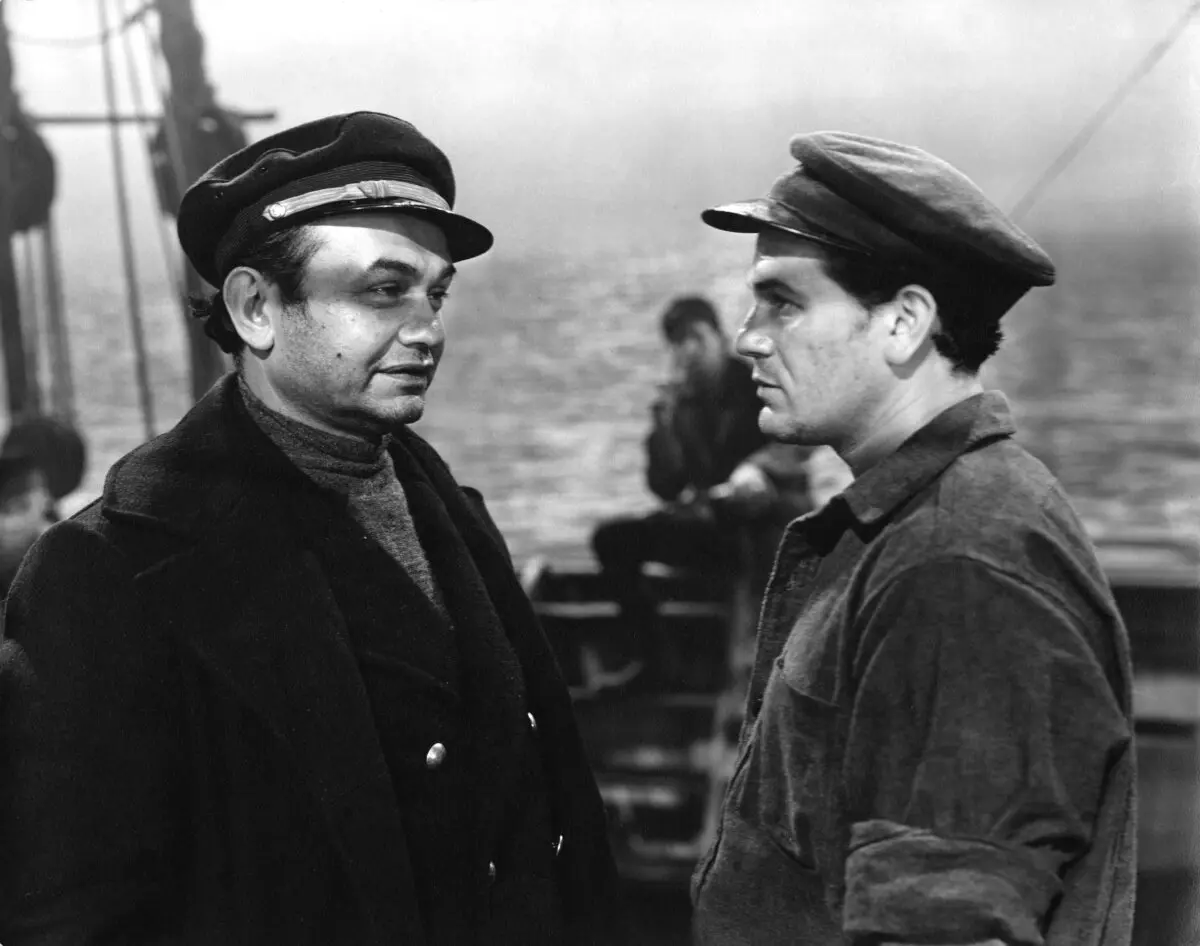
By the mid-1940s, however, Korngold was getting restless in Hollywood. He felt like he kept working on the same type of pictures, and he longed to return to writing serious music for the concert stage.
Cinematic Opera Scores
Korngold’s father was a music critic in Vienna, and young Erich played piano duets with him by the age of 5. Two years later, the boy began writing his first compositions. At age 11, he wrote his first major work, a ballet called “Der Schneemann” (“The Snowman”). It was performed for the Austrian emperor to great acclaim. During his teenage years, he wrote many successful works for piano and orchestra.Before his work in film, Korngold was first and foremost an opera composer. He wrote five operas and was working on a sixth at the time of his death. His third opera, “Die Tote Stadt” (“The Dead City”), which premiered in 1920 when he was 23 years old, remains one of the most respected operas of the 20th century.
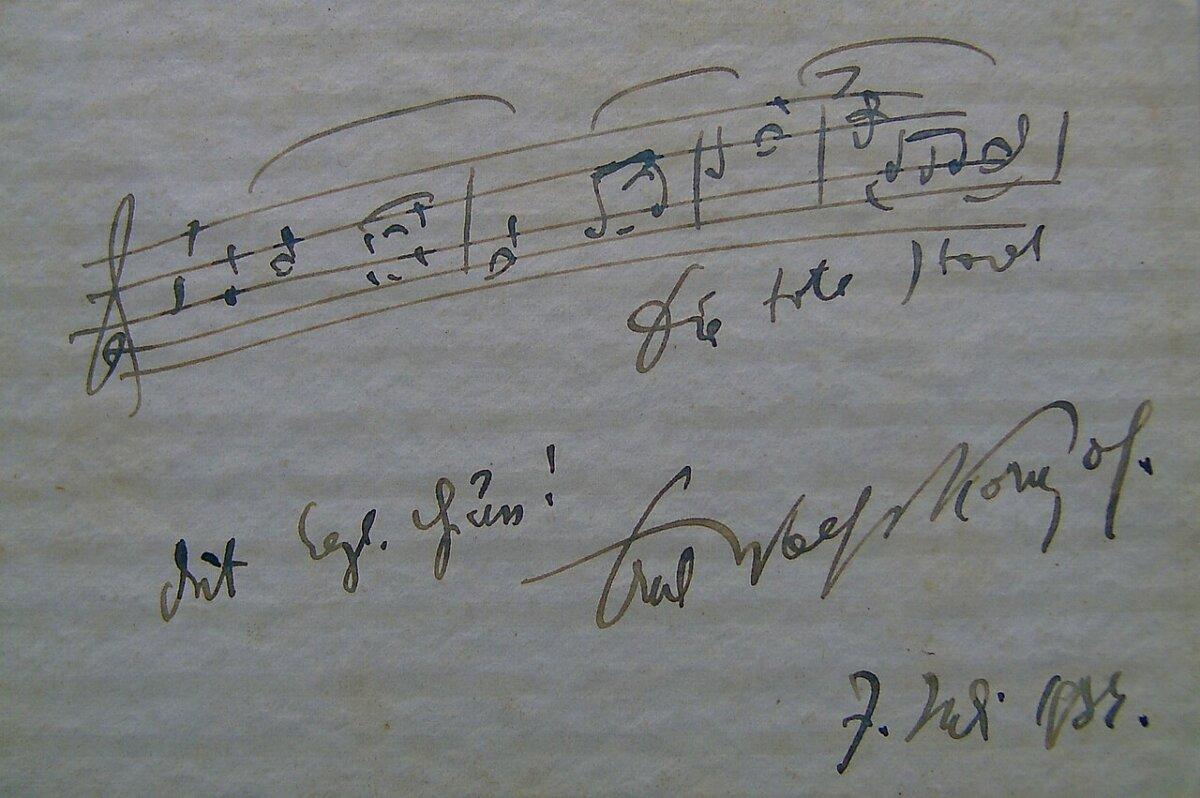
Besides writing a few operettas of his own, he achieved great success arranging existing operettas, such as those by famous composers Johann Strauss II and Jacques Offenbach.
Korngold thought of a film score as “an opera without singing.” He used operatic concepts, like the leitmotif (a recurring musical theme to represent a character or concept), to great effect.
Back to the Concert Stage
Korngold became an American citizen in 1943, and he vowed that he would only compose for films until Hitler was no longer in power. In 1947, he wrote his final film score, “Escape Me Never,” appropriately an Errol Flynn film.A few years earlier, he finished on a final Flynn swashbuckling project, “The Adventures of Robin Hood,” but it was delayed so long that he’d retired by the time production really began.
Korngold returned to Vienna in 1949 in hopes of reviving his career there, but he found that the war-torn city no longer had a place for his music. He returned to America, where he spent the last years of his life. He wasn’t idle during his retirement years. He wrote operas, concerti, and symphonies during his last decade.
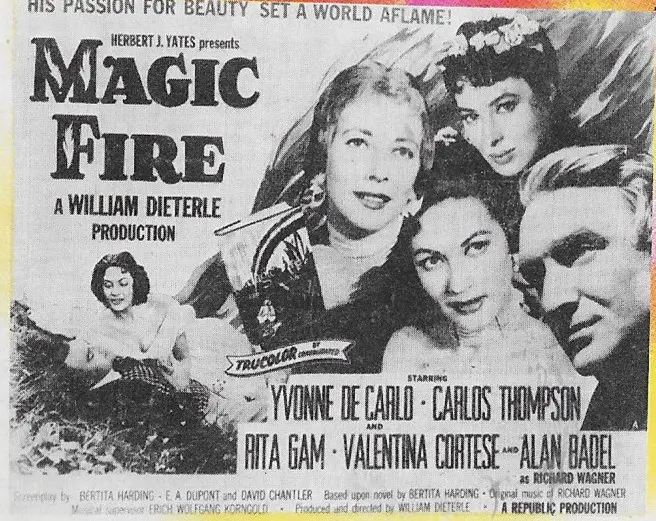
He briefly returned from retirement to work as music adaptor and supervisor on William Dieterle’s Wagner biopic, “Magic Fire” (1956); he also appears as a conductor in that film, marking one of his few onscreen appearances. That same year, he suffered a stroke and died a year later at age 60 of a heart attack.
Korngold was a brilliant composer who brought the concert hall to the movie theater and the movie theater to the concert hall. He often combined his earlier classical works into his film scores, drawing on his years of experience writing orchestral and operatic works. In turn, he endeavored to make all his film scores symphonic enough to be worthy of being played in concert. His scores have been frequently performed on the radio and in concert to this day.
His most famous instrumental work, the Violin Concerto in D, Op. 35 (1945), incorporates themes from his earlier film scores. It quickly became part of the standard repertoire, and it remains a great example of the multifaceted genius of this gifted composer.