This copy is for your personal, non-commercial use only. Distribution and use of this material are governed by our Subscriber Agreement and by copyright law. For non-personal use or to order multiple copies, please contact The Epoch Times Reprints.
(Right) A cropped portrait of Sophia Peabody, 1830, by Chester Harding. Peabody Essex Museum, Salem, Mass. (Left) Nathaniel Hawthorne, 1840, by Charles Osgood. Both artistically gifted were devoted to each other. Public Domain
After he graduated from Bowdoin College in 1825, Nathaniel Hawthorne essentially became a recluse, holed up in a dim attic in Salem for most of the next 12 years, reading and scribbling away. He committed himself to the literary equivalent of a Spartan life, spending all day reading and writing in what he termed his “Castle Dismal.” During this period, he read some 1,200 books and supported himself doing clerical work for his uncle’s stagecoach company and editing articles about fruit trees. He wrote, too, but destroyed much of what he produced. Speaking of himself and his sisters, knocking about the house, he said, “We do not live at our house; we only vegetate.” The sole fruit of the solitary years was a collection of short stories published in 1837.
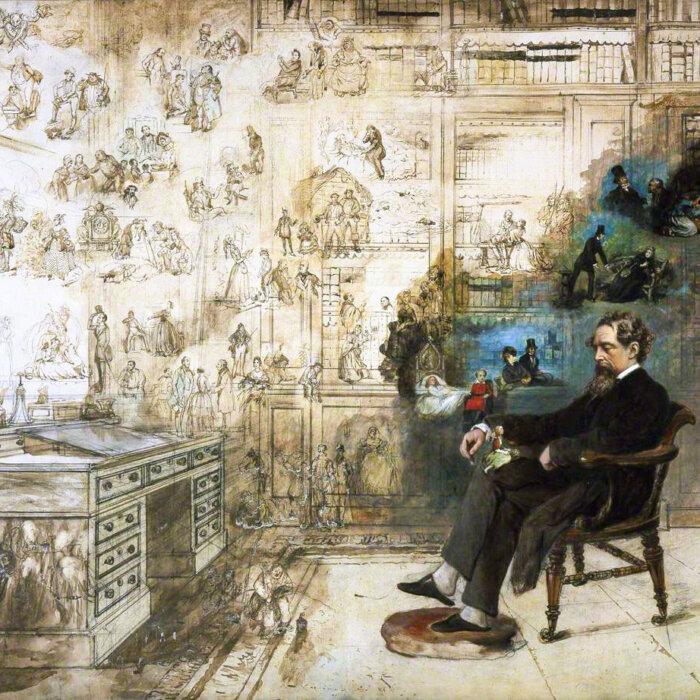
As Mason Currey’s book “Daily Rituals: How Artists Work” explains, Nathaniel developed a fairly regular routine during the course of these years. In the colder months, he wrote or read until lunch, then read or wrote or did nothing at all until sunset. Sometimes he simply watched a patch of sun move slowly across the room. At sunset, he embarked on a long walk—like other novelists, such as Charles Dickens. After the walk, Hawthorne would eat a bowl of chocolate crumbled with bread and talk about books with his two sisters. In warmer months, Hawthorne went for an early-morning swim and a shoreside amble. Sometimes, he’d stand on a cliff and throw stones from his perch. He’d also people-watch: travelers on the toll bridge north of Salem or people congregating for church on Sunday mornings.
He once wrote to his friend Horatio Bridge, saying he felt helplessly adrift during this time.
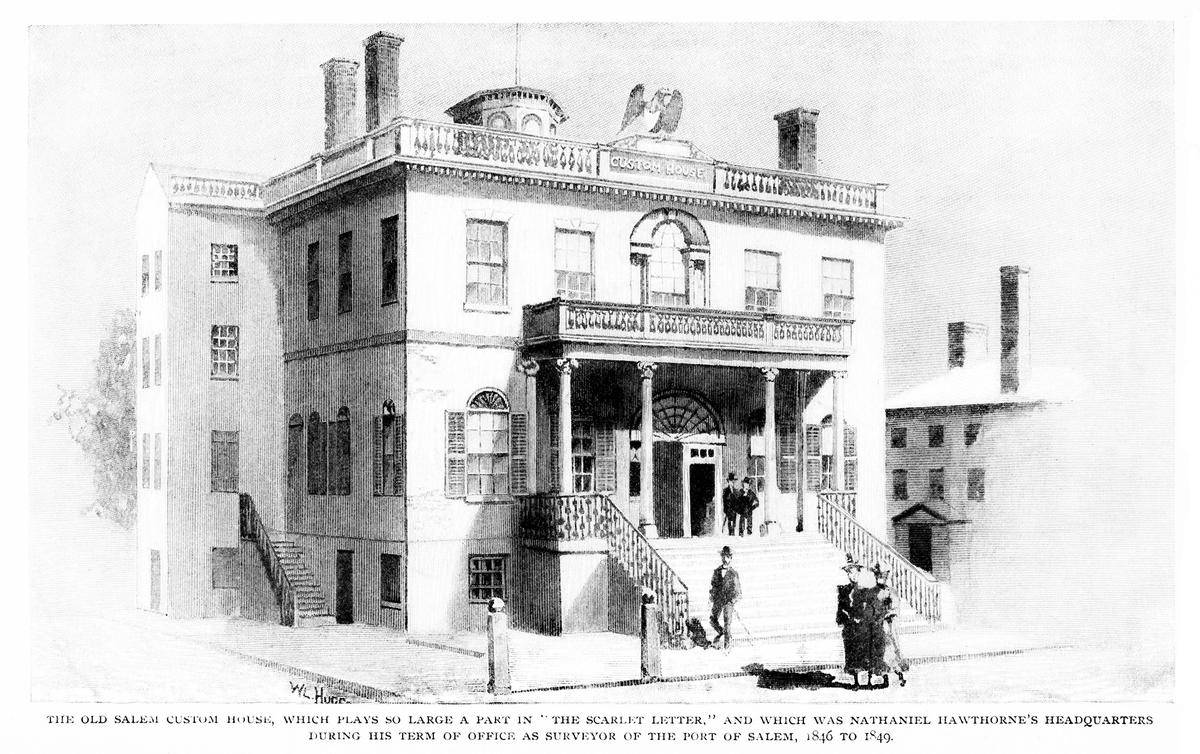
The old Custom House in Salem, Mass., where Hawthorne worked while gathering material for his novel, "The Scarlet Letter." Christine_Kohler/Getty Images
The Turning of a Page
What finally drew the writer from his solitary sanctum and his dreamy, dismal thoughts? Love. Well, first literary pursuits—and then love. Hawthorne’s short story collection “Twice-Told Tales,” published in 1837, received a positive review from Henry Wadsworth Longfellow and attracted the notice of the Hawthornes’ neighbor, Elizabeth Peabody, who realized that the stories were by the younger brother of her nearby friend Elizabeth Hawthorne. She visited the Hawthornes, and Hawthorne later returned the visit—repeatedly. He was attracted to Elizabeth’s sister Sophia, a good-looking, artistically inclined, and constitutionally weak woman. Perhaps Nathaniel sensed a kindred recluse; Sophia spent much of her life bedridden due to her poor health. She had also told her sister previously that her health discouraged her from pursuing marriage. But when Nathaniel proposed, she agreed. They married in 1842.
One of Sophia Hawthorne's paintings, which she completed several years before their wedding. Public domain
Hawthorne’s life changed considerably after his marriage, and his routine had to be adjusted. Nathaniel obviously became less solitary than he once had been, but still insisted on several hours of solitude each day when he was working on a writing project. As he told an editor, “I religiously seclude myself every morning (much against my will) and remain in retirement till dinnertime, or thereabouts.” By “dinner,” Nathaniel meant the midday meal around 2:00. After this meal, he went to town to visit the library. Upon his return home, he and Sophia would take a walk to the river, drink tea, and Hawthorne would read aloud for a few hours.
As the Sun Shines
For a period of time, Nathaniel and Sophia kept a journal together, chronicling the early years of their marriage, which was a long and happy one. The first entry, by Nathaniel, reads, “A rainy day—a rainy day, and I do verily believe there is no sunshine in this world, except what beams from my wife’s eyes.” In another entry, he observed, “It is usually supposed that the cares of life come with matrimony; but I seem to have cast off all care, and live on with as much easy trust in Providence as Adam could possibly have felt before he had learned that there was a world beyond his Paradise.”
By their first anniversary, Sophia was pregnant with their daughter, Una. The couple wrote rhapsodic love letters to one another to mark the occasion: “[Before our wedding] we had visions & dreamed of Paradise,” Sophia wrote. “Now Paradise is here & our fairest visions stand realized before us.“ And even Nathaniel, great writer that he was, couldn’t find the words to express all the fine shades of feeling that stirred and shimmered inside him: “[L]ife now heaves and swells beneath me like a brim-full ocean, and the endeavor to comprise and portion of it in words is like trying to dip up the ocean in a goblet.”
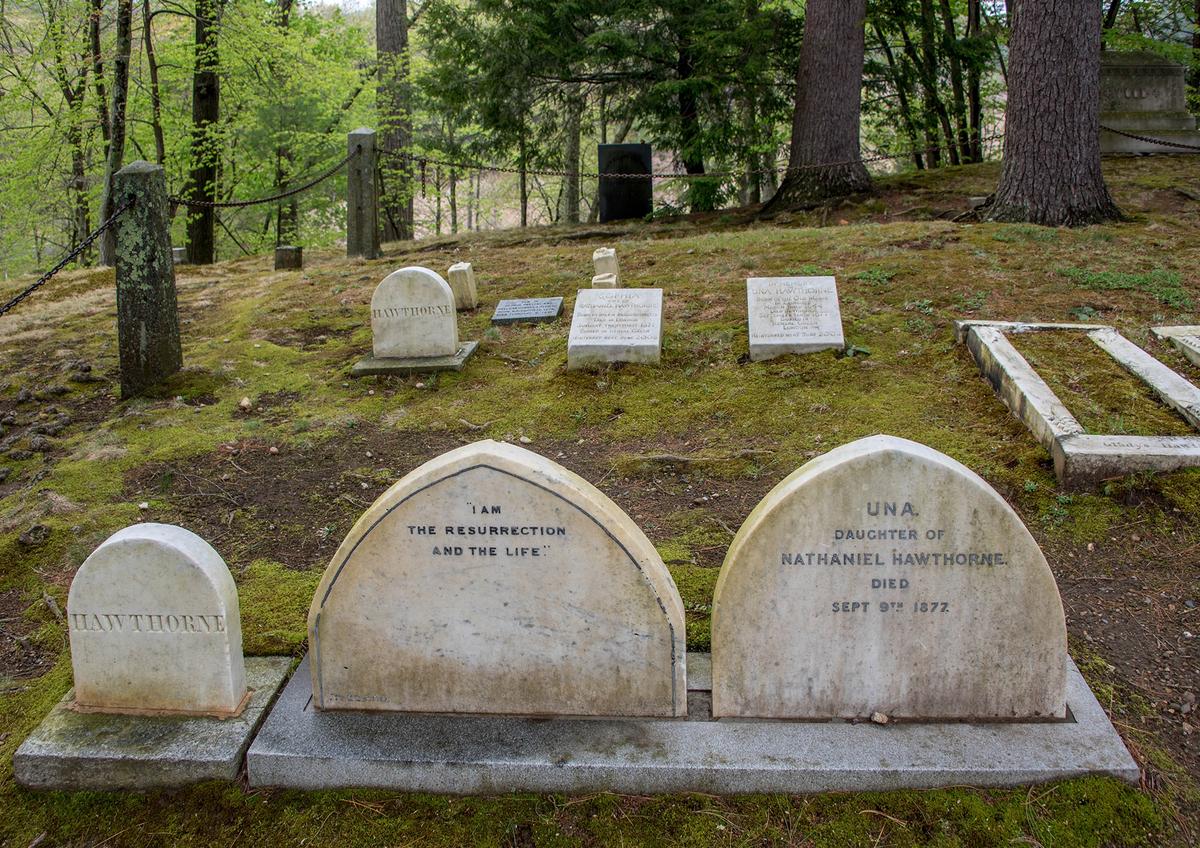
Hawthorne died in 1864 at the age of 59. His wife died seven years later in London, where she was buried. But after 142 years of separation, Sophia was disinterred and finally laid to rest beside her husband in Concord’s Sleepy Hollow Cemetery in 2006.
Where Hawthorne is buried, along with Sophia and their daughter, Una, in Sleepy Hollow Cemetery in Concord, Mass. ChicagoPhotographer/Shutterstock
Hawthorne’s story suggests a few things about the artistic life. First: it requires discipline. Hawthorne certainly put in his time during and even after his solitary years. But it requires more than just discipline. It is interesting to note that Hawthorne’s literary career really took off only after he met and fell in love with Sophia and saw the sunbeams in her eyes.
Before becoming a freelance journalist and culture writer, Walker Larson taught literature and history at a private academy in Wisconsin, where he resides with his wife and daughter. He holds a master’s in English literature and language, and his writing has appeared in The Hemingway Review, Intellectual Takeout, and his Substack, The Hazelnut. He is also the author of two novels, “Hologram” and “Song of Spheres.”