In the early 2000s, the Thomas Jefferson Foundation teamed up with Damon Lee Fowler, a culinary historian and cookbook author, to create a comprehensive presentation of Thomas Jefferson’s “place in American food history,” as Fowler’s introductory essay is titled.
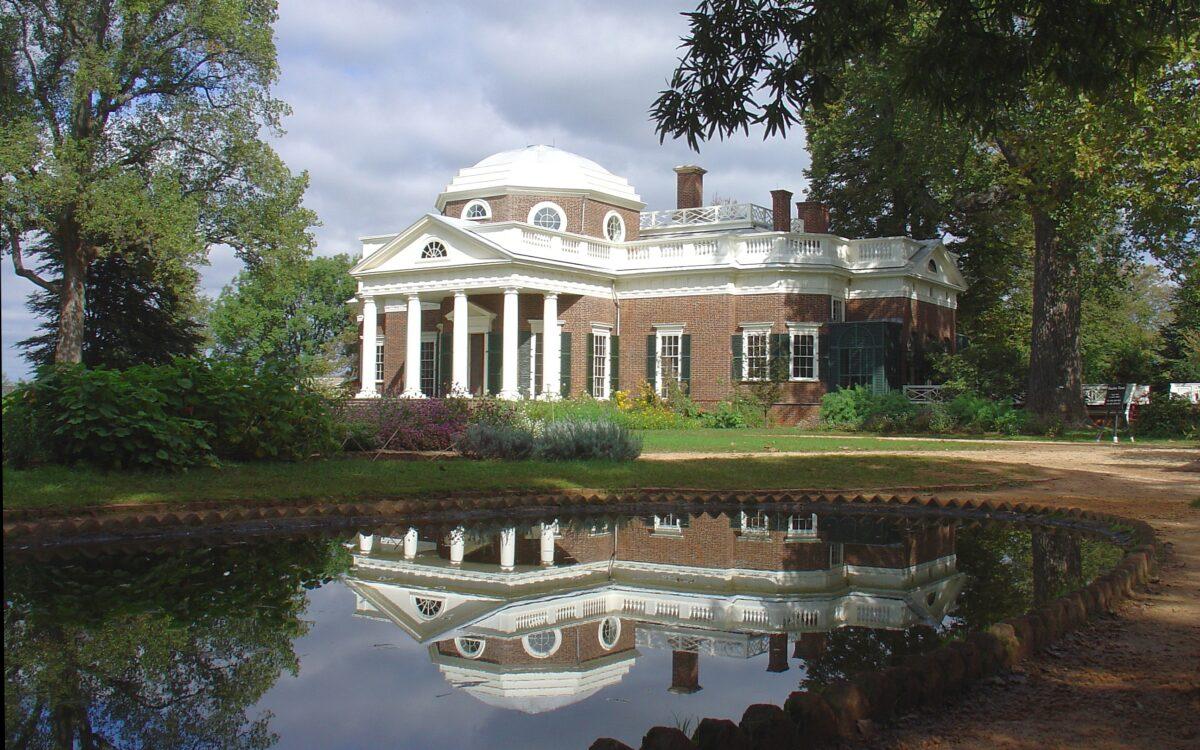
Each page of “Dining at Monticello: In Good Taste and Abundance” is dense in food photography. There are photos of Jefferson’s famous historic home in Charlottesville, Virginia, including beautiful table settings and Monticello’s vast gardens. Also adorning many pages are images of handwritten notes, ledgers, and recipes.
Long before the recipe section of this book begins, a description of how the Old World influenced the New World appears. We learn what Monticello residents grew, how they grew it, and then how they cooked and presented the fruits and vegetables harvested, as well as the animals raised for meat. “[Jefferson] embraced the relationship between garden and table,” Fowler wrote.
He also noted that Jefferson was astute when it came to incorporating ingredients both familiar and foreign and that his dining table often presented both classic dishes and internationally inspired fare.
The well-researched book includes images of dinner invitations, seed charts, historic lithographs, and cartoons depicting early American cooking. Information on kitchen utensils, the cookware used, and the training methods for cooks is highlighted as well.
Sections spotlight Jefferson’s longtime butler, Burwell Colbert, and dedicated chefs James Hemings and his brother, Peter. Even though they were enslaved, Jefferson shares in journals his appreciation of their contributions to the organization and management of the household. In fact, Jefferson’s granddaughter Ellen Randolph’s words about Colbert are in the book: “We never have the comfort of a clean house whilst Burwell is away.”


When Jefferson was in the White House, he missed his home-cooked meals. The book reveals that at one point he wrote home: “Pray enable yourself [recipient of letter unknown] to direct us here how to make muffins in Peter’s method.”
The layout of Monticello’s kitchen is also a focus, including references to the unique waist-high masonry “stew” stove and the heat conductivity of copper pans.
Instruction on how formal dining was achieved at Monticello is touched on in “The Feast of Reason” chapter. It is followed by a discourse on the types of wines made and served at the estate to complement the many signature dishes served.
Before recipes are delved into, Fowler, who is the book’s editor, and book coordinator Beth Cheuk offer “A Note on the Recipes.” This is an explanation on where and how the recipes were acquired. Some were passed down by family members, some were pulled from archives, and a few were penned by Jefferson himself.
Taking up approximately one half of “Dining at Monticello” are the “receipts” (the colonial American word for recipes) for breads, soups, entrees, side dishes, and desserts. Most interesting are the historical notes beside each recipe. For example, the recipe for Mushroom Catsup includes this notation: “Historically, catsups were not at first made with tomatoes, and many old recipes call for a variety of flavored catsups.”
Salads were a staple at Jefferson’s table when lettuces were in season. During his pre-presidency time as American Minister in France, he became particularly enamored with imported olive oil and wine vinegar. To stress this fact, the book also contains this April 16, 1810, quote by Jefferson: “We are out of sallad [sic] oil, and you know it is a necessary of life here.”
“Dining at Monticello” is one of those rare cookbooks that deserves a prominent display spot in a kitchen or on a coffee table, and its content begs to be read from cover to cover.