In recent years, Great Smoky Mountains National Park has been the most visited of the country’s 63 parks, according to the National Park Service (NPS). It had over 12 million visitors in 2024. People from across the nation and around the world are drawn to the Appalachian Mountains, which encompasses parts of North Carolina and Tennessee. The amenities are many: It has scenic drives and overlooks, myriad hiking opportunities, an 11-mile biking loop, stunning waterfalls, and closeup opportunities to see wildlife.
However, a lesser-known perk of this park is the preservation and presentation of the region’s cultural heritage. The visitor center’s exhibits present American Indian and settler lifestyles and traditions once prevalent in the 800 square miles that now make up the park. Since the park wasn’t established until 1934, scattered throughout are 123 historic structures and 147 family cemeteries.
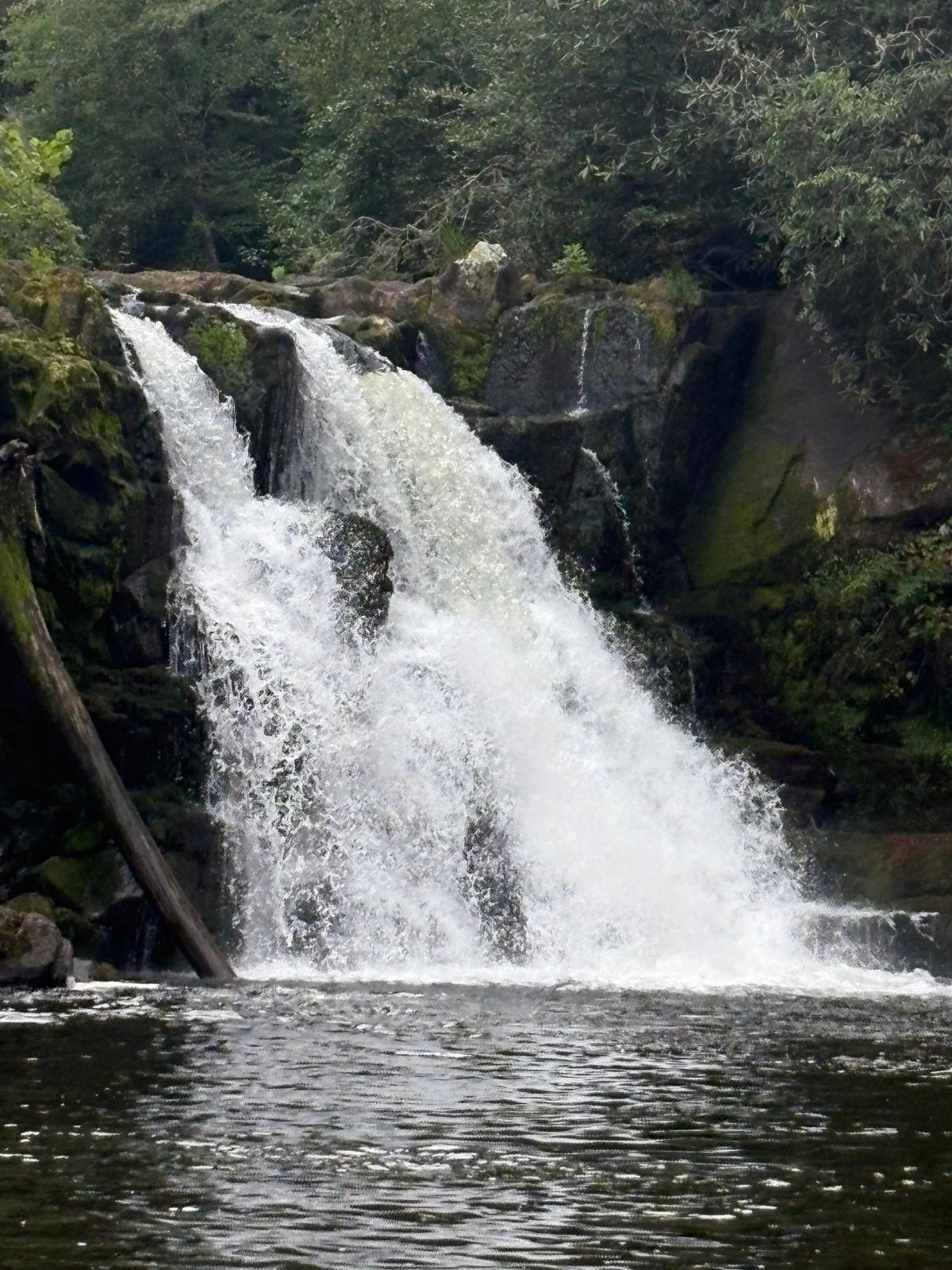
Waterfalls like Abrams Falls abound in the most popular national park in the United States. Deena Bouknight
Plenty of History
At one of the park’s main entrances, two miles north of Cherokee, North Carolina, is the 6,300-square-foot Oconaluftee Visitor Center. Inside are 19th-century tools, utensils, clothing, weapons, black-and-white photographs, as well as a display about the Civilian Conservation Corps (CCC). In the 1930s and 1940s, the CCC was instrumental in building roads, stone walls, trails, park buildings, and more within the park.Adjacent to this visitor center, one of four at the park, is the Mountain Farm Museum. The preserved 100-plus-year-old historic structures include a log farmhouse, barn, apple house, springhouse and a blacksmith shop. Moved there in the 1950s from areas within the park, the buildings, farm tools, and equipment relics at this site provide visitors with a clear understanding of how families lived long before modern technology and conveniences.
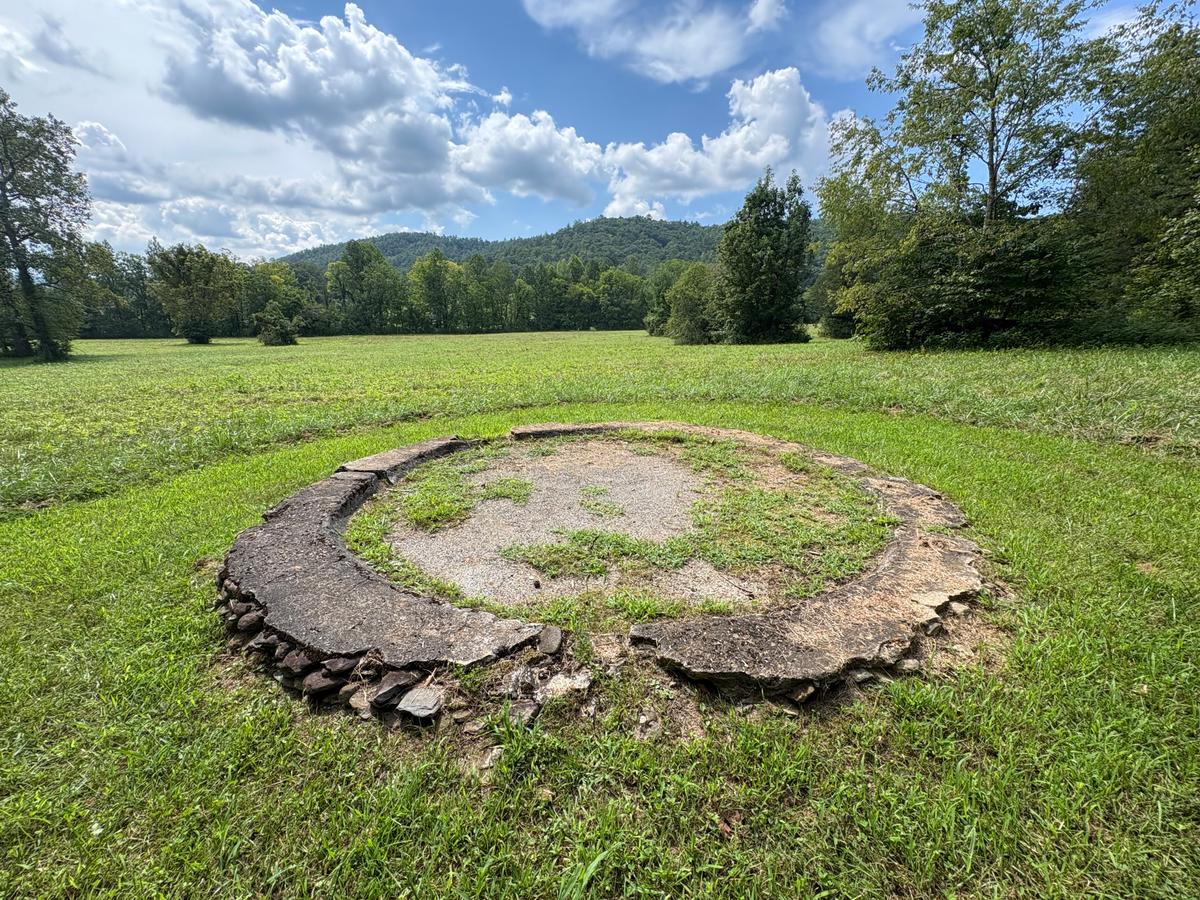
The remnants of a CCC flagpole base in the Great Smoky Mountains National Park. Deena Bouknight
Once inside the park via the North Carolina or Tennessee entrances, historic log and wood-frame houses, barns, outbuildings, churches, schools, and gristmills are viewable on drives and hikes. Many are open to the public, and most include educational signs communicating some aspect of the structure’s history: when it was built, who built it, families who lived in or used it, and idiosyncrasies of the architectural style and construction.
Several of the buildings, tucked into the woods or situated beside one of the park’s countless streams, were constructed of old-growth American chestnut trees. This species was essentially eradicated in the 1930s due to what became known as the chestnut blight. These buildings are some of the only remaining examples of American chestnut construction in the Appalachian Mountains.
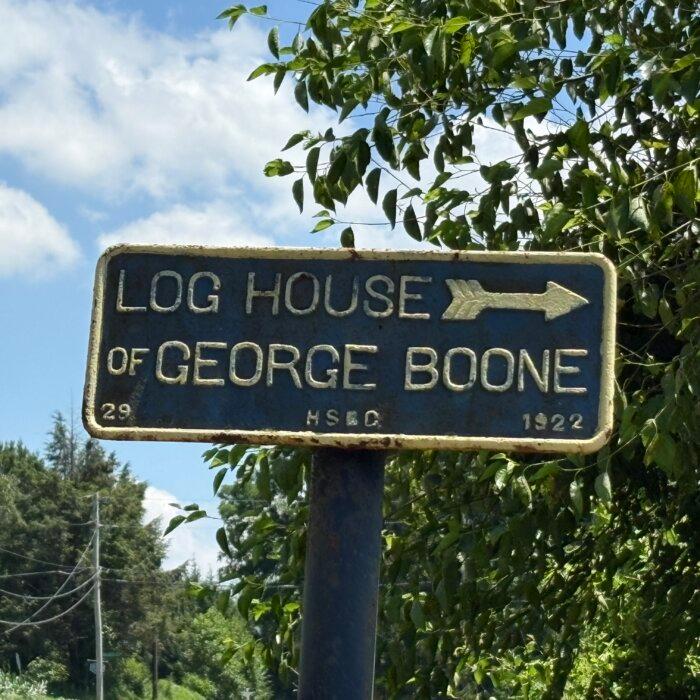
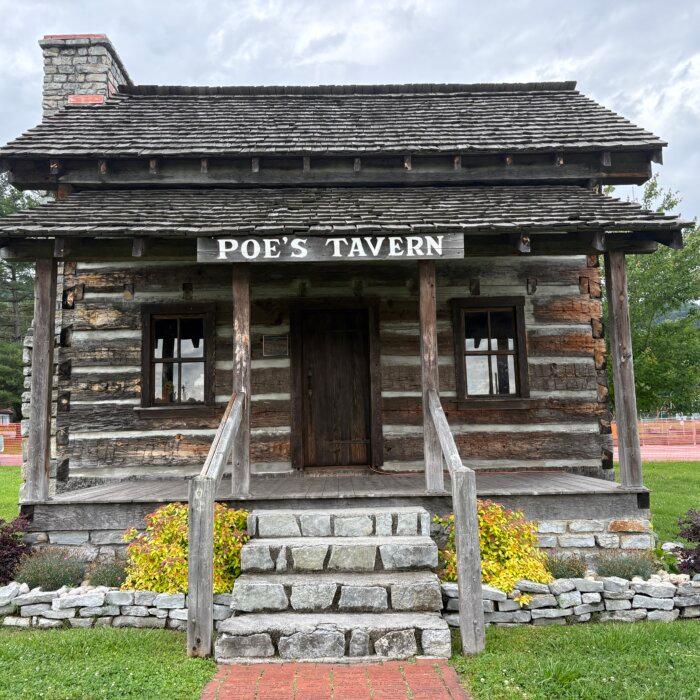
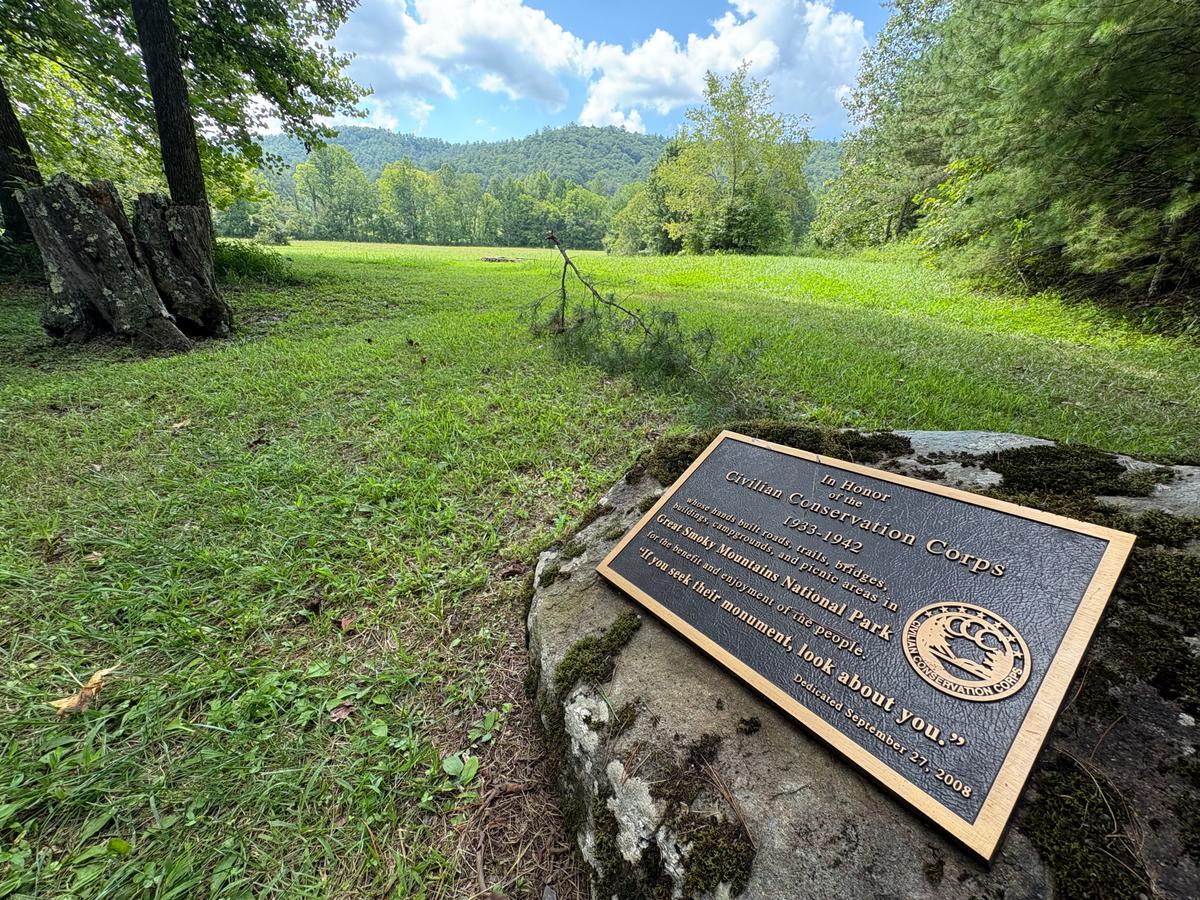
A commemorative plaque honors the men who constructed the many amenities in Smoky Mountains National Park. Deena Bouknight
The John E. Davis log house at the Mountain Farm Museum was constructed of American chestnut and stood one and a half stories tall. It used a half-dovetail notch process to join the logs, common to firmly lock the logs in place. The spaces in between the house’s logs were sealed with thin, hand-split boards instead of the area’s distinctive clay mortar. Some of the other historic structures demonstrate how logs were tightly stacked to leave no spaces in between.
While the Davis house was considered large for a log home, the typical log home design was more like that of the John Ownby cabin. It was built in 1860 and is the only existing home in what was once referred to as the Sugarland community—in a Tennessee portion of the park. Its is only one-story and has an open floor plan, which is characteristic of log homes built by early settlers in the region. And, instead of being built of American chestnut, it was built with the more readily available white pine and tulip poplar.
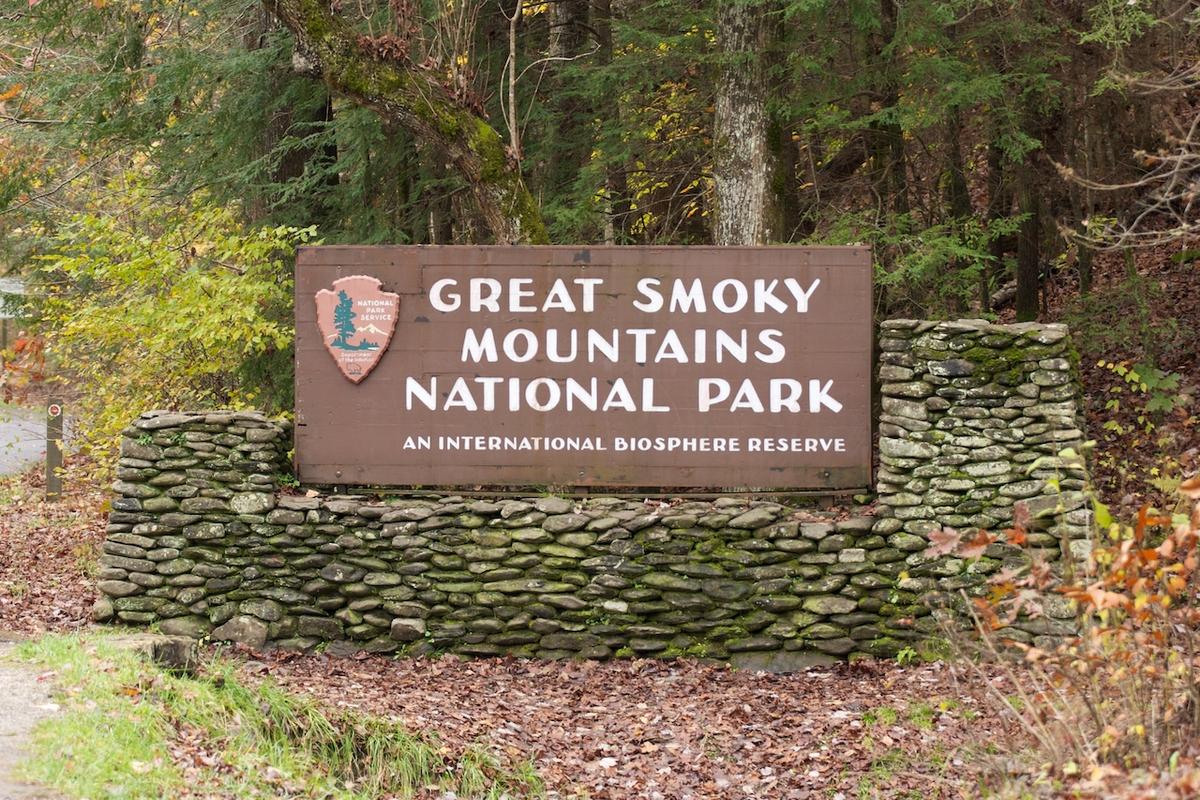
The entrance of the Great Smoky Mountains National Park. Dreamstime/TNS
Sometimes a sleeping and storage loft area of a simple cabin was accessible via a hand-crafted ladder. Such is the case with the Carter Shields cabin. It sits in a popular section of the park called Cades Cove. This log cabin shows visitors how most cabins were raised on pillars of stacked stone for a number of reasons. Primarily it served to keep moisture from rotting the floors and to permit air flow. A family’s dogs also used this space for shelter.
In the 19th century, roofs in the Appalachian Mountain were steeply pitched to prevent snow accumulation. Chimneys were made of field and stream rocks carefully stacked and fitted together with a mixture of clay mortar.
Because many people once lived off mountainous land, worshipped together, and are buried in the vast wilderness that is now a national park, it’s a plus that visitors can learn about them, their culture, and their lifestyles through the structures they left behind.
What arts and culture topics would you like us to cover? Please email ideas or feedback to [email protected]