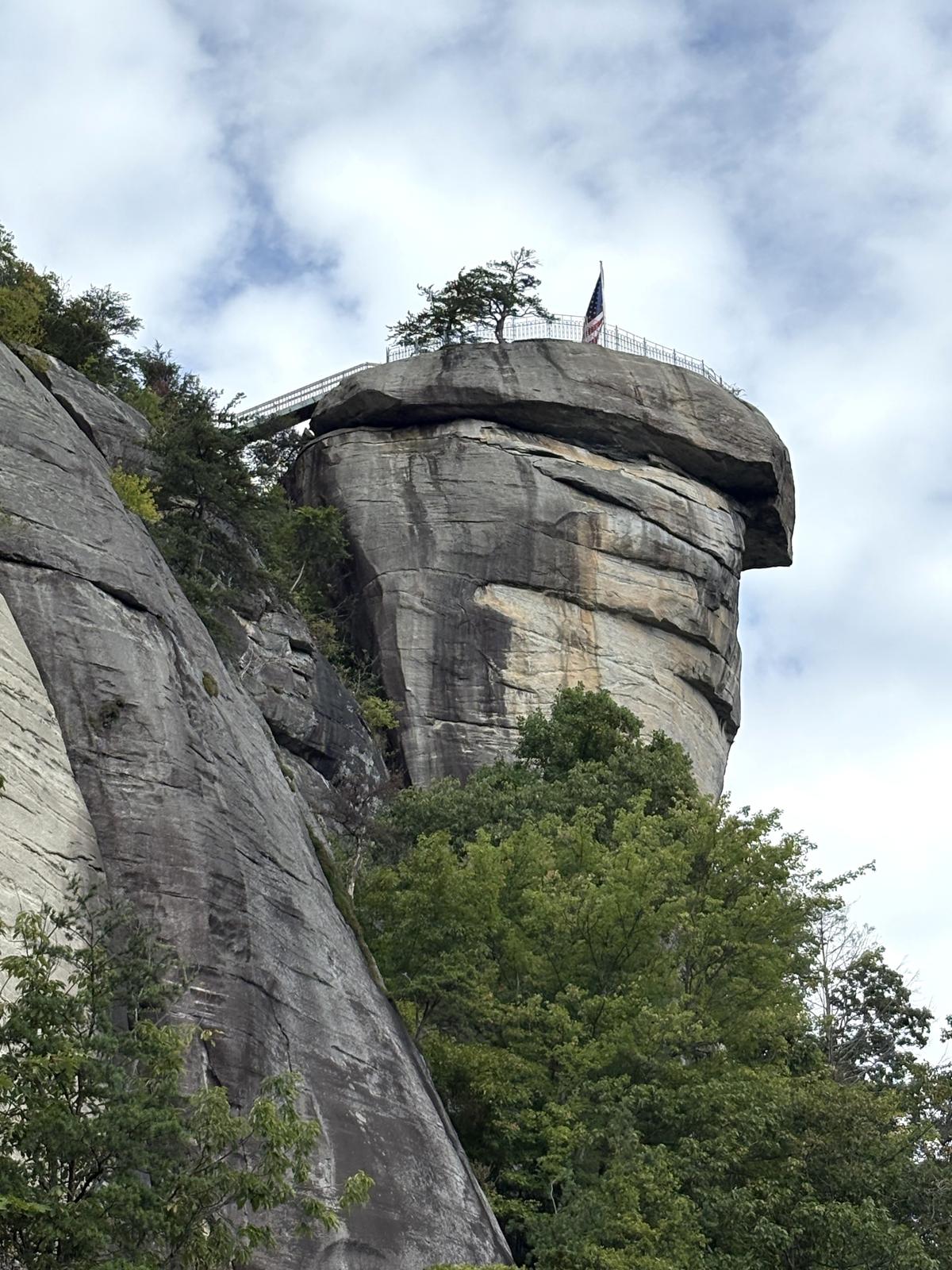
Twelve months ago, the town of Chimney Rock, North Carolina, was mostly wiped out by flood waters and mudslides resulting from over 10 to 20 inches of rain dumped by Hurricane Helene. Yet the historic structural feature of Chimney Rock State Park went unscathed—as did the natural rock monolith for which the area is named.
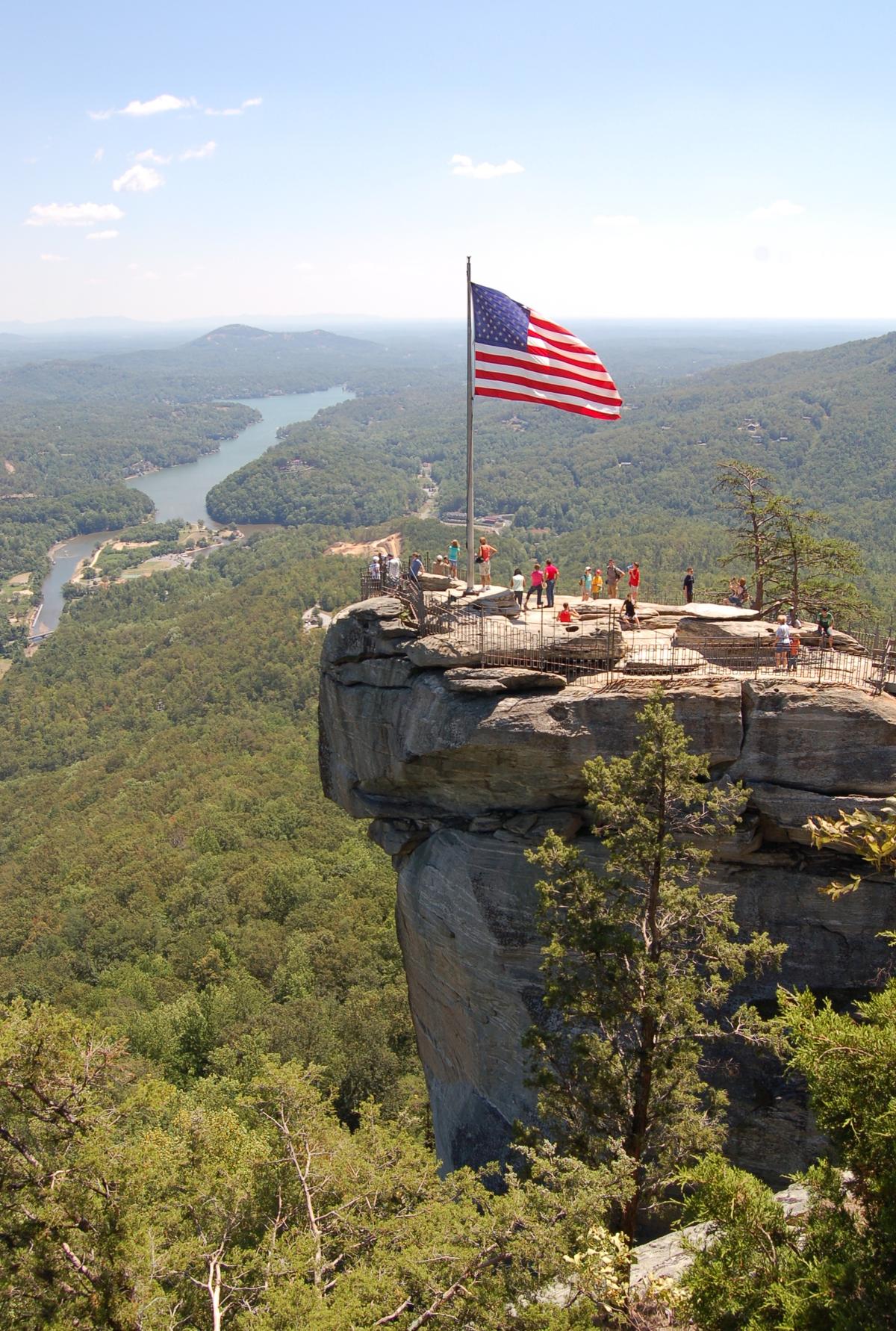
In fact, a few days after the devastating storm, a few rangers made their way inside the park and climbed to the top of the 315-foot-tall, chimney-shaped rock to hoist an American flag and give survivors in the town below a symbol of hope.
The park just reopened in June 2025. It took nine months to repair the severely damaged NC 9, which enters the park from the south. Other routes to Chimney Rock State Park are still under repair and remain closed to visitors.
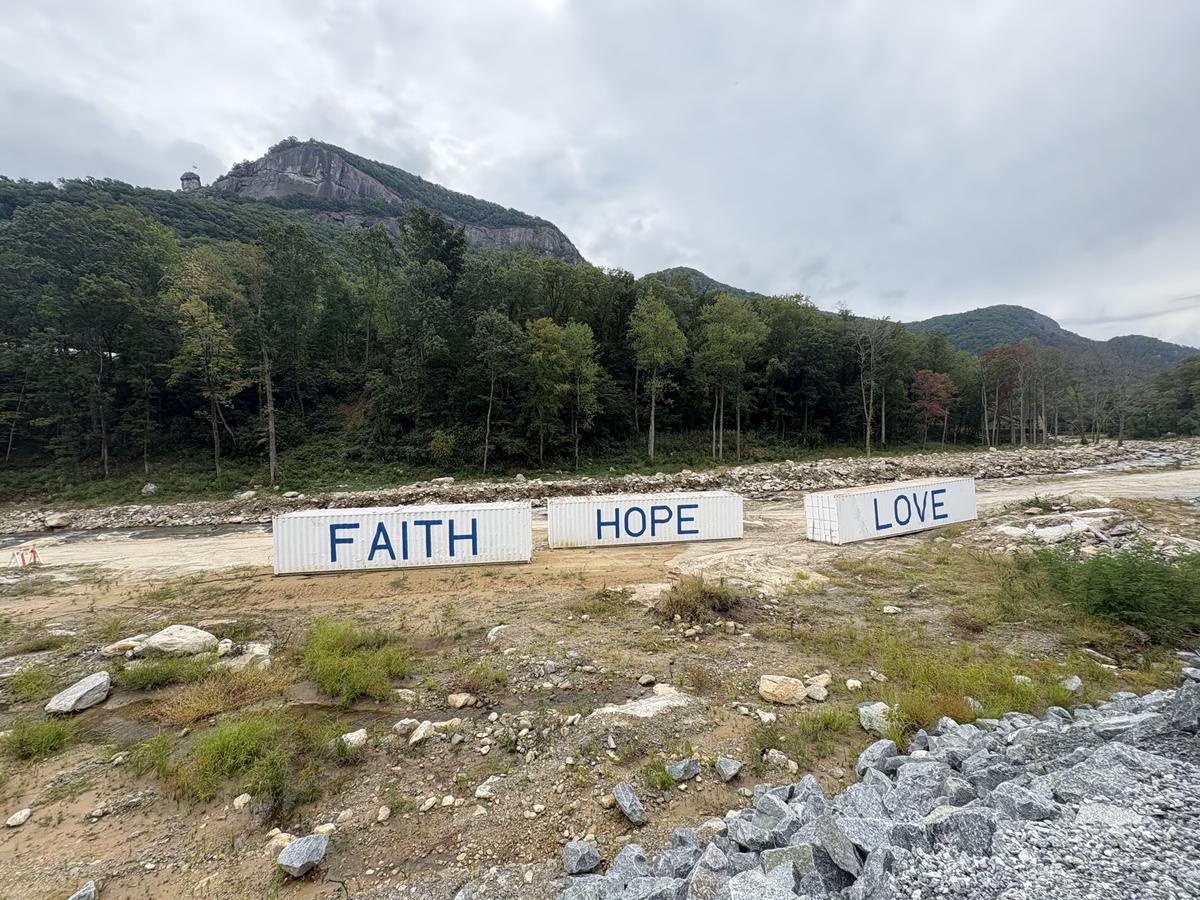
A visit to Chimney Rock on the eve of Hurricane Helene’s one-year anniversary found volunteers planting flowers beside dirt and debris piles in front of the park’s massive original stone entryway. Their efforts were within sight of abandoned containers sporting “Faith,” “Hope,” and “Love.” Part of the town once stood here. The volunteers’ goal was to dress up the otherwise apocalyptic setting for the next day’s remembrances of the momentous natural disaster.

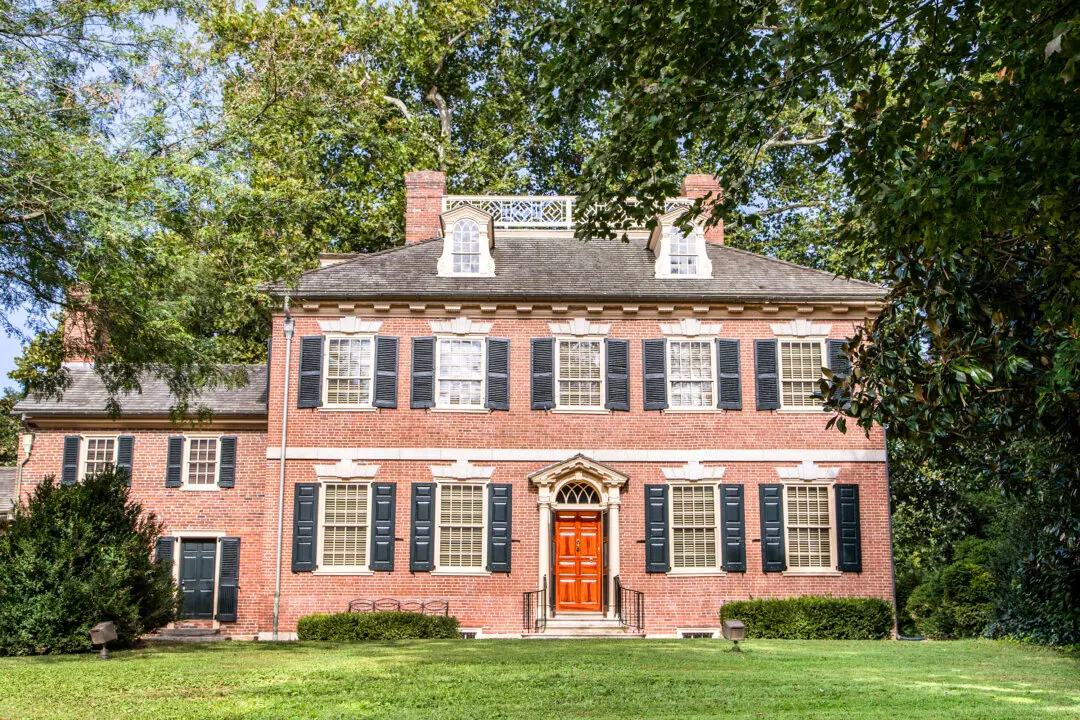
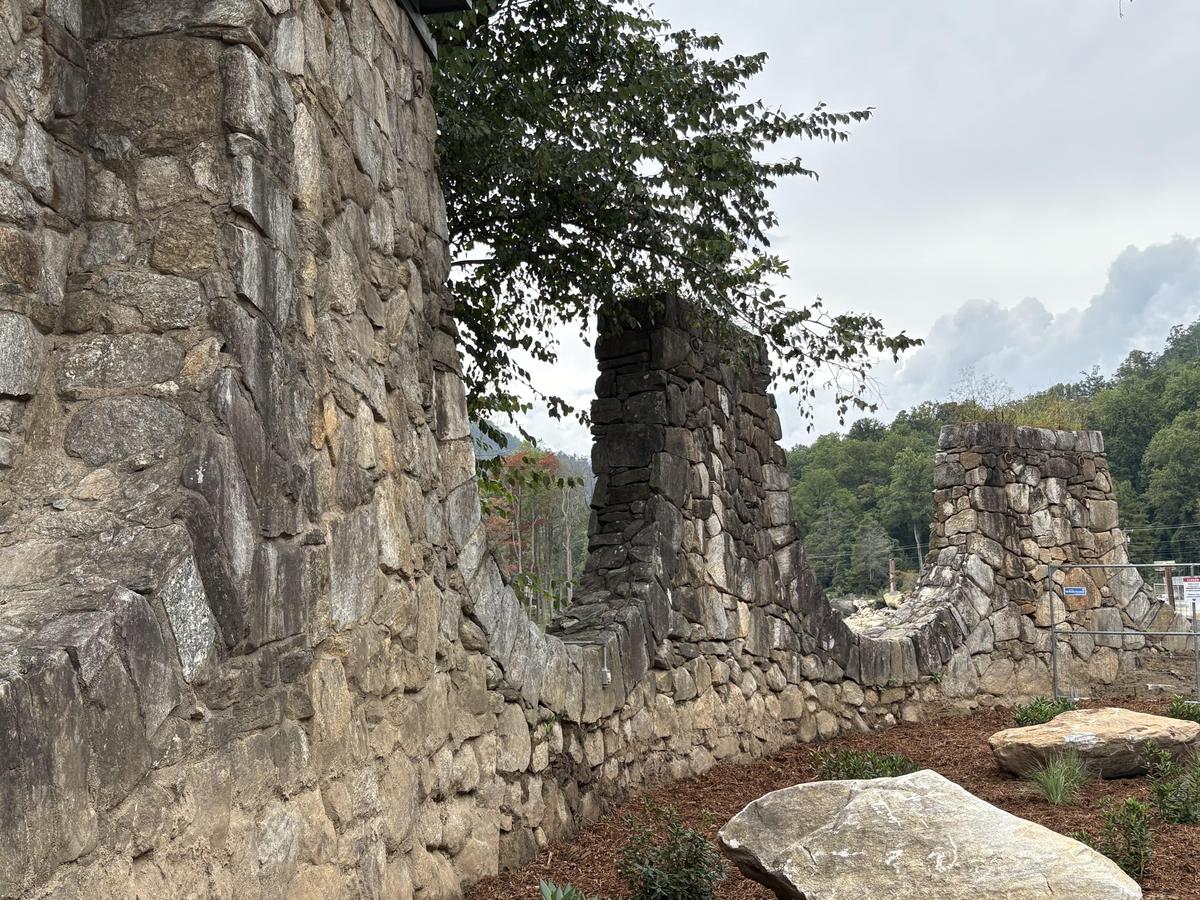
At least half of the town’s structures were severely damaged or completely washed away by the turbulent, swollen Rocky Broad River that separated the town by bridge from the upward climb to the “chimney.” Even so, the gatehouse from the early 1900s stands firm. Before last September, thousands of visitors passed through a metal gate. It was flanked by a pair of stacked stone, two-story towers. Their arched doorways were decorated with keystones. Visitors then traversed a steel bridge, which had replaced the original wooden bridge in 1984.
However, on Sept. 27, 2024, the river rose an estimated 25 to 30 feet above its normal flow and washed out the steel bridge.


The stone entryway towers, with a lengthy inverted arched wall on either side, remain as sentries among the town’s ruins.
A Long History
While the small town and its surrounding landscape are forever altered, the natural stone tower looms strong above the narrow valley surrounded by stunning slick rocks and monumental rugged cliffs. History runs deep here. At the turn of the 20th century, three brothers from Missouri—Lucius, Hiram, and Asahel Morse—sought to preserve and bring attention to this unique and beautiful area.A 1916 flood caused by Hurricane Hilda washed away the first bridge crossing the Rocky Broad River. But the brothers immediately commissioned it to be rebuilt and connect the burgeoning town to the road leading up to the “chimney.” Along with the new bridge, they constructed a stone gatehouse and wall. The edifice, more than a century old, that dominates the skyline has become recognizable to locals and visitors alike.
Undaunted Future
With the recent reopening of Chimney Rock State Park and a grand plan for reestablishing the town, the estimated 400,000 people who visited the area pre-Hurricane Helene are anticipated in the future.“Raise the Rock” is a recovery action plan to repair, restore, and revitalize the town of Chimney Rock. It plans to turn the space beyond the original stone gatehouse, where a portion of the bridge remains, into a park. A new permanent bridge will be built immediately to the west of the gatehouse and wall.
For the foreseeable future, countless dump trucks and backhoes will remain fixtures in and around the town of Chimney Rock. But visitors can still enjoy the view. Cross the temporary bridge to access a parking area, where an elevator and stairway lead to 75-mile panoramic views at an elevation of 2,280 feet. To get to Chimney Rock State Park in North Carolina, travel on Interstate 26 from Columbus, North Carolina, (42 miles from Asheville) to NC 9 through Lake Lure.