NR | 1h 52m | Drama | 1948
What would you do if you knew that a man has been wrongly sentenced to 99 years in prison? “Call Northside 777” recounts the real-life 1930s story of journalists who did everything in their power to free such a man.
Prohibition-era Chicago set bootleggers and beat cops on a collision course. Caught in that chaos, Frank Wiecek (Richard Conte) ends up wrongly convicted of the murder of patrolman Bundy. Eleven years pass.
Then Frank’s impoverished mom Tillie (Kasia Orzazewski), who’s been scrubbing floors to save up money, advertises a $5,000 reward in the Chicago Times to whoever can prove Frank’s innocence. All they’ve got to do is contact her at Northside 777 with clinching information. That triggers the journalistic itch of the newspaper’s editor Brian Kelly (Lee J. Cobb) and reporter P.J. McNeal (James Stewart).
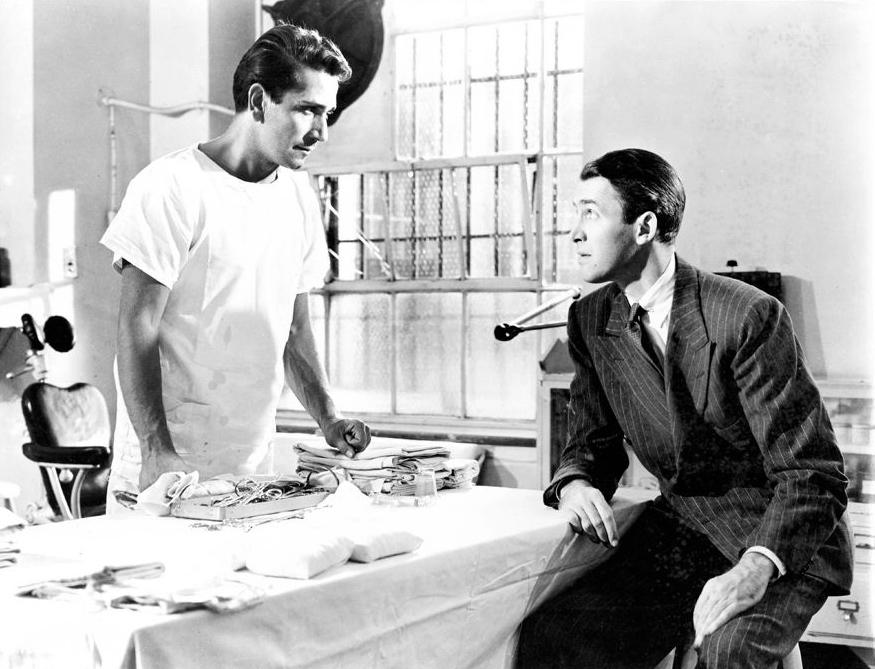
Skeptical of Wiecek’s innocence at first, McNeal changes his mind when he meets Tillie, and Wiecek’s former wife, Helen (Joanne De Bergh). A zealous McNeal reassures them he’ll do all he can to free Wiecek, but his plan soon stalls.
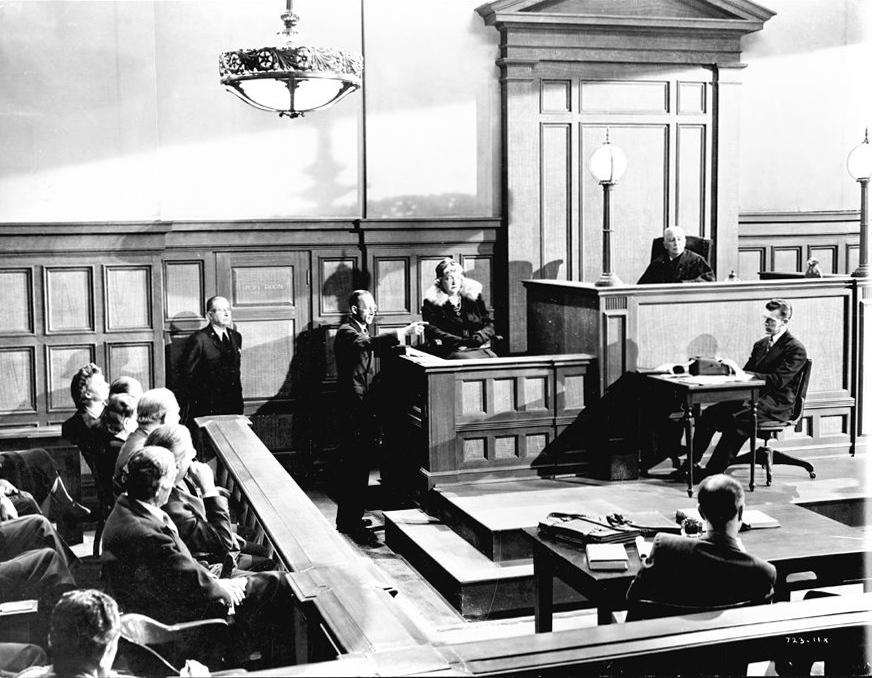
Illinois law requires only one eyewitness for a conviction, and courts already have the testimony of an aging woman who had identified Wiecek as the killer. All the evidence McNeal painstakingly gathers, even Wiecek’s acing a polygraph test, amounts to nothing if it’s inadmissible in court. The facts themselves don’t matter if they can’t be proven as facts. Crushed, McNeal’s about to give up. But he’s reminded of the hope that Tillie, Helen and, yes, Wiecek, have in him.

American inventor Leonarde Keeler designed the first polygraph in the 1930s, actively promoting it as a criminal investigative tool. Here, he appears as himself in a seven-minute scene explaining how his polygraph records emotional reactions by measuring blood pressure variations, how its pneumograph measures respiratory variations, and how its electrodes measure the skin’s electrical conductivity.
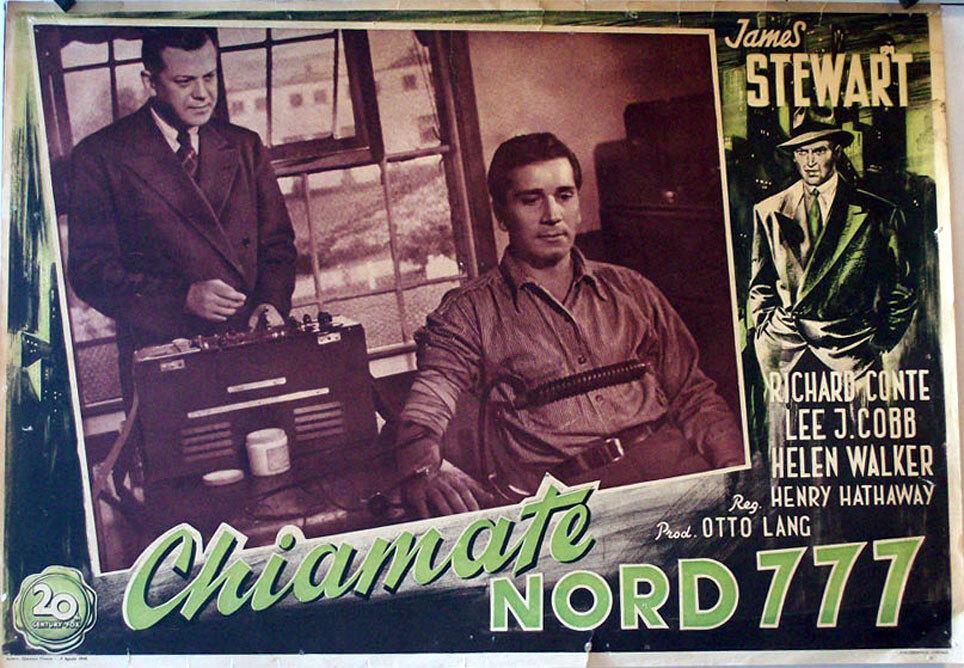
Director Henry Hathaway’s actors fare well, but this is clearly Stewart’s film. It’s his early cynicism that makes his eventual faith in Wiecek’s innocence convincing.
Police Procedural
Wiecek’s contained anguish in prison points to a fascinating truth. A government that punishes by imprisonment indicates how highly it believes its citizens value the warmth and affection of their friends and family.When making an example of an offender, the state can think of nothing harsher than denying him the company of his friends and family. Lawful incarceration is a civil acknowledgement, not a cruel denial, of a shared humanity; it demands that all citizens aspire to that shared humanity and penalizes those who don’t. For those reasons, a state that unlawfully or erroneously incarcerates betrays those same citizens.
McNeal’s investigative reporting relies heavily on technology: a typewriter, printing press, miniature hand-held camera, polygraph, photo-enlargement instruments, and image-transmission devices.
A novelty at the time, the polygraph here is proof that humans are hardwired to the truth. Hathaway’s saying that when people lie, their body, their mind, their whole being is repulsed. It takes repeated lies (and impunity) to blunt a person’s natural, truth-facing edge, until falsehood becomes a habit, then a reflex.
The film shows that technology is good, even desirable, as long as it’s steered by people grounded in faith, hope, truth, and love. Watch for McNeal’s and Tillie’s asides about prayer and hope. Watch Helen’s abiding respect for Wiecek; he’d forced her to divorce him because he didn’t want her not to have a husband at her side, because he was in prison.
Perhaps too idealistically, the director depicts different newspapers using and sharing each other’s resources and facilities at critical junctures. Idealism aside, he’s making a profound point. He’s not suggesting that prosecution and defense lawyers become back-slapping collaborators instead of competitors in a court; their immediate allegiance is to their clients.
Hathaway’s hinting at something deeper. They, the police, the jury, and judge may be devoted to their respective, often mutually exclusive, and occasionally antagonistic mandates in the justice system. If their overriding allegiance isn’t to the truth, their justice will stay shallow. Sometimes, as in Frank’s case, it may even end up as outright injustice.