Thousands of people walk by it daily on their way to work or to catch a ferry to Staten Island or the Statue of Liberty. Millions have entered and exited its doors. Yet, while it’s certainly not off the beaten path, the history and distinct architecture of Manhattan’s Bowling Green Station is mostly ignored as residents of and visitors to New York City rush to and fro.
Traditional Architecture
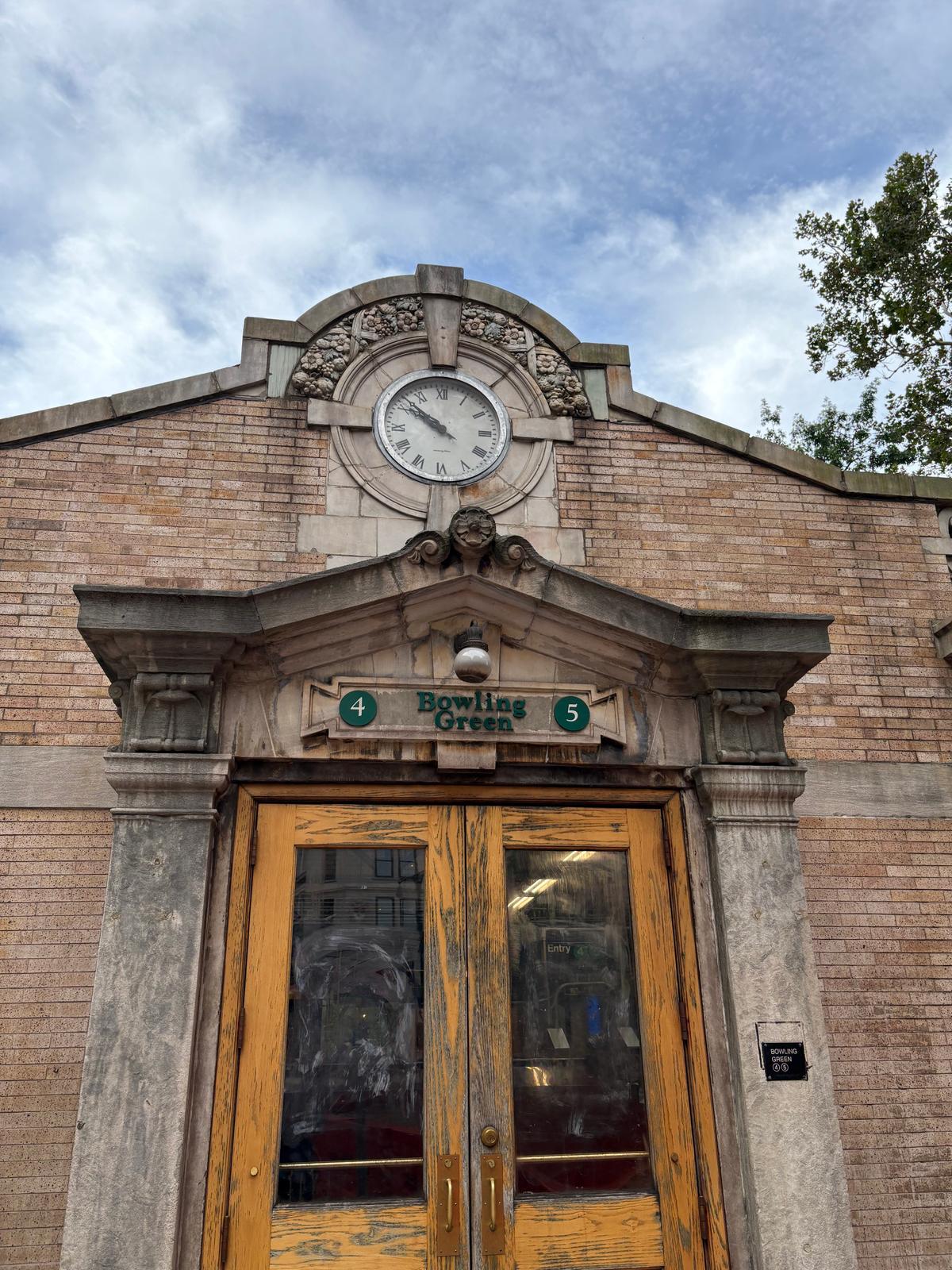
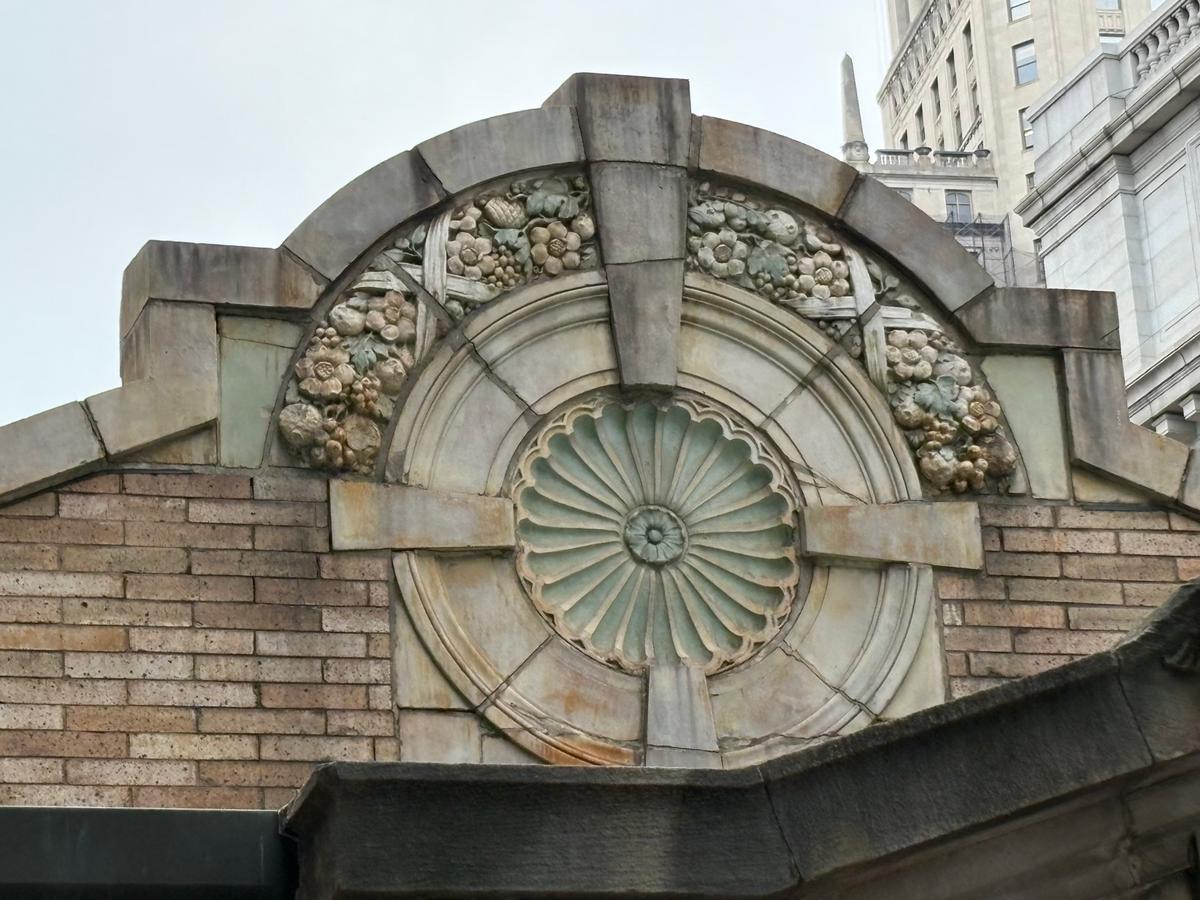
Constructed in a Flemish architectural style originally brought to the city by the Dutch, the square building’s key features are brick and limestone construction, decorative pediments, and elements of a stepped gable roof. Both its north and south facing entrances and exits sport a prominent roof pediment. Central on one side is a large, carved rosette encircled by a carved ring with four keystone-like elements; the exact same ornamentation is on the other side, but instead of a rosette, a clock is inset into the circle.Additionally, carved flowers are in both pediments’ arches, just above the circles. Flanking the main oak double-door entrances, over which are smaller pediments inset with a carved ornate rosette, are square columns with Doric-style (simple) capitals.
Once inside the historic Bowling Green building, passengers can wait below on one of two platforms serving two tracks. Four trains come and go at all times of day and night. A popular direct route is from Bowling Green to the iconic Grand Central Station, but one train travels beyond—all the way to the Bronx.
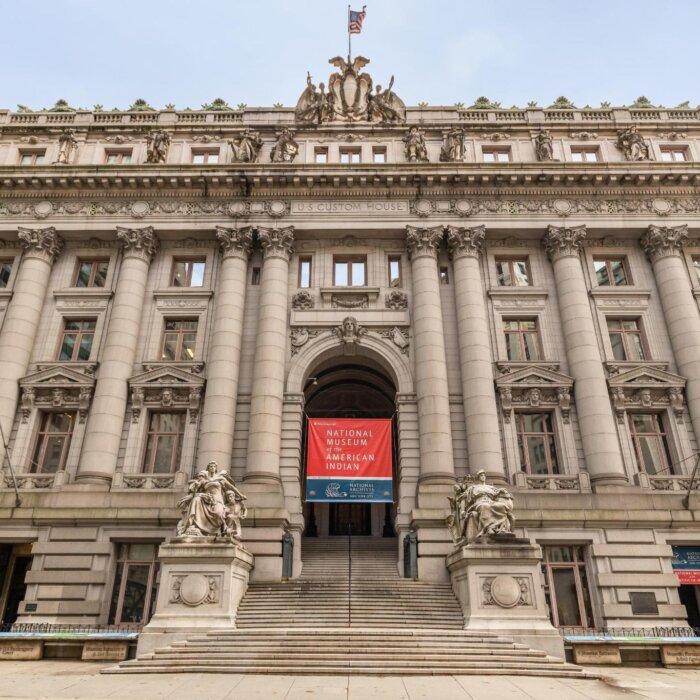
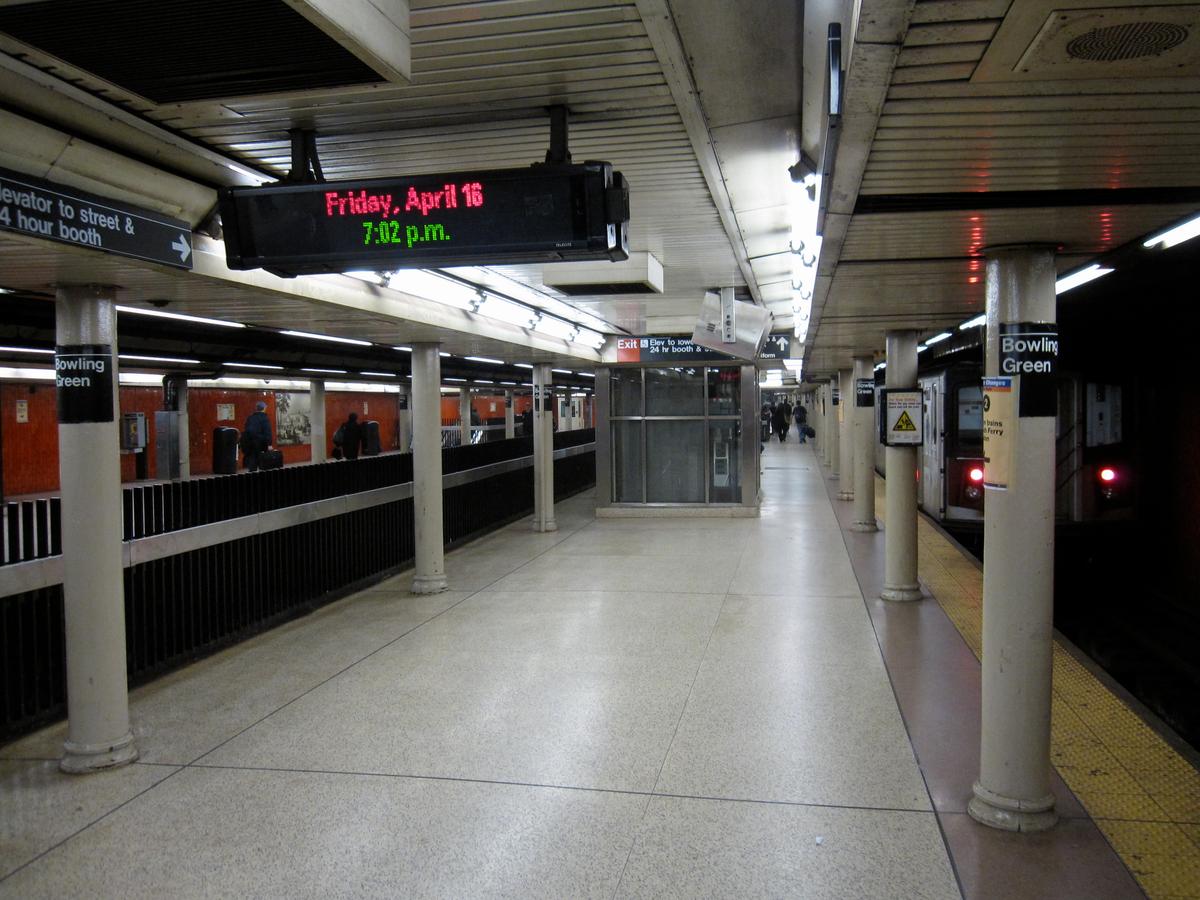
Interestingly, Bowling Green Station is one of New York City’s few remaining above-ground subway entrances—originally called “control” or “head” houses—in operation. It has been renovated many times to preserve its architectural and historic significance, especially after damage from Hurricane Sandy in 2012. Yet, this dwarfed structure among giants stretching skyward hasn’t lost its unique historic and decorative allure in a city replete with modern design proclivities.
It benefits anyone living in or traveling to New York City to seek out this compact but vital building. Take a moment to admire its architectural style and appreciate the purpose it has served for over a century.