This copy is for your personal, non-commercial use only. Distribution and use of this material are governed by our Subscriber Agreement and by copyright law. For non-personal use or to order multiple copies, please contact The Epoch Times Reprints.
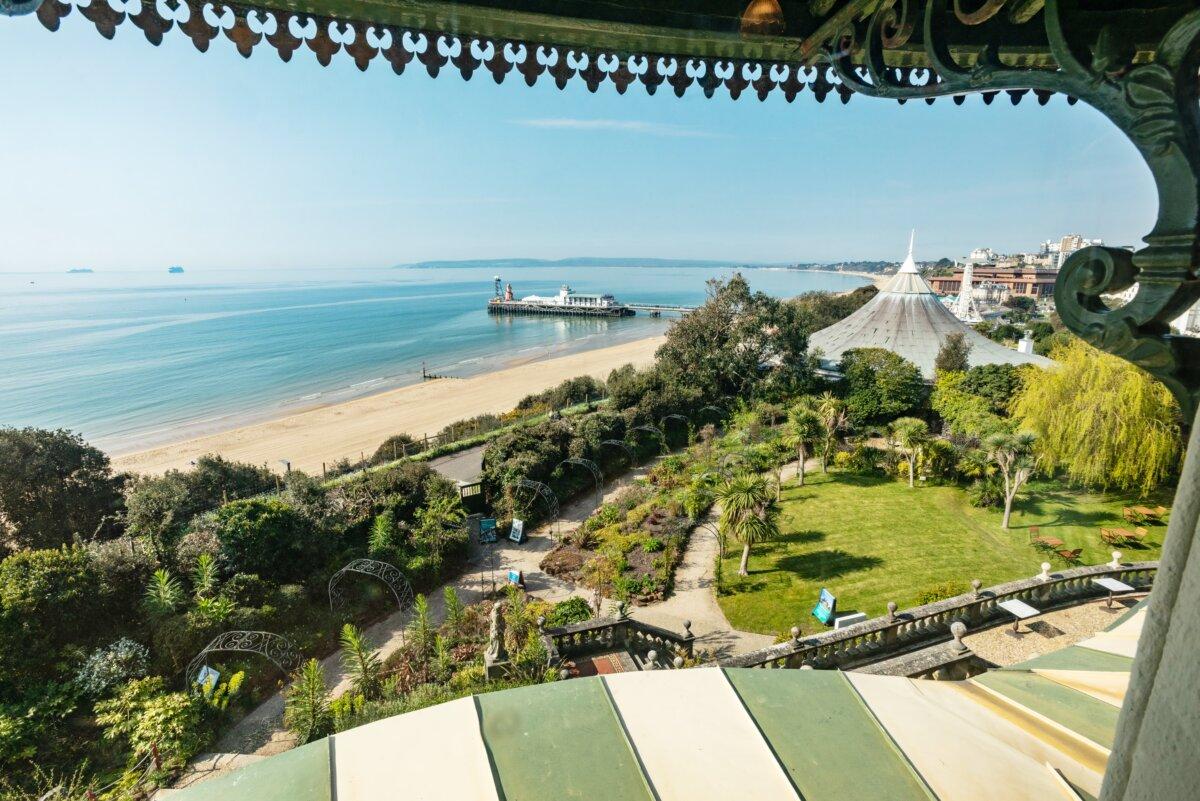
Merton and Annie Russell-Cotes's East Cliff Hall home with its conservatory, bay windows, striped canopies, and sweeping terraces was made for love and panoramic seaside views. Courtesy of Russell-Cotes Art Gallery & Museum
BOURNEMOUTH, England—“For many years I had in my mind that someday I would build a house after my own heart, as an offering of ‘love and affection’ to my wife,” hotelier Sir Merton Russell-Cotes (1835–1921) once said.
In 1897, Merton commissioned Irish architect John Frederick Fogerty to build that exotic villa, called East Cliff Hall, in the seaside town of Bournemouth, in southwest England.
East Cliff Hall is on the same site as the Royal Bath Hotel on the clifftop overlooking the white sand beaches of Poole Bay. The Russell-Coteses bought the hotel in 1876, when the couple moved to Bournemouth with their three children, developing the hotel into luxury seaside accommodation.
A Victorian Seaside Villa
As was common in Victorian architecture, Fogerty’s design for East Cliff Hall incorporated a variety of architectural styles, including Italian Renaissance and Scottish baronial with its distinctive conical roof structures.
Fogerty completed the hall in 1901, the year Queen Victoria died, making it one of the last Victorian-era seaside villas. On July 15 of that year, Russell-Cotes gave East Cliff Hall to his wife, Annie, on her 66th birthday.
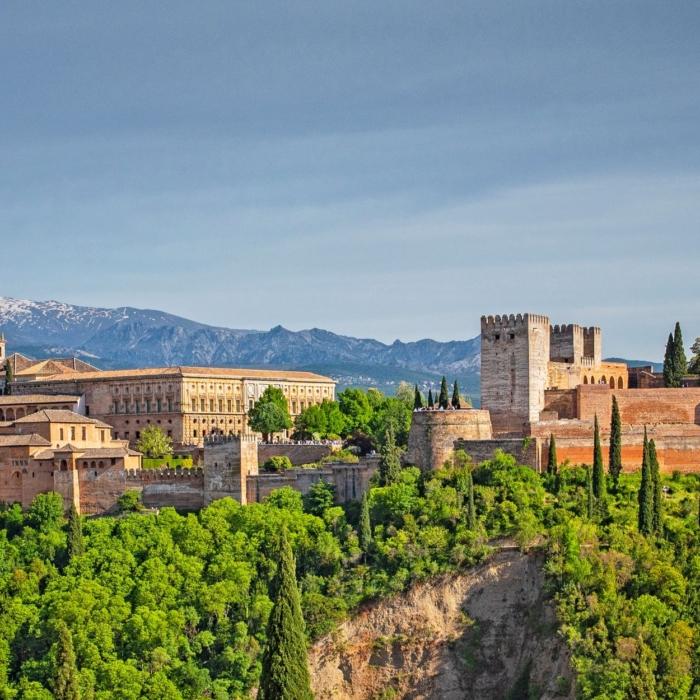
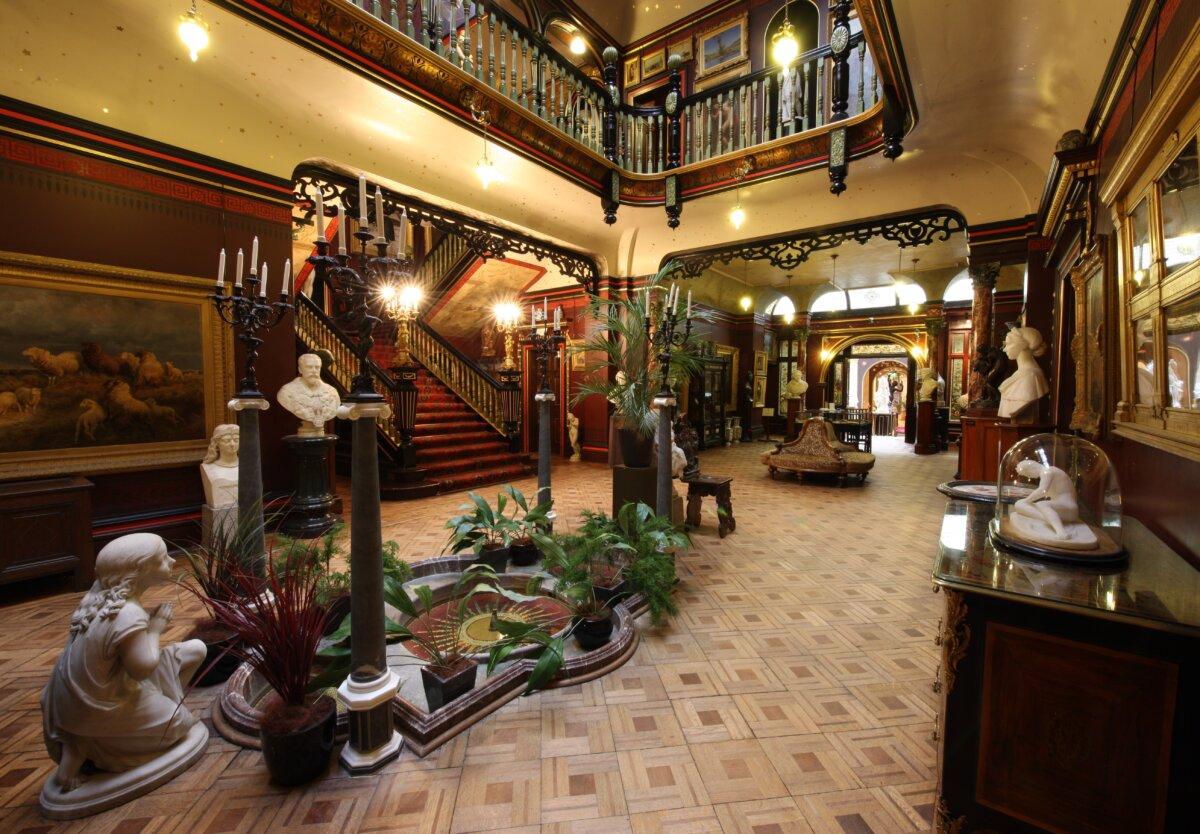
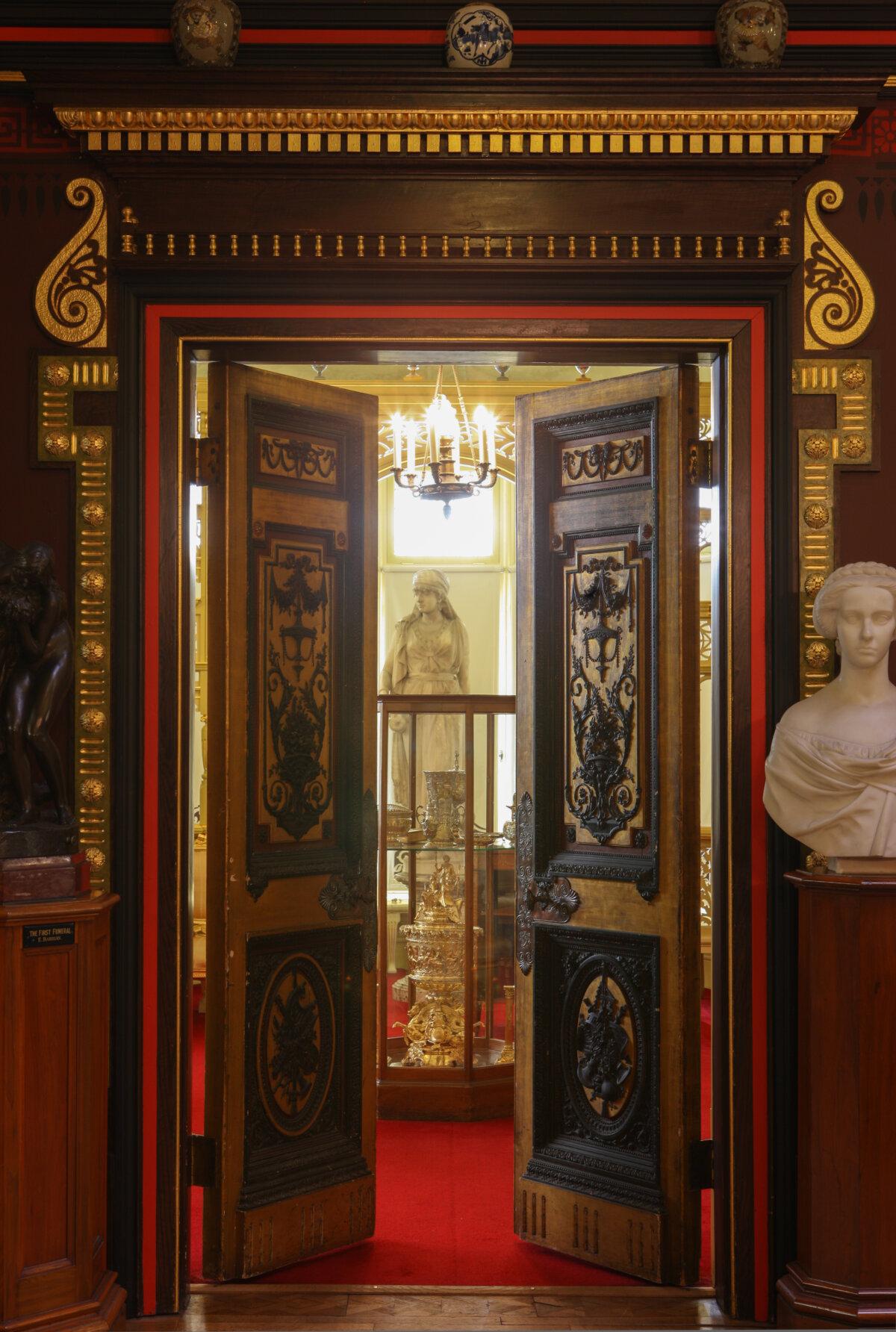
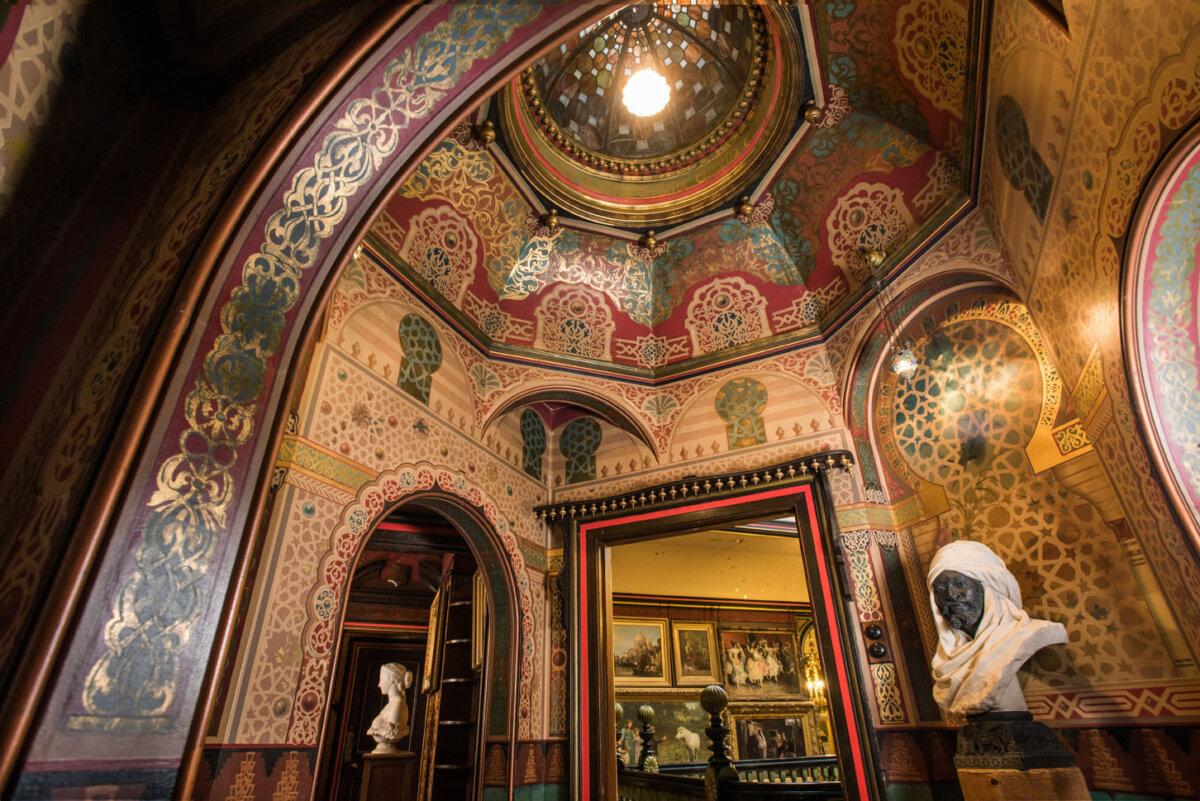
The couple’s love of world travel influenced every corner of the building. Its flamboyant decor included murals, wood carvings, and stained glass. The Alhambra Palace in Granada, Spain, inspired a colorful Moorish Alcove; doors rescued from a fire-damaged Florentine palazzo installed in the Drawing Room influenced its decor; and Japanese motifs feature throughout the fretwork and stencilwork of the Main Hall.
East Cliff Hall’s eclectic collection reflects Annie Russell-Cotes’s passion for curios, anthropology, and natural history and Merton Russell-Cotes’s love of sculpture and paintings, especially those created by British artists such as Edwin Henry Landseer.
The villa’s tropical garden once displayed their collection of Italian marble sculptures. Today, the pond, stone grotto, sweeping terrace, and Japanese lantern remain.
The Russell-Coteses donated their home and its various collections to the people of Bournemouth in 1908, and it was opened to the public on March 10, 1922. East Cliff Hall stands today as a loving testimony of beauty, marriage, and philanthropy.
All the rooms of East Cliff Hall converge on the double-height Main Hall, with its Italian style courtyard. The ornamental mosaic fountain, not currently functioning, features four Ionic columns topped with bronze candelabras. It’s similar to the mosaic fountain that Merton had recently seen in the Arab Hall of artist Lord Frederic Leighton’s home and studio in London. Courtesy of Russell-Cotes Art Gallery & Museum
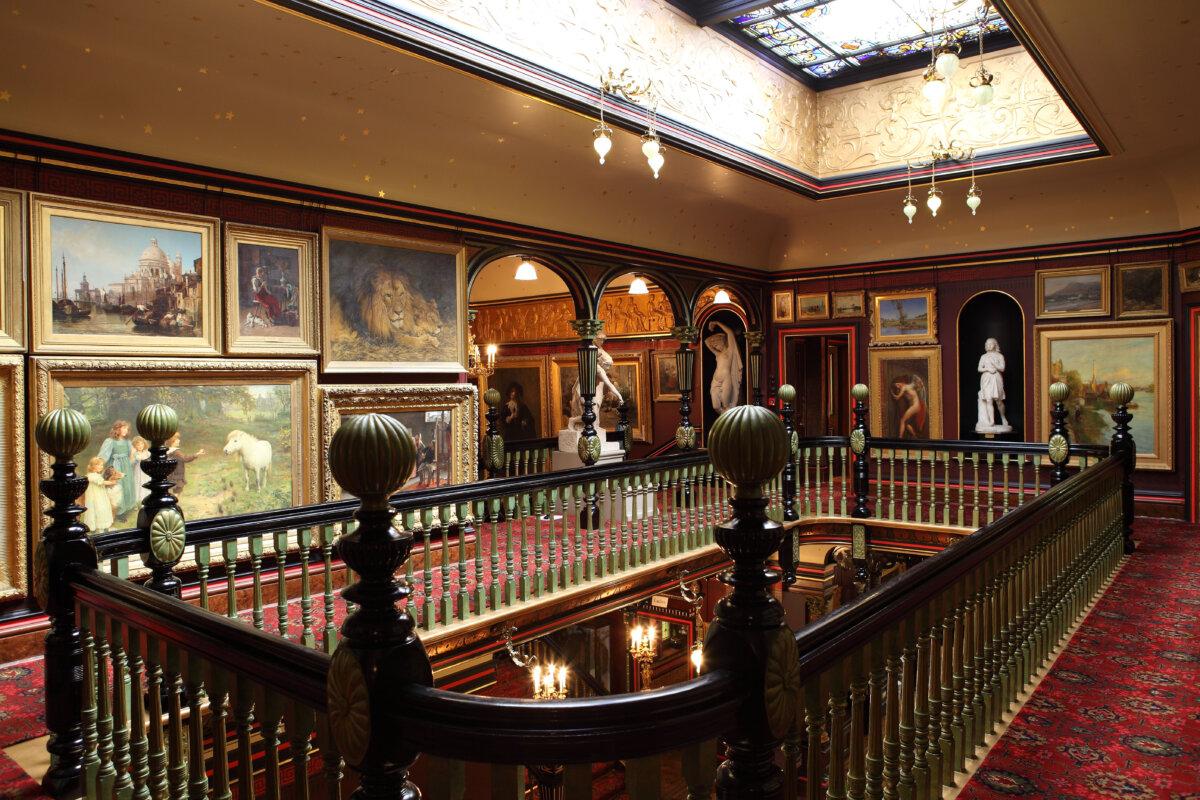
A stained glass skylight floods the Main Hall with sunlight. A gilded plaster frieze on the stairwell replicates the Parthenon frieze from the Athenian Acropolis. The Russell-Coteses displayed their art collection on rotation in the Balcony. Courtesy of Russell-Cotes Art Gallery & Museum
The Russell-Coteses salvaged these doors from an 18th-century Florentine Palazzo after a fire. They influenced the decoration of the Drawing Room, where they’re installed. Courtesy of Russell-Cotes Art Gallery & Museum
The Russell-Coteses’ 1910 visit to the Alhambra palace in Granada, Spain, inspired the Moorish Alcove with its domed ceiling and colorful murals. The alcove displays the bust “Il Moro Di Venezia (Othello).” Carved by Pietro Calvi in 1872, it is one of the earliest known sculptures combining marble and bronze. Courtesy of Russell-Cotes Art Gallery & Museum
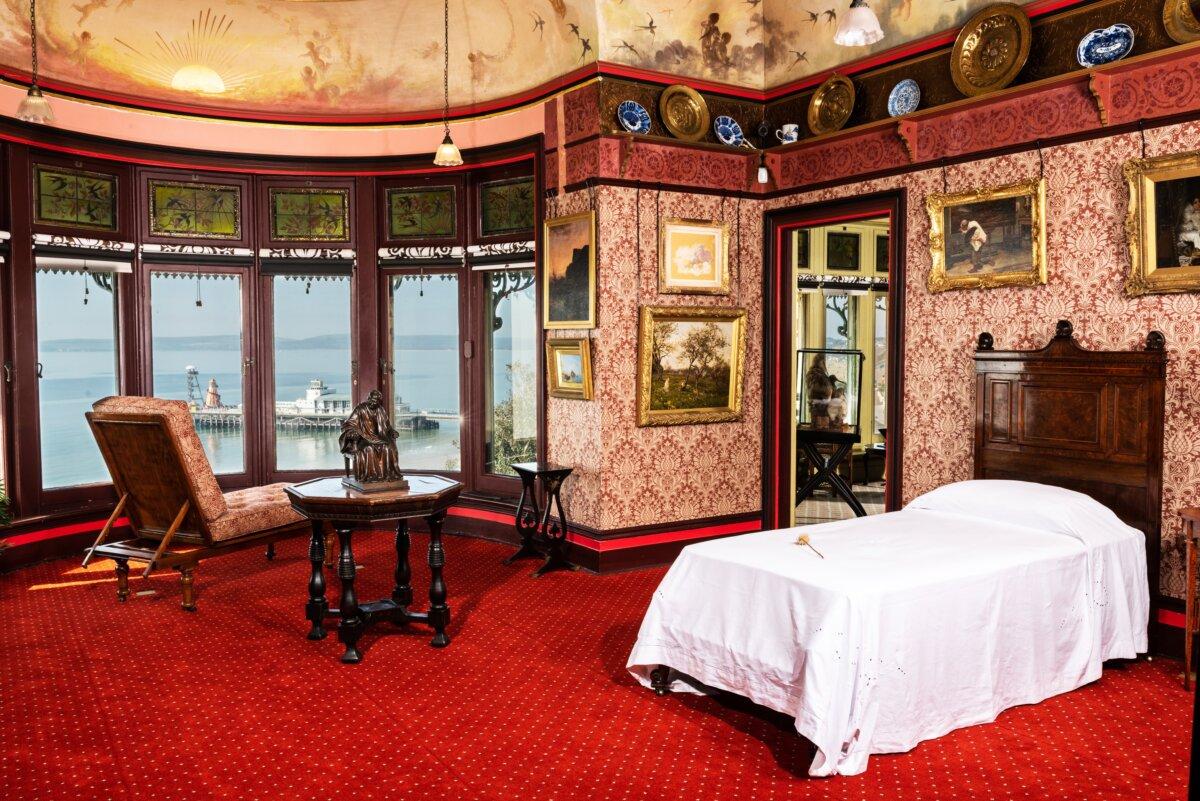
Merton’s opulent red bedroom, known as the Red Room, adjoins his wife’s yellow bedroom via an interconnecting door. The ceiling mural depicts “The Birth of Venus.” The bay window looks out to Bournemouth pier and beach. Courtesy of Russell-Cotes Art Gallery & Museum
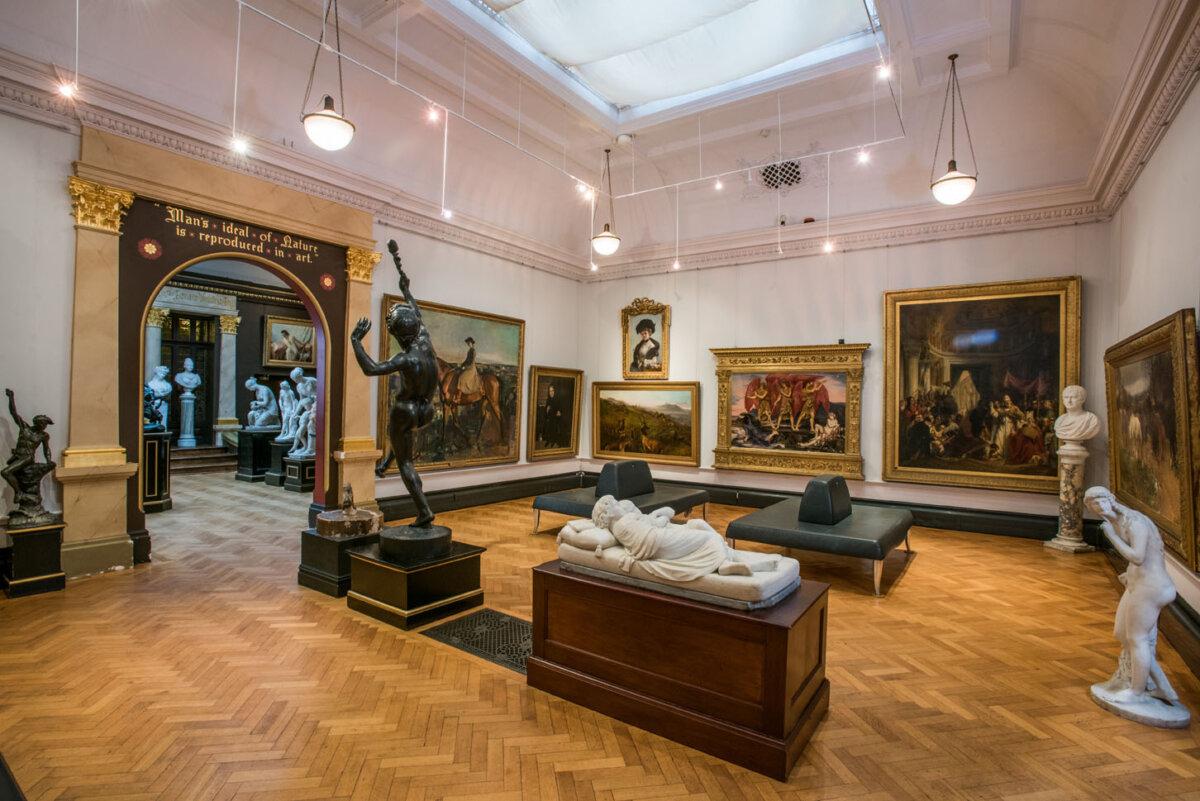
In 1916, Annie commissioned local architect Harry Hawker to add a gallery extension. According to the museum, Merton held history paintings in high esteem and was “fond of landscapes, small genre scenes and animal subjects and admired works with a ‘plein air’ approach.” His quotes about art, such as “Man’s ideal of Nature is reproduced in art,” run along the gallery archways. Courtesy of Russell-Cotes Art Gallery & Museum
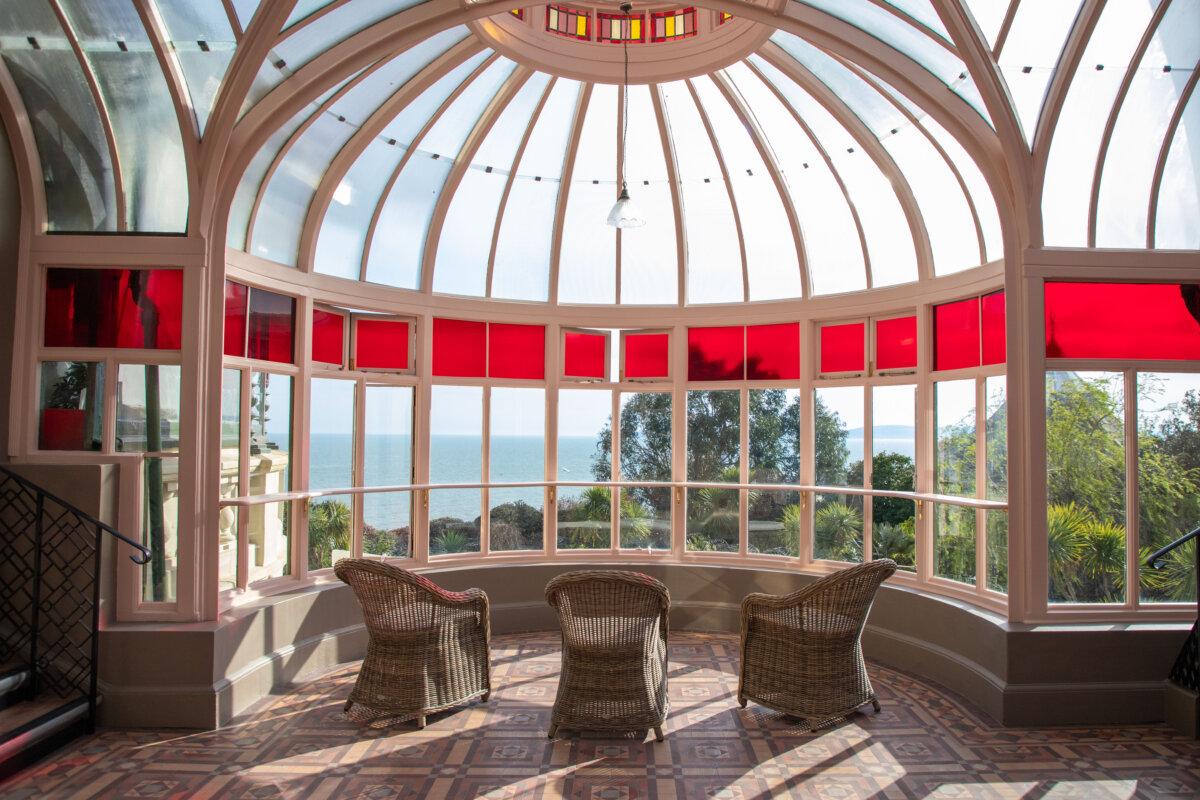
Exotic plants and sculptures once filled the pale pink conservatory where the Russell-Coteses enjoyed views of the sea, beach, and garden. The red glass panes in the conservatory were made with gold to prevent sun bleaching. Courtesy of Russell-Cotes Art Gallery & Museum
Sweeping views of Bournemouth beach can be enjoyed from the bay windows of East Cliff Hall. Courtesy of Russell-Cotes Art Gallery & Museum
Lorraine Ferrier writes about fine arts and craftsmanship for The Epoch Times. She focuses on artists and artisans, primarily in North America and Europe, who imbue their works with beauty and traditional values. She's especially interested in giving a voice to the rare and lesser-known arts and crafts, in the hope that we can preserve our traditional art heritage. She lives and writes in a London suburb, in England.