One of the most popular shows currently on Broadway is “Oh, Mary!” The play imagines Mary Todd Lincoln as a one-time cabaret performer who devolved into an alcoholic lunatic.
While framed as a farce, with playwright Cole Escola (a self-defined “nonbinary” male) originating the title role in Civil War-era women’s clothing, it’s the latest in a long skein of slams aimed at the wife of Abraham Lincoln.
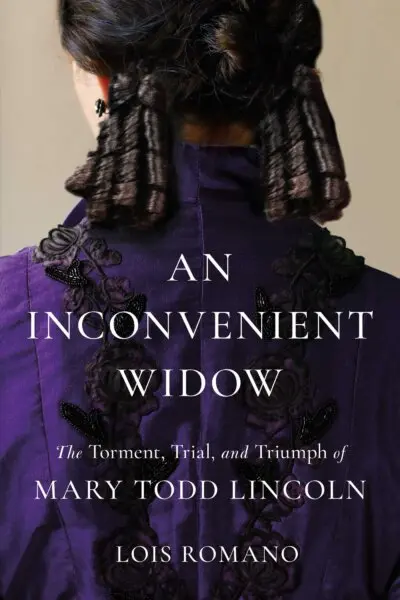
“An Inconvenient Widow: The Torment, Trial, and Triumph of Mary Todd Lincoln” by Lois Romano identifies nearly every derogatory claim ever made against the book’s subject. No slur is too outlandish, including historian C.A. Tripp’s comparison of her to Adolf Hitler.
In Romano’s presentation, Lincoln comes across as a flawed but fascinating personality who uneasily navigated a hostile America. For Romano, the 19th-century claims of Lincoln’s alleged madness evaporate in a 21st-century examination of her life.
Finding Her Place
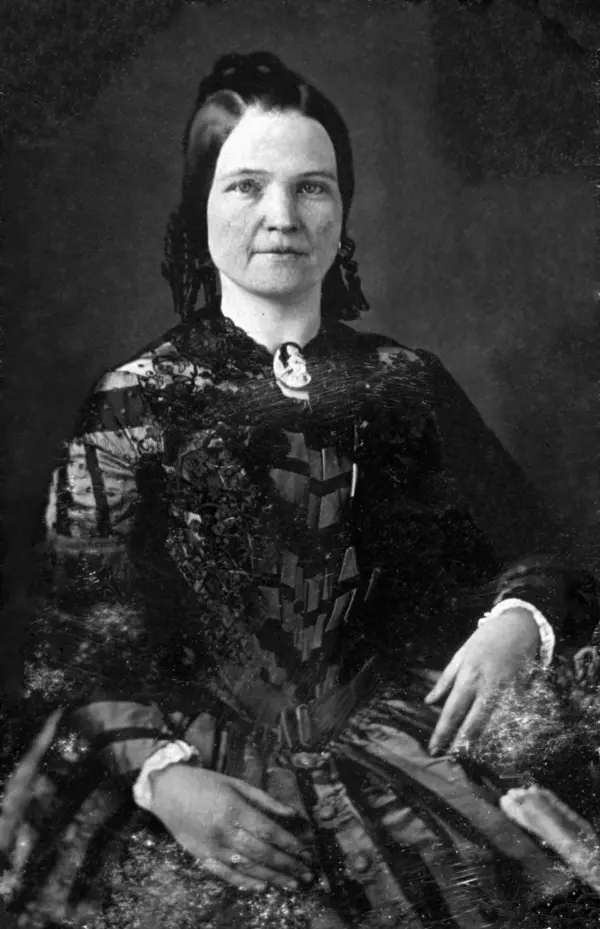
Romano’s Mary Lincoln was a woman ahead of her time. Her wealthy Kentucky family were slaveowners, but she opposed slavery. She was well educated and fluent in French; her father also encouraged her to become cognizant of political issues.During her marriage to Abraham Lincoln, she wisely advised him to reject an appointment as governor of the Oregon Territory because she feared it would isolate him from important political circles.

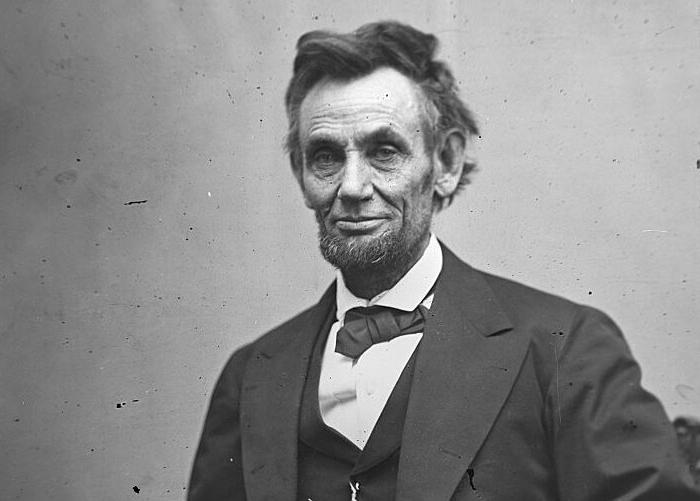
However, Lincoln lived in a time when educated women with a talent for political shrewdness had no place in the wider society. Many people were uncomfortable with her outspokenness and undisguised ambitions for her husband.
Unpopular in Washington
Romano recalls that the Lincolns weren’t heartily welcomed to Washington when they arrived in 1861. Abraham Lincoln only carried 40 percent of the popular vote in a four-way split election. Mary Lincoln (she never used her maiden name after marriage) had family members fighting for the Confederacy; this raised gossip that she was a Southern spy.Lincoln also had the audacity to redefine the role of First Lady from being a benign companion into a social trendsetter. Still, Romano admits that she was often her own worst enemy. She recklessly spent funds on renovations and decorations for the White House; her expensive personal wardrobe created ill feelings in the wartime capital. Even her slow-to-anger husband became furious with her excessive spending.
The death of her 12-year-old son Willie in 1862 from typhoid fever and the head injuries she suffered in an 1863 carriage accident failed to generate empathy within the capital.
Her humanitarian work on behalf of wounded Union soldiers was mostly ignored by the Lincoln-loathing press. Without true allies, Romano observes, Lincoln “was needy and nervous, afloat in turbulent waters with no anchors, not even her husband, who was consumed by a looming war and filling jobs.”
Widowhood Under Attack
Her husband’s assassination failed to change opinions about Lincoln. Even the city leaders in Springfield, Illinois, rudely ignored her wishes for her husband’s burial site. She won that emotionally draining fight, but without public admiration for her courage.It got to the point where anything Lincoln said was questioned and ridiculed. The Illinois State Journal claimed she was “hypochondriac as to her health and a monomaniac on the subject of money.” Nevertheless, her complaints weren’t the products of hysteria.
Aside from depression, she suffered from migraine headaches for years. The death of her 18-year-old son Tad in 1871 further damaged her mental fortitude. With no steady source of income, her fears of financial peril were justified. Lincoln lobbied tirelessly for five years to secure a widow’s pension from Congress; she led a nomadic existence in a series of crummy hotel rooms and temporary lodgings.
Lincoln’s public image suffered further from two scurrilous campaigns that unfairly redefined how she was perceived for decades.
Her husband’s one-time law partner William Herndon, who always loathed her (and the feeling was mutual), used every opportunity to vilify her. His weirdest attack was inventing the lie that President Lincoln’s only true love was Ann Rutledge, a sweetheart who died several years before he courted Mary Todd. Romano tartly recalls how “none of Lincoln’s close friends had heard of her,” but the lie became repeated so aggressively that it was long accepted as truth.
Complementing that outrage was her only surviving son, Robert, who viewed his mother as an embarrassment who could jeopardize his political ambitions. His efforts to have her committed to a mental institution in 1875 sealed the popular image of Lincoln’s alleged insanity.
Romano details her successful efforts to gain her freedom and her later peaceful residence in France, where she showed no evidence of madness.
The Mary Lincoln of “An Inconvenient Widow” isn’t a cartoonish figure but a complex woman capable of great strength and painful folly. Romano’s deeply researched work brilliantly captures the attitudes and antagonisms of Lincoln’s era and provides a sympathetic portrait of a determined woman fighting for her dignity against waves of malice.
This is the proverbial second look that the much-maligned First Lady truly deserves.