Healing waters have always been a draw for people. At least half of the United States has geothermal resources—more commonly referred to as natural warm and hot springs. Depending on conditions deep in the earth’s crust, magma or molten rock can heat groundwater in some areas. A circulation process generated through rock faults can also generate heat that warms water. Water that rises up and out of the ground can be odorless and clear or sulfur smelling and tasting. It can even be naturally bubbly.
Typically, where there are hot springs, there are accommodations for the people who flock to them.
A Resort Hotel for the Ages
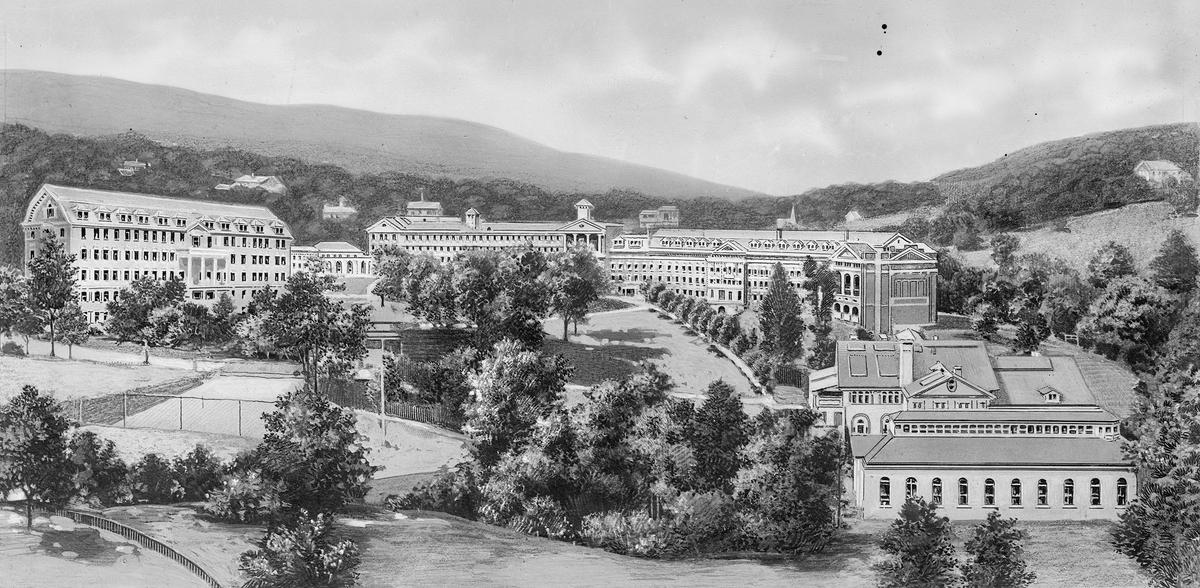
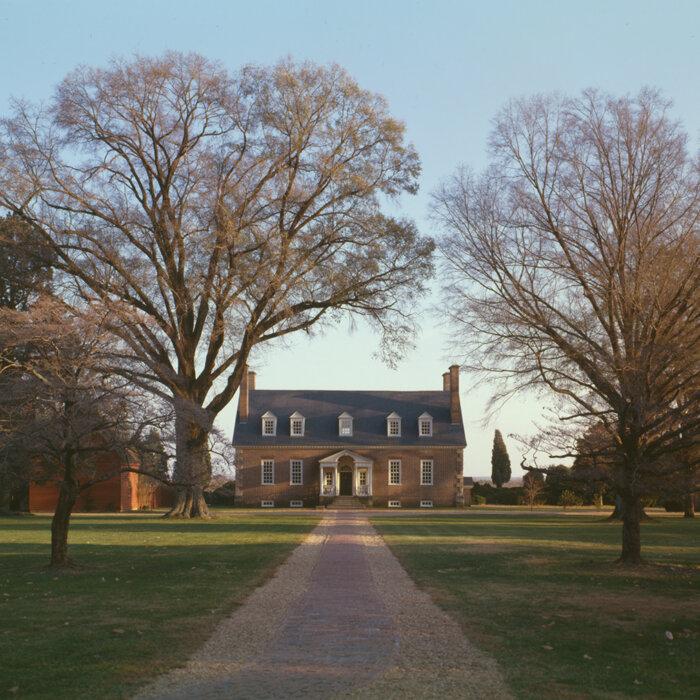
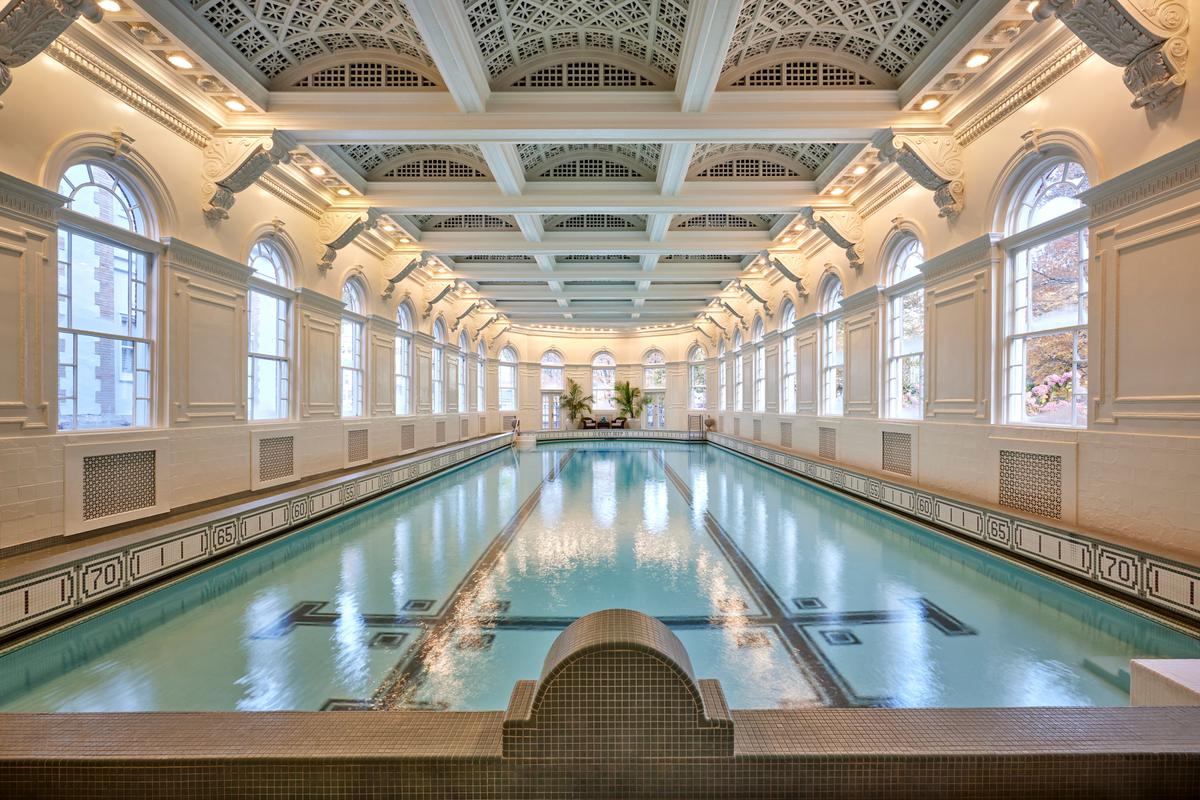
First, in 1761, an octagonal stone basin was built for soaking in the spring water. This was followed by an 18-room rustic wood hotel, called the Homestead. The hotel was constructed by the militia and operated by Capt. Thomas Bullett, until his death in the Revolutionary War.
The Bullett family continued to manage the original Homestead hotel for several more years. Thomas Jefferson was a guest in 1818. In fact, he wrote to his daughter, Martha, about how the water soothed his rheumatism. “I believe in fact that that spring with the Hot & Warm, are those of the first merit,” he wrote. His endorsement spread by word of mouth, prompting the Homestead to become a vacation destination.
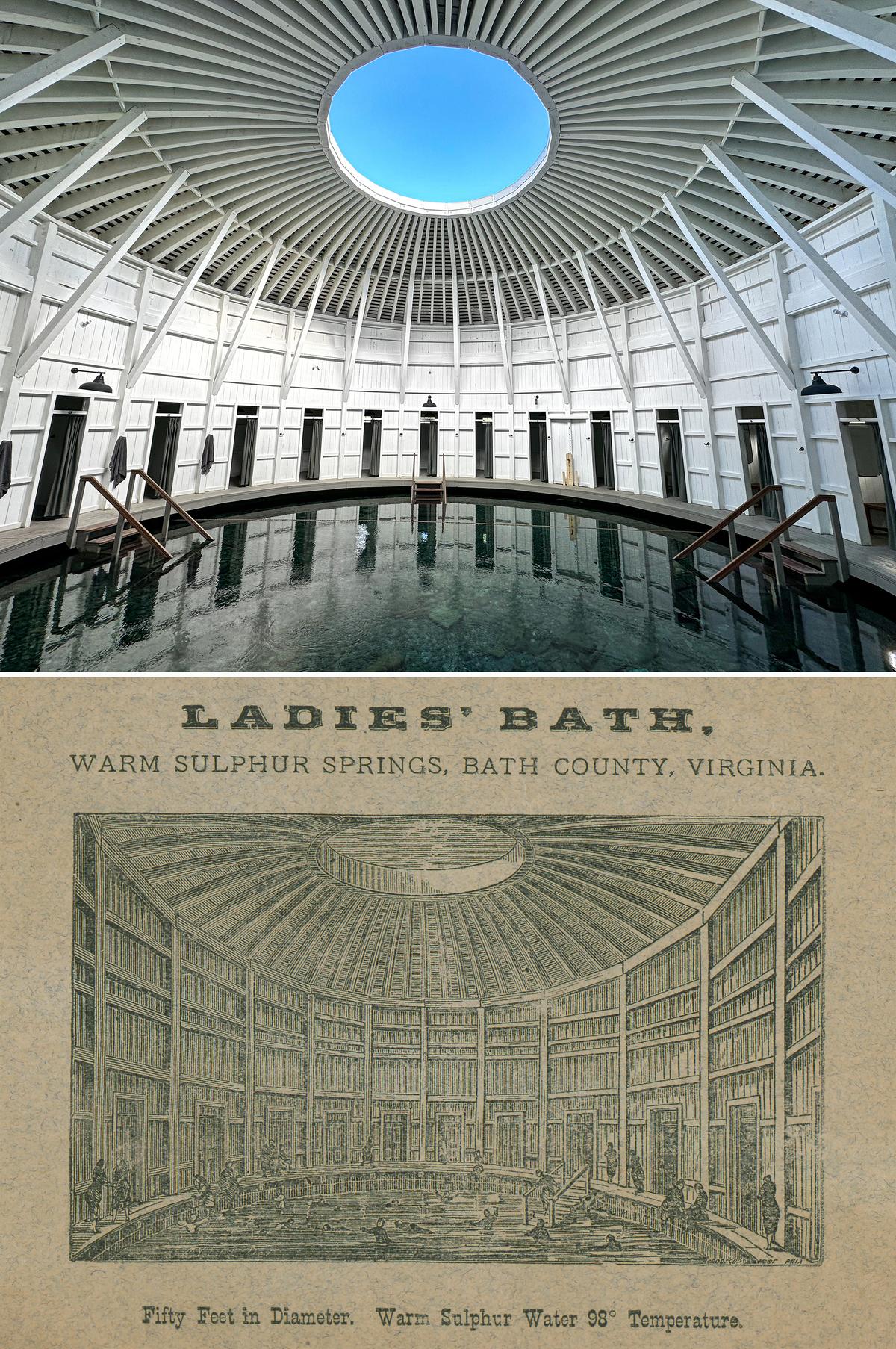
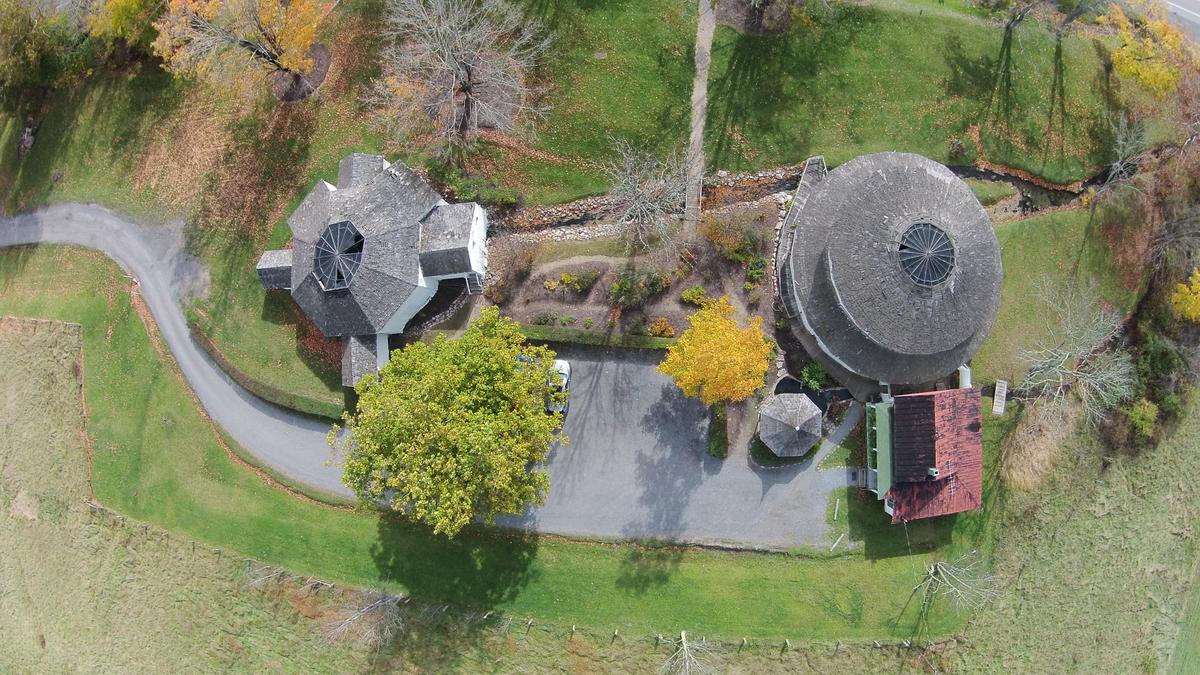
In 1820, the men’s octagonal basin was enclosed and turned into a full bathhouse. It’s believed to be the oldest surviving building of its kind in the United States. As more people learned about the secluded getaway featuring luxuriating waters, a second bathhouse, this one specifically for women, was constructed over one of the springs. This unique and intricately constructed polygonal building has been preserved over two centuries.

In the mid-1800s the area’s prestige as a resort destination received a noteworthy supporter in financier John P. Morgan. In the early 1900s, Morgan and other affluent entrepreneurs invested capital to begin planning and building an extraordinary structure to replace the first simple hotel. Since then, the site has attracted countless foreign dignitaries, recognizable film stars, 24 presidents, and the general public—all of whom have relished in the resort’s comfort and opulence.
Georgian Revival Architecture
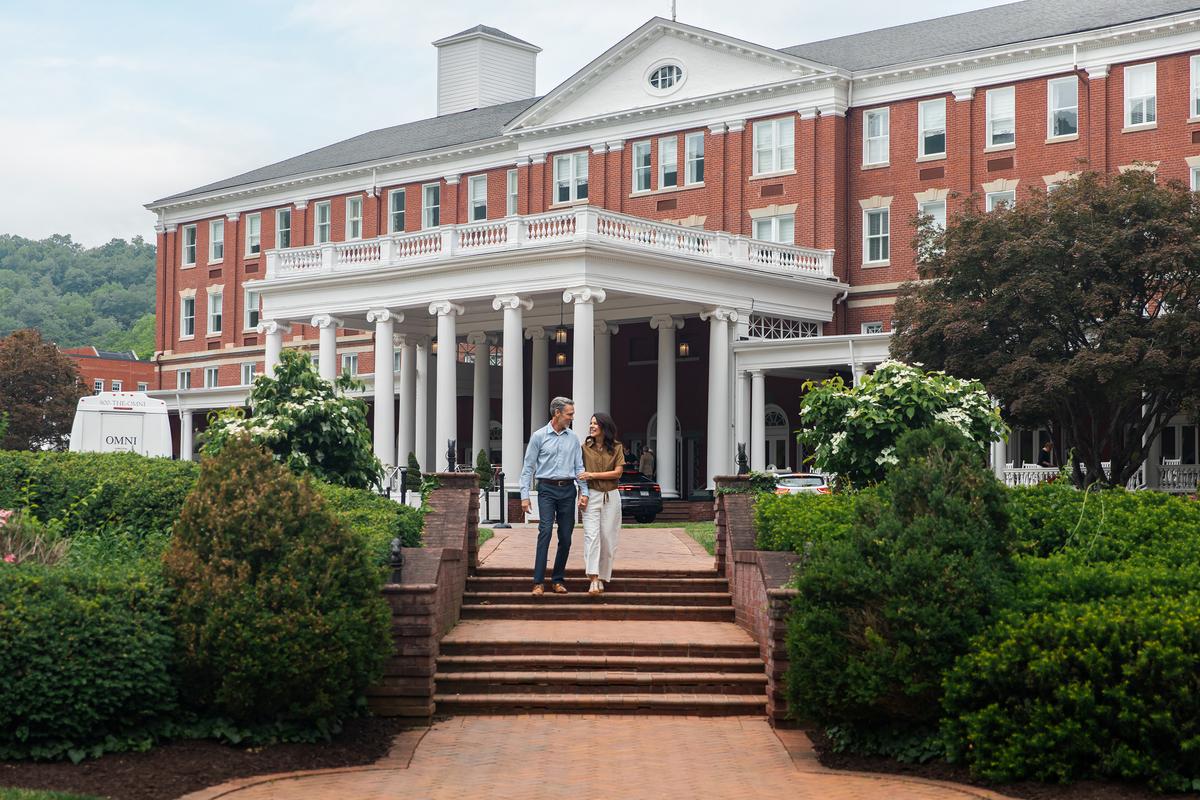
While the water’s high mineral content and consistent temperature of 98 to 99 degrees Fahrenheit is the obvious draw to Hot Springs, Virginia, the stunning and spacious architecture of the Homestead captivates visitors.The resort was built in stages. The Great Hall was the first space constructed. Cincinnati architects Alfred Elzner and George Anderson designed Homestead’s Great Hall, which serves as the resort’s main building and lobby. Constructed in 1902, its architectural style leans heavily on Georgian Revival, which focuses on symmetry, and is evident in the dominant portico supported by six Ionic-order columns at its front and back.
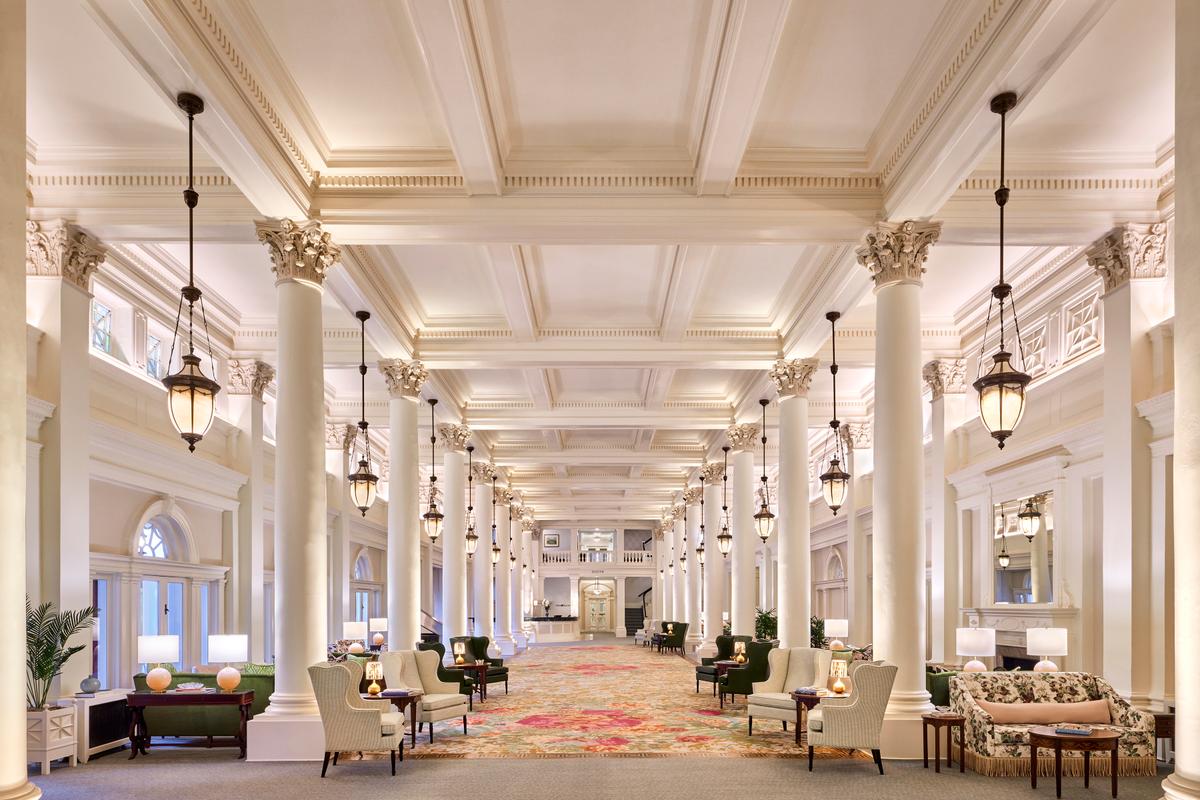
Inside the Great Hall is a colonnade of 16, two-story Corinthian columns that rise to meet a coffered ceiling. A series of French doors with arched fan-light transoms enables natural light to flood the expansive space. Down the center of the hall is an enormous, custom-designed rug featuring designs depicting the flora and fauna of the surrounding Allegheny Mountains.
Incorporating Colonial Revival Style
Latter additions to the Homestead, including the east and west wings, incorporated the Colonial Revival style, which is a blend of Georgian and Federal architectural styles. It includes elements such as hipped roofs and broken pediments.In the 1920s, the Ingalls family installed a series of luxurious facilities including the opulent Empire, Crystal, and Garden rooms, as well as the Theatre.
The most prominent Colonial Revival feature visible from outside the Homestead is called the Tower. The 10 and-a-half-story edifice, located between Great Hall and the West Wing, features a large clock tower, cupola, and a hipped standing-seam copper roof. Completed by 1929, the Tower primarily offers a variety of guest rooms. In its first seven stories are recessed porches set off by Doric columns, and on one side is a pavilion housing the Tower’s lounge space.
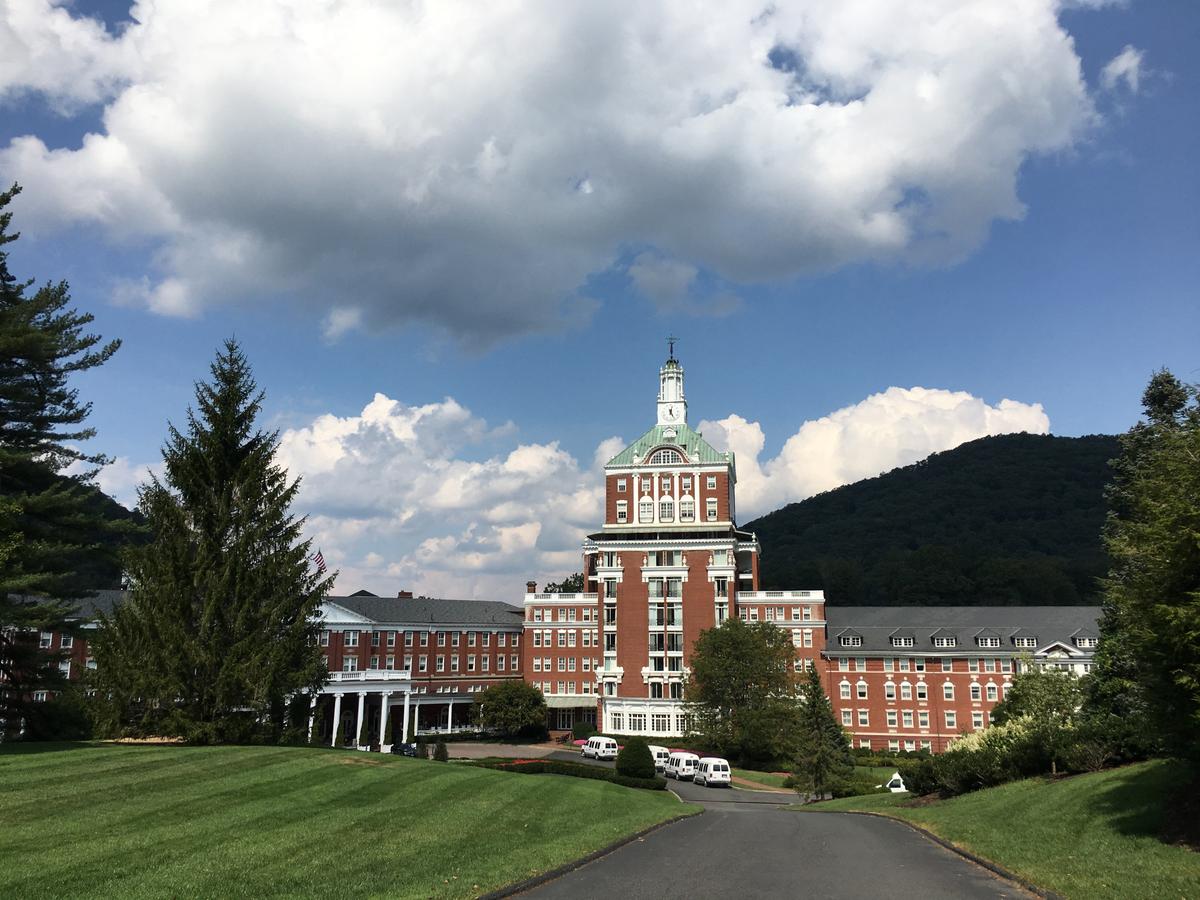
The Garden Wing was added in 1973. Then, in 2001, a 13,485 square-foot Grand Ballroom was built, adding another formal event space to the Homestead’s existing 10,368 square-foot Regency Ballroom.
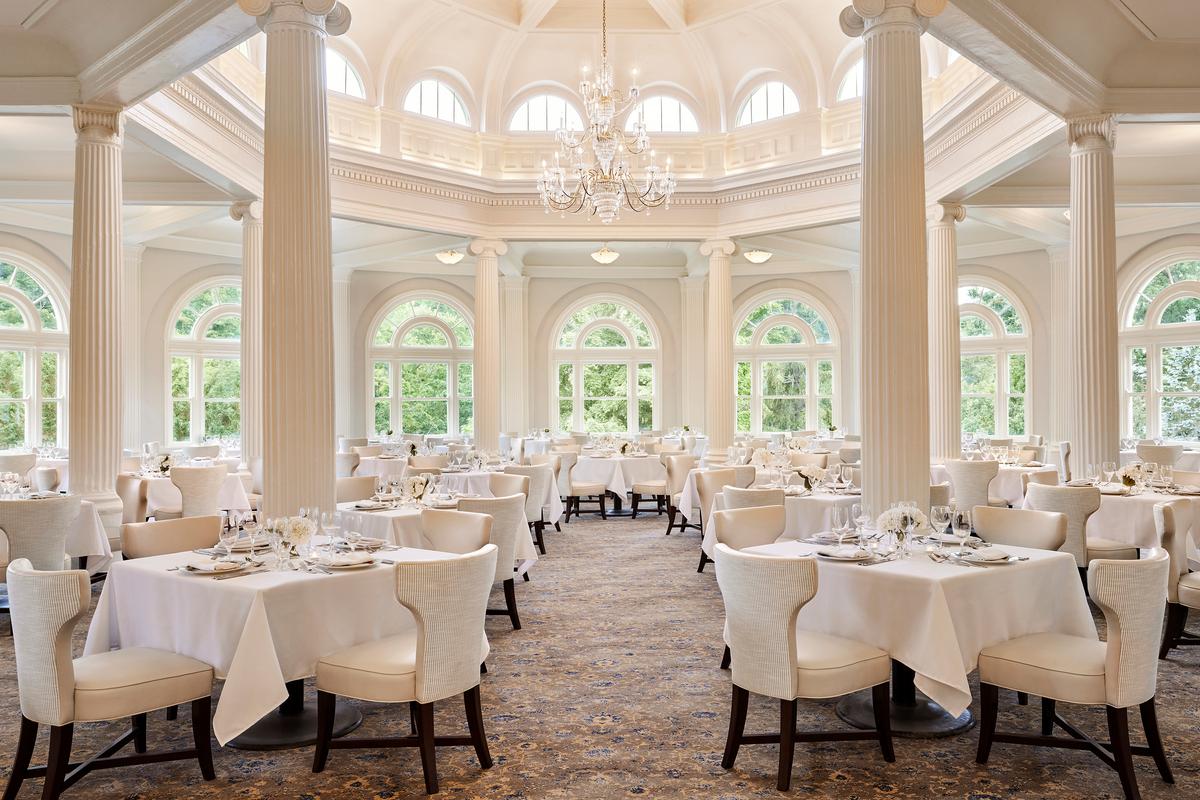
There are eight places on the campus to dine and enjoy libations. Two are named for the Homestead’s earliest noteworthy guest, Thomas Jefferson: Jefferson’s Restaurant and Taproom.
A National Landmark
“From December 1941 until June 1942, following the United States’s entry into World War II, The Homestead served as a high-end internment camp for 785 Japanese diplomats and their families until they could be exchanged through neutral channels for their American counterparts. The diplomats were later transferred to the Greenbrier Hotel in West Virginia.”
Because of its important history, the Homestead was chosen for National Register of Historic Places status in 1984, and it became a National Historic Landmark in 1991.
Year-round, guests can take in the views of the Allegheny Mountains from the Omni Homestead Resort and Spa’s 2,300-acre setting, savor the naturally soothing spring water, and admire the grandeur of America’s oldest resorts.