“This grand show is eternal,” wrote 19th-century naturalist John Muir in his journal.
“It is always sunrise somewhere; the dew is never all dried at once; a shower is forever falling; vapor is ever rising. Eternal sunrise, eternal sunset, eternal dawn and gloaming, on sea and continents and islands, each in its turn, as the round earth rolls.”
Muir’s journal entry could equally describe landscape painting. The genre immortalizes the theater of the natural world as the seasons roll on. With the “grand show” of summer just a gentle breeze away, let’s celebrate the season with 19th-century American landscape paintings and poetry.
Oh, summer has clothed the earth In a cloak from the loom of the sun! And a mantle, too, of the skies’ soft blue, And a belt where the rivers run.
And now for the kiss of the wind, And the touch of the air’s soft hands, With the rest from strife and the heat of life, With the freedom of lakes and lands.
Where better to experience the “freedom of lakes and lands” than in our national parks, and where better to feel the “kiss of the wind” than atop America’s mountains, on its coastlines, and out at sea. When we cannot access the great outdoors, we can explore public art galleries across the country that contain the American landscape in canvas after canvas.The Rockies
Rocky Mountain School painter Albert Bierstadt captured the romance and grandeur of the Old West in “The Rocky Mountains, Lander’s Peak.” He shrouded the distant mountain peaks in a purple-gray summer haze, clothed the land in myriad greens, and bathed crags in golden sunlight. In the middle ground, a waterfall gushes forth, reflecting itself in the clear waters below; and in the verdant foreground, Shoshone Indian life plays out.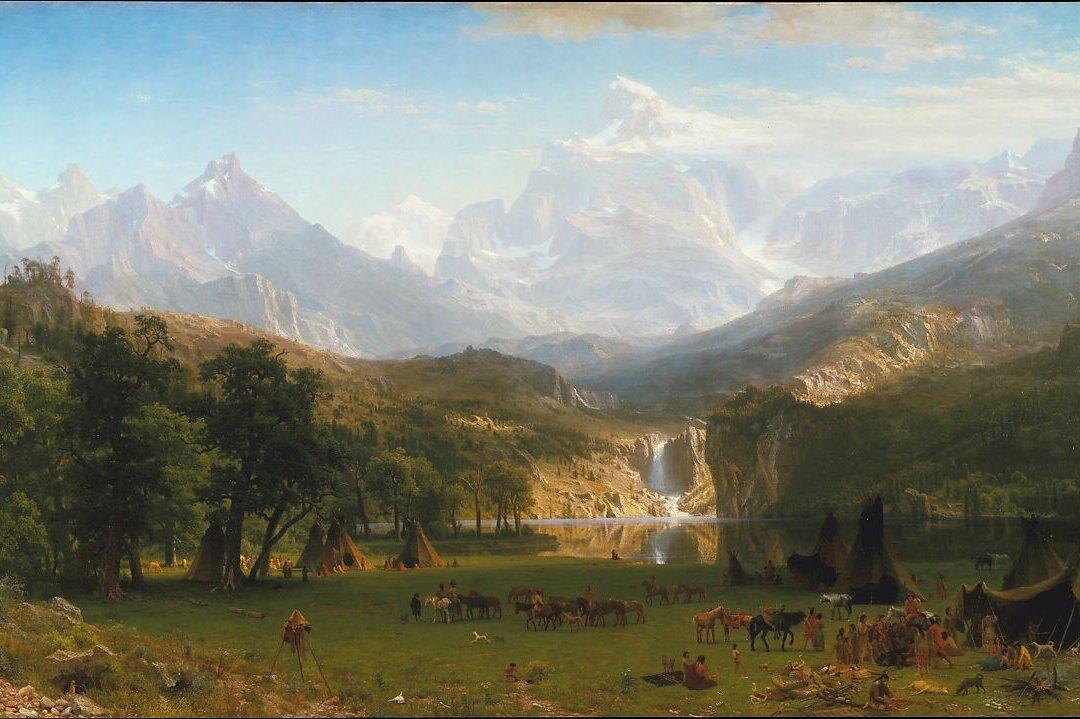
The Catskills
For his painting “In the Woods,” Hudson River School painter Asher Brown Durand rendered enchanted woods based on sketches he’d made in New York’s Catskill Mountains. Trees fill the canvas, creating a cocoon shaded from the summer sun. The sun’s rays stream through the trees, gilding the creek in gold and the tree trunks in silver.
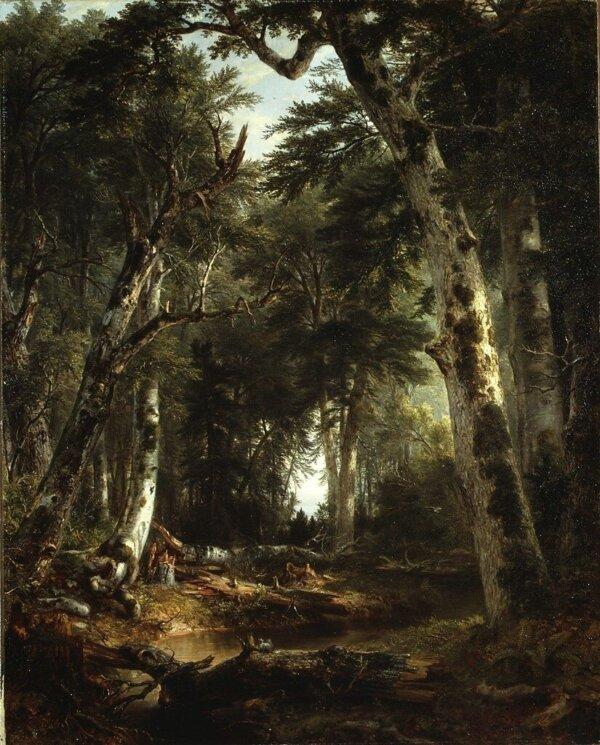
We can almost feel the welcoming summer breeze that whistles its way through the trees and the creek, enticing us deeper into the woods.
Durand wrote of “In the Woods” in 1855, in “Letters on Landscape Painting,” which was published in the American fine arts periodical “The Crayon”:
The East Coast Salt Flats
In “Summer Showers,” Martin Johnson Heade depicted a storm hitting the salt marsh flats. The luminist painter effectively conveyed the dramatic light as rain clouds swept across the honeyed land. In the foreground, pitch-black clouds eclipse the salt marshes and a haystack. In the middle ground, haystacks guide us out to farmhands hurriedly filling their hay cart before the rain sets in. On the distant horizon, warm weather clouds lie in wait for the rain to pass.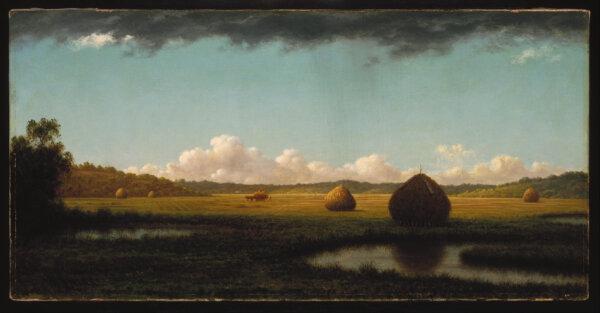
The Last Sunset of Summer
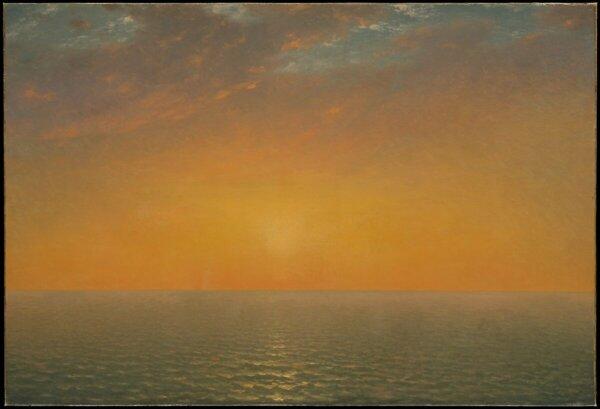
Luminist painter John Frederick Kensett captured the fleeting sun setting in “Sunset on the Sea,” likely viewed from Contentment Island, near Darien, Connecticut. He painted an amber sun casting fiery prisms across the sky that seem to scorch the dark clouds above like embers. The sea reflects the sunset in muted tones that will soon disappear, and a gentle breeze carries the waves and the symphony of the sea ashore for all to hear long after sundown.